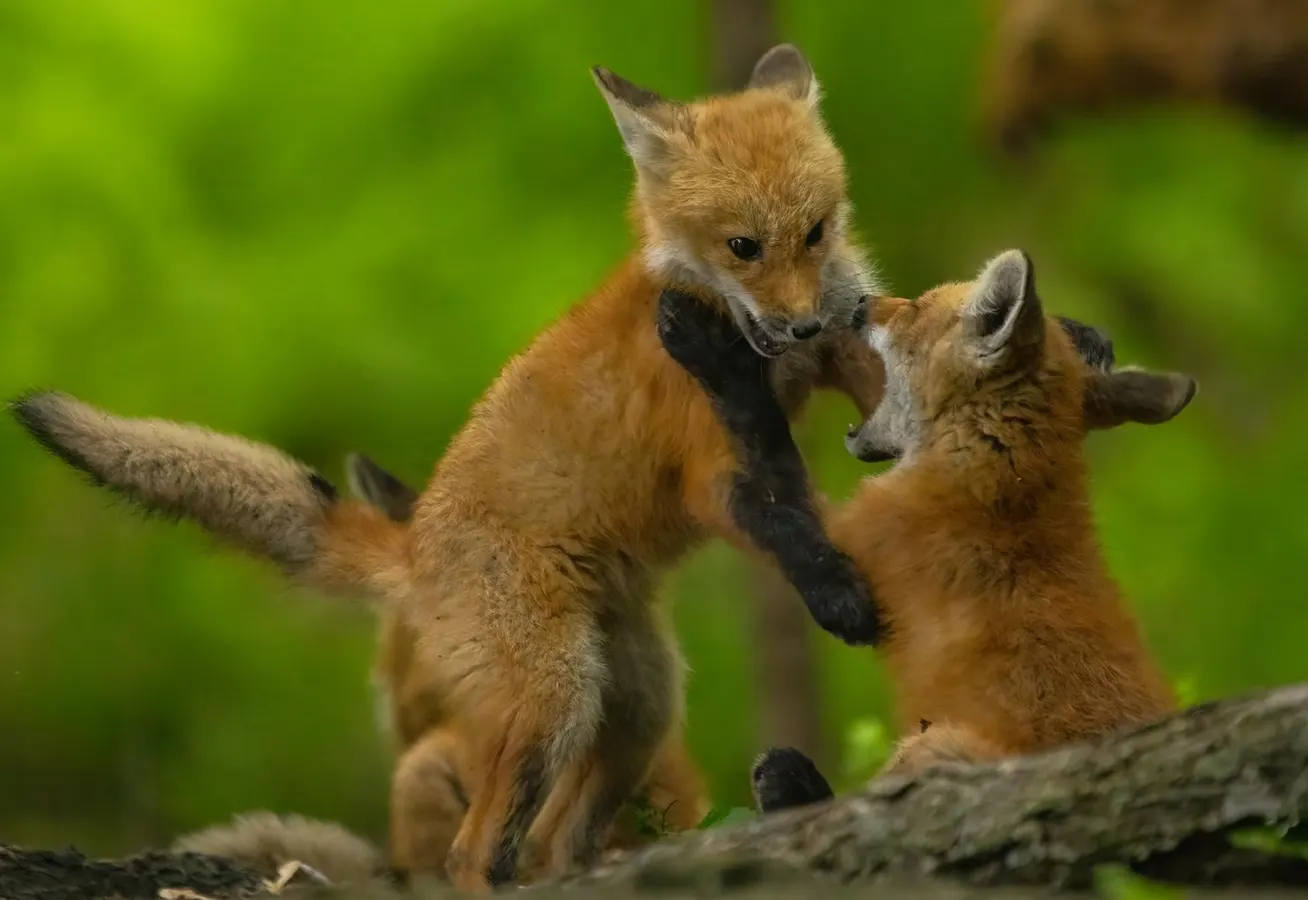
Two red foxes play together in Wisconsin.gettyPublic input identifying over 100 million trail cameras photos of Wisconsin’s animals has transformed science education and state wildlife management. The Snapshot Wisconsin trail camera program has surpassed expectations since it began over a decade ago. It relies on a statewide network of volunteer-managed trail cameras to monitor Wisconsin wildlife. The program is managed by the Wisconsin Department of Natural Resources’ Office of Applied Science, whose staff recruit, train and support volunteers. State scientists process and utilize the data from this community-based program to support wildlife management decisions.Last year, Snapshot Wisconsin celebrated its 10th year with over 100 million photos taken in every Wisconsin county on some 2,000 active trail cameras. To achieve this milestone, 25,000 volunteers worldwide helped identify the candid photos of wild animals using a research platform called Zooniverse.The wildlife research data obtained from Snapshot Wisconsin has provided valuable data for DNR scientists and university collaborators in more than 20 scientific publications.“Wisconsin is the first state to have a full, scale project of this kind and to our knowledge it now represents the largest trail camera dataset in the world,” said Christine Anhalt-Depies, DNR participatory research scientist. “Snapshot Wisconsin is a partnership to monitor wildlife year-round using a statewide network of trail cameras. It is also a unique opportunity for individuals, families and students to get involved in monitoring the state’s valuable natural resources.”MORE FOR YOUThe project is funded by a grant from the U.S. Fish and Wildlife Service Pittman‐Robertson Wildlife Restoration Program that pays for staff to support volunteers and analyze the data as well as buy trail camera equipment. “We hear from volunteers that they take away an improved understanding of the wildlife in their local area and appreciate the opportunity to contribute to wildlife research. Because the project is only possible through the volunteers, it is important that we provide the public an opportunity to explore the data themselves,” Anhalt-Depies explained.Snapshot Wisconsin has proved so successful it now offers three important resources for the public to learn about the state’s wildlife:Snapshot Data Dashboard—an interactive tool with maps and graphs to view trail camera data for 22 Wisconsin species.Snapshot Wisconsin Photo Library—a collection of the DNR’s favorite incredible wildlife trail camera photos, which are frequently updated.Snapshot in the Classroom—wildlife-focused K-12 lesson plans, flash cards and activities for parents and educators.“The library can be searched by Wisconsin county and species. We hope this provides for both volunteers and other members of the public an opportunity to learn about Wisconsin wildlife,” Anhalt-Depies added. “The fact that this is a partnership with the public is very meaningful—100 million photos represents an incredible effort and an achievement of this scale would most definitely not be possible without volunteers. It is an enormous dataset that would otherwise not be available for wildlife science and management.” Worldwide Volunteers Help Classify Wisconsin’s Wild AnimalsThe public can become involved in Snapshot Wisconsin by either helping maintain trail cameras or identify and count the wild animals seen in the photos. Prior experience is unnecessary since the DNR provides all the materials and resources.“Many more volunteers help identify wildlife online, with over 27,000 registered users on Zooniverse,” Anhalt-Depies said. “For online volunteers, we enjoy chatting with them on Zooniverse’s discussion boards, helping with identifications and answering wildlife questions.”Volunteers also can sign up to host a trail camera in a survey block where they own or have access to land. Wisconsin has been divided into over 6,000 survey blocks and there are additional opportunities to host trail cameras. Trail camera hosts deploy a camera and monitor it for one year to swap out the SD card and batteries every three months. “Over the 10-year lifetime of the project, over 4,700 volunteers have contributed as a trail camera host,” Anhalt-Depies said. “We have staff at DNR that are dedicated to supporting volunteers. During the week you can find them answering phone calls or emails, helping volunteers to troubleshoot any issues they run into.”Unique Educational OpportunitiesA bald eagle in a forest.Snapshot Wisconsin, Department of Natural ResourcesFormal and informal educators have played a key role in monitoring wildlife. In fact, over 150 of Snapshot Wisconsin trail camera hosts are educators. “They report using Snapshot Wisconsin with children as young as kindergarten-age to young adults in college courses. We’ve heard from educators that they appreciate the opportunity to provide an authentic learning experiences for their students, involving them in the collection of data that will be used for science,” Anhalt-Depies noted.An otter in the snow.Snapshot Wisconsin, Department of Natural ResourcesEducators also can use the program’s online resources in Zooniverse for students to help identify and count species in photos captured across the state.“Teachers can also have their students explore math and statistical topics using our online Data Dashboard where we provide data from over 22 species. We try to make it easy for educators to get involved, providing free lesson plans on our project webpage,” Anhalt-Depies said.Photos Help Wildlife Managers Make DecisionsSnowshoe hare.Snapshot Wisconsin, Department of Natural ResourcesJennifer Stenglein, DNR quantitative research scientist, said the trail cameras have provided valuable information since the cameras usually are at a location for months and even years. This enables researchers to track spatial and temporal trends for many Wisconsin species, such as black bears, bobcats, coyotes, opossum and raccoons.“Animal detections across hours of the day and days of the year are useful for visualizing diet and seasonal animal activity patterns,” Stenglein said. Coyotes at night.Snapshot Wisconsin, Department of Natural ResourcesShe said plots of opossum confirm the range of these animals since they don’t live in northern Wisconsin where it’s too cold to survive winter. Opossums have hairless tails, ears and paws susceptible to frostbite. A final type of data that Snapshot Wisconsin produces are population composition metrics. The state’s longest metrics of this kind are white-tailed, deer fawn-to-doe ratios. A deer running through a forest.Snapshot Wisconsin, Department of Natural Resources“In late May, white-tailed deer fawns are born, and they have spots to help camouflage them for the first few months of life. We detect fawns from adults most readily on Snapshot Wisconsin cameras in July and August once the fawns are a bit bigger, moving around more, and still have spots,” Stenglein said. “There are so many white-tailed deer photos. Roughly 7 out of every 10 animal photos are of deer.”She said the project also provided important discoveries about the spatial distributions of bobcat and fisher with the best data the state ever had. Scientists saw through photos that these creatures generally live on opposite areas Wisconsin. This information is useful to know since the bobcat and fisher compete for resources. Photos also helped the DNR better understand trends in the lives of many mammals and upland birds such as wild turkeys.“Each year of the project adds data that improves our understanding of how wildlife populations change in space and time. With Snapshot Wisconsin data, researchers have explored interesting ecological and behavioral questions about species interactions, effects of human development on wildlife, and wildlife behavior related to seasonal weather variability,” Stenglein said.The people of Wisconsin know their wildlife better because of Snapshot Wisconsin. This exposure to the state’s animals is both enjoyable and educational. Many times, a volunteer managing a trail camera will find their first photo of a bobcat or bear. A Model for Other StatesThis project may be a model for other states to use. Snapshot Wisconsin has surpassed the DNR’s expectations both with public reaction and the vast amount of information produced. “Trail cameras provide a unique and non-invasive way to monitor wildlife, and the photos are a captivating way for the public to learn about wildlife,” Anhalt-Depies said. “Trail cameras seem to be tailor made to support this type of collaborative approach to wildlife monitoring and science.”She advised scientists considering a similar project to be open about learning from the public and “be willing to set aside strict protocols. The folks we’ve worked with know the land on which they are participating. Their expertise is an important part of why this project has been successful. That and be ready to manage a massive amount of data.”
How Wisconsin Used Foxes And Deer To Revamp Science Education
Public input identifying over 100 million trail cameras photos of Wisconsin’s animals has transformed science education and state wildlife management.
1,353 words~6 min read