PostgreSQL scans operate at the page level: the buffer manager fetches one 8 KB page (BLCKSZ) at a time, issuing one read per block. The operating system may merge some of these requests through readahead, but PostgreSQL still generates many small I/O operations, leading to a high number of system calls on large scans. This is inefficient for streaming access patterns.
Operations like Seq Scan and Bitmap Heap Scan know which blocks they need ahead of time and can read them independently, unlike Index Scans where each next block depends on the previous one.
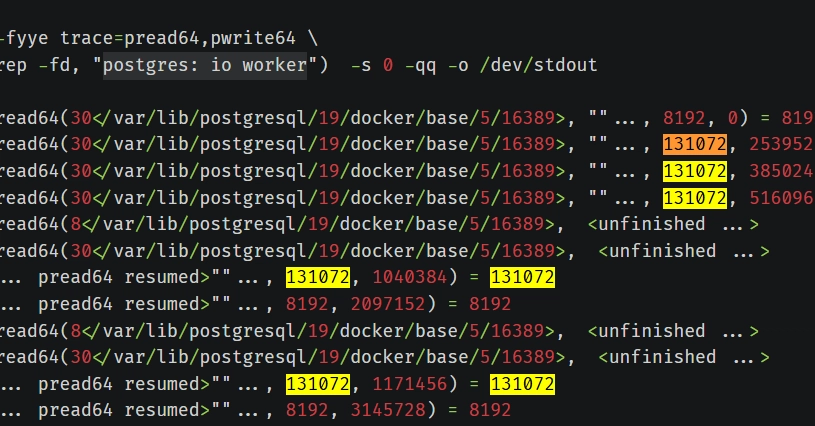
PostgreSQL 19 changes this with the new read stream layer. Instead of issuing one read per page, it groups adjacent blocks and combines them into larger I/O requests, up to io_combine_limit. The logical unit remains the 8 KB page, but physical I/O is no longer page-by-page. This reduces system call overhead and makes better use of modern storage.
IO combining and prefetch
PostgreSQL 19 (currently in beta) introduces Asynchronous I/O (AIO), enabling non-blocking reads for operations involving multiple blocks. Instead of waiting for each read to finish before issuing the next, PostgreSQL can pipeline I/O requests using methods such as worker threads, io_uring, or a synchronous fallback. The AIO read pathway creates a look-ahead stream of block requests, grouping nearby blocks into larger I/O operations. This process attempts to coalesce adjacent blocks into a single request, subject to the io_combine_limit.