Originally published on tamiz.pro.
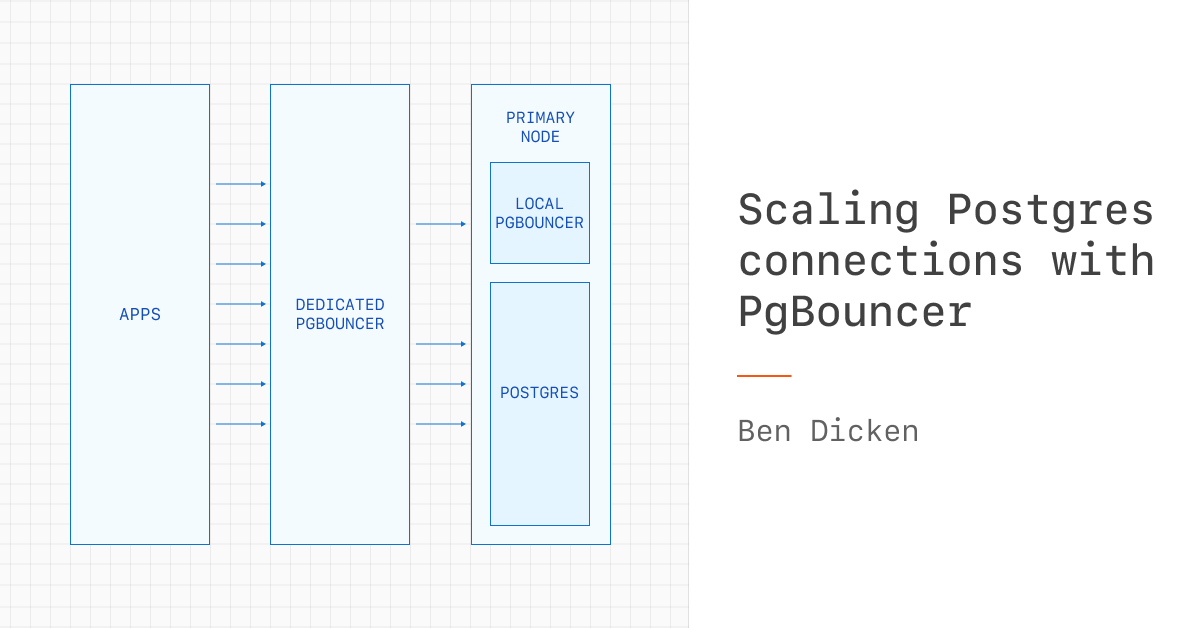
In high-traffic applications, database connection management often becomes a significant bottleneck long before the database itself runs out of steam. Opening and closing connections is an expensive operation, consuming CPU cycles and memory on both the client and server. For PostgreSQL, this overhead is particularly pronounced due to its process-per-connection model. This deep-dive explores how we tackled this challenge, achieving a remarkable 4x improvement in throughput by strategically implementing PgBouncer as a connection pooler.
The PostgreSQL Connection Overhead Problem
PostgreSQL's architecture is robust and highly reliable, but its handling of client connections can introduce performance limitations under specific workloads. When a new client connects, PostgreSQL forks a new backend process dedicated to that connection. This process handles authentication, query parsing, execution, and result transmission. While this model offers excellent isolation and stability, it incurs a non-trivial cost:
Forking Overhead: Creating a new process involves memory allocation, copying parent process state, and CPU cycles, which is slow.