Originally published on tamiz.pro.
Achieving high throughput with PostgreSQL in demanding environments often hits a bottleneck: managing database connections. Each new connection is resource-intensive for PostgreSQL, leading to performance degradation under heavy load. This is where PgBouncer shines, acting as a lightweight connection pooler that can dramatically improve application scalability. This deep dive will explore the critical configurations and underlying mechanisms to scale PgBouncer, aiming for a hypothetical 4x throughput increase through strategic optimization.
Understanding the Connection Bottleneck
Before diving into solutions, it's crucial to understand why direct connections to PostgreSQL become a bottleneck. Each client connection requires PostgreSQL to fork a new backend process, allocate memory, and manage resources. Under high concurrency, the operating system's scheduler struggles, context switching overhead increases, and the database server spends more time managing connections than processing queries. This leads to increased latency and reduced overall throughput.
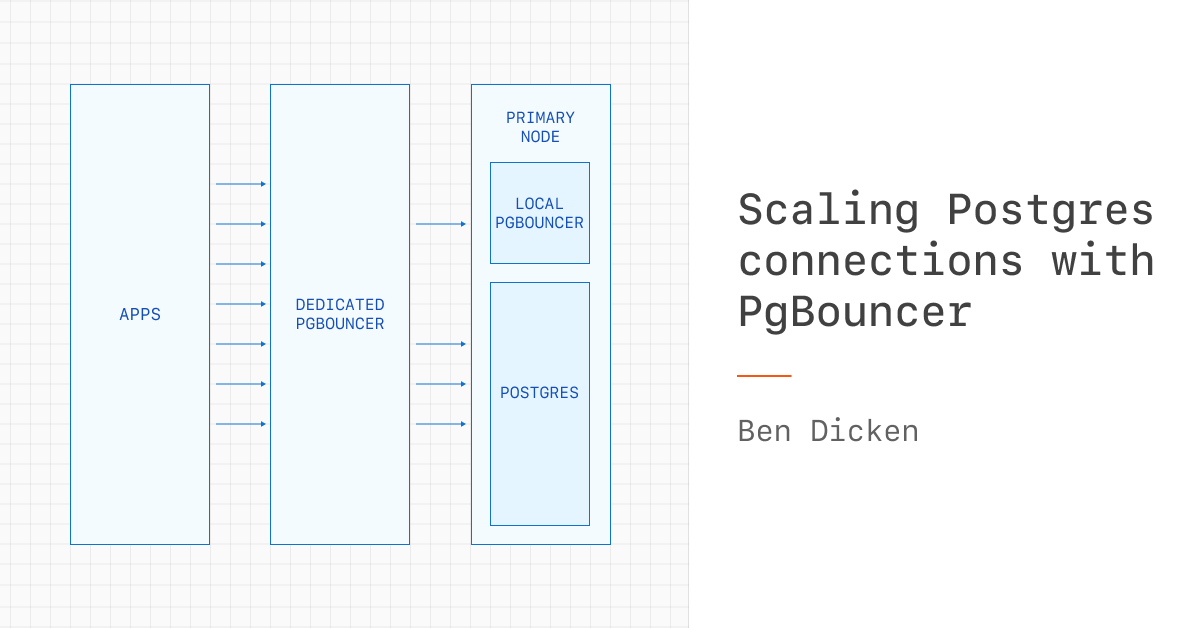
PgBouncer addresses this by maintaining a persistent pool of connections to PostgreSQL and serving client requests from this pool. When a client connects to PgBouncer, it gets a 'virtual' connection. PgBouncer then maps this virtual connection to a real backend connection to PostgreSQL only when needed, effectively amortizing the cost of connection establishment.