Press return to see results.
cmd / ctrl + k to open and close.
From the Front Line: Stalingrad–Treblinka–Berlin, 1941–1945 by Vasily Grossman translated from Russian by Robert Chandler and Elizabeth Chandler. NYRB Classics, 512 pages. 2026
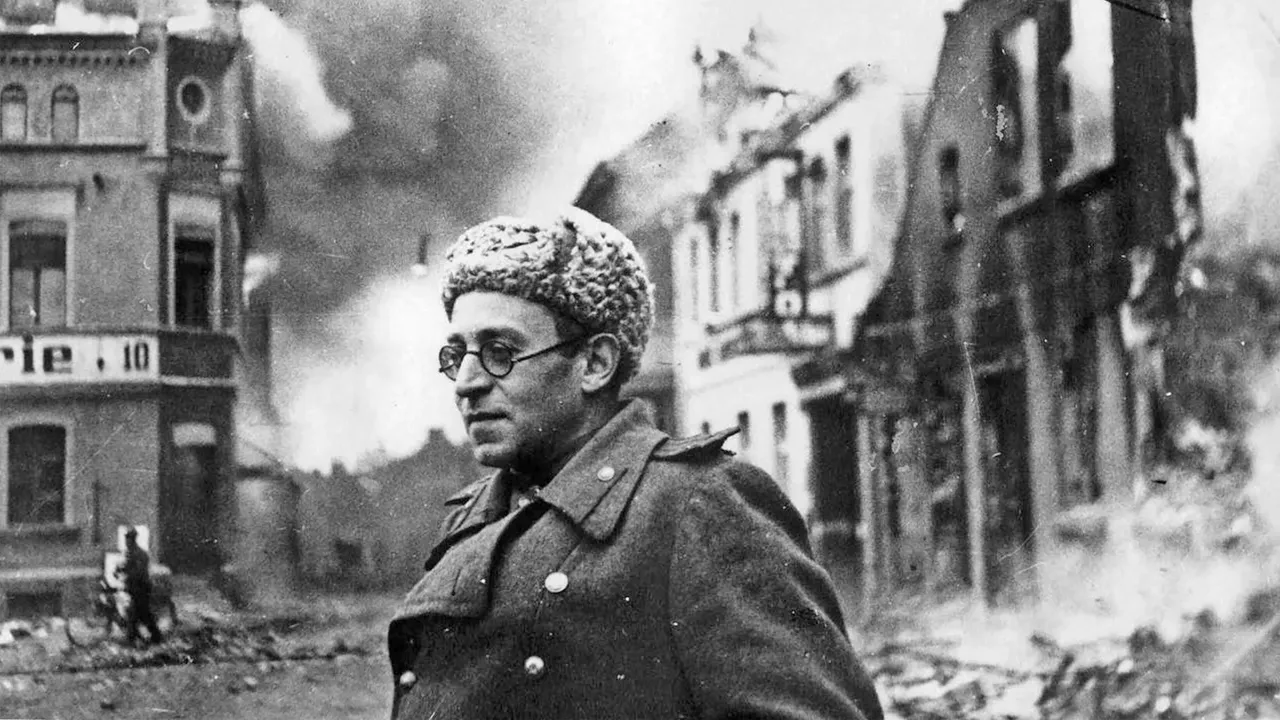
During the final days of World War II, Vasily Grossman entered Adolf Hitler’s office study in the New Reich Chancellery in Berlin. Designed by Albert Speer, the building was meant to be the executive center for the new German empire; Grossman noted that among the ruins of the office “the giant globe that had long stood beside [Hitler’s] desk” had been “flattened into a pancake” when the ceiling collapsed. The entrance hall to the New Reich Chancellery, fitting the megalomaniacal Nazi style, was a massive corridor stretching, Grossman estimated, “hundreds of meters long.” Here, Grossman observed “two young Red Army soldiers are trying to ride bicycles along it. They are not having much success, but this does not upset them.” To get to this point, Grossman had advanced more than fifteen hundred miles over the course of four years.
Grossman’s two major novels, Stalingrad and Life and Fate, form a mirrored portrayal of Soviet society and WWII. While they are connected novels, with overlapping characters and storylines and a common emphasis on the nature of shared sacrifice within the Soviet state, they have fundamentally different aesthetic and ideological approaches. Across dozens of characters, Stalingrad emphasizes the struggle of the Soviet people against the Nazis, but this struggle is given meaning and purpose as towards the development and preservation of the socialist project. Life and Fate, using the same characters, also emphasizes the struggle of the Soviet people, yet not just against the Nazis but also against the Soviet state itself, emphasizing how they are trapped in a dual war both outwardly and within as the socialist project breaks down into an ideological justification for power and authority.