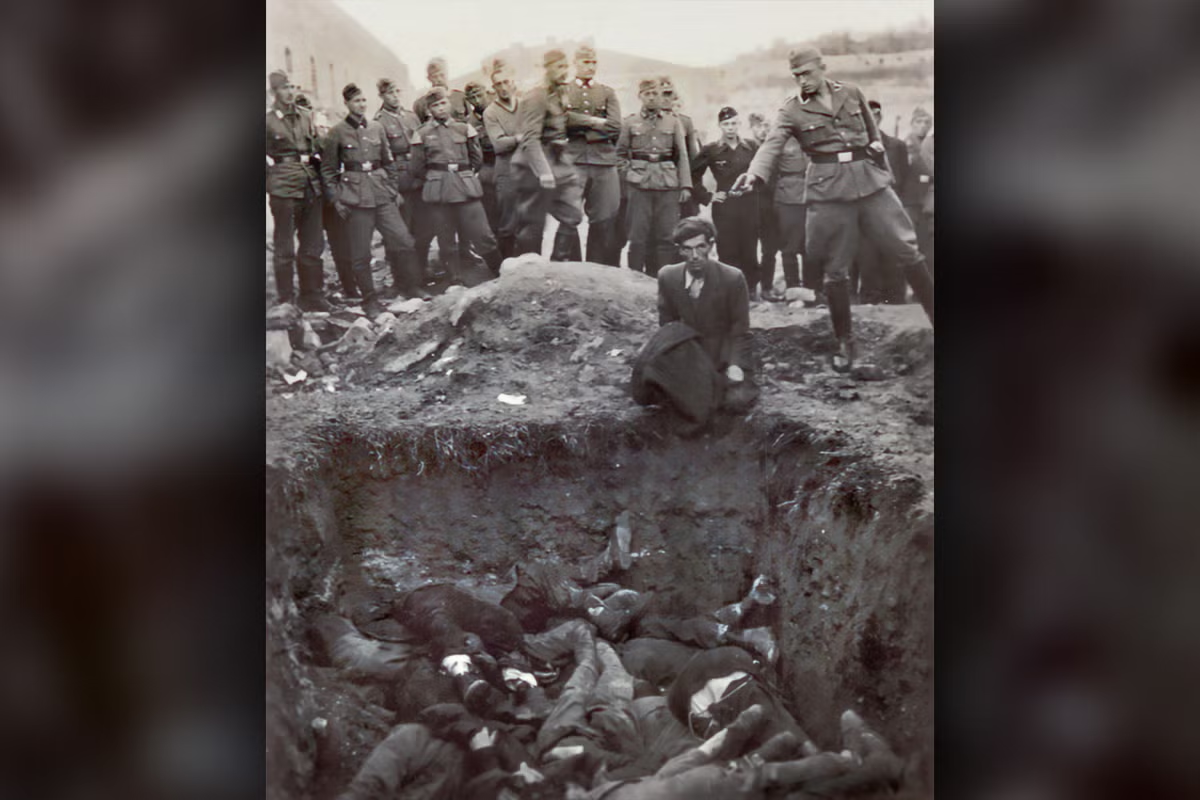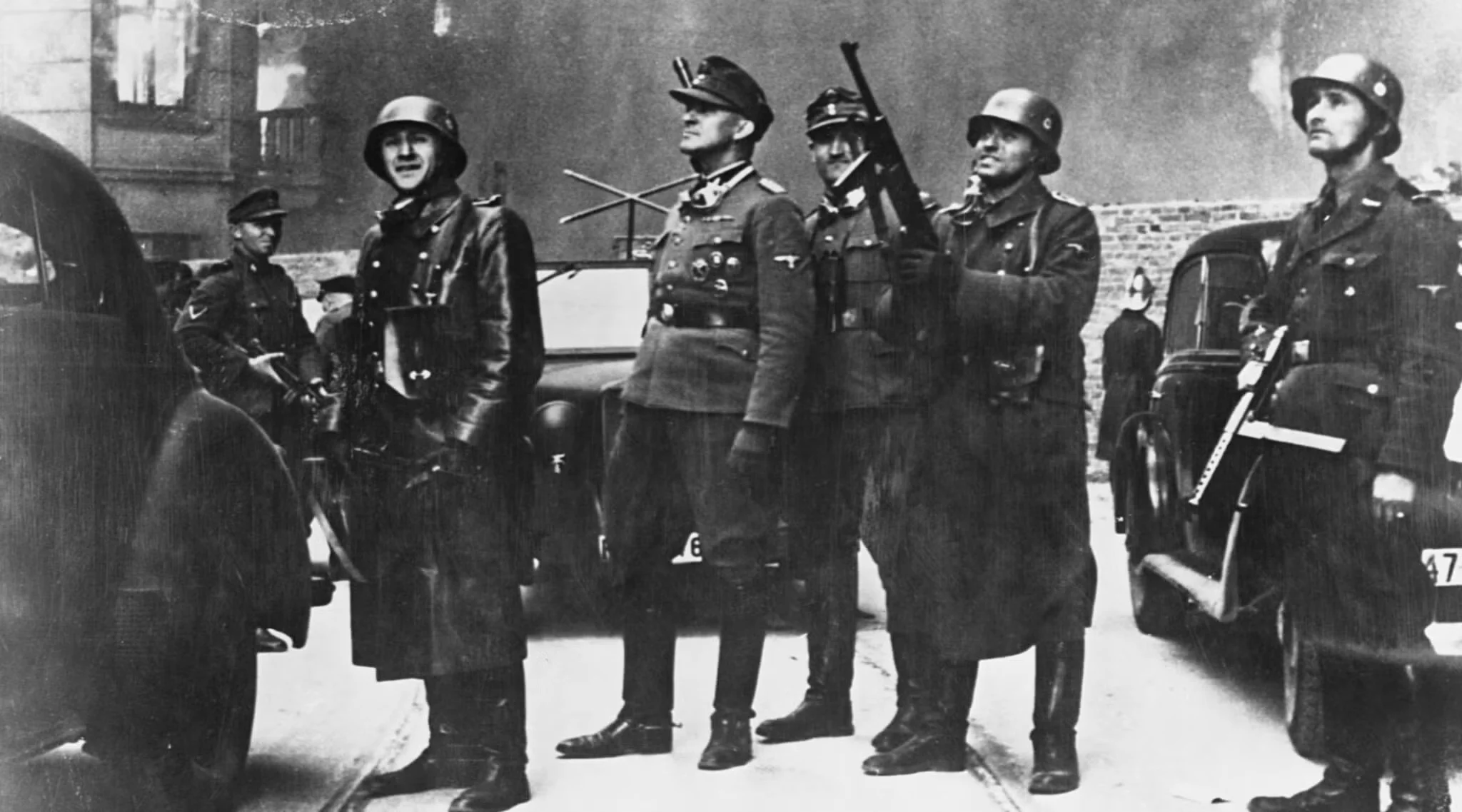
JTA — Jurgen Stroop, the Nazi commander who led the killing of more than 50,000 Jews, was sitting in a cell in Warsaw awaiting his own execution.
Before he met the gallows, Stroop described in unrepentant detail his ascent as a Nazi, his destruction of the Warsaw Ghetto and his daily prosecution of mass murder. He gave his account to Kazimierz Moczarski, the journalist, Polish resistance leader and veteran of the Warsaw Uprising who shared Stroop’s cell in Mokotów Prison for 255 days in 1949.
Though he is now remembered as a hero for fighting the Nazi occupation, Moczarski was villainized by Poland’s postwar Communist regime, which viewed his resistance group as a threat to their monopoly on power. His unlikely imprisonment alongside a former Nazi officer he’d once tried to assassinate gave Moczarski the chance to document Stroop’s confessions in an influential book, “Conversations with an Executioner.”
This book, despite being censored for years by the Polish government, proved revelatory about Stroop, the rise of Nazism and the psychology of genocide. After decades of being translated into over 15 languages and adapted for the stage and screen, “Conversations with an Executioner” was published Tuesday for the first time in a complete English translation by Steerforth, an imprint of Pushkin Press.