The Supreme Court's immigration rulings have largely allowed Trump to decide who can enter the United States and who must leave. The justices drew the line at ending birthright citizenship.Show Caption
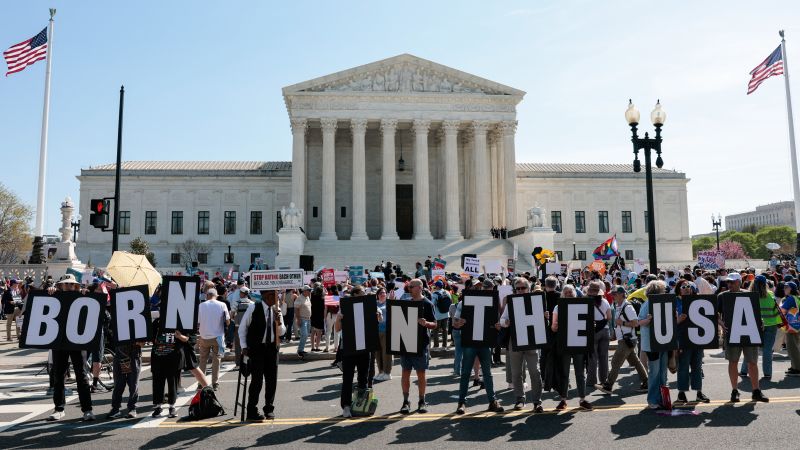
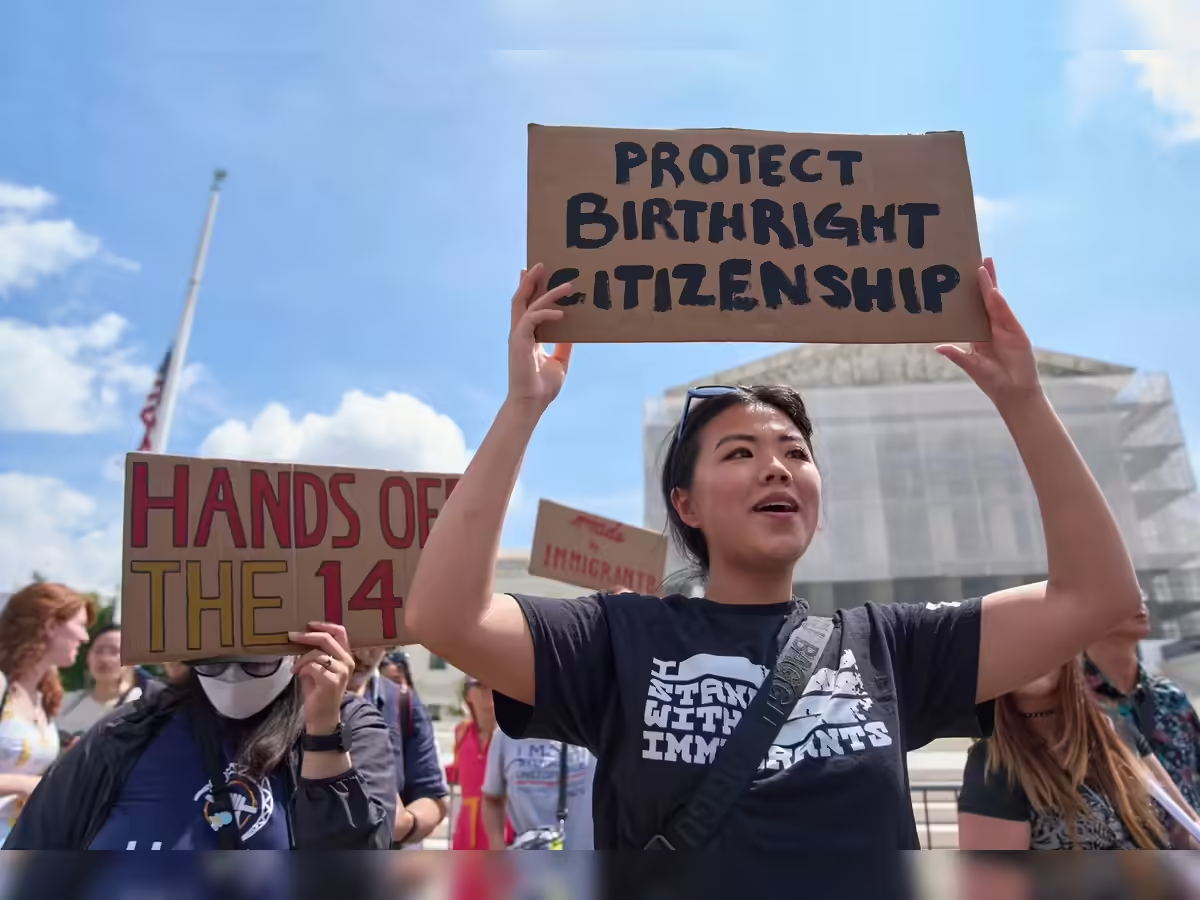
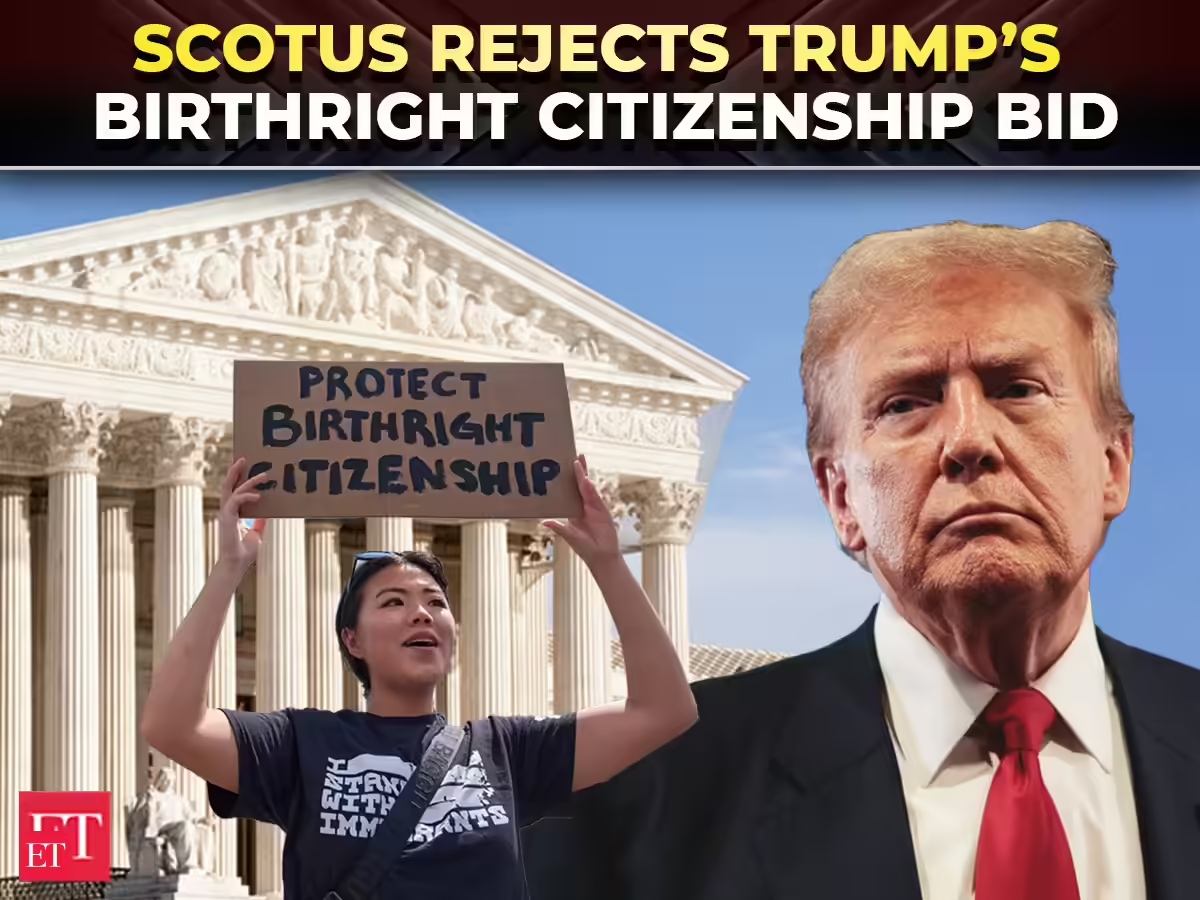
WASHINGTON – President Donald Trump lost at the Supreme Court on his top goal of restricting birthright citizenship, but he has cracked down on immigration through hundreds of policy changes that have affected millions of people – changes that have largely been supported by federal courts.Key decisions in the closing weeks of the Supreme Court’s term confirmed three Trump policies. One allowed him to end a humanitarian program for Haitians and Syrians living temporarily in the country. Another allowed him to turn away refugees seeking asylum at the border. A third allowed more scrutiny of green-card holders returning from abroad."The three rulings from the Supreme Court this week are all victories for enforcing our nation’s immigration laws," Homeland Security Secretary Markwayne Mullin said on social media June 25. "These decisions give us the tools we need to continue securing our nation."Courts have traditionally given presidential administrations of both parties wide discretion over immigration policy, according to immigration law experts.“I think that with these last decisions ruling in favor of the Trump administration on his immigration policies, it seems very clear that the court is going to give very wide and broad deference to the Trump administration’s mass deportation agenda," Nicole Hallett, a University of Chicago law professor and director of the Immigrants’ Rights Clinic, told USA TODAY.But immigration law experts said the Supreme Court's rejection of Trump's proposed restrictions on birthright citizenship outweighed the wins. Trump sought to limit the long-standing policy – ratified in the 14th Amendment in 1868 and upheld in a Supreme Court decision in 1898 – that everyone born in the United States is a citizen.“It doesn’t stack up against the other immigration cases. It was not a close case,” Amanda Frost, a University of Virginia law professor and director of the Immigration, Migration and Human Rights Program, told USA TODAY. "It’s basically that they lost the one that everyone thought they absolutely had no grounds to try to even bring.”Supreme Court removes judicial review of humanitarian programThe biggest immediate impact of the recent Supreme Court decisions hits immigrants who have work permits and protection from deportation under a program called Temporary Protected Status (TPS) because of dangerous conditions in their home countries.Justice Samuel Alito’s opinion June 25 for a 6-3 majority barred judicial review of administration actions governing the TPS program.The decision immediately put 350,000 Haitians and Syrians at risk of losing work permits and being deported if they don't have some other legal status that would allow them to stay. All told, the administration has proposed to end the protected status for 1.3 million people from a total of 13 countries.“All of those people now are at risk of deportation,” Stephen Yale-Loehr, a retired Cornell Law school professor, told USA TODAY. “That’s going to significantly enhance the Trump administration’s efforts to increase deportations and it’s going to significantly hurt companies that have relied on these individuals who had been working legally with work permits.”Court bars asylum claims before refugees enter USAlito wrote another decision June 25 for a 6-3 majority that allowed the administration to turn back refugees at the border. Refugees can apply for asylum once in the country, but the decision allowed the government to prevent their entry.“A guest does not arrive in a house when he knocks on the front door," Alito wrote.But critics of the decision noted it would spur refugees to try to enter the country illegally to pursue asylum claims. Justice Sonia Sotomayor wrote that “more people will die."Hallett called the combined decisions "catastrophic."“It’s essentially going to allow the Trump administration to close the southern border and effectively end the right to seek asylum,” Hallett said of the asylum decision. "There are going to be hundreds of thousands of people who lose their lawful immigration status," she added, about TPS.Justices approve scrutiny of green-card holders returning from abroadAnother recent case made it riskier for legal permanent residents, also known as green-card holders, to travel abroad.The case focused on Muk Choi Lau, a Chinese citizen and green-card holder, who was charged with selling nearly $300,000 in counterfeit shorts before returning from a 2012 trip. He was “paroled” into the country, which meant that he could enter but wasn’t considered formally admitted. Immigration officials began deportation proceedings after his guilty plea a year later.Justice Clarence Thomas wrote a decision for a 6-3 majority on June 23 that made it easier for immigration officials to deny reentry to green-card holders because Lau "had committed a crime involving moral turpitude before attempting to reenter the country."But Justice Ketanji Brown Jackson disagreed, writing that the court “handed the Government a massive blank check” to put lawful permanent residents in “immigration limbo.”Stakes highest in birthright citizenship caseTrump signaled his priority of limiting birthright citizenship by signing an executive order on the first day of his second term. He underlined his interest by becoming the first sitting president to attend a Supreme Court argument when the justices heard the birthright case this spring.Trump argued that the amendment was intended for the children of slaves and not tourists or undocumented immigrants.But the 14th Amendment says: "All persons born or naturalized in the United States, and subject to the jurisdiction thereof, are citizens of the United States and of the State wherein they reside." The phrase "subject to the jurisdiction thereof" has traditionally excluded children born to foreign diplomats."Citizenship, then and now, was the right to have rights – to freely participate in our political community," Chief Justice John Roberts wrote for a 5-4 majority. "The Framers of the Fourteenth Amendment extended that promise to 'every free-born person in this land.'"Cesar Hernandez, an immigration law professor at the Ohio State University, said it is important to distinguish the birthright case as a citizenship law rather than an immigration law.“That distinction matters because birthright citizenship is ultimately not about how the U.S. government treats foreigners. It is instead about how the U.S. government treats U.S. citizens,” Hernandez told USA TODAY. “The Trump administration’s chosen policy threatens to turn U.S. citizens into foreigners through the stroke of a pen."Court declines to block Trump crackdown through emergency docketThe Supreme Court has sided with Trump in a number of emergency appeals, although those are early decisions in cases that haven’t been fully argued yet. The emergency docket, nicknamed the shadow docket, offers a venue for a quick answer about whether the government can continue a policy while a challenge is litigated.About one-third of the 37 emergency applications during Trump's second term through June 25 involved immigration issues, according to tracking by Ballotpedia.org.Even before the TPS decision June 25, the high court earlier allowed the administration in October to move forward with plans to end deportation protections for more than 300,000 Venezuelans in the program. The cases covering Haitians and Syrians fully fleshed out the court’s position on TPS.Another challenge to Trump policies focused on deportations to countries where migrants had never been, such as South Sudan or Libya. The Supreme Court paused a lower court’s block on the removals while the case is litigated."Fire up the deportation planes," the Department of Homeland Security said on social media after the mid-2025 ruling.Trump sending National Guard to Chicago was temporarily blockedAnother emergency case focused on Trump's deployment of National Guard troops to assist immigration enforcement.In October 2025, Trump federalized the National Guard in Texas and Illinois, and sent troops to Chicago to assist immigration enforcement. As Illinois fought back, a federal judge blocked the move. The 7th U.S. Circuit Court of Appeals ruled that Trump could federalize the troops but not deploy them.The Supreme Court denied a government request to lift the block in December, in a rare setback for Trump.Challenges to Trump's invocation of Alien Enemies Act continue to roil lower courtsTrump invoked the 1798 Alien Enemies Act to speed the deportation of Venezuelans he accused of being members of the crime gang Tren de Aragua, which he labeled a terrorist organization. But he faced legal challenges almost immediately.Three cases reached the Supreme Court under emergency requests to halt deportation flights. The high court temporarily blocked the flights in May 2025 while the cases are litigated. But the court also said the people facing deportation must pursue their cases individually where they are being held, under what are called habeas petitions, rather than collectively, under what is called a class action.Kilmar Abrego Garcia, a Salvadoran man who unlawfully entered the country in 2011, has become a symbol of the resistance to Trump’s immigration crackdown. He was mistakenly sent to his home country – despite having an immigration court order allowing him to stay – before he was returned.Federal authorities continue to pursue criminal charges against Abrego as an alleged member of the crime gang MS-13 – which he denies – and for his removal. A federal judge in Tennessee dismissed criminal charges of human smuggling against Abrego in May as the result of a "vindictive" prosecution. The Justice Department has appealed.Court upholds immigration checks nicknamed 'Kavanaugh stops'One of the most contentious among the emergency decisions approved is what became known as “Kavanaugh stops.”After Immigration and Customs Enforcement raids in Los Angeles, several people filed a lawsuit in July 2025 alleging authorities questioned them without justification.The Supreme Court lifted a block that a lower court placed on the stops. As part of a 6-3 majority, Justice Brett Kavanaugh wrote that immigration officers make brief investigative stops to question the immigration status of people waiting for day jobs; people who work in construction, landscaping or agriculture that often don’t require paperwork; or people who don’t speak English.Kavanaugh wrote that “the questioning in those circumstances is typically brief, and those individuals may promptly go free after making clear to the immigration officers that they are U.S. citizens or otherwise legally in the United States.”But Sotomayor called the decision a “grave misuse of our emergency docket.” She wrote that the lower court found the stops likely violated the Fourth Amendment’s requirement for a reasonable suspicion to stop someone and should be discontinued while the court considered the “troubling allegations.”Deference leaves immigration policy in hands of White House or CongressThe court decisions since Trump's election have shone a spotlight on an immigration system that many on all sides of the debate call broken and Trump's extensive use of executive power to close America's southern border.Yale-Loehr, the retired Cornell professor, said the Trump administration changed more than 700 immigration policies with a “striking” scope.“The lower courts have been much more vigorous in rejecting some of Trump’s immigration policies,” Yale-Loehr said. “But when those cases have percolated up to the Supreme Court, the Supreme Court has often overturned those lower-court decisions and allowed the policies to go ahead in restricting immigration.”After the recent Supreme Court victories, the White House promoted 60 policies as part of Trump’s crackdown on illegal immigration.Legal experts say the court rulings highlight how the Trump administration changed policies in the absence of Congress updating immigration law. Work-permit levels for TPS were set in 1990 and the complex method for determining whether someone qualifies for asylum was codified in 1996.“We desperately need Congress to step in and legislate in this area and try to fix this broken system,” Hallett said.That was also Trump's takeaway after the June 30 birthright decision. He urged Congress to pass legislation adopting his proposed citizenship restrictions, after Justice Brett Kavanaugh wrote that the Constitution would not stand in the way.Kavanaugh was part of a 6-3 majority that overturned Trump's executive order restricting citizenship but not part of the 5-4 majority that said the 14th Amendment ensured citizenship for everyone born in the country.“No long and unwieldy Constitutional Amendment is necessary!” Trump wrote on social media. “Congress should start TODAY to work on ending expensive and unfair to our Country, Birthright Citizenship.”