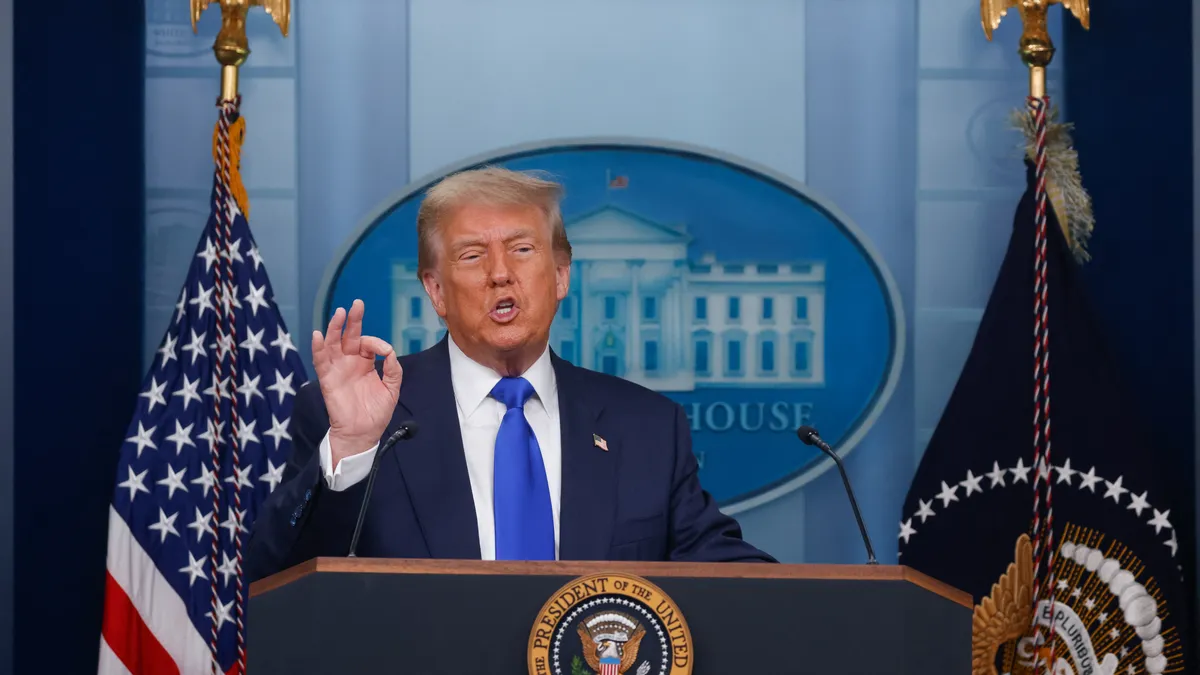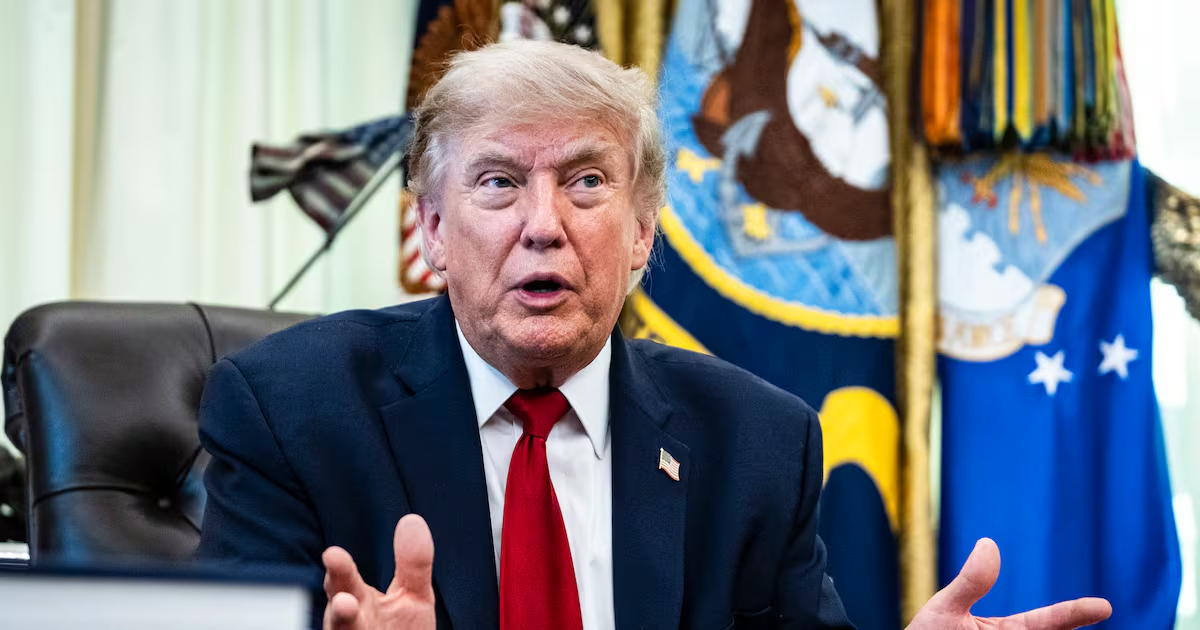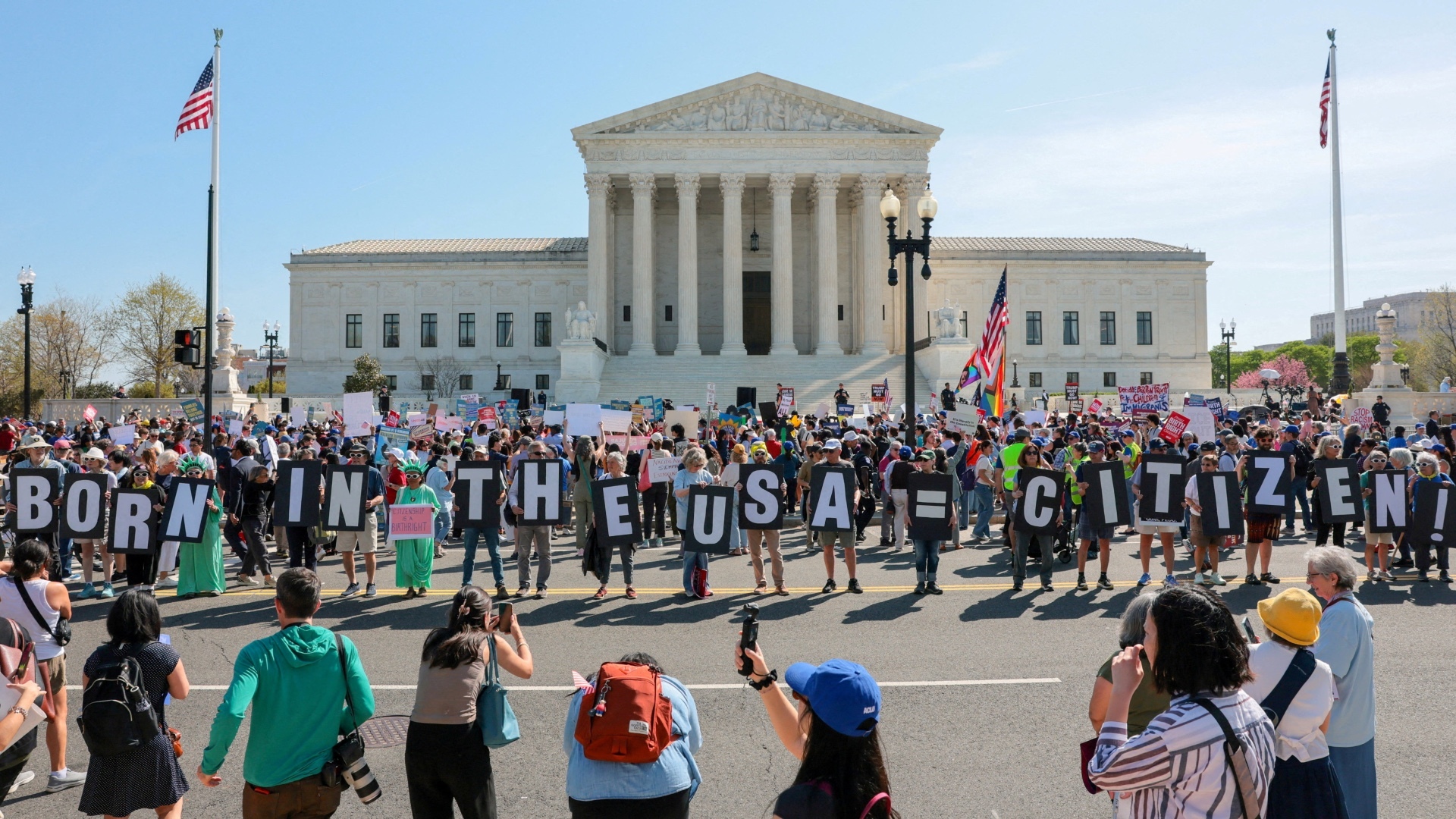
The U.S. Supreme Court denied an executive order by Donald Trump that going forward would have limited who can be considered an American citizen.Limiting birthright citizenship was one of the top priorities in the Republican president's crackdown on immigration — so much so that he signed the executive order immediately after returning to the Oval Office in January 2025 for his second term. But Tuesday's Supreme Court decision was a rare legal setback from the justices for Trump, who otherwise has radically transformed the immigration and asylum stance of the U.S. government in the past 18 months. Trump promised dramatic changes on the 2024 presidential campaign, during which he stated that migrants were "poisoning the blood of our country."The changes have occurred at a rapid pace and can be hard to track. Here's a look at some of the major developments, which analysts say are already impacting U.S. demographics. Residents who escaped war, disaster may have to returnThe Trump administration essentially prevailed in a trio of other Supreme Court rulings in June. The top court ruled that the government can end Temporary Protected Status (TPS) protections for Haitians and Syrians who came to the U.S. as a result of war-like conditions or destructive natural disasters.The decision specifically impacts more than 356,000 residents who have been in the U.S. for years and who could be compelled to go back to two countries that the State Department warns against travelling to, given their unstable and dangerous conditions. Overall, there are some 1.3 million immigrants, from 17 countries, legally in the U.S. through the TPS program.A woman gets emotional during a June 25 rally in New York City with immigration advocates, on the day of the U.S. Supreme Court ruling allowing the Trump administration to strip Temporary Protected Status protections from hundreds of thousands of Haitian and Syrian migrants. (Eduardo Munoz/Reuters)The Supreme Court also sided with the Trump administration on "metering." The metering policy allowed U.S. immigration officials to stop asylum seekers before they reach the southern border. While president Barack Obama's administration initiated the policy to deal with a specific surge, the two Trump presidential administrations have expanded the policy, whereby U.S. officials can indefinitely decline to process asylum claims. The court also expanded the ability of border officials to detain permanent residents and green card holders suspected of crimes, but not yet convicted, when they return to the U.S. from travel abroad."In most cases, the Supreme Court has been a rubber stamp for Trump's mass deportation agenda," Elora Mukherjee, director of the Immigrants' Rights Clinic at Columbia Law School in New York, told Reuters last week. U.S. Supreme Court denies Trump's bid to end birthright citizenshipSupreme Court says Trump administration can end legal protections for many U.S. residents from Haiti, SyriaTwo unsigned orders from the top court last year have also been impactful. As the administration began a more expansive deportation campaign compared to previous Democratic and Republican administrations, the Supreme Court made it easier for the government to send deportees to countries not of their origin, a result contrary to the principle of non-refoulement that past administrations had respected. And in an order that pro-immigration activists derisively refer to as "Kavanaugh stops," Justice Brett Kavanaugh wrote last September that Immigrations and Customs (ICE) agents can consider — though not solely — "apparent ethnicity" as a "relevant factor" when approaching or interviewing persons regarding their legal status.What's winding through the courtsA separate, sweeping executive order from the metering decision, which would have effectively denied entry to nearly all asylum seekers at the southern border, was rejected 2-1 in April by a panel from the U.S. Court of Appeals in D.C. Trump sought the shutdown based on his claims of an "invasion" at the border.With respect to foreign-born workers in the U.S., Trump last year proposed a new fee for H-1B work visas of $100,000 US. A federal judge in June struck down the fee adjustment — applicants typically have paid no more than $5,000 — saying it required congressional approval.WATCH | A rare defeat for Trump at the Supreme Court:U.S. Supreme Court strikes down Trump’s executive order on birthright citizenshipJune 30|Duration 2:39The Supreme Court in the United States ruled against Donald Trump's executive order limiting birthright citizenship on Tuesday, in a highly anticipated decision that confirms a lower court finding. Trump's executive order would have denied citizenship to those born to parents who are in the U.S. without authorization, or whose presence is lawful but temporary, such as being in the country on a work or student visa.Weeks earlier, U.S. Citizenship and Immigration Services said foreigners who are in the U.S. temporarily and who want to apply to become lawful permanent residents, or green card holders, must return home and apply there, except in "extraordinary circumstances." It was viewed as a dramatic change, as it is estimated that hundreds of thousands apply for green cards from within the U.S. The agency appears to have backtracked after an outcry, saying determinations will be made on a "case-by-case basis."Trump administration tells green card applicants to apply from abroadIn June, a federal judge ruled that Trump administration policies that have barred people from 39 countries from receiving decisions on applications for asylum, work permits, green cards and citizenship was unlawful. The list of countries was expanded from an initial list of 19 proposed by the government, and is comprised of African, Asian, Latin American and Middle Eastern countries.The administration could choose to abandon one or more of these issues, while others could eventually reach the Supreme Court for resolution.'America's doors are fully closed'After the Haiti decision last week, White House adviser Stephen Miller declared, "America's doors are fully closed to asylum seekers … If you want asylum, we'll find another country to take you."While the administration and MAGA-aligned websites have highlighted incidents of violent crime committed by those not born in the U.S., TPS recipients have to periodically re-register, ostensibly receiving background checks.Stephen Miller, White House deputy chief of staff for policy, speaks with reporters at the White House on June 26, after the administration prevailed in Supreme Court cases concerning metering and the Temporary Protected Status program. (Jacquelyn Martin/The Associated Press)The governor of Ohio, where many of the Haitians have resided and worked, said any large-scale repatriation could negatively impact the state's economy.Department of Homeland Security Secretary Markwayne Mullin told CNN on Sunday that TPS recipients should "fill out the paperwork and be here under a permanent status, or we’ll help you get back to your country."Pope Leo, Catholic bishops come out against 'vilification' of immigrants in U.S.While TPS recipients can apply for permanent residency, or be sponsored by employers, it's open to question how those applications would be assessed, given Trump and his administration have been accused, even by a federal judge, of "racial animus" in communications concerning Haitians in the U.S. As well, since last year, messaging from agencies in the administration has encouraged those without status to self-deport. The U.S. has, by some estimates, 14 million people in the country without legal status, including many adults who crossed into the U.S. as minors while accompanying parents or relatives.LISTEN | Atlantic reporter Michael Scherer on Stephen Miller's impact on U.S. policy:Front Burner36:50Stephen Miller: ICE’s ideologue-in-chiefPopulation growth slowsThe Census Bureau reported that U.S. population growth last year was at one of its lowest levels in recent memory, aside from the early stages of the COVID-19 pandemic, owing largely to a historic decline in net international migration. Growth was measured at 0.5 per cent, compared to just under one per cent the previous year, and is projected to be just 0.2 per cent for 2026. For most of the century, U.S. population growth per year has been around 0.8 per cent.WATCH | Trump's deportation efforts have sparked an industry:The companies making big money off Trump’s immigration crackdownJune 7|Duration 9:09A growing network of U.S. companies are getting billions from the Trump administration to carry out its immigration crackdown. For The National, CBC’s Jonathan Montpetit breaks down how ICE detention turned into a big money business, and what it means for the people who find themselves locked up.The refugee system has been throttled since 2025, when fewer than 12,000 refugees were granted admission to the U.S., a drop of 89 per cent from the previous year. During the 1990s, the U.S. regularly took in more than 100,000 refugees a year.In recent months, the U.S. has denied nearly all asylum claims, aside from white applicants from South Africa. U.S. allows nearly 4,500 South African refugees since October — and only 3 from elsewhereThe non-profit, non-partisan National Foundation for American Policy has estimated that over a four-year term, the Trump administration could reduce legal immigration by an estimated 33 to 50 per cent, or 1.5 million to 2.4 million legal immigrantsThe liberal think-tank Brookings Institution has argued that the drop in immigration, combined with demographic shifts and lower birth rates, could negatively impact GDP growth in the U.S.What's not yet clear is the extent to which the shift in approach from the U.S. will impact Canada's immigration and refugee system. Some are predicting, for example, that last week's TPS decision could see more Haitians apply for entry in Canada.
Trump may scorn Supreme Court ruling, but he's radically transformed U.S. immigration system | CBC News
The U.S. Supreme Court denied Donald Trump's executive order that going forward would have limited who can be considered an American citizen. But otherwise, the president has succeeded in radically transforming the U.S. approach to immigration and asylum in just 18 months in office.
1,532 words~7 min read