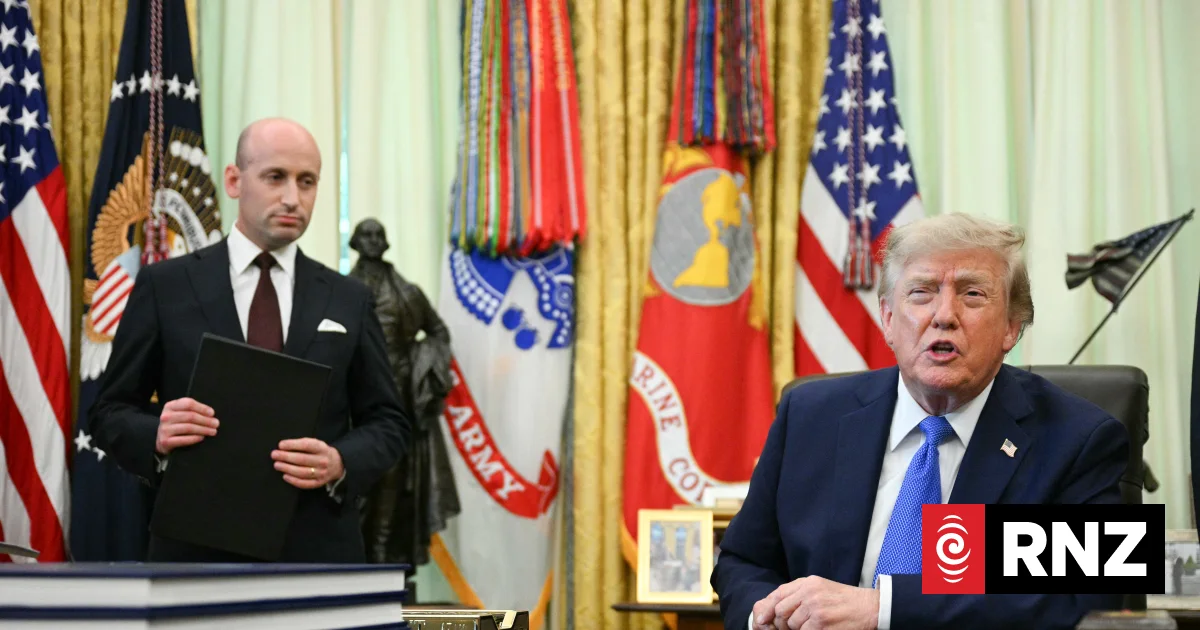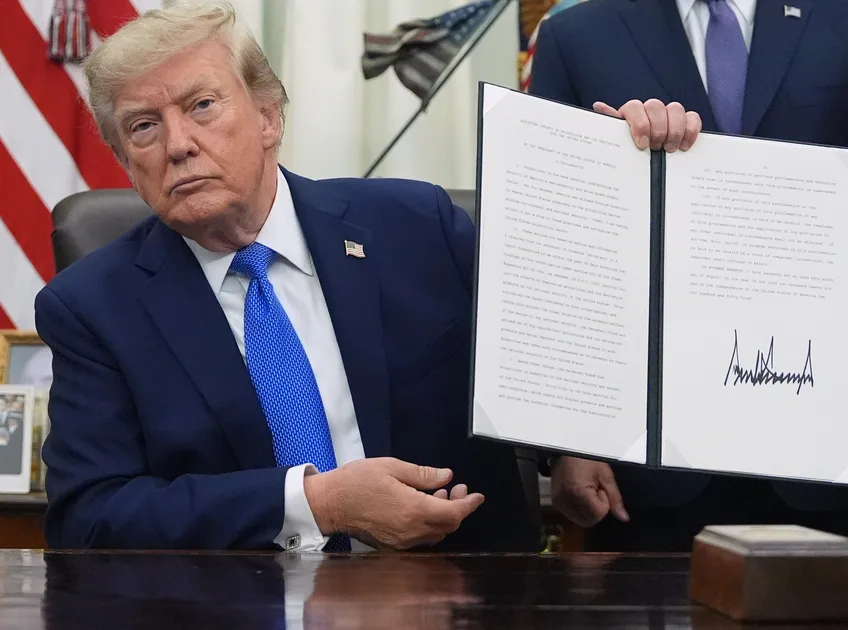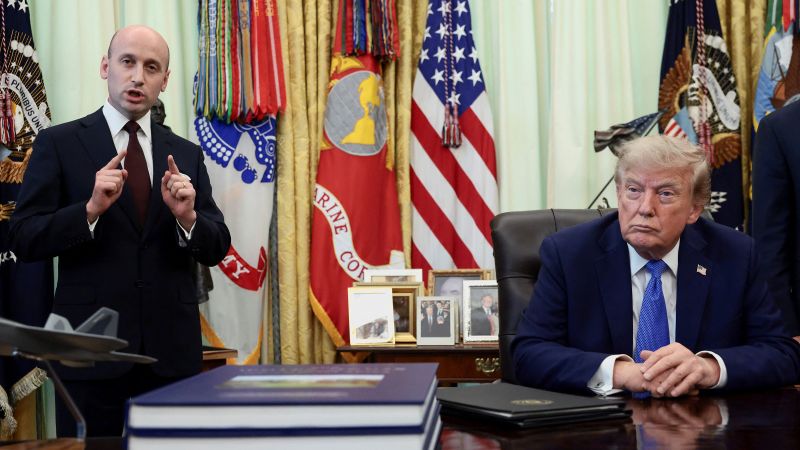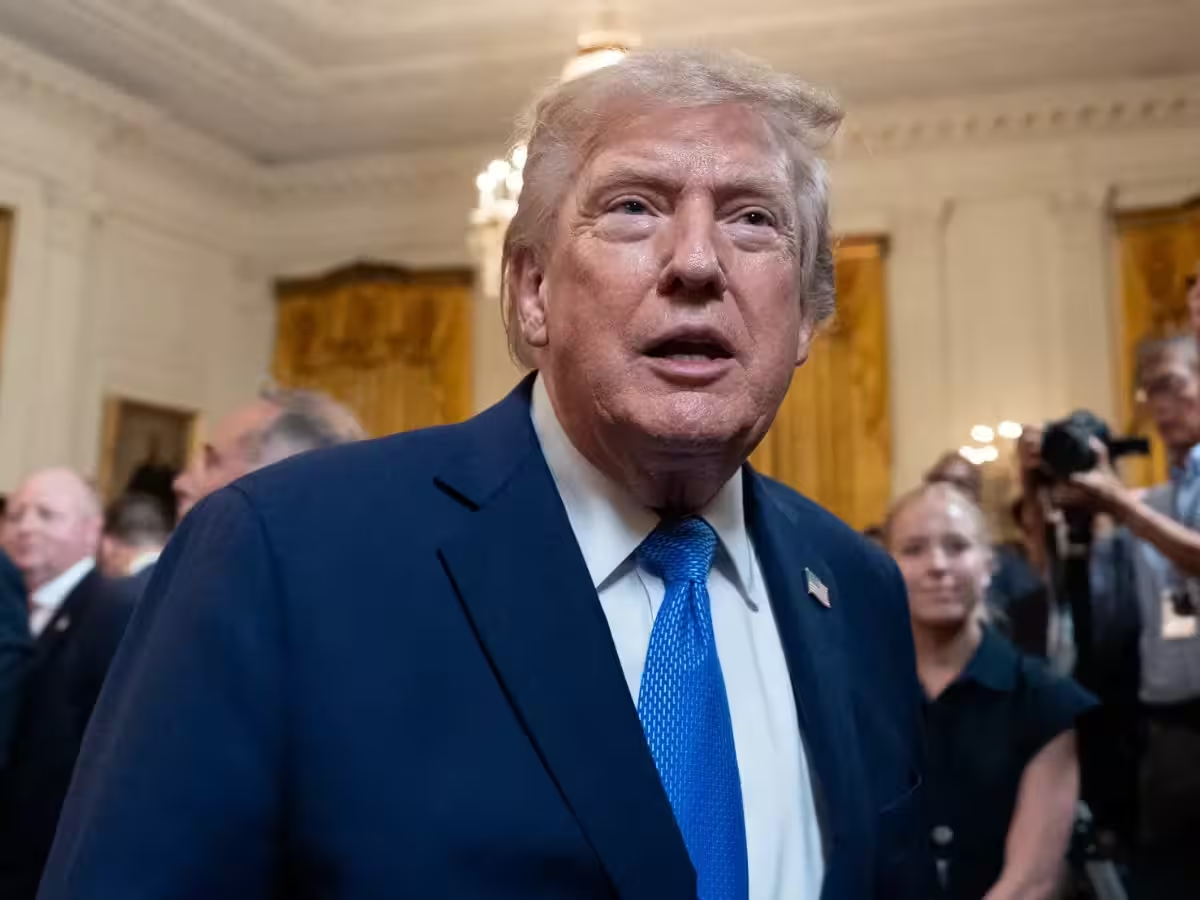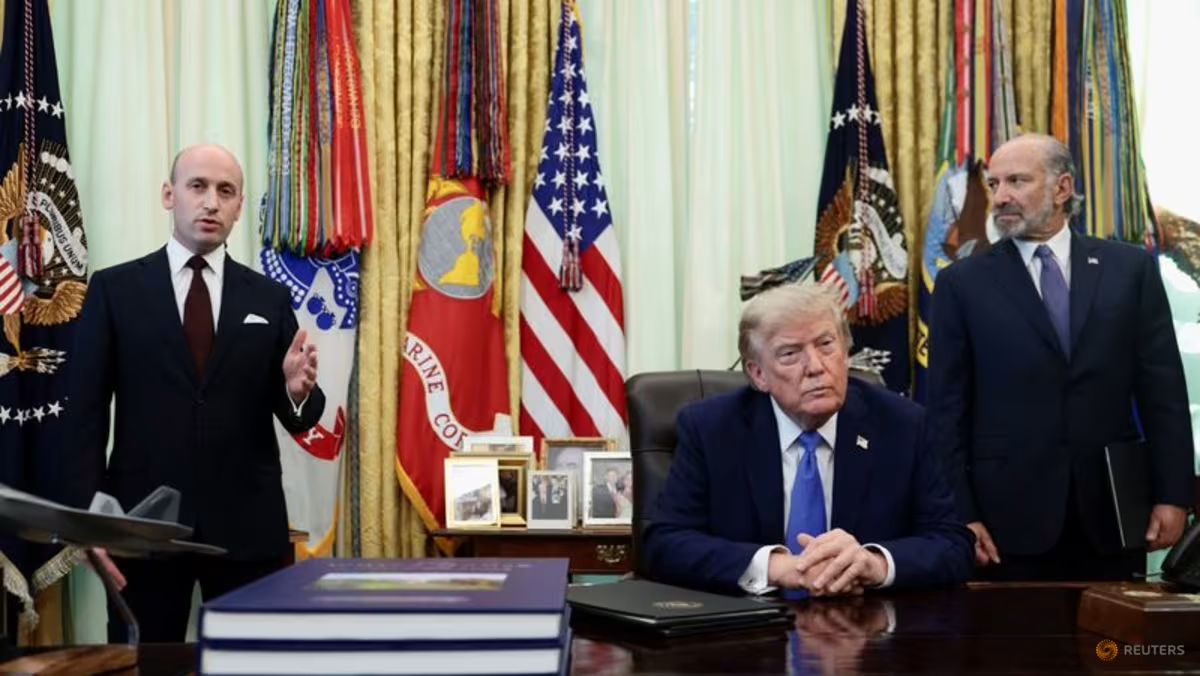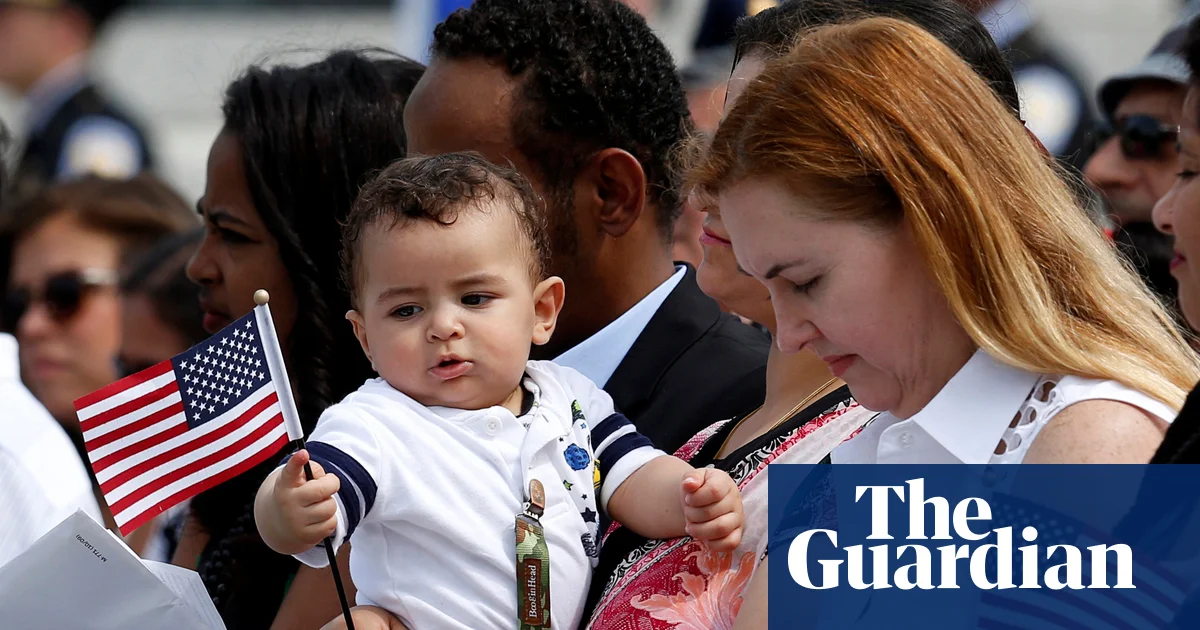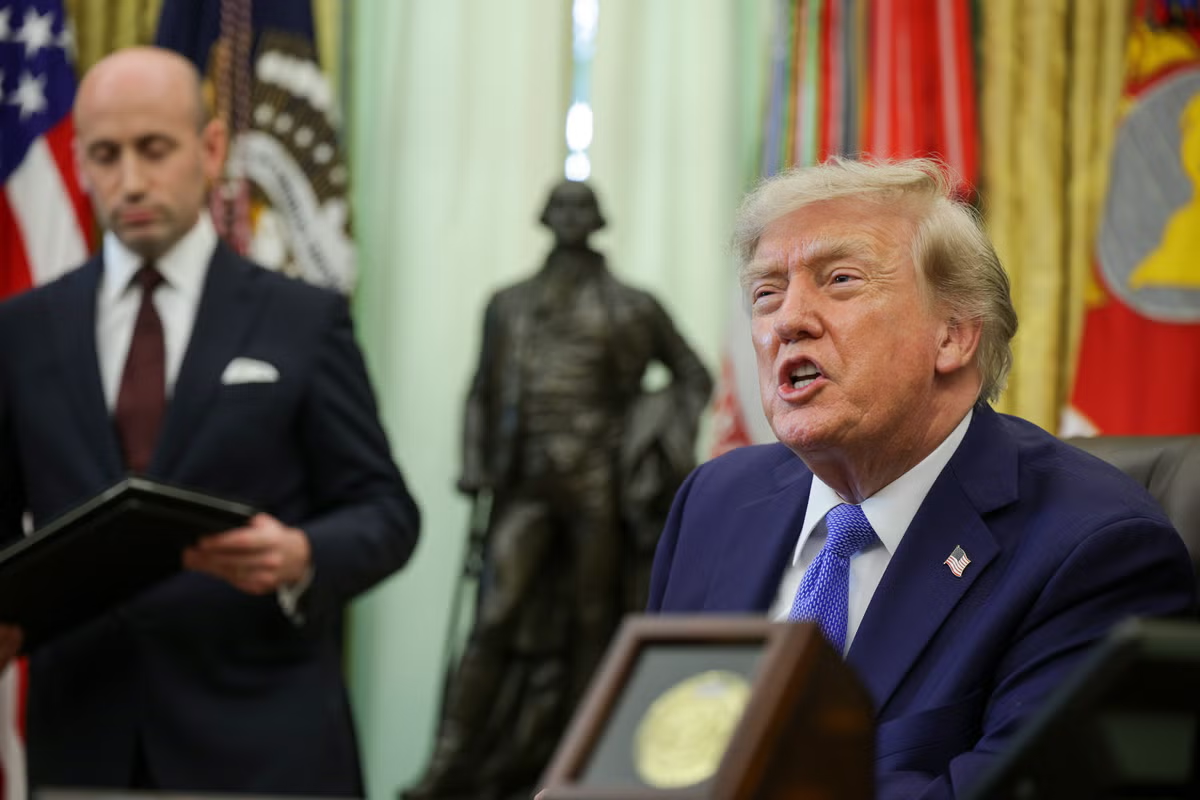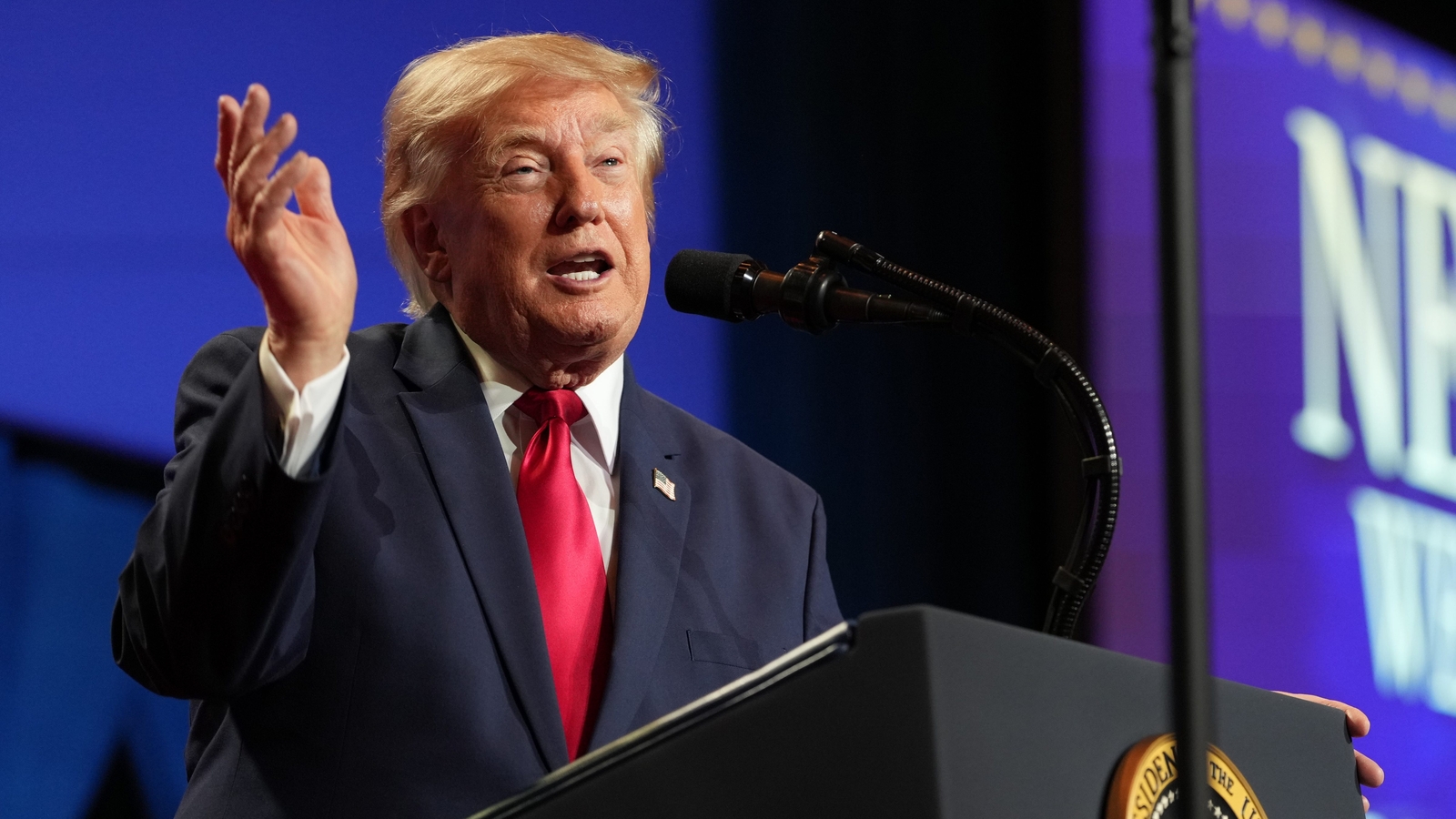
Almost a month after the US Supreme Court thwarted Donald Trump's effort to terminate birthright citizenship via an executive order, the US President is making another attempt—this time through two more focused executive actions aimed at addressing "birth tourism" and broadening the categories of people whose US-born children might be refused citizenship documentation.Trump's recent executive orders on birthright citizenship focus on addressing birth tourism and modifying citizenship documentation. (AP)Trump's new executive order sparks discussionThe recent action has sparked a constitutional discussion regarding the extent of the Fourteenth Amendment, as immigration attorneys contend that the new directives are expected to encounter legal opposition. This is what Trump has declared, its significance, and the potential implications for immigrants.The administration aims to restrict foreign nationals from entering the US mainly for the purpose of giving birth, thereby ensuring that their child automatically receives US citizenship.The directive instructs officials to enhance visa examination, refuse entry to people suspected of being "birth tourists," and implement enforcement measures, which may include visa cancellations in certain situations. Officials from the administration contend that acquiring a visa under false pretenses regarding the true intent of travel amounts to fraud.Also Read: US' new visa bond rule mandates payments of up to $20,000 for 50 countries. Is India on the list?Implications of Trump's new directiveIf US authorities suspect that the couple traveled to the US specifically to give birth (a practice referred to as "birth tourism"), they may: revoke or annul their visas, refuse them entry, and attempt to withhold citizenship documents for the child in situations involving a commercial birth-tourism arrangement.The recent executive orders do not aim at regular workers, students, or tourists who legally have children while residing in the US. Instead, they concentrate on specific categories such as commercial birth tourism, personnel from foreign governments, suspected foreign agents, terrorist organizations, and other similar exceptions.If a diplomat from a foreign nation is assigned to Washington, DC, and has a child there, the current legislation states that the child does not automatically acquire US citizenship, as children born to accredited foreign diplomats have historically been exempt from birthright citizenship.This exemption continues to be upheld under Trump's order and is reaffirmed as one of the classifications not eligible for automatic citizenship.The second directive seeks to restrict citizenship documentation for children born in the US if their parents belong to specific categories outlined by the administration.These categories encompass children born to parents who are purported to have entered the US via commercial birth tourism schemes, certain employees or diplomats of foreign governments, individuals classified as foreign terrorists or “alien enemies” and some persons advocating for foreign governments, as interpreted by the administration.What is the importance of Trump's new order?This action follows the US Supreme Court's dismissal of Trump's extensive executive order regarding birthright citizenship just over a month ago.In its ruling on June 30, the Court upheld the traditional interpretation of the Fourteenth Amendment, which states that almost all individuals born in the United States are automatically granted US citizenship, with only a few specific exceptions, such as the offspring of foreign diplomats.Instead of attempting to directly challenge that ruling, the administration claims that the recent orders are "adjustments" that concentrate on historical exceptions and visa fraud rather than imposing a comprehensive ban.Legal experts express concernsSeveral immigration attorneys contend that the administration lacks the authority to limit constitutional citizenship via executive measures."Trump's new EO on birthright citizenship is also blatantly unconstitutional when it precludes citizenship if the parents of the person engages in a commercial transaction to ensure that the person's mother is present in the United States, or a territory of the United States to give birth," Cyrus Mehta, a New York-based Immigration lawyer wrote on X."The meaning of commercial transaction is too vague and violates the 14th Amendment. It should be struck down," he added.The Migration Policy Institute reports that the broadest census-based estimate states that between 22,000 and 26,000 babies are born annually in the United States as a result of birth tourism. However, government statistics reveal that there were only 9,600 births recorded to mothers with foreign addresses in 2024.In a statement, the American Civil Liberties Union remarked that the US Supreme Court has already ruled on this matter, saying that the birthright citizenship is enshrined in the Constitution. Any executive order attempting to undermine birthright citizenship will face the same outcome as Trump's previous order, stated the Union.Will Trump's new orders encounter legal challenges?It is highly probable as several legal experts anticipate lawsuits claiming that the executive orders infringe upon the Fourteenth Amendment.According to a Reuters report, immigration advocates and constitutional scholars assert that the administration is trying to restrict citizenship via executive action, despite the recent ruling by the Supreme Court, thus making further litigation very likely.What implications does Trump's directive hold for immigrants?Currently, birthright citizenship in the US remains unchanged.The ruling from the Supreme Court in June continues to be the prevailing law. The recent executive orders are anticipated to undergo prompt legal examination, and any efforts to revoke citizenship based on the new regulations would probably be contested in federal courts prior to extensive enforcement.The ACLU stated that the Supreme Court has already resolved the constitutional issue, and any forthcoming executive order aimed at limiting birthright citizenship is expected to encounter the same legal challenges as Trump's earlier directive.
Trump targets birthright citizenship with new executive move: Why is this crucial and will it survive? Experts weigh in
The US Supreme Court ruling on birthright citizenship remains intact after Donald Trump's latest executive orders targeting birth tourism.
886 words~4 min read