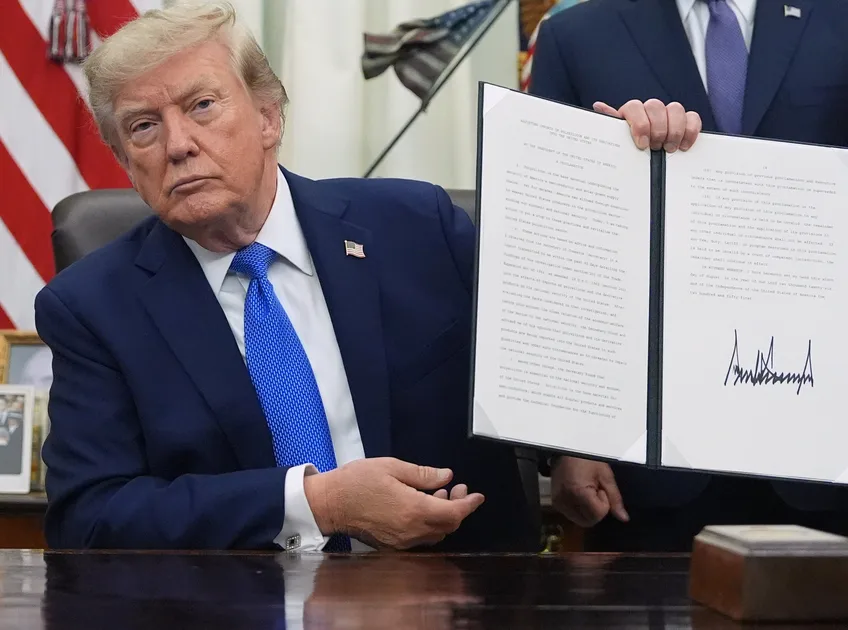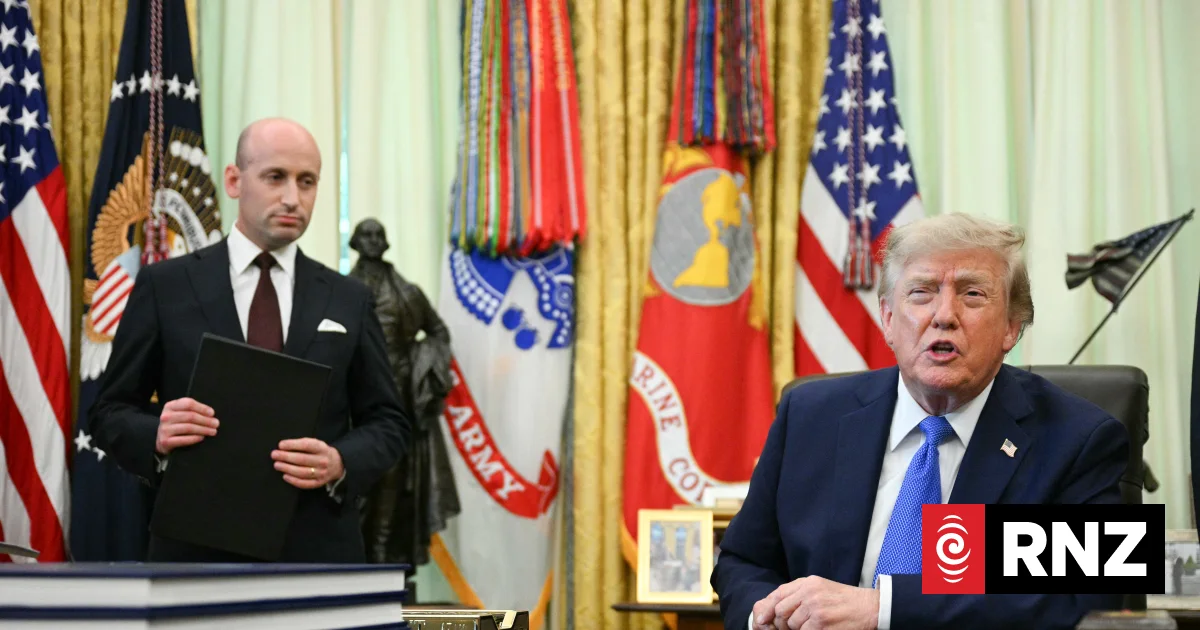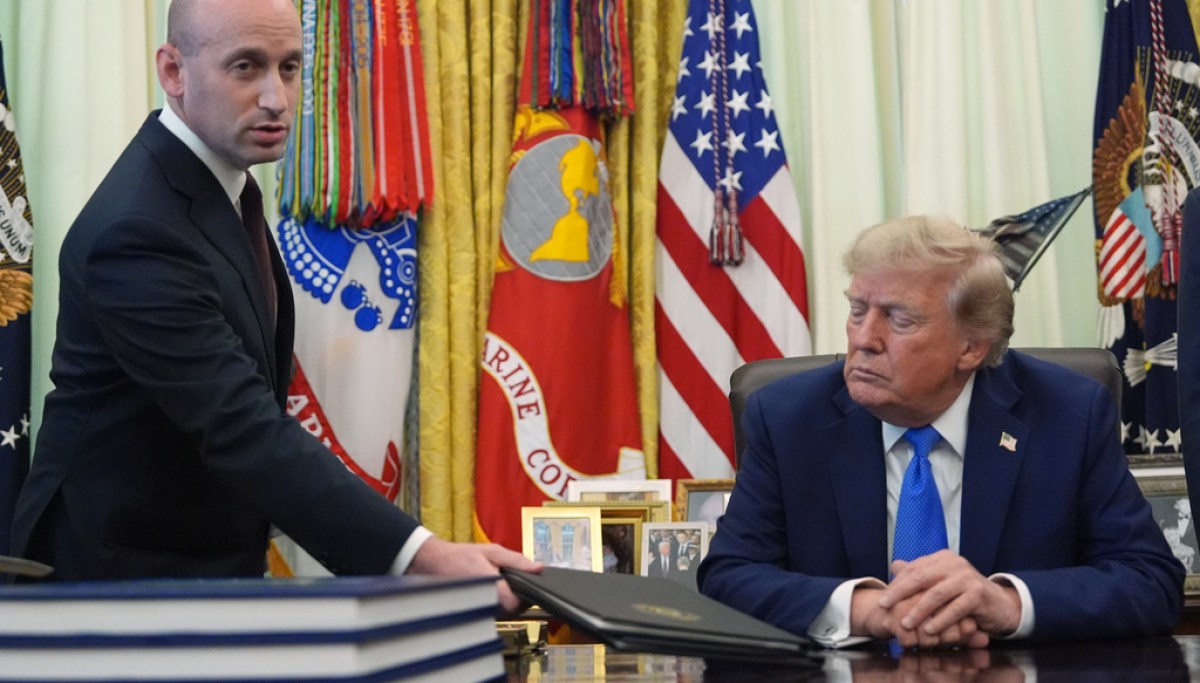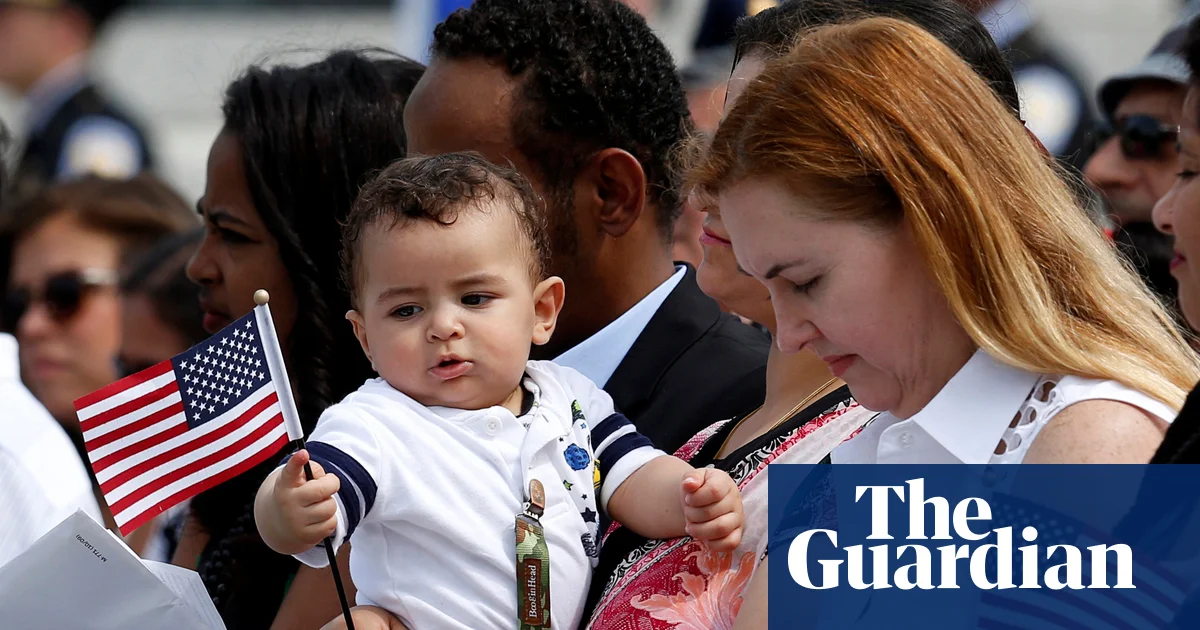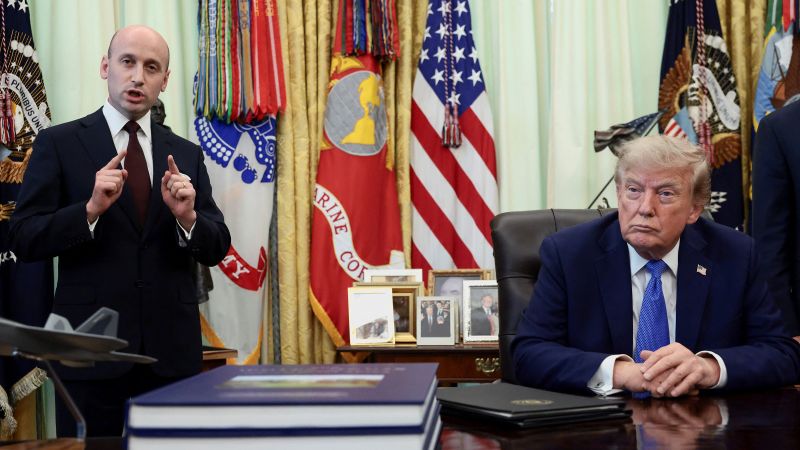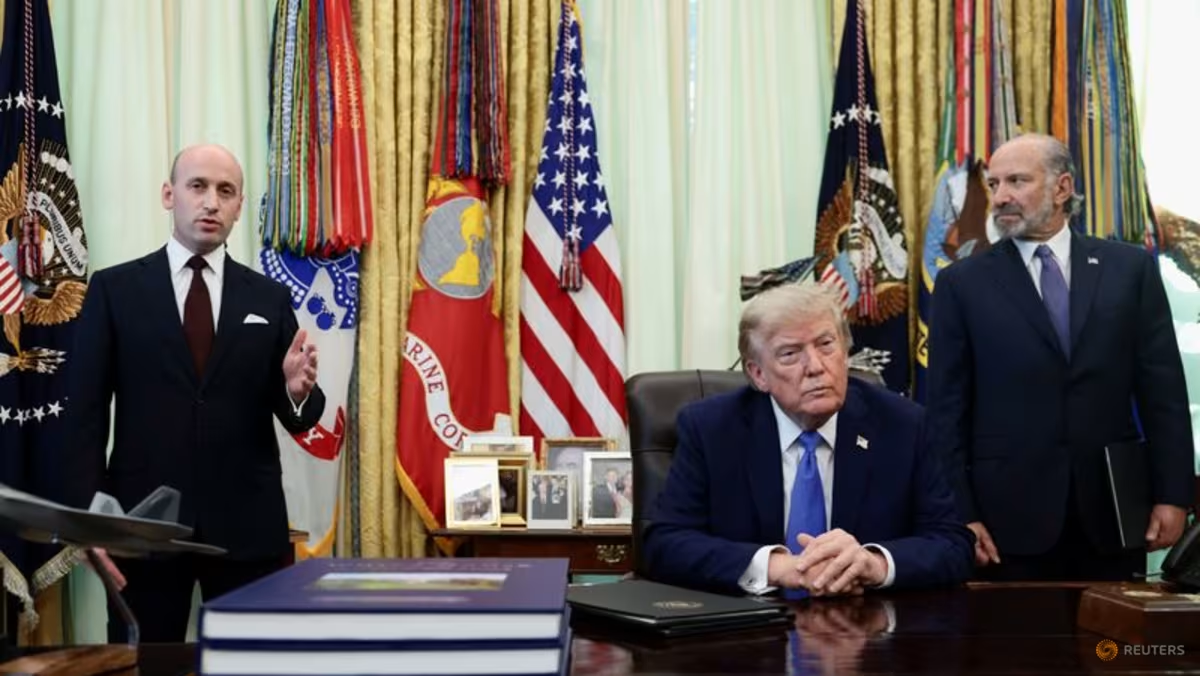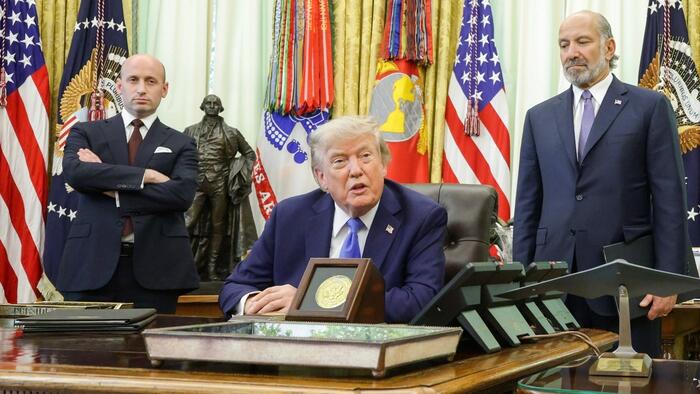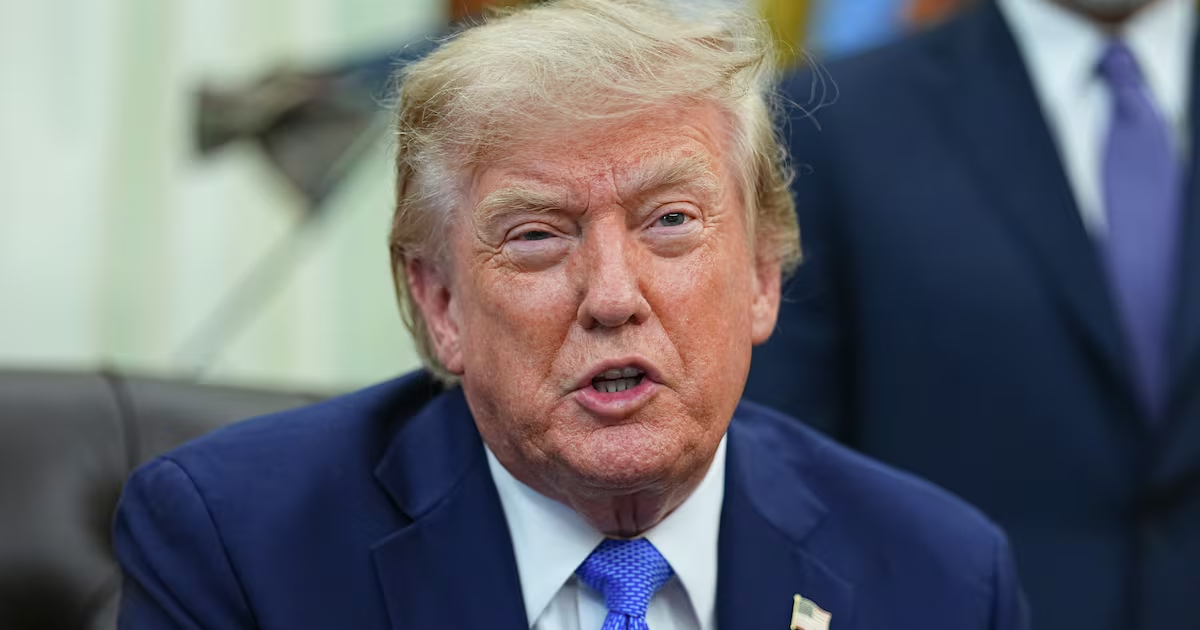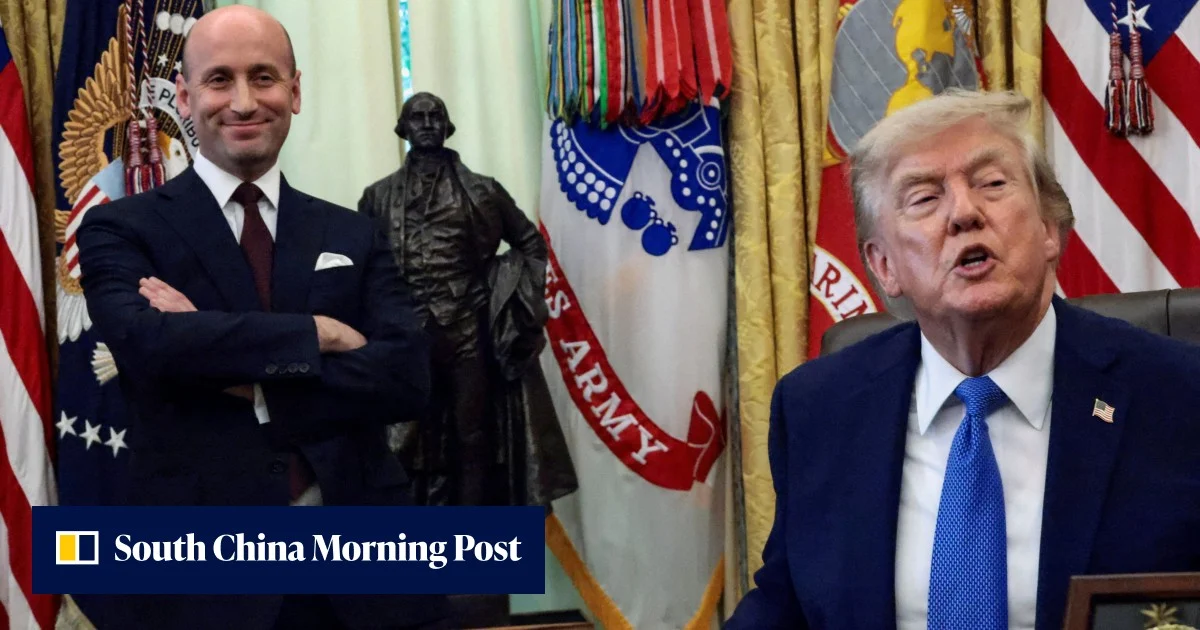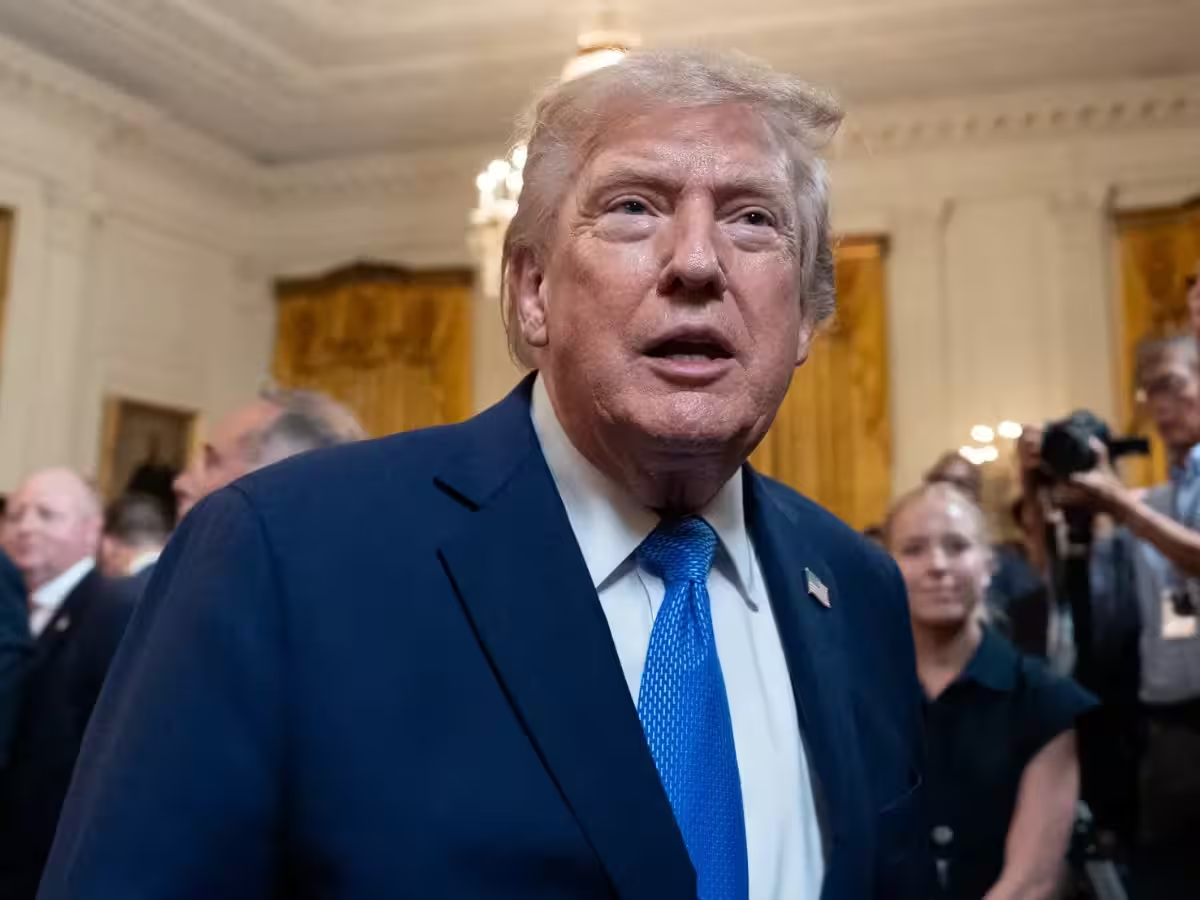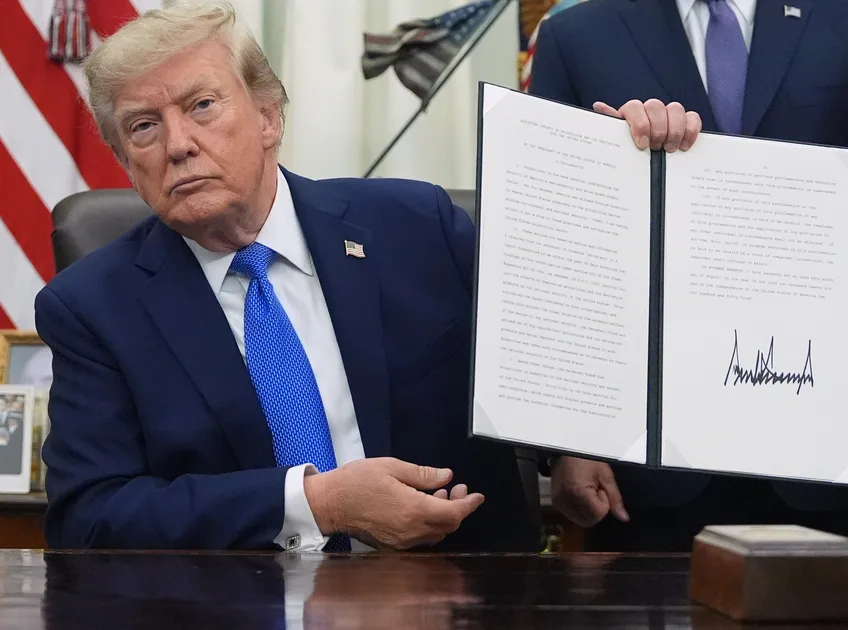
President Donald Trump on Thursday signed two executive orders to limit who is eligible for birthright citizenship in an apparent move to undermine the Supreme Court’s recent decision to uphold the 14th Amendment. “We had a very unfortunate decision in the Supreme Court concerning birthright. It was close,” Trump told reporters during a signing ceremony in the Oval Office. “But a very, very unfortunate decision. So we’re making adjustments.”Trump used the signing as an opportunity to rehash several of his concerns about “birth tourism,” though U.S. law already prohibits a tourist from getting a visa “for the primary purpose of obtaining U.S. citizenship for a child by giving birth in the United States.” The president’s order will ban the act, which is estimated to account for a very small percentage of the country’s births.“Wealthy people are building businesses around birthright citizenship. That’s not the way it’s supposed to work,” Trump continued, referring to companies that arrange for pregnant women to visit the U.S. and give birth so their child has automatic citizenship.“It’s a disgrace,” he said. “They’re buying their way in. And we’re not going to let it happen.”Trump’s orders expand the definition of who is ineligible for birthright citizenship, which will now include children of foreign diplomatic staff working for another government or children of anyone deemed an “alien enemy,” like members of foreign terrorist organizations. The president also wants to revoke birthright citizenship for those born in U.S. territories, like Puerto Rico, but that would require Congressional approval. A bill filed last month to achieve that goal is not expected to pass.White House deputy chief of staff for policy Stephen Miller hands President Donald Trump a document in the Oval Office of the White House, Thursday, Aug. 6, 2026, in Washington. via Associated PressIn a 6-3 ruling last month, the Supreme Court struck down an executive order Trump signed on the first day of his second term, which aimed to revoke birthright citizenship for children of undocumented immigrants. “I thought we were going to win it at the Supreme Court,” Trump said Thursday. “Unfortunately we had a very bad decision, very unfair decision. Our country suffers because of it. And we’re ending it a different way.”Administration officials argued that the ruling still grants Trump the power to limit birthright citizenship under certain exceptions recognized by the court.Both the president and Stephen Miller, his deputy chief of staff for policy, asserted during the signing that birthright citizenship was only established after the Civil War to ensure citizenship for children of enslaved people.That argument has been a popular one among Republicans pushing to overhaul the constitutional right, including lawyers for the administration who raised it with the Supreme Court. But a majority of the justices took issue with the administration’s justification for limiting birthright citizenship.“This alternative account pitches Black Americans against immigrants when the advocates who promoted the Fourteenth Amendment did no such thing,” Justice Ketanji Brown Jackson argued in her minority opinion.Speaking about the new regulations on the “birth tourism” industry, Miller said he would characterize Thursday’s move as one of Trump’s most important actions, “because it ends what has been one of the gravest and most egregious abuses of the American system, and it keeps American citizenship sacred.”The Center for Immigration Studies in 2020 estimated that around 20,000 to 26,000 babies were born from “birth tourism,” making up less than 1% of the U.S. population. Thursday’s order grants presidential authorities to the Secretary of State and Secretary of Homeland Security, directing them to stop tourism births in the country.When asked about what specifically he plans to do to limit tourism births, Trump said he has plans for “very big crackdowns,” without elaborating further.
Trump Executive Orders Target Birthright Citizenship, 'Birth Tourism'
The move aims to undermine the Supreme Court’s recent decision to uphold the 14th Amendment.
615 words~3 min read