Staff writer, with CNA
Business sentiment in Taiwan’s manufacturing sector improved in May, reaching its highest level since March last year, as robust artificial intelligence (AI)-driven demand and easing geopolitical tensions in the Middle East boosted confidence, the Taiwan Institute of Economic Research (TIER, 台灣經濟研究院) said yesterday.The manufacturing composite index rose from 14.03 in April to 15.75 last month, the Taipei-based institute said in a report.The institute attributed the improvement to sustained global demand for electronic components and information and communications technology products driven by the AI supply chain.
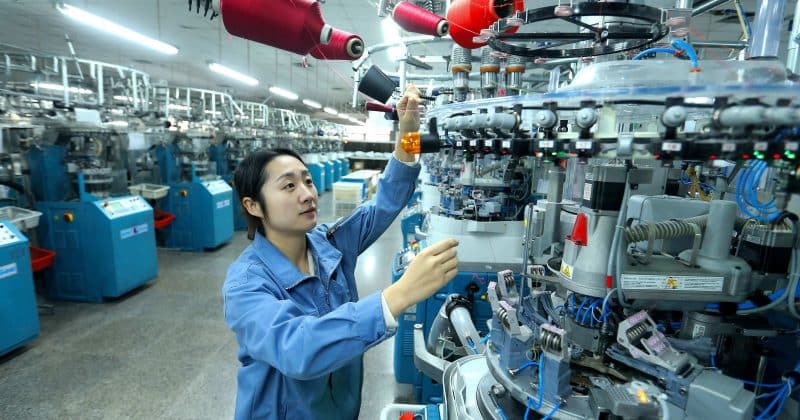
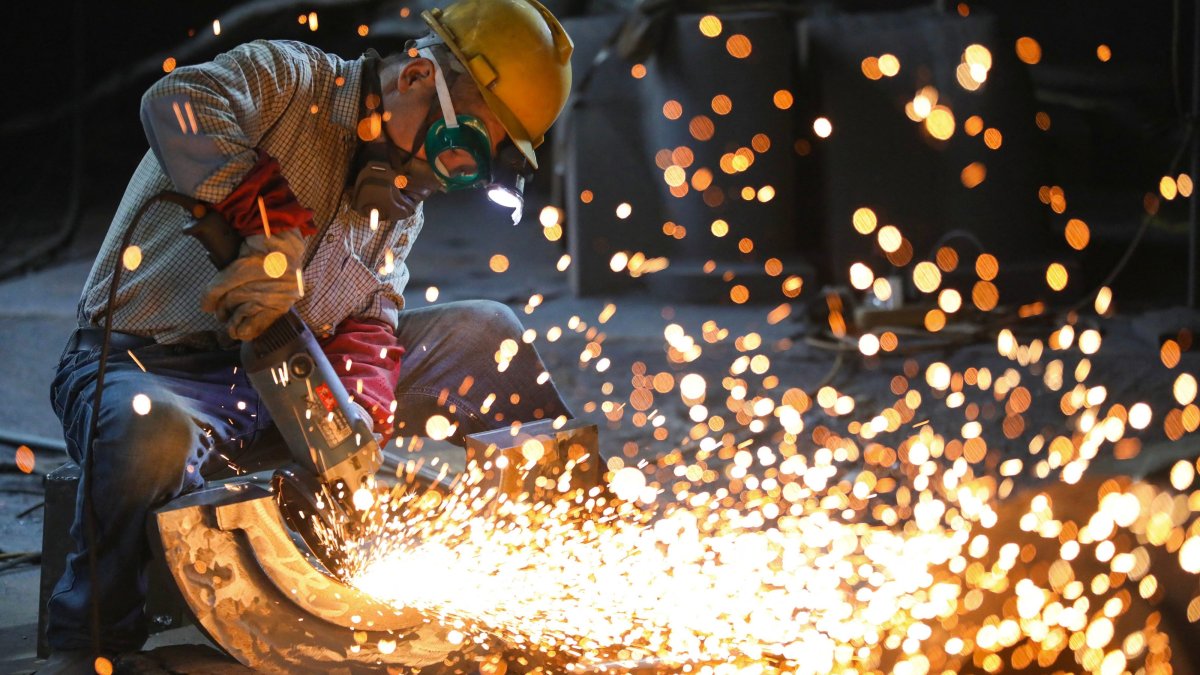
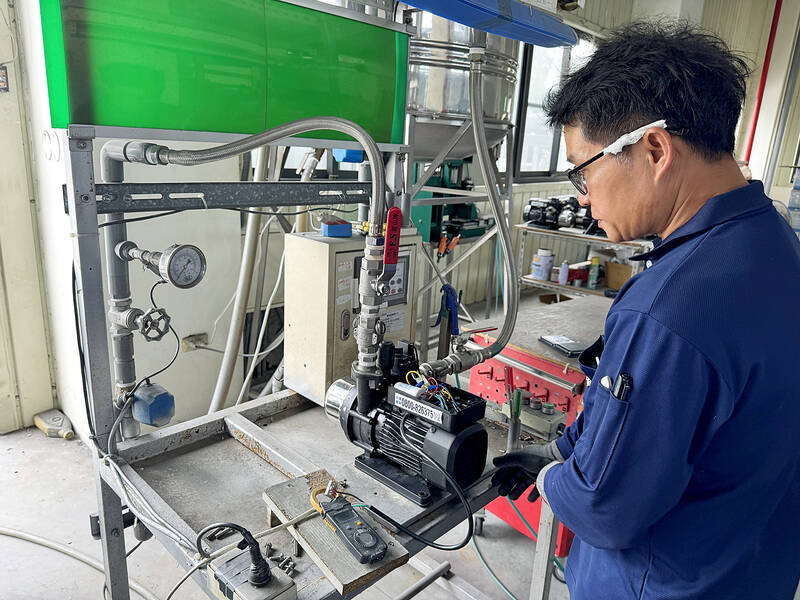
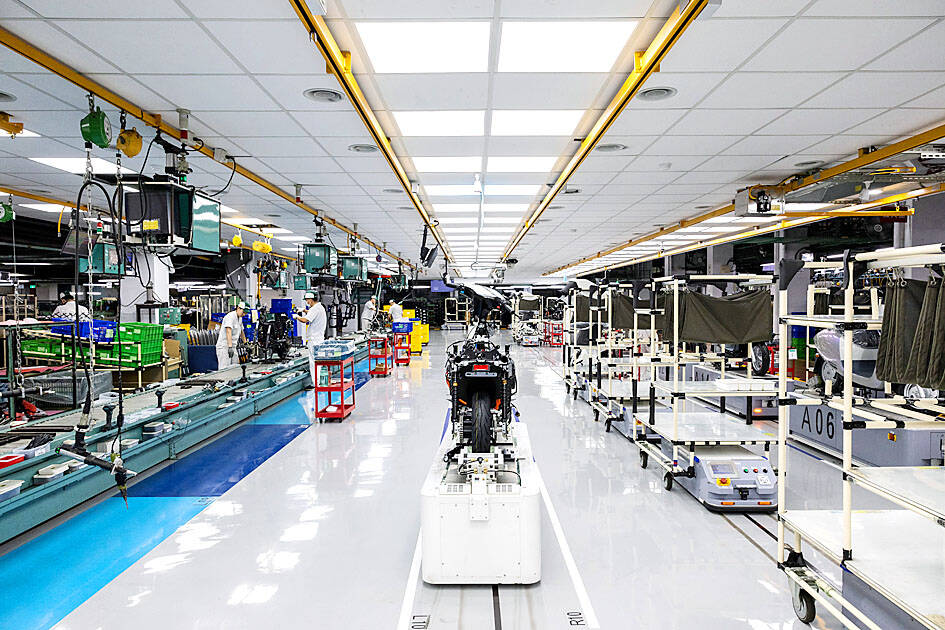
People work at an electric scooter production line in Kaohsiung on May 26, 2024.
Higher retail prices for electronic products, rising global prices for base metals, and gains in Taiwan’s stock market in both share prices and trading volume also helped lift business sentiment, the institute said.At 15.75, the index remained in the “green” range, indicating stable conditions, but was close to the threshold for a “yellow-red” reading, which signals warming growth, it said.
Among individual industries, the electronic components sector was upgraded from “yellow-red” to the highest “red” rating, reflecting strong orders and production fueled by demand for AI and high-performance computing applications. The institute said many Taiwanese manufacturers have been operating at full capacity as global demand continues to outpace supply for DRAM chips.The machinery and equipment manufacturing sector also improved from “green” to “yellow-red,” supported by continued investment in advanced semiconductor manufacturing, advanced packaging and testing, and factory automation equipment, it said.Strong export orders and double-digit growth in both export orders and industrial production further strengthened business confidence in the sector, the institute said.Looking ahead, the institute said uncertainty remains due to shifting global trade policies and geopolitical developments.However, easing tensions in the Middle East, including the reopening of the Strait of Hormuz and improved conditions surrounding Iranian oil exports, have pushed international oil prices lower, helping ease inflationary pressure from energy imports, it said.Meanwhile, continued growth in demand for AI computing capacity is expected to support Taiwan’s manufacturing sector, the institute said. Major cloud service providers continue to increase capital spending, while governments around the world are accelerating AI infrastructure development, boosting demand for Taiwan’s semiconductors, advanced packaging and testing, and server industries, it said.