Taiwan’s manufacturing sector continued to grow in June, with the Taiwan Institute of Economic Research (TIER, 台經院) yesterday saying that its business climate indicator stayed in the “yellow-red” zone for a second consecutive month.External orders and production indices remained at high levels in June, driven by demand growth and higher raw material imports, TIER said.As a result, the manufacturing composite index, which measures the sector’s overall health, rose 1.08 points from May to 17.30 in June, marking the second consecutive month that the indicator has been “yellow-red,” indicating rapid growth.
A man visits a computer store at Kuanghua Digital Plaza in Taipei on Sept. 25 last year.
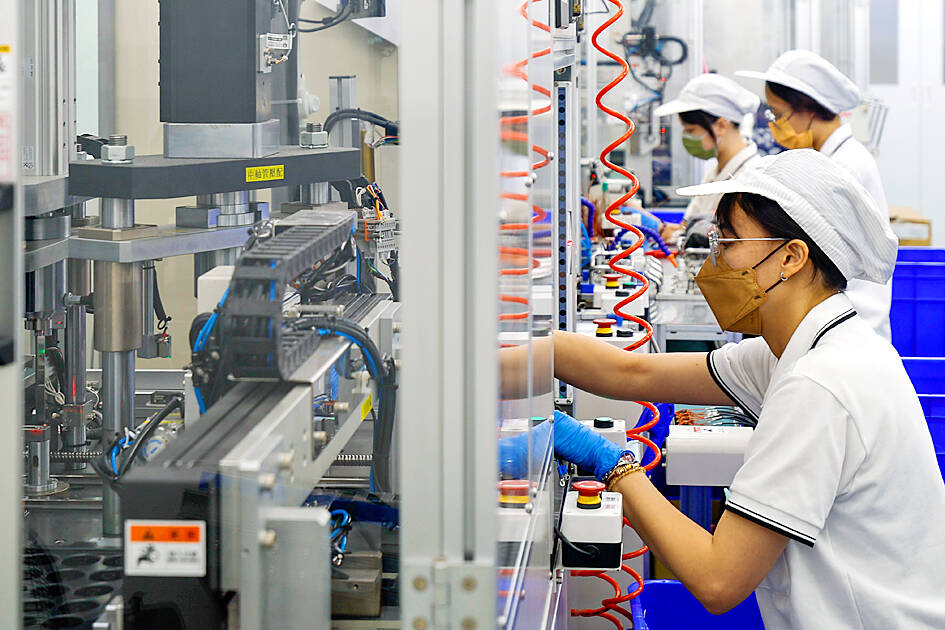
The computer, electronics and optical products sector stayed “red,” indicating overheating, in June, buoyed by demand for cloud services and artificial intelligence (AI) infrastructure.The sector saw increased orders for servers, switches and networking products, while exports, overseas orders and production indices all posted double-digit year-on-year growth, TIER said.
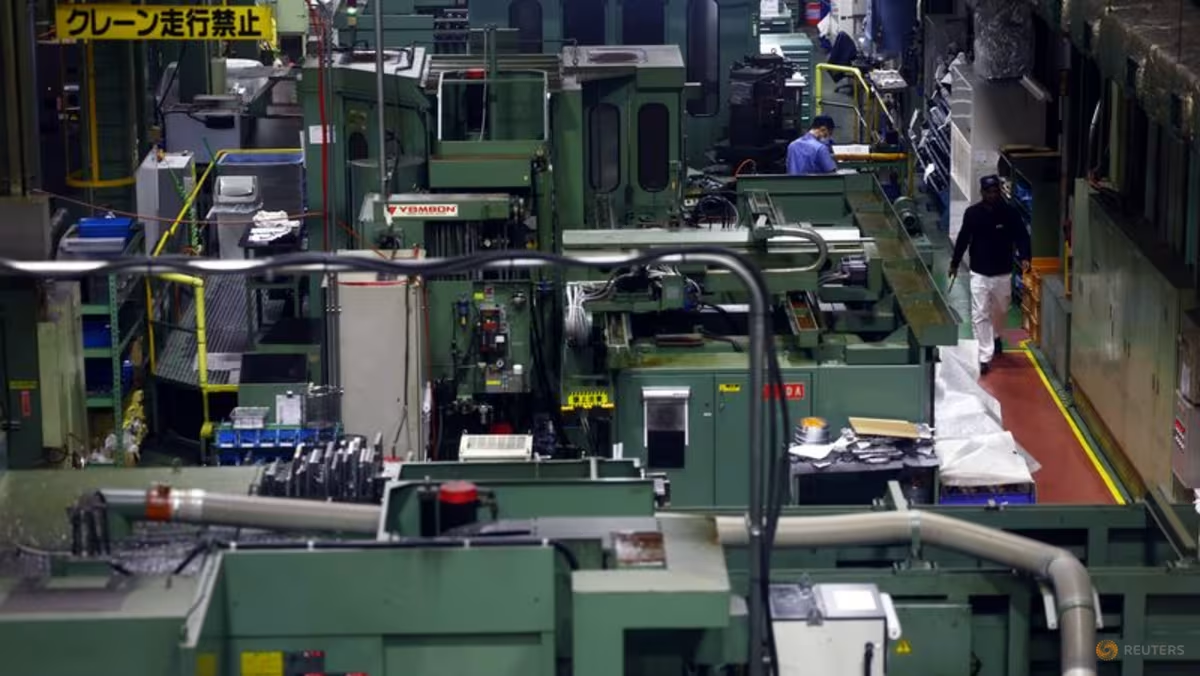
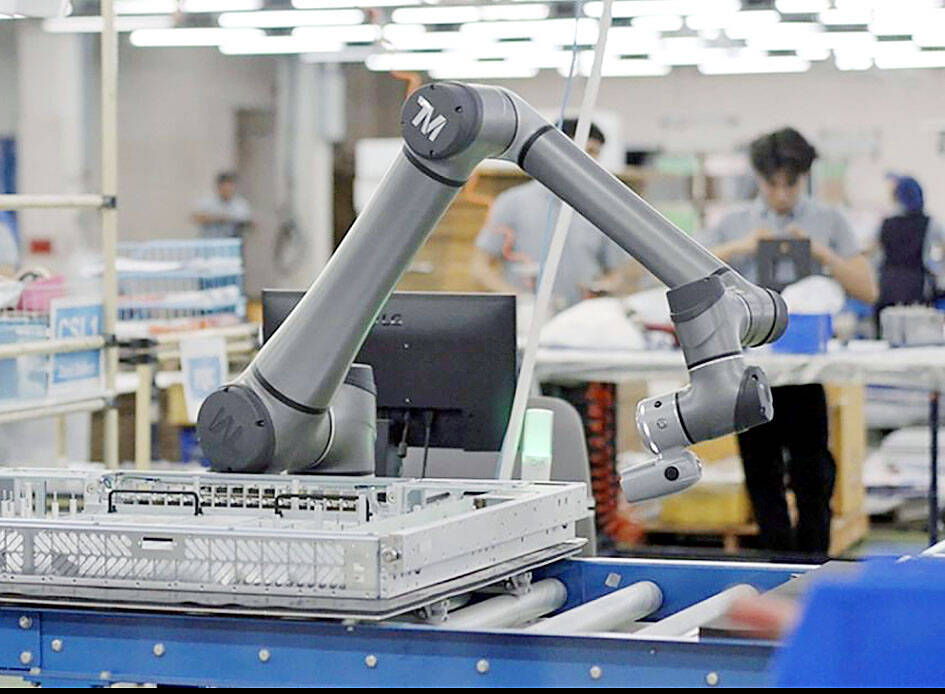
The machinery sector also benefited from global semiconductor companies’ capacity expansion, which boosted demand for related equipment.Continued growth in orders for automation equipment kept exports, overseas orders and production indices growing at double-digit year-on-year rates, pushing the sector’s business climate indicator from “yellow-red” to “red,” the institute said.Despite the positive June data, TIER warned that global uncertainties remain, with conflicts in the Middle East and fluctuations in international oil prices posing risks to energy supplies, financial markets and inflation.The US government’s tariff policies could weigh on Taiwan’s outlook, it said.Taiwan’s role in supply chains and demand for high-performance computing, AI and cloud applications could help offset some of the adverse effects of geopolitical risks, it said.Taiwan’s manufacturing sector is expected to maintain steady growth, supported by demand across the AI supply chain and improved competitiveness among traditional industries, it added.