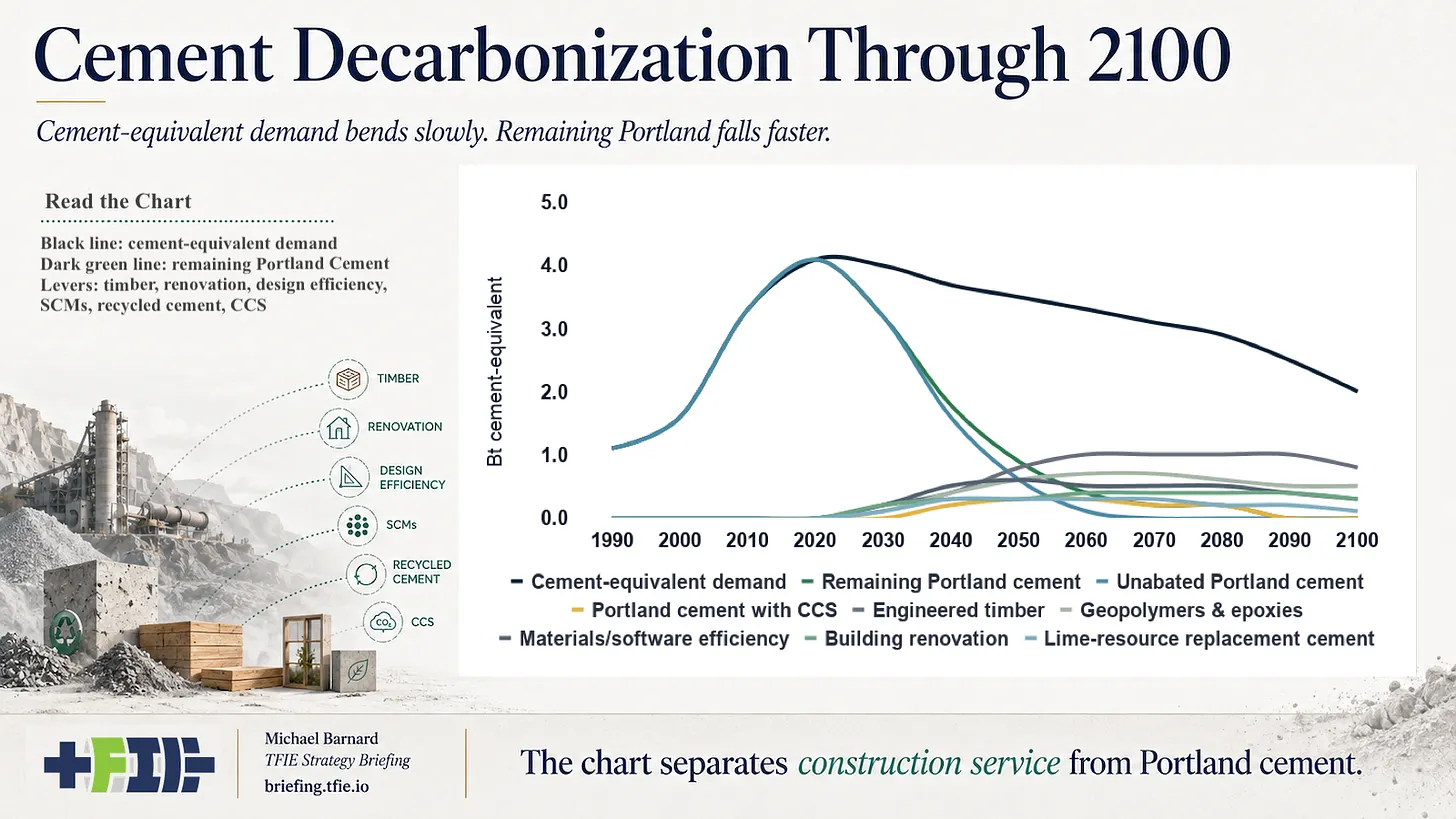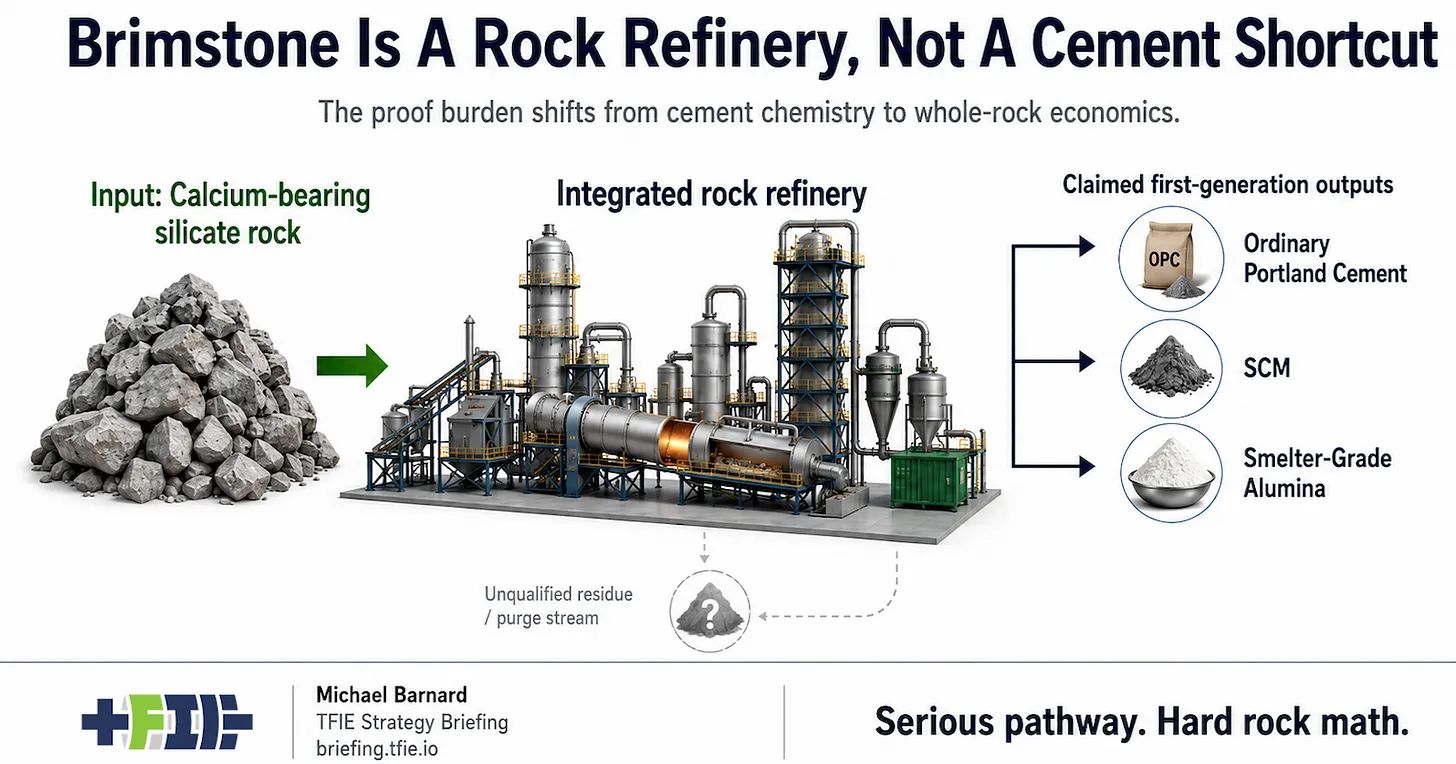
Industrial cement graphic showing calcium-silicate rock entering a complex processing plant and ordinary cement leaving as the main product.
Support CleanTechnica's work through a Substack subscription or on Stripe.
Brimstone’s cement story is interesting because it is not only a cement story. The company’s public positioning is now much bigger than ordinary Portland cement without limestone process CO₂. Brimstone is presenting itself as a Rock Refinery: a process that starts with calcium-bearing silicate rock and co-produces multiple industrial materials from the same feedstock.
That is the right frame for diligence. A cement shortcut would be a simpler kiln, a better binder, or a clever retrofit into the existing cement plant model. Brimstone is closer to a minerals-refining business that happens to make cement as one of its first products. Its first plant is supposed to produce ordinary Portland cement, supplementary cementitious materials and smelter-grade alumina. The roadmap extends to aluminum, iron or steel, magnesium, titanium and other critical minerals.
The conventional Portland cement problem is familiar. Cement plants use limestone, which is mostly calcium carbonate, as the calcium source. Kilns run hot, so there are fuel emissions. More importantly, calcination releases CO₂ from the limestone itself. Electrifying the kiln can help with heat emissions, but it does not remove the process CO₂ embedded in the carbonate chemistry.