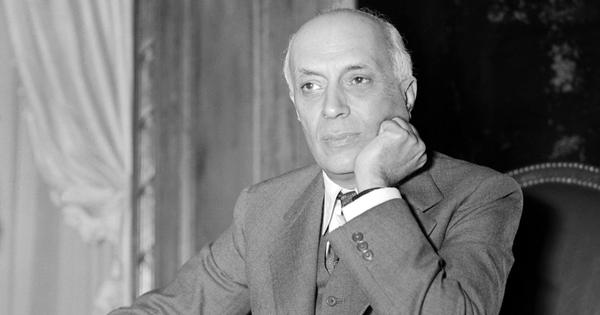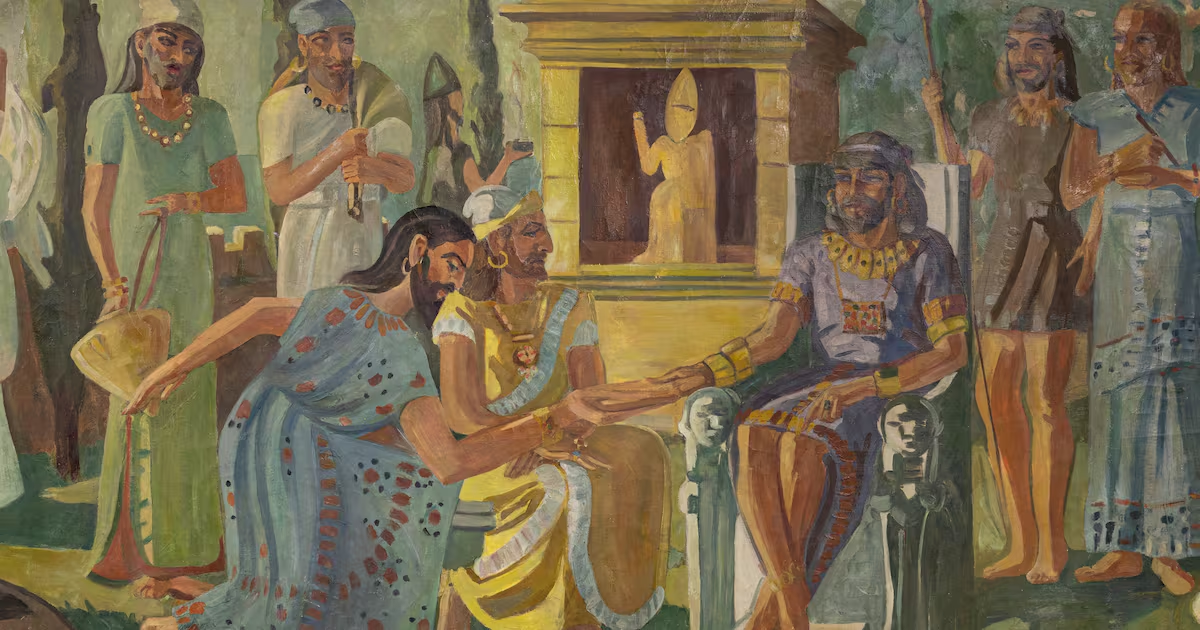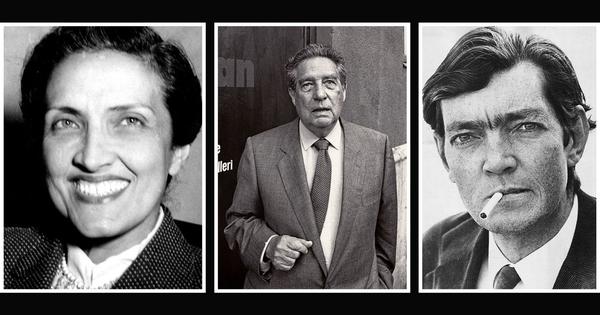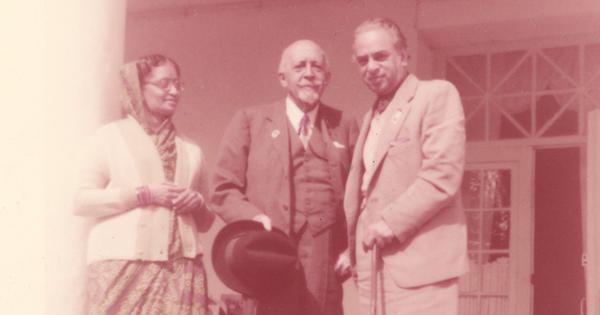
One of the most enduring photographs from the first Afro-Asian Writers Conference in Tashkent in 1958 shows two men standing side by side, both in suits and carrying walking sticks. One is the Indian novelist Mulk Raj Anand. The other is 90-year-old WEB Du Bois, whose passport had been confiscated by the US government just three years earlier, preventing him from attending the Bandung Conference that inspired this gathering.The photograph captures a moment that would have seemed unlikely only a few years earlier. Du Bois, one of the most influential American intellectuals of the 20th century, had spent decades challenging colonialism and racism. As the Cold War intensified, his views increasingly brought him into conflict with the US government, and in 1951, it indicted him as an “unregistered agent” of a foreign power. Although he was eventually acquitted, his passport was not restored in time for him to travel to Indonesia for the 1955 Bandung Conference.Bandung brought together leaders and representatives from nations across Asia and Africa, including Indonesian President Sukarno, Indian Prime Minister Jawaharlal Nehru, Ghanaian leader Kwame Nkrumah and Egyptian President Gamal Abdel Nasser. The conference became a defining moment in the rise of developing nations, with participants calling for political cooperation, economic independence and resistance to colonial domination.Among the ideas discussed at Bandung was the need for greater cooperation between writers from Asia and Africa. While the conference itself emphasised non-alignment during the Cold War, the Soviet Union quickly embraced the writers’ initiative. Moscow, which had positioned itself as a supporter of anti-colonial struggles in Africa, based its claim to hosting the conference on the fact that a large part of the USSR was in Asia.In 1958, when the Soviet Union did host the first Afro-Asian Writers Conference in Tashkent, it gave Du Bois a chance to finally participate in the kind of gathering he had hoped to attend three years earlier. Despite his strained relationship with Washington, he was granted permission to travel to the USSR.Du Bois accepted the invitation enthusiastically and arrived in Tashkent, where he joined writers from across Asia, Africa, Europe and the Americas. Among them was Anand, whose novels Coolie and Untouchable had introduced readers in the West to the struggles of India’s poor and marginalised communities.For Du Bois, the conference must have carried some personal significance. He had followed India’s independence movement and had even published a novel in 1928 about the relationship between an African American medical student and the daughter of an Indian maharaja. The book, which is believed to be among his favourites, explored themes of racial solidarity and love among oppressed communities.Its protagonist, Matthew Townes, encounters Princess Kautilya at a Berlin cafe among a group of people from India, China, Arabia and Egypt. They discuss the discrimination they face because of their race and nationality. Three decades later, Du Bois found himself in Tashkent discussing many of the same questions with writers from the very same countries and regions.Delhi rootsThe idea of gathering writers from Asia and Africa took shape in New Delhi in December 1956, when more than 250 writers from 14 countries gathered for the Asian Writers Conference. Inaugurated by Nehru, the meeting brought together some of the most prominent literary figures of the developing world, including Mulk Raj Anand, Faiz Ahmed Faiz and Krishan Chander.The writers discussed solidarity among countries emerging from colonial rule and debated the role literature should play in reflecting political struggles. The gathering provided the foundation for a broader Afro-Asian literary movement, one that would eventually find its first major expression in Tashkent.The Soviet Union, under Nikita Khrushchev, was among the supporters of the initiative. After Khrushchev’s 19-day visit to India in 1955, the Soviet leader secured Nehru’s backing to host the first Afro-Asian Writers Conference.The Soviet authorities selected Tashkent, the capital of Uzbekistan, as the venue and scheduled the conference for the first week of October 1958.
How Mulk Raj Anand and WEB Du Bois found common ground at a moment of anti-imperialist solidarity
A rare 1958 photograph from Tashkent captures the two writers at a literary gathering that defied Western Cold War scepticism.
1,656 words~8 min read