India-Japan: Coming together
| Photo Credit:
MicroStockHub
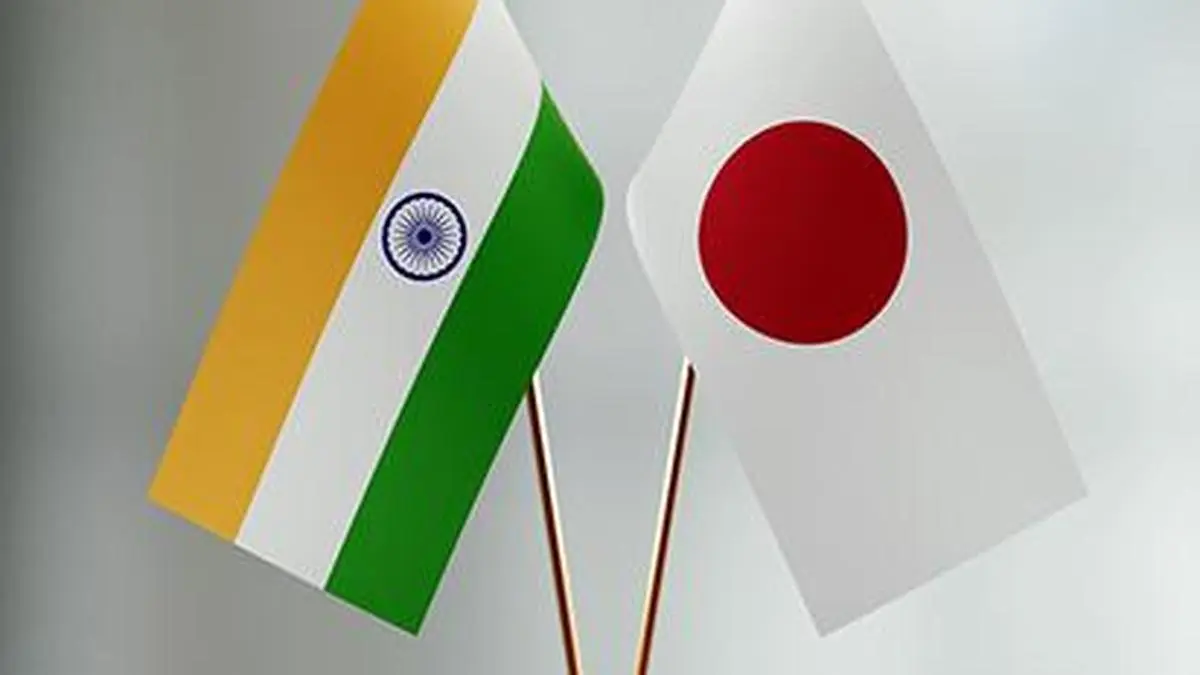
The forthcoming Infrastructure, supply chains, and regional security architecture will be the focus areas going ahead summit marks a milestone moment for one of Asia’s most consequential partnerships, speaking to just how far the relationship has progressed since 2014, when the ‘Special Strategic and Global Partnership’ between India and Japan acquired the institutional depth and economic substance that now span trade, technology, geopolitics, and defence.Since 2014, the India-Japan economic relationship has grown from simple trade exchange into something far more textured: a dense web of institutions, financing instruments, and people-to-people ties. Trade itself tells part of the story: bilateral volume climbed from $15.33 billion in 2020-21 to $27.47 billion in 2025-26, a 79 per cent rise. However, the growth story is not free from the notion of asymmetry, as India’s exports to Japan rose only from $4.43 billion to $6.04 billion over five years, while imports nearly doubled to $21.43 billion — a gap visible in trade rankings too, where Japan sits 10th among India’s trading partners, but India ranks just 22nd among Japan’s import sources.But the more telling change is everything built around that growth. The 2021 Industrial Competitiveness Partnership now runs joint working groups across twelve sectors, from textiles and steel to automobiles and logistics, while a new SME Forum, launched only in November 2025, sent its first Japanese aerospace mission to India within a month. Government-to-government dialogue has, in effect, given way to direct enterprise matchmaking. Technology cooperation has undergone a similar shift, as a matter of economic security.Japanese ODAFinancing and confidence have evolved together. Japanese ODA, flowing since 1958 and now past $52.7 billion across roughly 100 projects, has gone from being the relationship’s backbone to just one instrument among many — topped up in March 2026 by a further $1.71 billion in loans. FDI, cumulating to $44.97 billion since 2000, reflects genuine sentiment: JBIC’s 2025 survey rated India the top medium-term investment destination for a fourth straight year, with 81.5 per cent of Japanese firms in India planning to expand.It is in Northeast India that trade, technology, geopolitics, and connectivity converge most visibly. Since the India-Japan Act East Forum was established in 2017, Japan’s Foreign Ministry has explicitly articulated its ambition: building an ‘Industrial Value Chain’ connecting the Bay of Bengal to Northeast India, pairing connectivity assistance with private investment in semiconductors and clean energy. JICA’s cumulative commitment to the region now exceeds ¥314 billion, financing highway networks across Meghalaya and Mizoram, the Dhubri-Phulbari bridge across the Brahmaputra, and the ₹1,736-crore Guwahati Water Supply Project serving over 140,000 households, with separate compilations placing total Japanese Northeast investment above ₹23,529 crore across 20 projects by early 2026.These developments sit within a shared geopolitical framework that has matured considerably since 2014. The Free and Open Indo-Pacific construct, formalised through the Quad and reiterated in Japan’s 2022 National Security Strategy, positions India as a structurally indispensable partner, casting India as the one power capable of balancing China’s weight across the Indo-Pacific’s maritime and continental spaces simultaneously — a role no other regional partner can credibly play.The clearest expression of this alignment is Exercise Malabar, bilateral since 1992, joined permanently by Japan in 2015, and quadrilateral since Australia’s 2020 return, with its most recent iteration conducted around Guam in 2025 involving anti-submarine warfare and air-defence operations among all four Quad navies.The upcoming summit can reasonably be expected to accelerate the relationship’s trajectory. Continuity with the ¥10 trillion investment roadmap announced in August 2025 is likely to feature prominently, alongside progress markers for the newly launched Digital Partnership 2.0 and SME Forum.The most consequential parts of the India-Japan relationship are, as a result, no longer confined to traditional engagements, but increasingly written into the infrastructure, supply chains, and security architecture of a region both capitals have spent 10 years building into a shared strategic frontier.Deb is Chief Economist, CM’s Secretariat, Government of Assam; Lakkireddy is Mukherjee Fellow, in the Office of Harsh V Shringla, MP, Rajya SabhaPublished on June 30, 2026