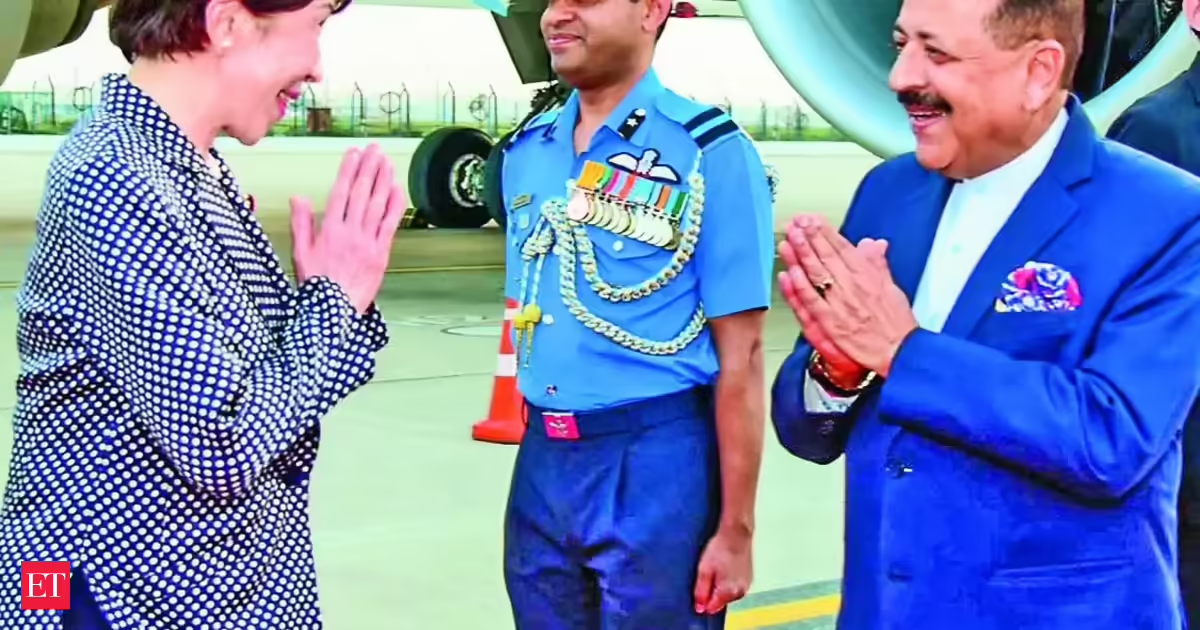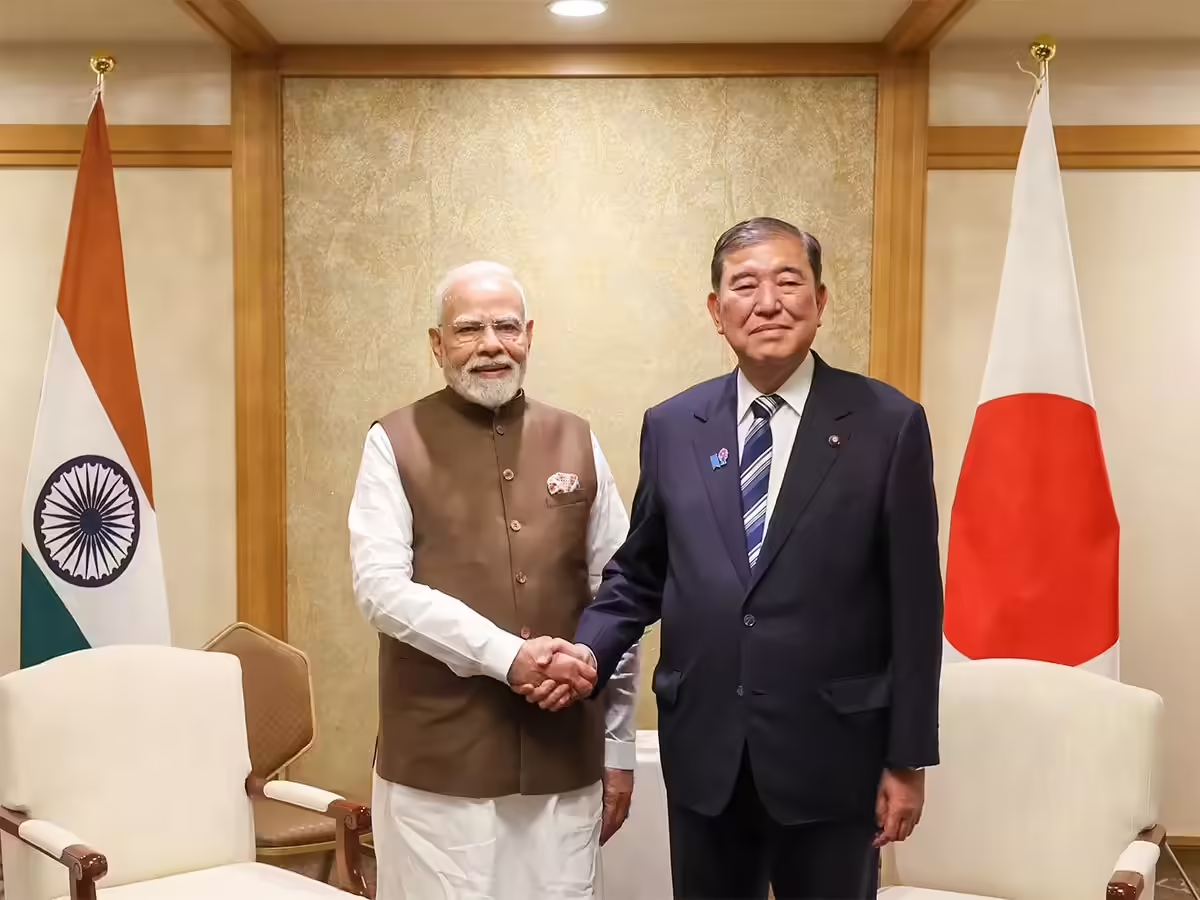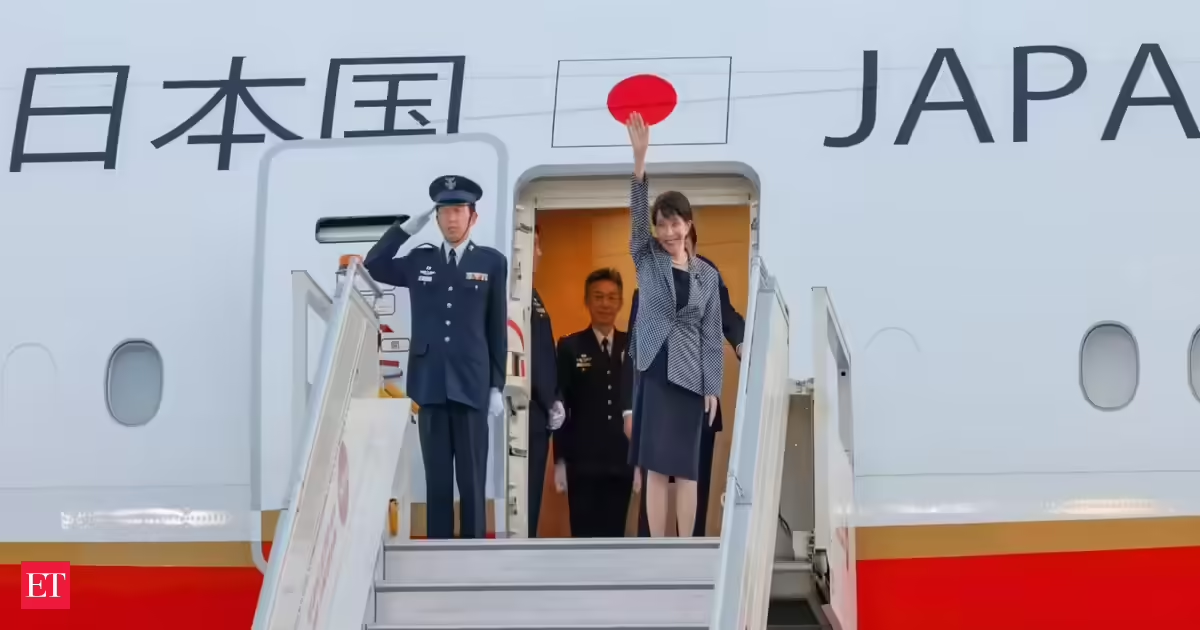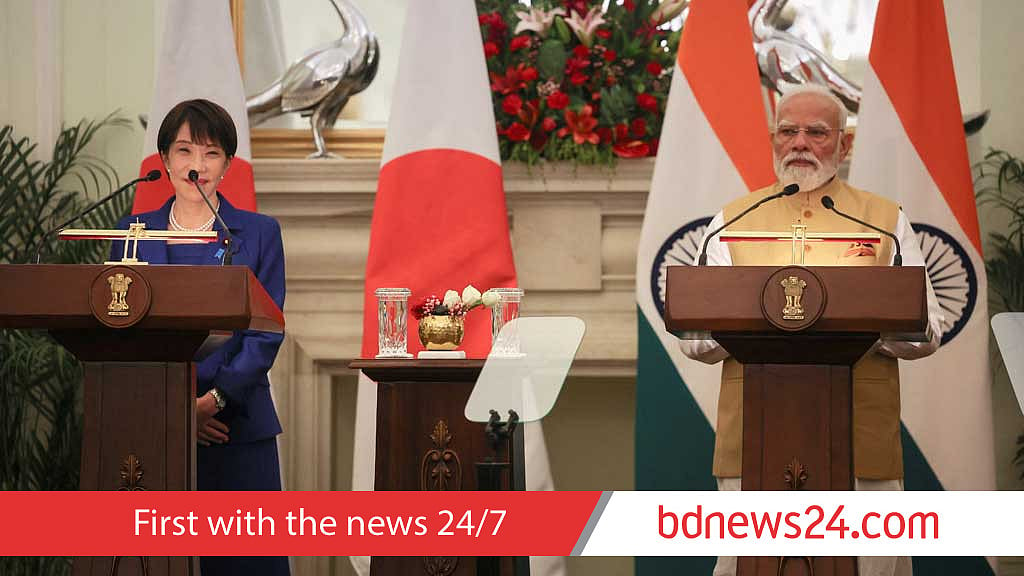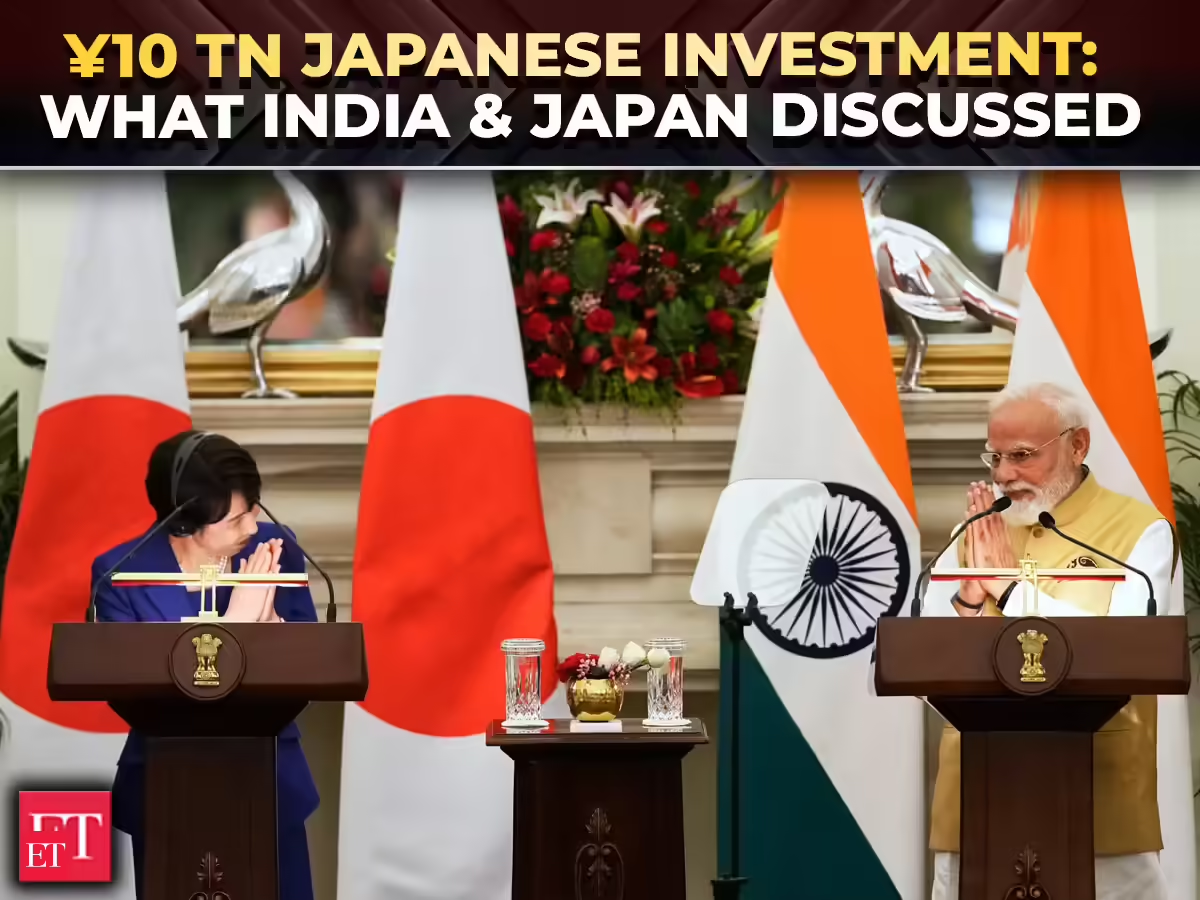
The forthcoming India–Japan Annual Summit in New Delhi from July 1–3, 2026, comes at a moment when both countries can move their partnership from infrastructure cooperation to strategic transformation. The summit is expected to review the full spectrum of bilateral cooperation, including the Mumbai–Ahmedabad High-Speed Rail project, economic security, technology, supply chains and industrial collaboration. This is the right time for Prime Minister Narendra Modi and Japan’s Prime Minister Sanae Takaichi to endorse a bold new idea: a Joint India–Japan Multi-modal Mobility 2036 Initiative.The starting point is obvious. Japan’s high-speed rail partnership with India is already one of the most visible symbols of trust between the two countries. But the next phase should go beyond the bullet train. India and Japan should build a seamless HSR-to-Airline and Logistic Mobility Corridor linking high-speed rail, airports, regional airlines, metro systems, logistics hubs, digital ticketing, tourism circuits and clean-energy transport. This would convert a rail project into a national mobility platform, supporting India’s economic transformation and Japan’s long-term strategic engagement with India.Infra imperativesThis idea fits naturally with Viksit Bharat 2047. India’s goal of becoming a developed economy requires not only more infrastructure, but better-connected infrastructure. The Prime Minister has emphasised mission-mode reforms, proactive infrastructure planning, productivity enhancement and global integration as pillars of India’s 2047 journey. NITI Aayog’s work on Digital Public Infrastructure for Viksit Bharat also points to the next frontier: open, interoperable digital systems that improve productivity, inclusion and opportunity at scale. A rail-air mobility platform with one ticket, one payment, one baggage interface and one traveller experience would be a practical example of this vision.Japanese airlines and logistics companies should be part of this story. Japan Airlines, ANA, ZIPAIR, Peach and AirJapan can support India through expanded direct flights, code-share partnerships, airport operations, MRO, cargo logistics, safety systems, digital passenger services and aviation training. JAL is expanding India connectivity through Narita–Delhi and Narita–Bengaluru services, while ANA has a codeshare partnership with Air India and is strengthening India–Japan connectivity. For India, this would bring operational excellence, safety culture and global connectivity. For Japan, it would open one of the world’s fastest-growing aviation and tourism markets.Connecting hinterlandThe regional development impact could be substantial. India’s growth will not be complete if mobility remains concentrated in a few metros. Integrated HSR–airport–regional airline systems can connect tier-2 and tier-3 cities to national and global markets. This can help MSMEs, industrial corridors, food-processing zones, medical tourism, higher education, logistics parks and regional tourism circuits. India’s 2026 aviation schedule already includes regional carriers such as Alliance Air, FLY91, Star Air and IndiaOne Air, underlining the importance of regional aviation in the next phase of growth. Japan can help make these links financially viable through efficient airport design, low-cost carrier experience, regional route planning and station-area development.Tourism pivotTourism should be a central pillar. Japan welcomed a record 315,100 Indian visitors in 2025, crossing 300,000 Indian arrivals for the first time. This shows that India is no longer a marginal tourism market for Japan. Better air links, affordable carriers and integrated travel platforms can take Indian tourists beyond Tokyo, Kyoto and Osaka to Hokkaido, Okinawa, Tohoku, Kyushu and lesser-known prefectures. Similarly, India can attract more Japanese visitors to Buddhist circuits, Varanasi, Bodh Gaya, Sarnath, Kushinagar, Ayodhya, Rajasthan, Kerala, the Northeast and wellness destinations. Uttar Pradesh and Japanese partners have already explored cooperation in Buddhist, wellness, cultural and experiential tourism.This multi-modal mobility partnership also has a strategic dimension. India and Japan’s Joint Declaration on Security Cooperation calls for deeper defence interoperability, logistics cooperation, cyber defence, maritime security, joint exercises, repair and maintenance cooperation, and sharing of emerging security-risk assessments. Civilian mobility systems are not military projects, but they can strengthen national resilience. Secure airports, cargo hubs, MRO facilities, rail links, digital logistics platforms and disaster-response networks can support evacuation, humanitarian assistance, medical supplies and emergency movement during crises. In the Indo-Pacific, where natural disasters, maritime disruptions and supply-chain shocks are frequent, connectivity is also security.Strategic valueThe initiative would also contribute to a free, open, resilient and prosperous Indo-Pacific. India’s geography makes it a natural bridge between the Indian Ocean and the Pacific. Japan’s technology, capital and operational experience make it a trusted partner in building high-quality infrastructure. Together, the two countries can create secure mobility corridors that reduce dependence on fragile routes, strengthen supply chains and support credible disaster response.Finally, the partnership will strengthen India’s ambition to host the 2036 Olympic and Paralympic Games. India has formally entered the race, Ahmedabad is among the leading contenders, and the IOC host decision is expected around mid-2029 under the new selection process. A successful Olympic bid will require, in addition to stadiums, world-class airport access, inter-city rail, urban transit, digital ticketing, crowd management, tourism readiness, emergency response and cyber-secure transport systems. Experts have rightly noted that India’s 2036 bid is an opportunity to “turbo-charge” infrastructure investment while ensuring long-term benefits for local communities.Japan’s experience in rail operations, airports, urban transport, crowd management, public safety and major-event logistics can help India build an Olympic mobility model that leaves a permanent legacy. The message is simple: from Bullet Train to Olympic-ready Bharat.At the summit, the two Prime Ministers could endorse a six-point framework: launch the Joint India–Japan Multi-modal Mobility 2036 Initiative; integrate HSR, airports and regional airlines; deepen Japanese airline participation in India; promote tourism and regional development; link civilian mobility with resilience and Indo-Pacific security; and create an Olympic Mobility and Tourism Readiness Track for 2036.India and Japan have already built trust through rail, infrastructure and strategic cooperation. The next step is to build a connected mobility ecosystem that serves citizens, tourists, businesses, regions and security needs. If done well, this partnership can become a defining pillar of Viksit Bharat 2047 and a model for trusted connectivity across the Indo-Pacific.The writer is an Asian Development Bank Institute Fellow and an Associate Member of The Club of RomPublished on July 1, 2026
India-Japan mobility partnership rolls along
From high speed rail, the two countries must move to air and logistics to aid tourism and security interests
978 words~4 min read