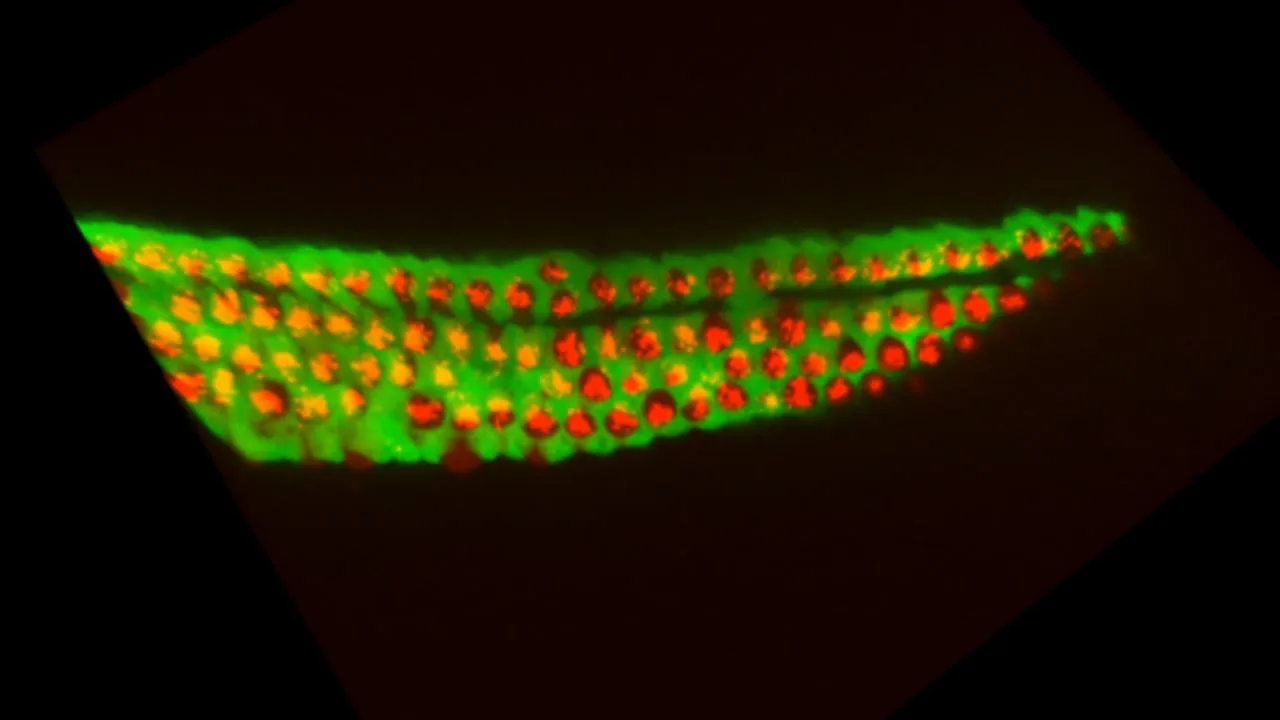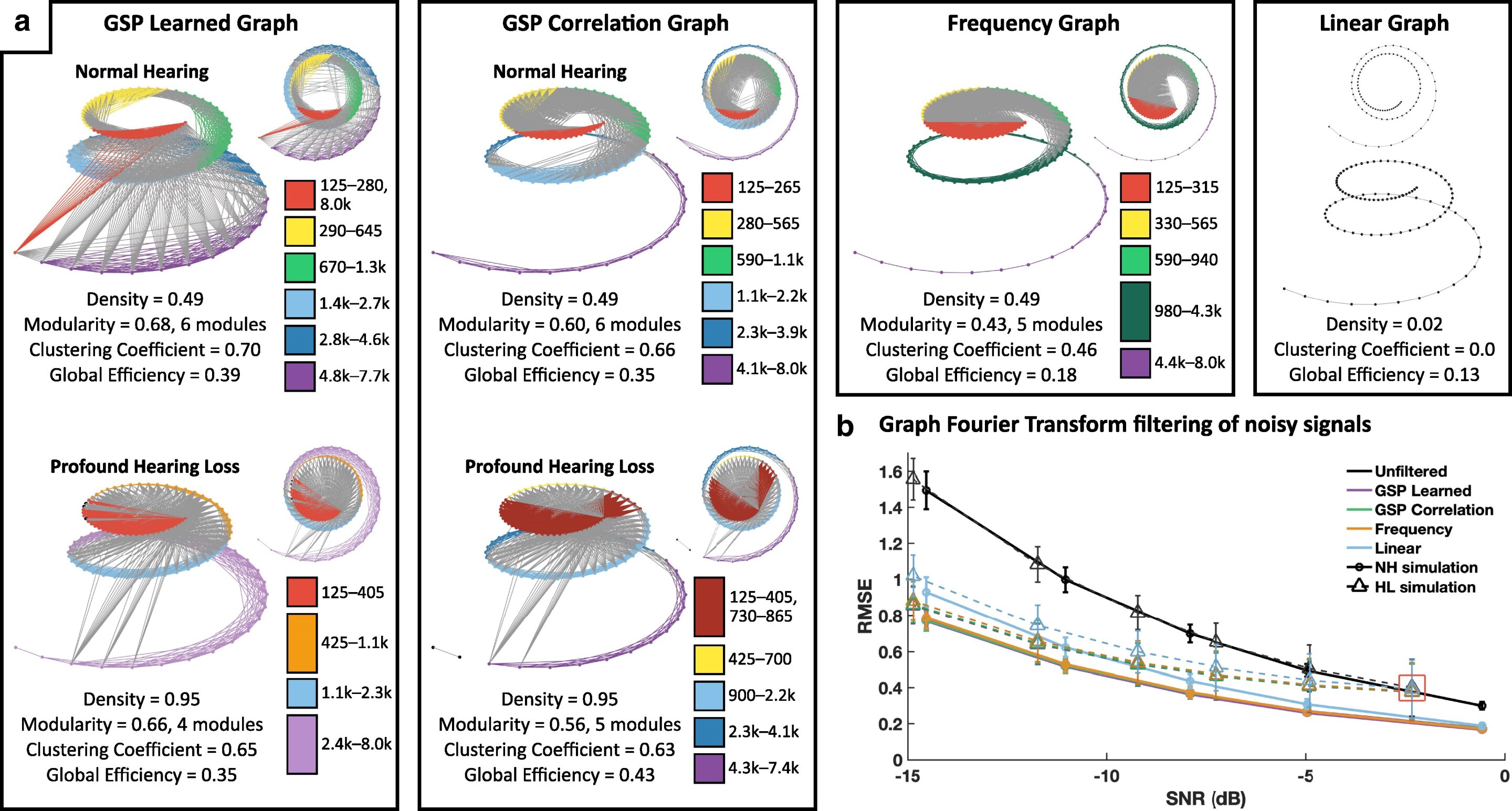
Analysis of graph structure. Credit: PNAS Nexus (2026). DOI: 10.1093/pnasnexus/pgag134
Over 70 million people in the U.S. are impacted by hearing loss, and age-related hearing loss is the second most common health problem in older adults, according to the Advanced Research Projects Agency for Health. However, scientists still do not fully understand how the cochlea—a delicate, spiral-shaped cavity in the inner ear lined with thousands of specialized sensory cells—performs the signal processing needed to separate meaningful sounds from background noise.
Filling that knowledge gap could shed light on what happens as hearing deteriorates with age and make possible better assistive technologies for people with hearing loss. A study published in PNAS Nexus by Rice University researchers presents a step in the right direction—a new way to model how the cochlea processes incoming sound using graph signal processing.
Modeling the cochlea as a network
Traditionally, to study how the cochlea works, researchers have used classical signal processing, which involves mapping the overall cochlear response onto a uniform grid of points, where each point isolates and tracks the distinct responses of individual sensory cells. In contrast, Rice researchers' GSP-based method replaces this uniform grid with a graph structured around the cochlea's natural spiral layout.