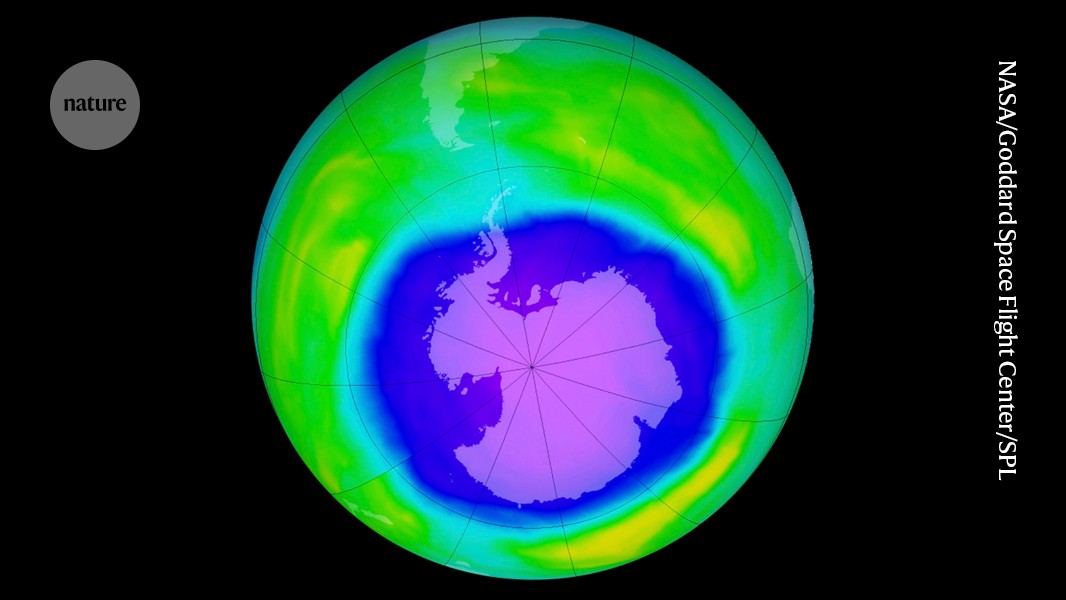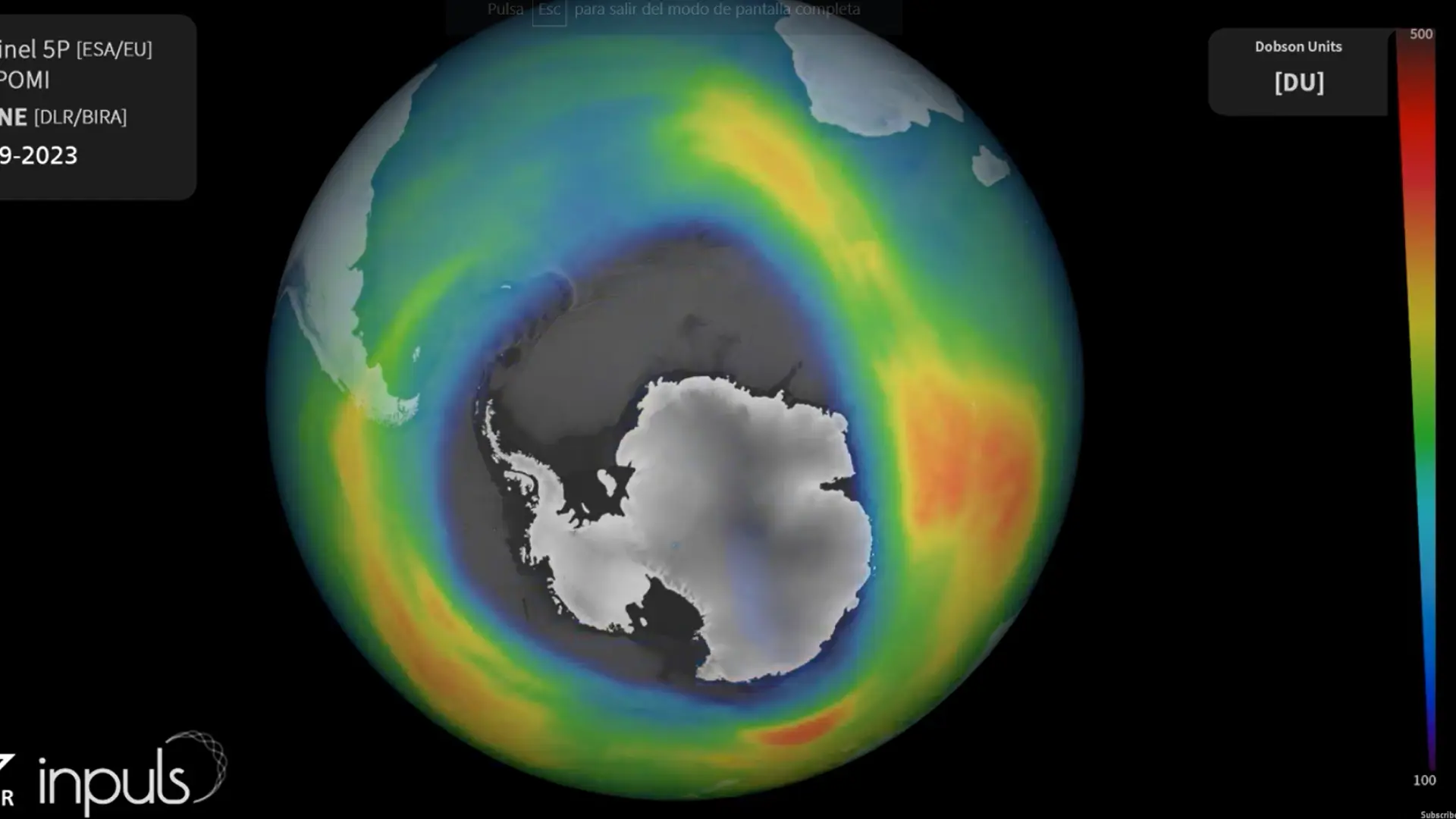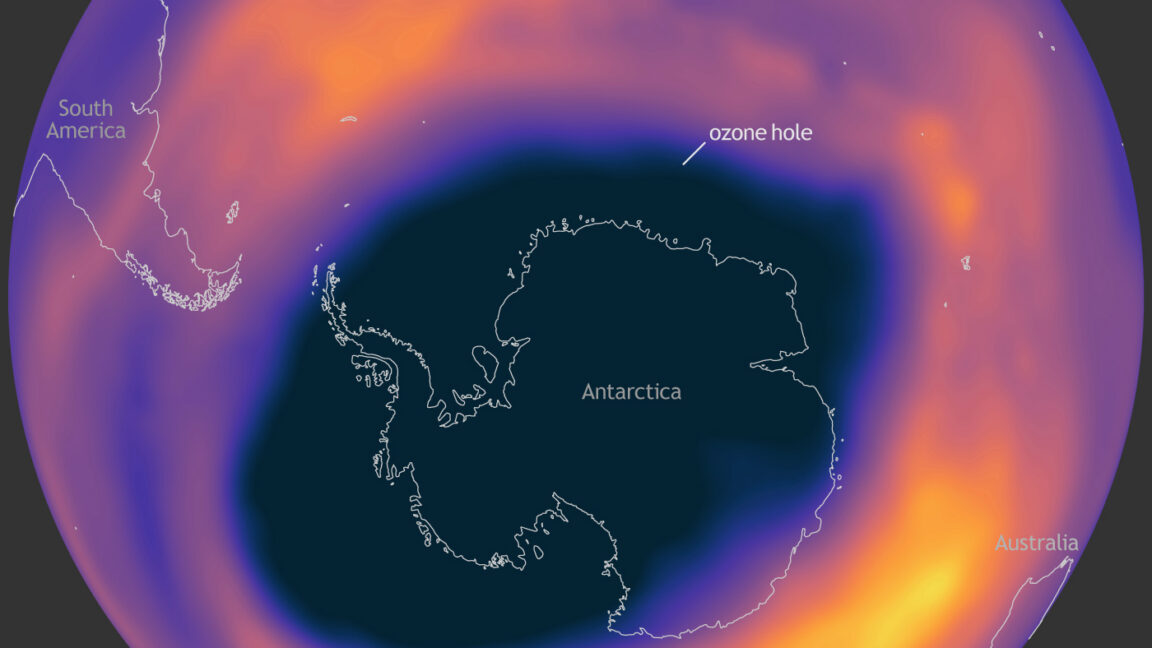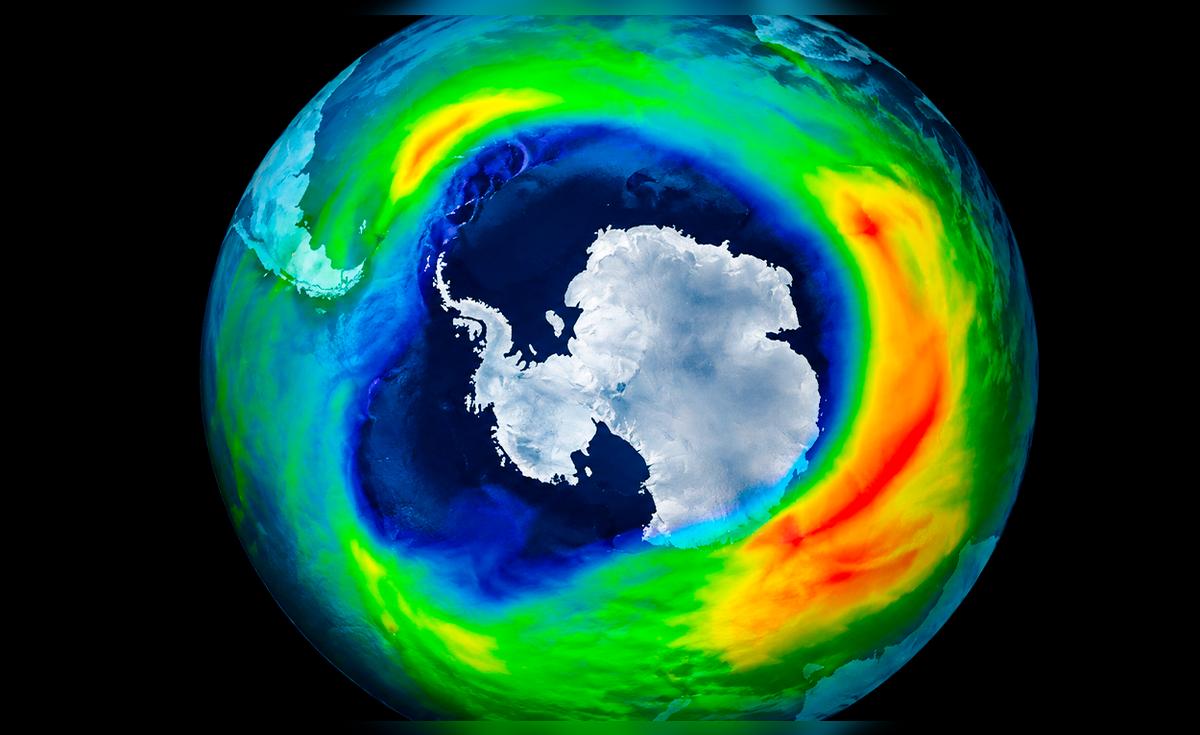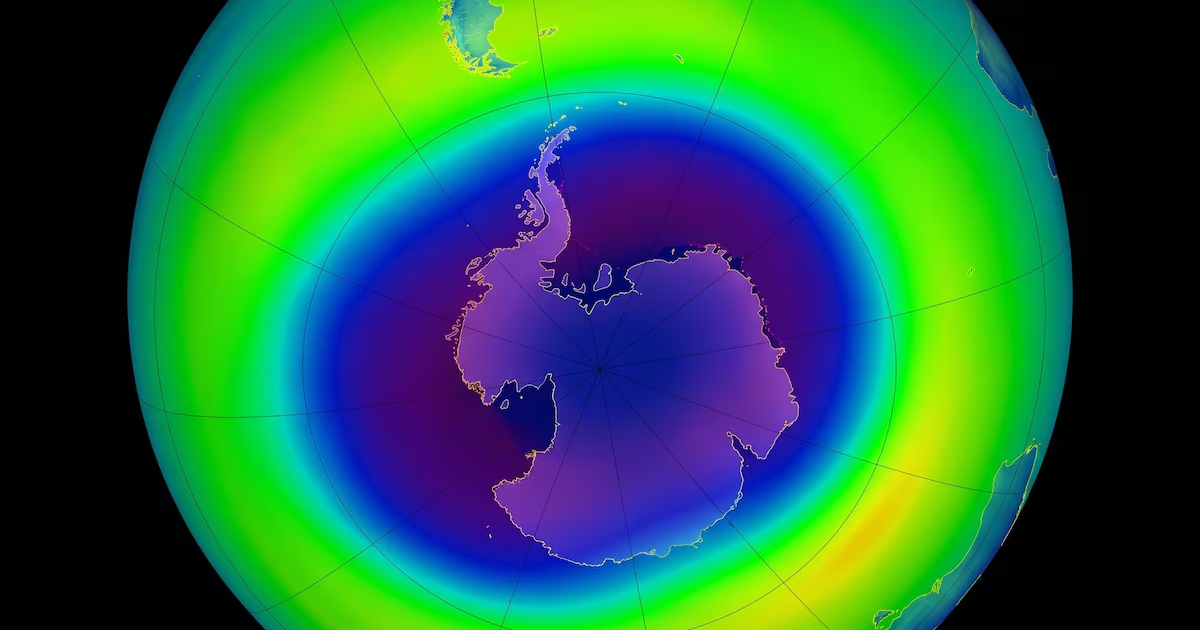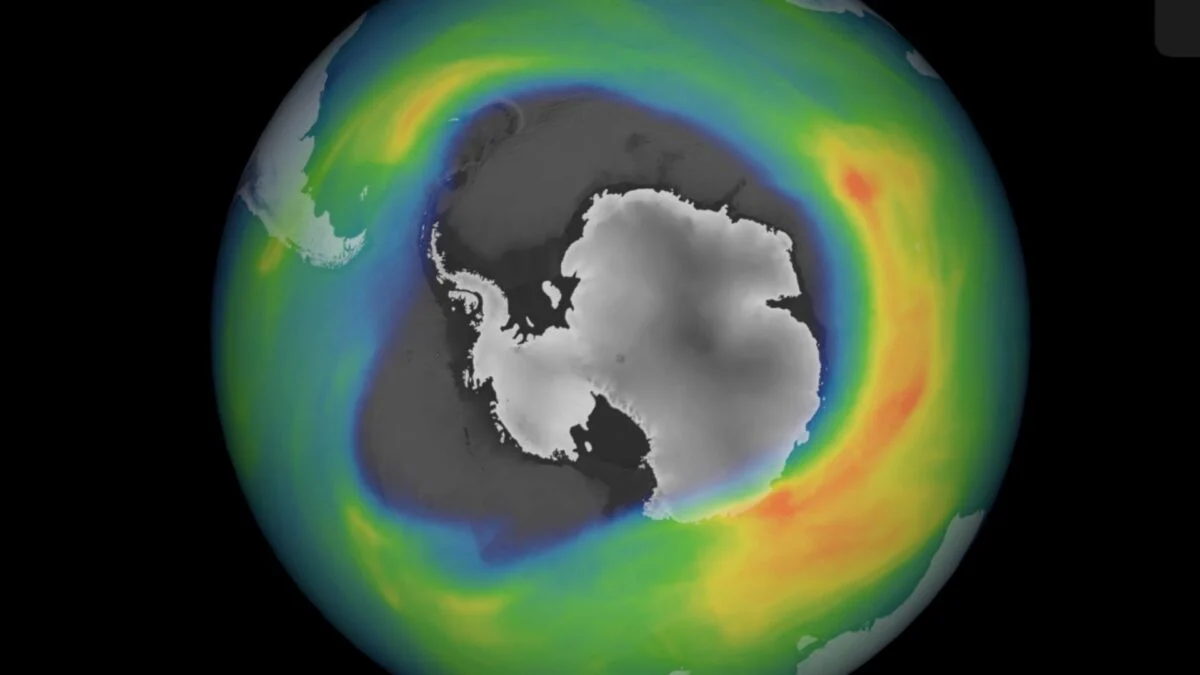
When researchers first discovered the Antarctic ozone hole in 1985, it was a shock to the scientific community. The wave of studies that followed suggested it began forming in the 1970s, driven primarily by chlorofluorocarbons (CFCs). Now, a new study offers a totally different perspective on its origin. The findings, published today in the journal Proceedings of the National Academy of Sciences, suggest that the first signs of ozone depletion actually appeared as early as 1957. Though it took another 30 years for scientists to develop the atmospheric monitoring capabilities that led them to discover the hole, the ozone layer began thinning decades earlier. The surprises don’t stop there. The researchers determined that the first signal of ozone loss appeared not in the Antarctic, but in the upper stratosphere of the tropics. What’s more, the early stages of depletion were not driven by CFCs but by carbon tetrachloride, another industrial chemical used as a dry-cleaning and degreasing agent in the 1930s.
“The fact that ozone depletion would have happened as early as the late 1950s, which is much earlier than I would have thought, just absolutely blew my mind,” lead author Susan Solomon, the Lee and Geraldine Martin Professor of Environmental Studies and Chemistry at the Massachusetts Institute of Technology, said in a statement. Solomon was an early pioneer in the study of ozone’s effects on the atmosphere and the first to show that CFCs were primarily responsible for eroding Antarctic ozone, according to MIT.