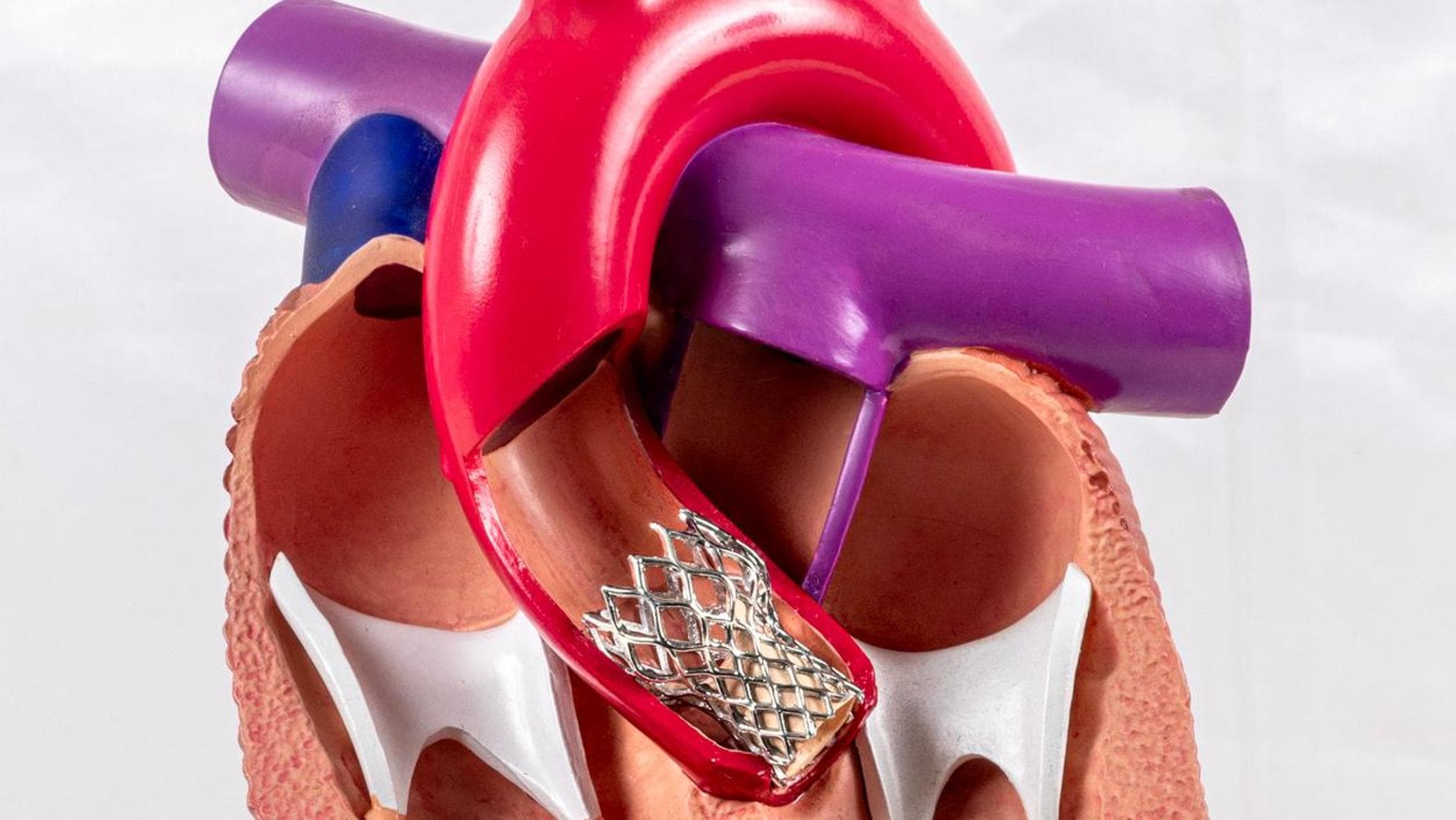
NEW YORK CITY -- A transcatheter aortic valve replacement (TAVR) system could work as a last resort for patients with left ventricular assist device (LVAD)-associated aortic regurgitation (AR), according to a retrospective study.
Among 28 patients with clinically significant LVAD-associated AR undergoing urgent-, emergent-, or compassionate-use TAVR with the Trilogy device, the procedural success rate was 93%; there were two cases of emergent valve-in-valve (one due to migration, and one due to significant paravalvular leak).
No major vascular complications, emergency cardiac surgery, new acute kidney injury, new pacemaker, or stroke occurred. By 30 days, there was one death due to failure to wean from extracorporeal membrane oxygenation (ECMO), while 96.4% of the cohort were free from inotropes and mechanical circulatory support, reported Ravi Ramana, DO, of Heart Care Centers of Illinois in Palos Park.
The JenaValve TAVR device for LVAD-associated AR thus appeared safe and feasible, Ramana told the audience at the New York Valves annual meeting hosted by the Cardiovascular Research Foundation.
In addition, the rate of 1-year mortality was 7.3% (8.3% with compassionate use and 6.2% with emergency use).