Transcatheter aortic valve replacement (TAVR) with a self-expanding valve still worked out better, at least in terms of hemodynamics, in the first head-to-head device trial exclusively in women.
Among older women with symptomatic severe calcific aortic stenosis (AS) in the ALL WOMEN study, TAVR resulted in mean gradients falling by 40.9 mmHg from baseline to 30 days with the Allegra valve, a larger drop than the 34.8 mmHg with a balloon-expandable valve (P=0.005), reported Ignacio Cruz-Gonzalez, MD, PhD, of University Hospital of Salamanca in Spain.
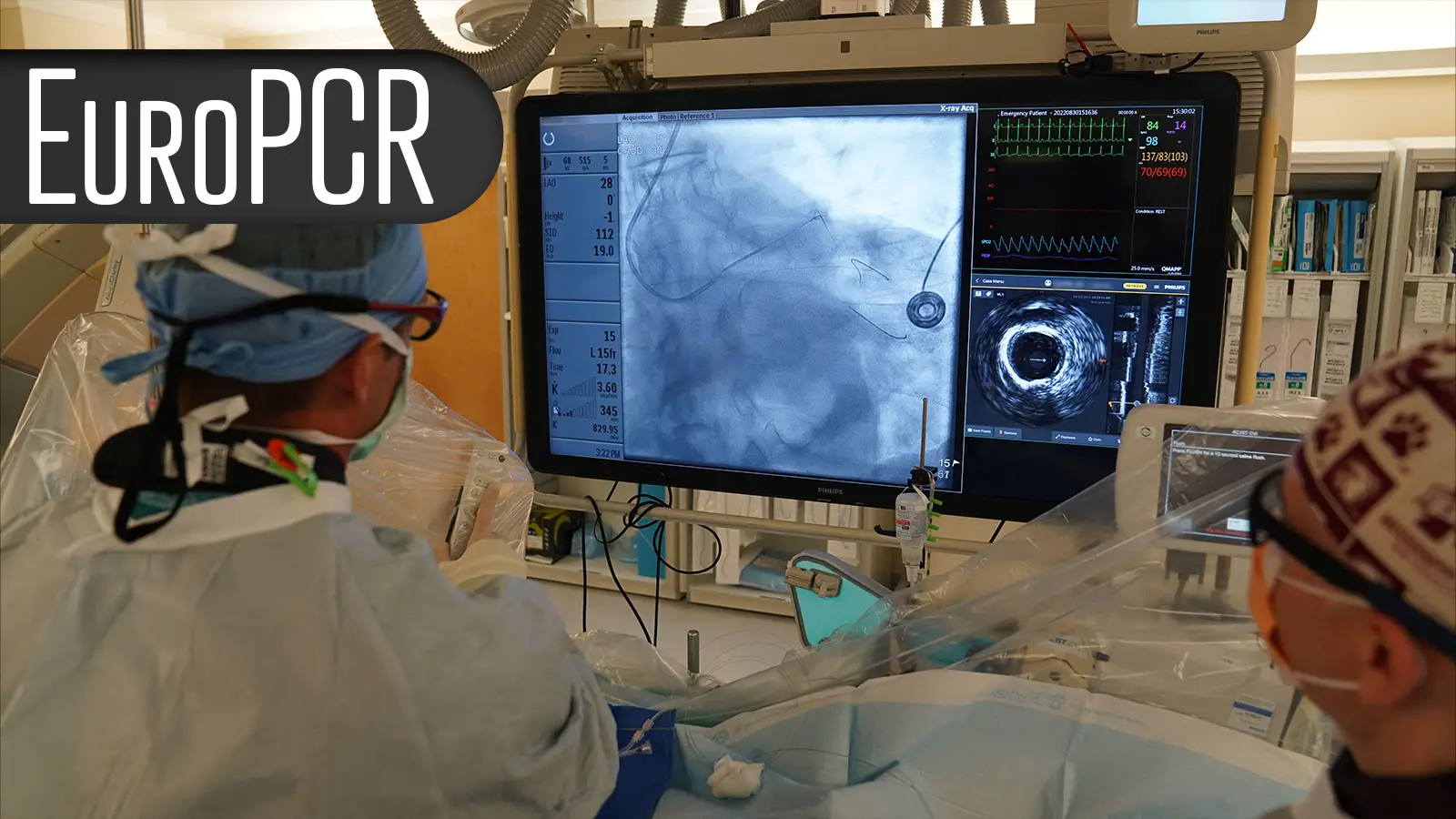
Resulting 30-day gradients were 7.1 and 11.3 mmHg, respectively (P<0.0001), between the self-expanding and balloon-expandable valve groups in this 130-person trial. Effective orifice area and patient-prosthesis mismatch (PPM) results also significantly favored the Allegra group, Cruz-Gonzalez reported at the EuroPCR meeting in Paris.
Cruz-Gonzalez noted special considerations for female TAVR candidates, namely their typically worse outcomes, underdiagnosis of aortic stenosis and underrepresentation in landmark trials, as well as their typically smaller annuli, smaller vessels, and increased frailty. With smaller annuli, operators can expect a higher risk of elevated postprocedural gradients and PPM.