view more
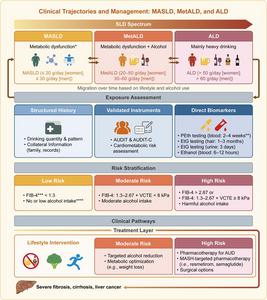
The classification of steatotic liver disease (SLD) is undergoing a major conceptual transformation. In a recent article published in eGastroenterology, Dr. Chen, Dr. Horn, and Prof. Tacke from Charité - Universitätsmedizin Berlin argue that metabolic dysfunction-associated steatotic liver disease (MASLD), metabolic dysfunction and alcohol-associated liver disease (MetALD), and alcohol-associated liver disease (ALD) should not be regarded as rigid diagnostic categories, but rather as interconnected and evolving disease trajectories.
The current SLD framework was introduced to better reflect the biological overlap between metabolic dysfunction and alcohol exposure. However, the authors emphasize that existing classifications still rely heavily on “snapshot” assessments of alcohol intake and metabolic status. In reality, both exposures fluctuate substantially over time, making transitions between MASLD, MetALD, and ALD biologically plausible and clinically common.
A key message of the article is that SLD should be understood as a dynamic continuum rather than a set of isolated diseases. Supporting this concept, the authors discuss prospective cohort data demonstrating substantial migration across SLD subclasses within only six months. Approximately 36% of individuals initially classified as MetALD shifted to MASLD or ALD, while 32% of patients with ALD transitioned toward MetALD or MASLD. Even MASLD, considered the most stable subtype, showed reclassification in around 11% of cases.