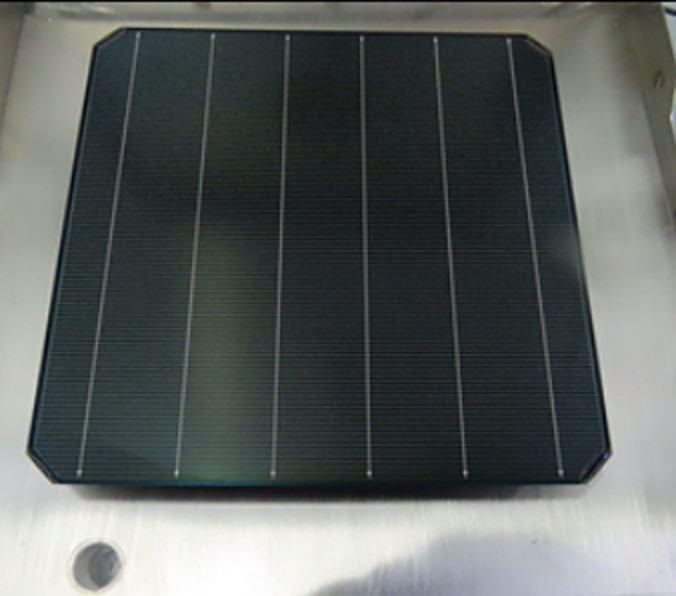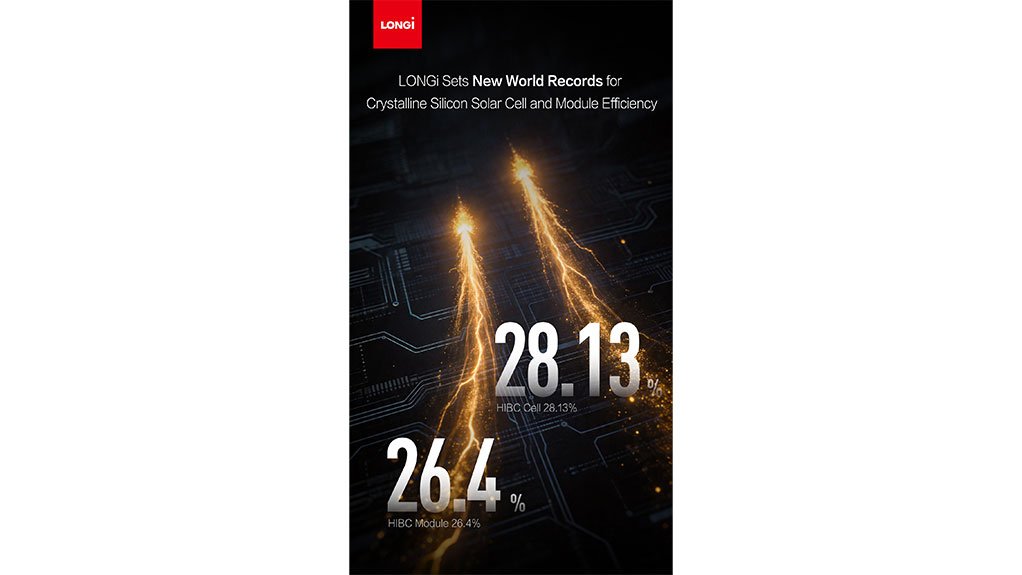
This article has been supplied.Recently, LONGi announced two major technological breakthroughs. First, its independently developed Hybrid Interdigitated-Back-Contact (HIBC) solar cell has been certified by the Institute for Solar Energy Research Hamelin (ISFH) in Germany, achieving a photoelectric conversion efficiency of 28.13%. This marks yet another step forward toward the theoretical efficiency limit of crystalline silicon solar cells, following LONGi's previous efficiency record of 28.04% set in January 2026. Second, modules fabricated based on HIBC solar cells have been certified by the U.S. National Laboratory of the Rockies(NLR), with efficiency breaking through to 26.4% — setting a new record after LONGi had earlier pushed the crystalline silicon module efficiency to 26%.
As the ultimate solution for single-junction crystalline silicon cell technology, the HIBC cell developed by LONGi's Central R&D Institute represents a culmination of the strengths of various cell technologies. The R&D team has innovatively introduced core technologies such as in-situ Patterned Edge Passivation (iPET) and Laser-Induced Crystallization modification (LIC). Through systematic optimization of structural design, material selection, and fabrication processes, the team has achieved multiple breakthroughs in optical performance, interface passivation quality, and charge transport efficiency, paving a mature pathway for the commercial deployment of ultra-high-efficiency crystalline silicon cells.