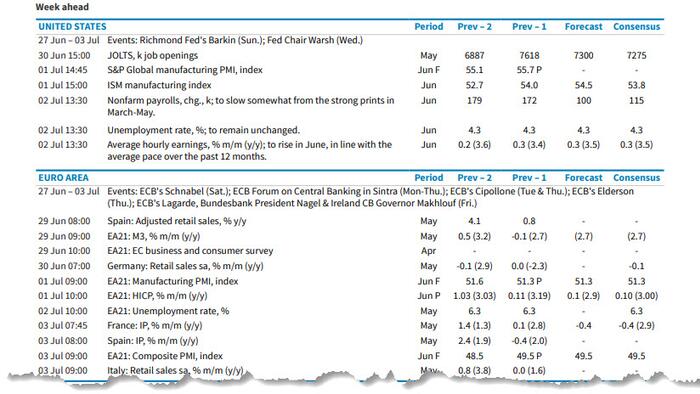
Neil IrwinAdd Axios as your preferred source tosee more of our stories on Google.European Central Bank president Christine Lagarde in Sintra, Portugal. Photo: Goncalo Fonseca/Bloomberg via Getty ImagesA wave of data this week will give us our first indicators of how the U.S. economy held up in June. Top policymakers convene in Portugal for the world's most-scrutinized central banking conference, second to the Kansas City Fed's annual Jackson Hole symposium in late August.Driving the news: The European Central Bank's annual forum in Sintra, a picturesque ancient town outside Lisbon, convenes Monday and runs through Wednesday.ECB president Christine Lagarde delivers an introductory speech Monday evening (local time). Wednesday at 2pm local time (9am ET), Lagarde and Fed chairman Kevin Warsh appear on a policy panel alongside Bank of England governor Andrew Bailey and Bank of Canada governor Tiff Macklem.We'll be particularly watching to see if Warsh offers more clarity than he did in his mid-June news conference on whether U.S. rate increases are on the way.Zoom out: The central banking world's goings-on take place against a backdrop of employment data that should offer greater visibility into this spring's apparent firming of the U.S. labor market.On Tuesday morning, the Labor Department will release May data on job openings and labor turnover that will show the internal dynamics of what was a solid month for payrolls growth.Wednesday, payroll processor ADP will release its monthly read on private-sector employment.Thursday is the big day for the government's June employment situation report. Analysts expect it to show a solid 118,000 net jobs being added, and the unemployment rate unchanged at 4.3%.Of note: Other notable data releases include the Institute for Supply Management's monthly surveys for manufacturing, due out Wednesday.The bottom line: Buckle up for a short but eventful week of economic news.
Fed's Warsh, jobs report, and more econ data on tap this week
The goings-on in the central banking world will take place against a backdrop of employment data that should offer greater visibility into an apparent firming of the U.S. labor market this spring.
296 words~1 min read