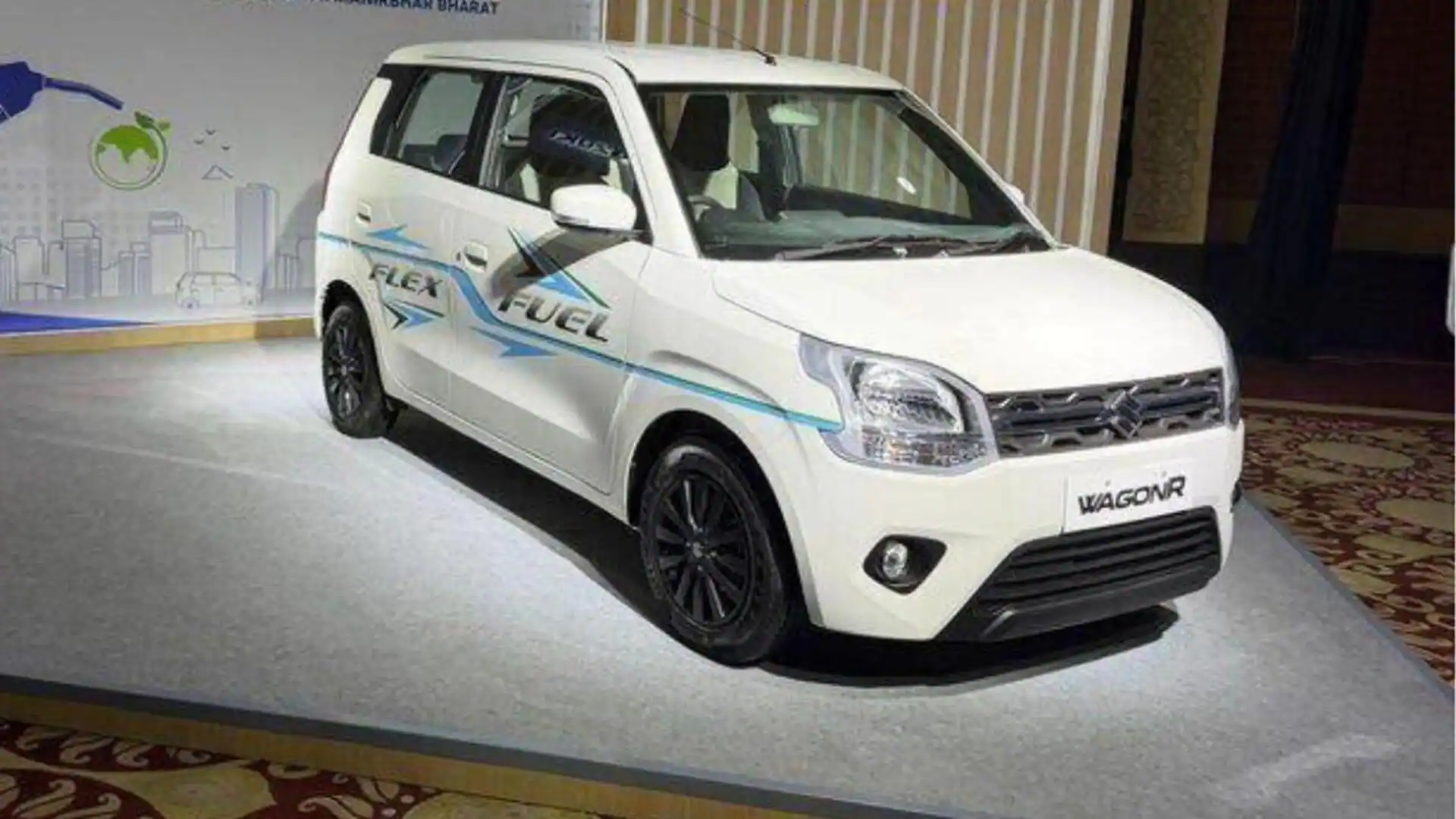
Adoption is also constrained by limited scale. India has only a small base of flex-fuel vehicles, with most models still at prototype or early production stages
India’s push toward E100 fuel is struggling to gain consumer traction as the economics remain unconvincing. At current E85 prices of ₹82.12 per litre, savings versus petrol are negligible, about 8 paise per km, or roughly ₹1,100 annually, far too little to offset the ₹86,000-plus premium for flex-fuel vehicles such as the WagonR. Even if E100 were priced at ₹65 per litre, the payback period would stretch to nearly five years compared to petrol, making it unattractive in a price-sensitive market that prioritises upfront affordability and quick returns.The core challenge lies in unit economics. Ethanol delivers lower energy per litre than petrol, reducing mileage and diluting the benefit of a cheaper pump price. As a result, cost per kilometre, not fuel price, becomes the decisive factor. Compared with CNG, which offers substantially lower running costs and a payback of just over two years, E100 falls short as a mass-market alternative.Adoption is also constrained by limited scale. India has only a small base of flex-fuel vehicles, with most models still at prototype or early production stages. This contrasts sharply with Brazil, where flex-fuel vehicles dominate, accounting for nearly 90 per cent of new car sales, supported by decades of policy backing and favourable fuel pricing. Brazilian consumers follow a simple rule: ethanol must be about 70 per cent of petrol’s price to be viable underscoring the importance of pricing.Toyota Kirloskar Motor, drawing from its Brazil experience, highlighted that economics drove adoption rather than technology. “There was a 25-30 per cent difference and tax incentives for FFVs. That is what made the customer move to ethanol,” said Vikram Gulati, Executive Vice-President, Corporate Affairs & Governance.Experts say Indian consumers apply a similarly practical lens. “The customer will ask a simple question: is the vehicle affordable, is the fuel easily available, and does the running cost beat petrol?, said Randheer Singh, former NITI Aayog official and CEO of ForeSee Advisors.While automakers point to the smooth transition to E20 as proof of feasibility, moving to E85 and E100 is more complex. It requires changes in materials, fuel systems and calibration, along with extensive testing. “Multiple platforms, variants and fuel blends require continuous validation, creating recurring development costs”, noted an industry official. Sridhar V of Grant Thornton Bharat added, “The cost burden of flex-fuel adoption for E100 will be significant.”Concerns about durability, corrosion and resale value also persist among consumers. However, Maruti Suzuki remains optimistic. Having launched India’s first flex-fuel car, Rahul Bharti, Senior Executive Officer, Corporate Affairs, said, “The key pillars for flex-fuel adoption — such as fuel availability, vehicle models and pricing are developing much faster than we anticipated and this technology has the potential to positively surprise us all.”For E100 to succeed, three factors are critical: ethanol prices closer to ₹60 per litre, a significant scale-up in vehicle and fuel availability, and stronger consumer confidence. Until then, E100 remains more a policy ambition than a market-driven shift.Published on June 25, 2026