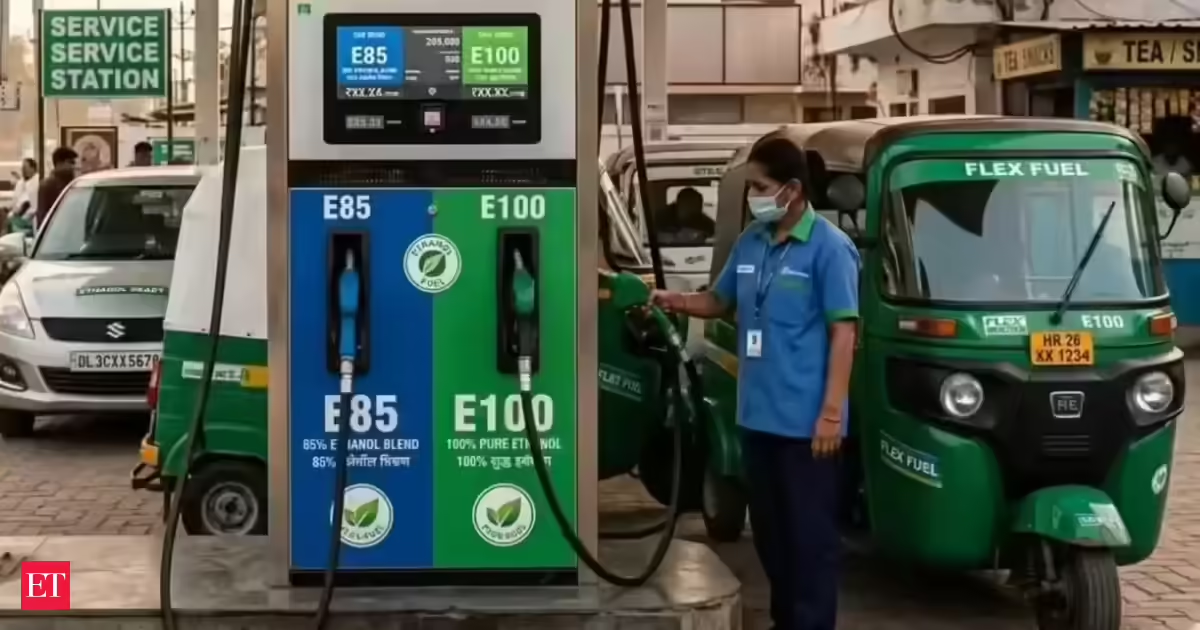
SynopsisIndia is set to boost E100 flex fuel availability with 5,000 dispensing stations planned within two years. This initiative aims to significantly cut crude oil imports. Automobile and oil companies are collaborating on this roadmap. The government's plan includes phased rollout of E100 pumps across major cities, paving the way for flex fuel vehicles.ET BureauNew Delhi: The Centre is working on fast-tracking availability of E100 flex fuel, or 100% ethanol, by putting in place 5,000 dispensing stations across the country over the next two years, to reduce crude imports, people aware of the development told ET.The government, for the first time, apprised representatives from automobile and oil marketing companies (OMCs) of the road map for establishment of infrastructure to run flex fuel vehicles (FFVs) on May 4, they said.All major four-wheeler and two-wheeler makers in the country, including Maruti Suzuki, Hyundai, Tata Motors, Mahindra & Mahindra, Hero MotoCorp and TVS Motor Company, have readied prototypes of FFVs.Read more: India proposes new vehicle rules to allow higher ethanol-blended fuelsThey have not yet launched these vehicles due to lack of E100 fuel pumps and clarity over pricing of E100, industry insiders said.As per the plan outlined by the Ministry of Petroleum and Natural Gas, 150 retail outlets for E100 fuel will be made operational in the next one month across Delhi, Mumbai, Pune and Nagpur.In the next 6-12 months, in addition to deeper penetration in Delhi-NCR and Maharashtra, infrastructure would be expanded to Bengaluru, Chennai, Kolkata and Hyderabad. The Centre is targeting commissioning 500 retail outlets for E100 in this period. Thereafter, 5,000 retail outlets will be made functional mid-term, within 24 months, people cited above said.Flex fuel vehicles will help India save forex from crude imports, which totalled ₹10.9 lakh crore in FY26. These vehicles not only enable higher ethanol blends, but also give customers the flexibility to put whatever fuel is available."FFVs offer a major opportunity for India," said Deepak Ballani, director general of Indian Sugar & Bioenergy Manufacturing Association (ISMA). "While nearly 85-90% of crude oil is imported, 100% of ethanol is produced in India, supporting nearly 70-80 million farmers and stakeholders linked to the ethanol ecosystem."Ballani, however, said tax incentives like lower GST will be key for mass adoption of FFVs.Also read: There is no future for petrol and diesel vehicles, Nitin Gadkari saysSociety of Indian Automobile Manufacturers (SIAM) had earlier suggested that E100 be priced 30% lower than normal petrol to compensate for lower fuel efficiency of FFVs. It also urged the government to extend fiscal support to ensure adoption of FFVs.A senior official at Indian Oil Corporation (IOC) said the state-owned oil marketer had rolled out E100 fuel at close to 400 outlets as a pilot, but the offtake was negligible. "We've since scaled back sharply," the person said. "The core issue is structural as India has an extremely limited base of flex-fuel vehicles and E100 also delivers lower fuel efficiency compared to regular petrol, making it unattractive for consumers."The official added that E100 currently accounts for an insignificant share of retail fuel sales, not even 0.5%, with flex-fuel vehicle penetration still at a nascent stage in India.India currently blends 20% ethanol in petrol.Read More News on...moreless
Ready to flex ethanol muscle, E100 gets road map to cut oil imports
India is set to boost E100 flex fuel availability with 5,000 dispensing stations planned within two years. This initiative aims to significantly cut crude oil imports. Automobile and oil companies are collaborating on this roadmap. The government's plan includes phased rollout of E100 pumps across major cities, paving the way for flex fuel vehicles.
531 words~2 min read