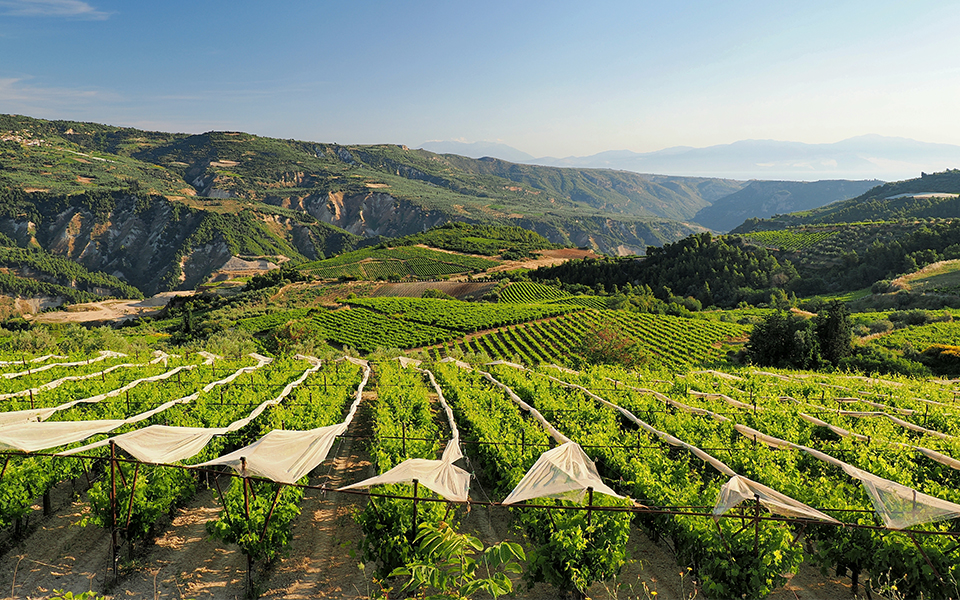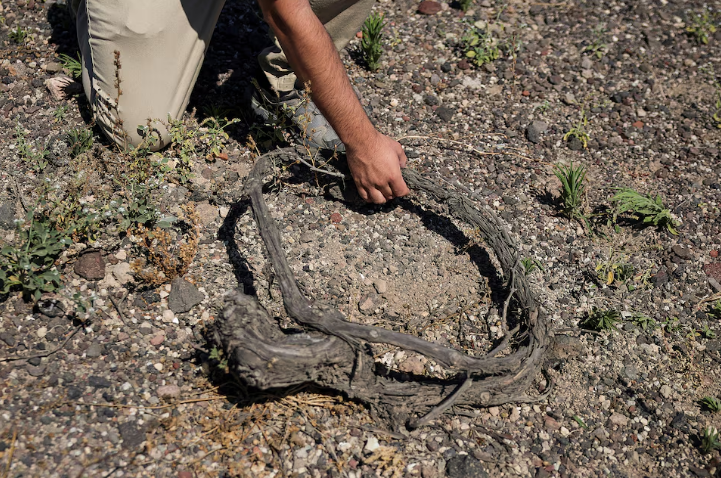
Winemaker Yiannis Boutaris holds a dried-up traditional ‘kouloura’ vine, woven into the shape of a basket to protect the grapes from the grueling summer sun, which endured for 90 years but was finally killed by heat and drought near Oia. [Louisa Gouliamaki/Reuters]
In a vineyard on the Greek island of Santorini, winemaker Yiannis Boutaris gestures to a dried-up ‘kouloura’ vine trained into the shape of a basket to protect the grapes from the grueling summer sun. The plant endured for 90 years but was finally killed by heat and drought.
Its fate highlights a growing problem on Santorini, where low rainfall and searing temperatures from 2023-2025 have increased the price of grapes, slashed wine production and intensified concerns over water supply – an issue blighting much of Greece as climate change makes summers hotter and rainfall more erratic.
“The lack of rain, in combination with the lack of cultivation, in the last couple of years has led to these old vineyards really dying,” said Boutaris, whose winery has its own vineyards and also buys grapes – including from the vineyard with the dying vines.
“The main thing for our winery is we are not abandoning tradition … we are adapting the vineyard to the new circumstances.”