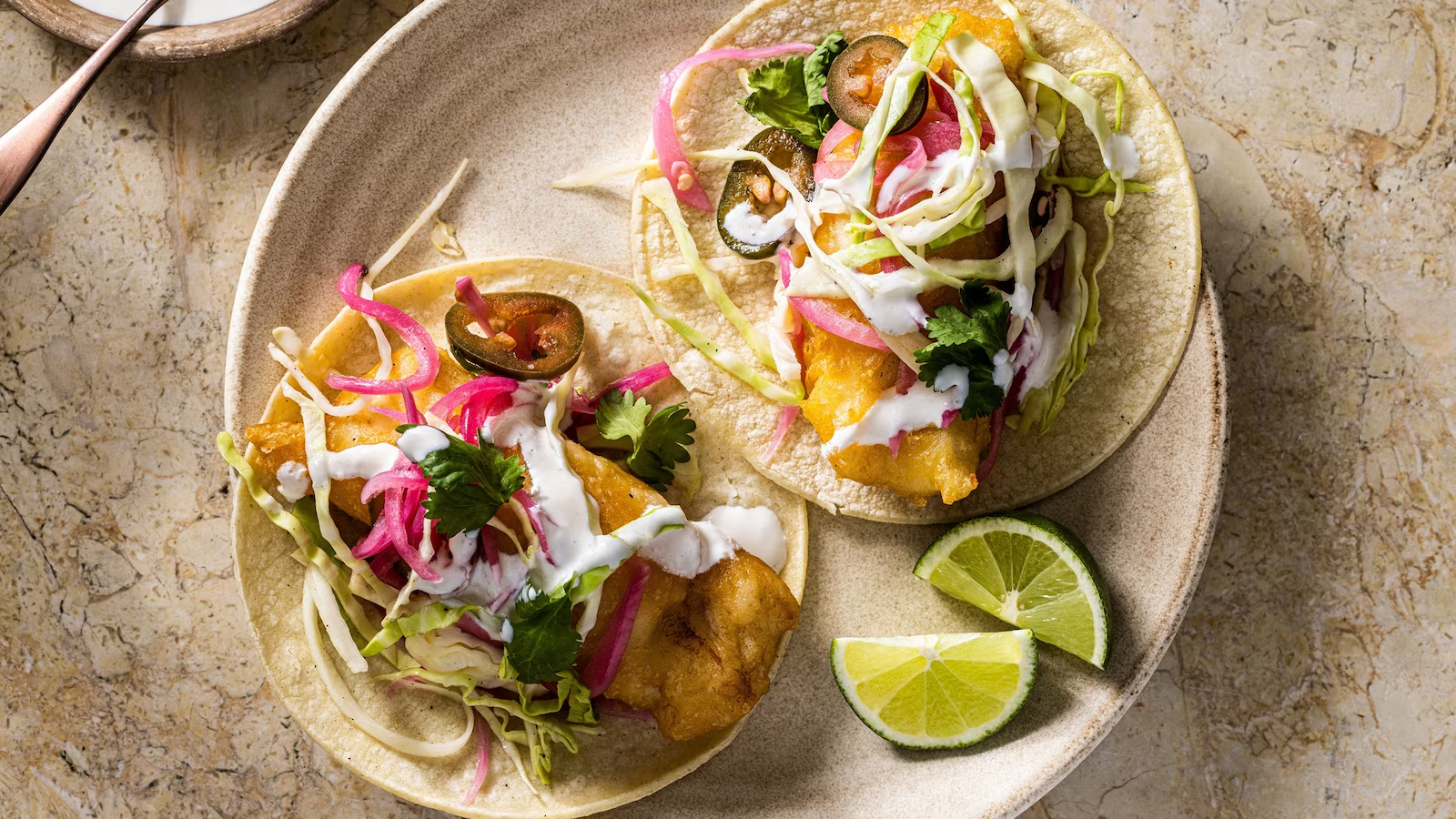
As America gears up to celebrate Independence Day, "Good Morning America" is taking a culinary road trip across the country with the help of "America's Test Kitchen.""America's Test Kitchen" TV hosts Bridget Lancaster and Julia Collin Davison joined "GMA" on Monday to share regional recipes inspired by different states, including California fish tacos, West Virginia pepperoni rolls and fresh Delaware peach pie.Find the recipes below and try them at home.California Fish Tacos A plate of California battered fish tacos.America's Test Kitchen"Why This Recipe Works: Simple, satisfying, fresh fish tacos from the West Coast combine fried fish, sliced cabbage, and a creamy white sauce in a corn tortilla," Julia writes."We chose mild but sturdy white fish for our tacos and tossed it in an ultrathin beer batter to avoid a thick, bready coating. Cornstarch and baking powder in the batter ensure that the fish fries up golden brown and crispy," she continues. "A quick pickle of red onions and jalapeños adds color and spice to the tacos, and we use a portion of the vinegary pickling liquid to dress shredded cabbage.""Light-bodied American lagers, such as Budweiser, work best here. Cut the fish on a slight bias if your fillets aren’t quite 4 inches wide. You should end up with about 24 pieces of fish," Julia further writes.Yield: Serves 6Time: 1 1/4 hours, plus 30 minutes picklingIngredients1 small red onion, halved and sliced thin2 jalapeño chiles, stemmed and sliced into thin rings1 cup white wine vinegar2 tablespoons lime juice1 tablespoon sugar1 teaspoon table saltFor the cabbage3 cups shredded green cabbage1/4 cup pickling liquid from pickled onions1/2 teaspoon table salt1/2 teaspoon pepperFor the white sauce1/2 cup mayonnaise1/2 cup sour cream2 tablespoons lime juice2 tablespoons milkFor the fish2 pounds skinless whitefish fillets, such as cod, haddock, or halibut, cut crosswise into 4 by 1-inch strips1 1/2 teaspoons table salt, divided1/2 teaspoon pepper3/4 cup all-purpose flour1/4 cup cornstarch1 teaspoon baking powder1 cup beer1 quart peanut or vegetable oil for frying24 (6-inch) corn tortillas, warmed1 cup fresh cilantro leavesDirectionsFor the pickled onions: Combine 1 small red onion, halved and sliced thin, and 2 thinly sliced jalapeños in medium bowl. Bring 1 cup white wine vinegar, 2 tablespoons lime juice, 1 tablespoon sugar, and 1 teaspoon salt to boil in small saucepan. Pour vinegar mixture over onion mixture and let sit for at least 30 minutes. (Pickled onions can be made and refrigerated up to 2 days in advance.)For the cabbage: Toss 3 cups shredded green cabbage, 1/4 cup pickling liquid from pickled onions, 1/2 teaspoon salt, and 1/2 teaspoon pepper together in bowl.For the white sauce: Whisk 1/2 cup mayonnaise, 1/2 cup sour cream, 2 tablespoons lime juice, and 2 tablespoons milk together in bowl. (Sauce can be made and refrigerated up to 2 days in advance.)For the fish: Adjust oven rack to middle position and heat oven to 200 degrees. Set wire rack in rimmed baking sheet. Cut 2 pounds skinless whitefish fillets crosswise into 4-by-1-inch strips. Pat fish dry with paper towels and season with 1/2 teaspoon salt and 1/2 teaspoon pepper. Whisk 3/4 cup all-purpose flour, 1/4 cup cornstarch, 1 teaspoon baking powder, and remaining 1 teaspoon salt together in large bowl. Add 1 cup beer and whisk until smooth. Transfer fish to batter and toss until evenly coated.Add 1 quart peanut oil to large Dutch oven until it measures about 3/4 inch deep and heat over medium-high heat to 350 degrees. Working with 5 to 6 pieces at a time, remove fish from batter, allowing excess to drip back into bowl, and add to hot oil, briefly dragging fish along surface of oil to prevent sticking. Adjust burner, if necessary, to maintain oil temperature between 325 and 350 degrees. Fry fish, stirring gently to prevent pieces from sticking together, until golden brown and crispy, about 2 minutes per side. Transfer fish to prepared wire rack and place in oven to keep warm. Return oil to 350 degrees and repeat with remaining fish.Divide fish evenly among 24 warmed corn tortillas. Top with pickled onions, cabbage, white sauce, and 1 cup cilantro leaves. Serve.Peach Pie"Why This Recipe Works: Juicy summer peaches usually produce soupy peach pies. We corralled the moisture that peaches give off during cooking in a number of ways," Bridget writes."First, we macerate the peaches to draw out some of their juices and add back to the filling only a specific amount," she continues. "Second, we use both cornstarch and pectin to bind up what remains. Using two thickeners leaves the pie with a clear, silky texture without any of the gumminess or gelatinous texture that larger amounts of either one alone produces. Finally, we use a reliable, delicious lattice crust, the open nature of which lets moisture cook off as the pie bakes.""If your peaches are too soft to withstand the pressure of a peeler, cut a shallow X in the bottom of the fruit, blanch them in a pot of simmering water for 15 seconds, and then shock them in a bowl of ice water before peeling," Bridget goes on. "For fruit pectin we recommend both Sure-Jell for Less or No Sugar Needed Recipes and Ball RealFruit Low or No-Sugar Needed Pectin."Yield: Serves 8Time: 2 hours, plus 4 1/2 hours macerating, freezing, chilling, and coolingIngredientsPie dough for lattice top pies3 cups (15 ounces/425 grams) all-purpose flour2 tablespoons sugar1 teaspoon salt7 tablespoons vegetable shortening, cut into 1/2-inch pieces and chilled10 tablespoons unsalted butter, cut into 1/4-inch pieces and frozen for 30 minutes10 - 12 tablespoons ice waterPeach pie filling3 pounds (1,361 grams) peaches, peeled, quartered, and pitted, each quarter cut into thirds1/2 cup (3 1/2 ounces/99 grams) plus 3 tablespoons sugar, divided1 teaspoon grated lemon zest plus 1 tablespoon juice1/8 teaspoon table salt2 tablespoons low- or no-sugar-needed fruit pectin1/4 teaspoon ground cinnamonPinch ground nutmeg1 tablespoon cornstarchDirectionsFor Pie Dough for Lattice Top Pies: Process flour, sugar, and salt in food processor until combined, about 5 seconds. Scatter shortening over top and process until mixture resembles coarse cornmeal, about 10 seconds. Scatter butter over top and pulse until mixture resembles coarse crumbs, about 10 pulses. Transfer to bowl.Sprinkle 5 tablespoons ice water over flour mixture. With rubber spatula, use folding motion to evenly combine water and flour mixture. Sprinkle 5 tablespoons ice water over mixture and continue using folding motion to combine until small portion of dough holds together when squeezed in palm of your hand, adding up to 2 tablespoons remaining ice water if necessary. (Dough should feel quite moist.) Turn out dough onto clean, dry counter and gently press together into cohesive ball. Divide dough into 2 even pieces and flatten each into 4-inch disk. Wrap disks tightly in plastic wrap and refrigerate for 1 hour or up to 2 days.Popular ReadsFor Peach Pie: Toss 3 pounds quartered peaches, 1/2 cup sugar, 1 teaspoon lemon zest and 1 tablespoon juice, and 1/8 teaspoon salt in medium bowl. Let stand at room temperature for at least 30 minutes or up to 1 hour. Combine 2 tablespoons pectin, 1/4 teaspoon ground cinnamon, pinch nutmeg, and 2 tablespoons sugar in small bowl and set aside.Remove pie dough from refrigerator. Before rolling out dough, let it sit on counter to soften slightly, about 10 minutes. Roll 1 disk of dough into 12-inch circle on lightly floured counter. Transfer to parchment paper–lined baking sheet. With pizza wheel, fluted pastry wheel, or paring knife, cut round into ten 1 1/4-inch-wide strips. Freeze strips on sheet until firm, about 30 minutes.Adjust oven rack to lowest position and heat oven to 425 degrees. Roll other disk of dough into 12-inch circle on lightly floured counter. Loosely roll dough around rolling pin and gently unroll it onto 9-inch pie plate, letting excess dough hang over edge. Ease dough into plate by gently lifting edge of dough with your hand while pressing into plate bottom with your other hand. Leave any dough that overhangs plate in place. Wrap dough-lined pie plate loosely in plastic wrap and refrigerate until dough is firm, about 30 minutes.Meanwhile, transfer 1 cup peach mixture to small bowl and mash with fork until coarse paste forms. Drain remaining peach mixture through colander set in large bowl. Transfer peach juice to liquid measuring cup (you should have about 1/2 cup liquid; if liquid measures more than 1/2 cup, discard remainder). Return peach pieces to bowl and toss with 1 tablespoon cornstarch. Transfer peach juice to 12-inch skillet, add pectin mixture, and whisk until combined. Cook over medium heat, stirring occasionally, until slightly thickened and pectin is dissolved (liquid should become less cloudy), 3 to 5 minutes. Remove skillet from heat, add peach pieces and peach paste, and toss to combine.Transfer peach mixture to dough-lined pie plate. Remove dough strips from freezer; if too stiff to be workable, let stand at room temperature until malleable and softened slightly but still very cold. Lay 2 longest strips across center of pie perpendicular to each other. Using 4 shortest strips, lay 2 strips across pie parallel to 1 center strip and 2 strips parallel to other center strip, near edges of pie; you should have 6 strips in place. Using remaining 4 strips, lay each one across pie parallel and equidistant from center and edge strips. If dough becomes too soft to work with, refrigerate pie and dough strips until dough firms up.Trim overhang to half-inch beyond lip of pie plate. Press edges of bottom crust and lattice strips together and fold under. Folded edge should be flush with edge of pie plate. Crimp dough evenly around edge of pie using your fingers. Using spray bottle, evenly mist lattice with water and sprinkle with remaining 1 tablespoon sugar.Place pie on rimmed baking sheet and bake until crust is set and begins to brown, about 25 minutes. Rotate pie and reduce oven temperature to 375 degrees; continue to bake until crust is deep golden brown and filling is bubbly at center, 30 to 40 minutes longer. Let cool on wire rack for 3 hours before serving.Pepperoni Rolls "Why This Recipe Works: Pepperoni rolls can be greasy and dry with barely enough pepperoni to go around," Bridget writes. "For starters, we microwaved the pepperoni to get rid of some of the oil that was puddling in the baked roll and then saved some of the oil to soften and season the dough. Microwaving the pepperoni upfront meant it would shrink less once inside the roll.""For the dough, we settled on a moist, slightly sweet dough that paired well with the pepperoni. We used four 4-inch pieces of pepperoni in each roll so there was plenty of pepperoni in every bite," she continued.Yield: Makes 16 rollsTime: 2 hours, plus 2 hours risingIngredients4 (7-to-8-ounce/198-to-227-gram) sticks pepperoni, 8 inches long1 1/2 cups plus 1 tablespoon water, divided1 cup whole milk2 tablespoons plus 2 teaspoons sugar6 2/3 cups (33 1/3 ounces/945 grams) plus 1 tablespoon all-purpose flour, divided, plus extra as needed1 tablespoon instant or rapid-rise yeast2 teaspoons table salt1 large egg4 teaspoons sesame seedsDirectionsCut 4 pepperoni sticks in half crosswise, then cut each half in half lengthwise. Slice each quarter lengthwise into four 4-inch wedges. (You should have 64 wedges.) Place pepperoni in large bowl and microwave until fat is rendered, about 3 minutes. Using tongs, transfer pepperoni to paper towel–lined plate; reserve 3 tablespoons pepperoni oil. Do not wash bowl.Combine 1 1/2 cups water, 1 cup whole milk, and 2 tablespoons plus 2 teaspoons sugar in 4-cup liquid measuring cup. Microwave until temperature registers 110 degrees, 1 to 2 minutes. Stir in reserved pepperoni oil.Using stand mixer fitted with dough hook, mix 6 2/3 cups (33 1/3 ounces) all-purpose flour, 1 tablespoon instant yeast, and 2 teaspoons table salt on low speed until combined, about 30 seconds. With mixer running, slowly add water mixture until incorporated. Increase speed to medium and mix until dough is shiny and smooth and pulls away from sides of bowl, about 8 minutes. (If dough appears wet, add additional flour 1 tablespoon at a time.) Turn dough onto lightly floured counter and knead briefly to form cohesive ball. Transfer dough to reserved bowl and turn to coat with residual pepperoni oil in bowl. Cover with plastic wrap and let rise in warm place until doubled in size, 50 to 60 minutes.Transfer dough to lightly floured counter and divide into 16 equal (3½-ounce) pieces. Working with 1 piece at a time (keep remaining pieces covered with plastic), form dough into balls, cover with plastic, and let rest for 5 minutes.Line rimmed baking sheet with parchment paper. Toss pepperoni wedges with remaining 1 tablespoon all-purpose flour to coat. Working with 1 dough ball at a time, use hands to press ball into 6 by 4-inch rectangle. Starting along short side of rectangle, lay 4 pieces of pepperoni side by side, half-inch apart, and roll into tight cylinder, pinching seam to seal. Leave ends of rolls open. Arrange rolls seam side down on prepared baking sheet, end to end, half-inch apart, and 4 per row. Cover with plastic and let rise until doubled in size, 50 to 60 minutes. Adjust oven rack to middle position and heat oven to 375 degrees.Beat 1 large egg with remaining 1 tablespoon water in small bowl. Brush rolls with egg mixture and evenly sprinkle with 4 teaspoons sesame seeds. Bake until golden brown, 24 to 28 minutes. Transfer baking sheet to wire rack and let cool for at least 15 minutes. Serve. (Baked and cooled rolls can be wrapped in plastic, placed in a zipper-lock bag, and frozen for up to 1 month. To reheat, adjust oven rack to middle position and heat oven to 350 degrees. Remove plastic and wrap each roll in foil. Bake directly on oven rack until heated through, 35 to 45 minutes.)Black & White Cookies "Why This Recipe Works: This enormous New York City deli favorite begins with a cakelike 'cookie' bottom," Julia writes. "Our glaze needed milk for flavor but required the addition of just enough corn syrup to make it thick enough to rest on top of the cookies instead of sinking in and disappearing.""Twelve cookies doesn’t sound like much, but these cookies are huge. You’ll get neater cookies if you spread on the vanilla glaze first," she continued. "This recipe provides a little extra glaze, just in case."Yield: Makes 12 cookiesTime: 1 hour, plus 2 1/4 hours coolingFor the cookies1 3/4 cups (8 3/4 ounces/248 grams) all-purpose flour1/2 teaspoon baking powder1/4 teaspoon baking soda1/8 teaspoon table salt10 tablespoons unsalted butter, softened1 cup (7 ounces/198 grams) granulated sugar1 large egg2 teaspoons vanilla extract1/3 cup sour cream, dividedFor the glaze5 cups (20 ounces/567 grams) confectioners' sugar, sifted7 tablespoons whole milk, divided2 tablespoons corn syrup1 teaspoon vanilla extract1/2 teaspoon table salt3 tablespoons Dutch-processed cocoa powder, sifted.DirectionsFor the cookies: Adjust oven racks to upper-middle and lower-middle positions and heat oven to 350 degrees. Line 2 baking sheets with parchment paper. Combine 1 3/4 cups (8 3/4 ounces) flour, 1/2 teaspoon baking powder, 1/4 teaspoon baking soda, and 1/8 teaspoon salt in bowl.Using stand mixer fitted with paddle, beat 10 tablespoons softened unsalted butter and 1 cup (7 ounces) granulated sugar on medium-high speed until pale and fluffy, about 2 minutes. Add 1 large egg and 2 teaspoons vanilla and beat until combined. Reduce speed to low and add flour mixture in 3 additions, alternating with ⅓ cup sour cream in 2 additions (about 2½ tablespoons each), scraping down bowl as needed. Give dough final stir by hand.Using greased ¼-cup measure, drop cookie dough 3 inches apart onto prepared baking sheets. Bake until edges are lightly browned, 15 to 18 minutes, switching and rotating sheets halfway through baking. Let cookies cool on sheets for 5 minutes, then transfer to wire rack to cool completely, about 1 hour.For the glaze: Whisk 5 cups (20 ounces) confectioners' sugar, sifted; 6 tablespoons milk; 2 tablespoons corn syrup; 1 teaspoon vanilla; and ½ teaspoon salt together in bowl until smooth. Transfer 1 cup glaze to small bowl; reserve. Whisk 3 tablespoons Dutch-processed cocoa powder, sifted, and remaining 1 tablespoon milk into remaining glaze until combined.Working with 1 cookie at a time, spread 1 tablespoon vanilla glaze over half of underside of cookie. Refrigerate until glaze is set, about 15 minutes. Cover other half of cookies with 1 tablespoon chocolate glaze and let cookies sit at room temperature until glaze is firm, at least 1 hour. Serve. (Cookies can be stored at room temperature for up to 2 days.)Recipes reprinted with permission from "America's Test Kitchen.""GMA" Kitchen PicksBy clicking on these shopping links, visitors will leave ABCNews.com and Goodmorningamerica.com, and these e-commerce sites are operated under different terms and privacy policies. ABC will receive a commission for purchases made through these links. SOME PRICES ARE DYNAMIC AND MAY CHANGE FROM THE DATE OF PUBLICATION. Have questions about ordering or a purchase? Click here.
Must-try July 4th potluck recipes from America's Test Kitchen
Celebrate Independence Day with regional recipes, from California fish tacos to a Delaware peach pie.
2,804 words~13 min read