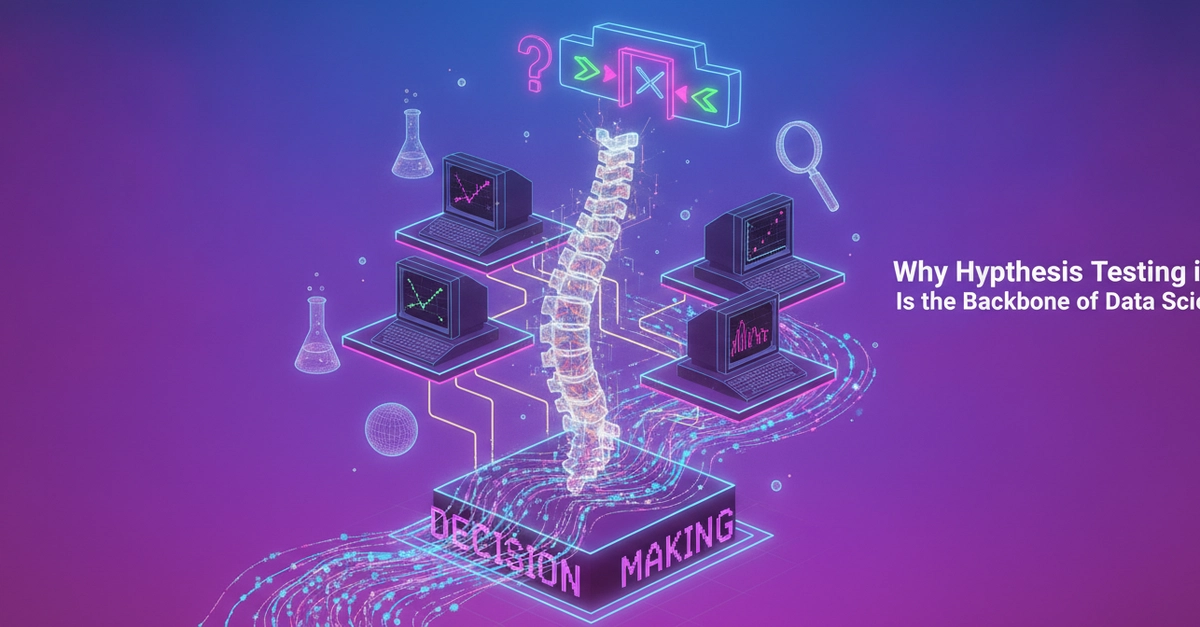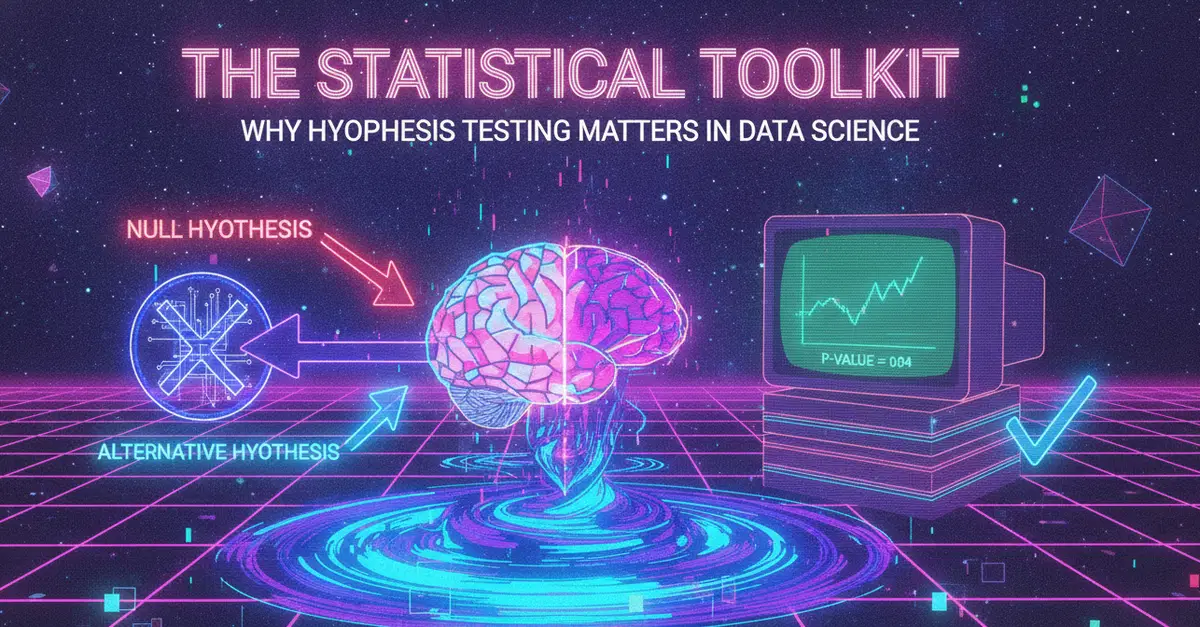
In the era of big data, having information is not enough; the ability to distinguish signal from noise is the true competitive advantage. Hypothesis testing provides the rigorous mathematical framework to make decisions based on evidence rather than intuition.
So far, we've covered four fundamental statistical tests, each serving a unique role in the data analyst's toolkit. Understanding not only how these tests work but also when to use them is critical for transforming raw data into actionable insights.
1. The foundation: distinguishing signal from randomness
Data is inherently noisy. A slight difference in sales between two weeks or a small variation in user engagement might simply be random chance. Hypothesis testing answers one of the most important questions in data analysis:
"Is this pattern real, or did it happen by luck?"