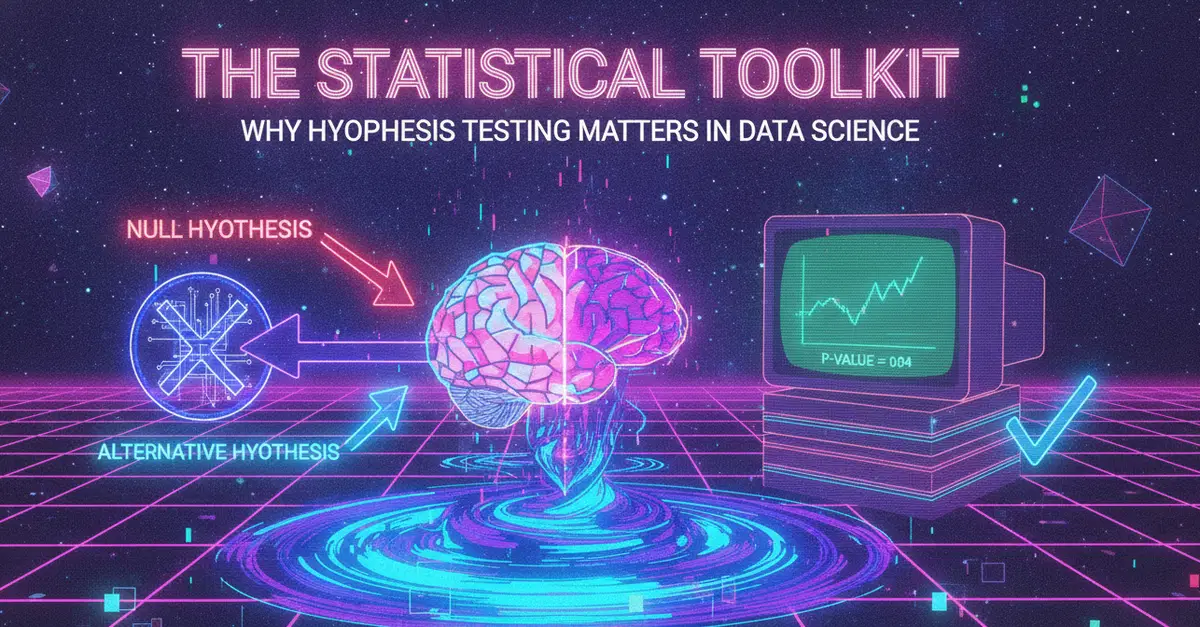
Hypothesis testing, p-values, confidence intervals, statistical power, and the traps that fool even experienced teams.
The Tasting Illusion
In the 1970s, Pepsi ran a marketing campaign that seemed to prove something remarkable: in blind taste tests, more people preferred Pepsi over Coke. The campaign was a sensation — millions of consumers sipped from unmarked cups and pointed to the sweeter drink. Pepsi's stock rose. Coke panicked, reformulated, and launched "New Coke" in 1985, one of the most infamous product launches in history.
The problem wasn't the taste. It was the test. A single sip from a small cup measures immediate sweetness preference, not which beverage someone drinks for decades. The blind test had statistical significance — the difference was real and repeatable — but it lacked practical significance. It measured the wrong thing.
This is the central trap of A/B testing and experimentation: statistical significance does not mean business significance. A test can prove, with 99% confidence, that a button color change increases clicks by 0.3% — a finding that is simultaneously true and useless. This guide explains how to design and interpret experiments that avoid that trap: how to set up hypotheses, calculate whether your sample is large enough, interpret p-values without fooling yourself, and distinguish signals that matter from noise that merely looks convincing.