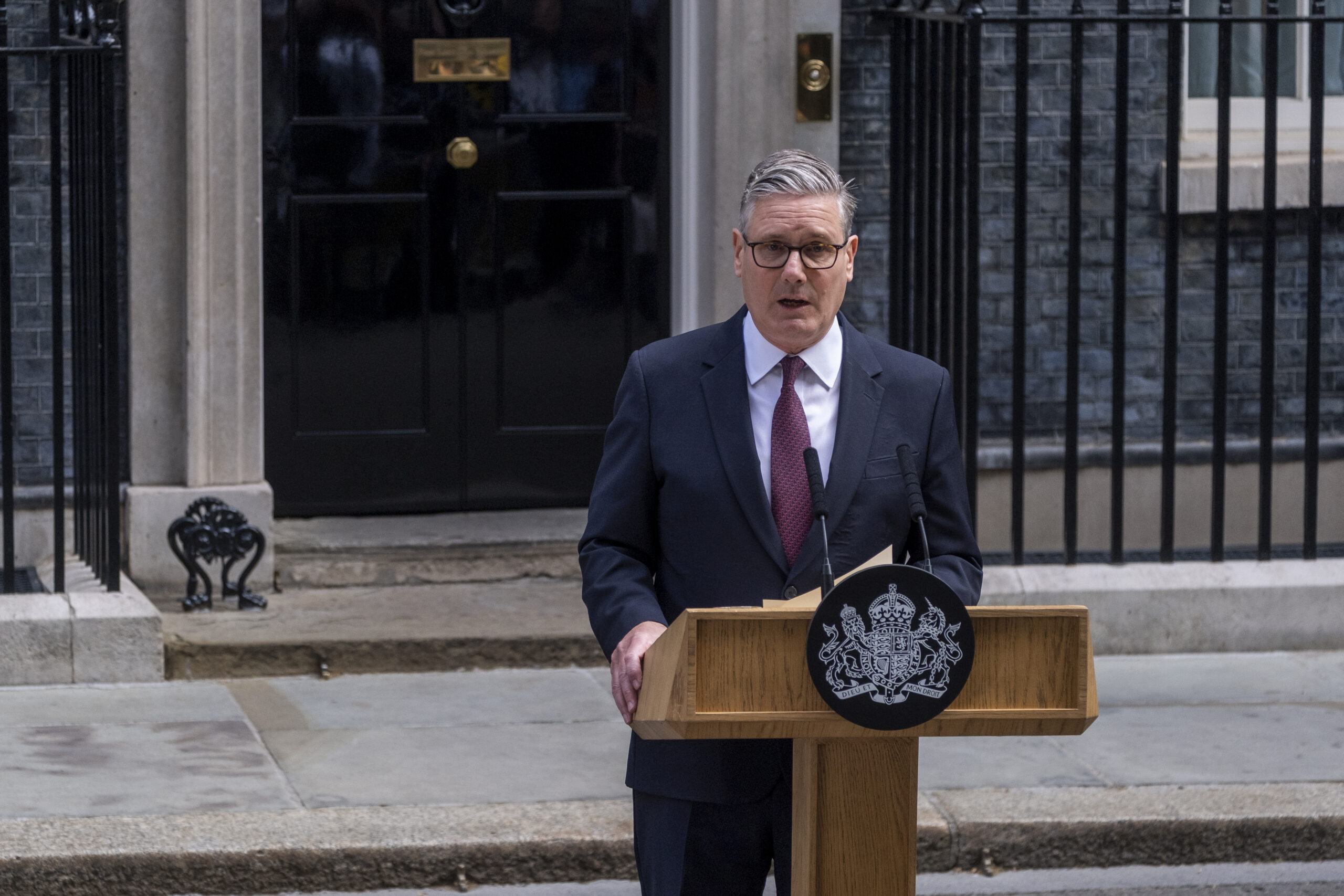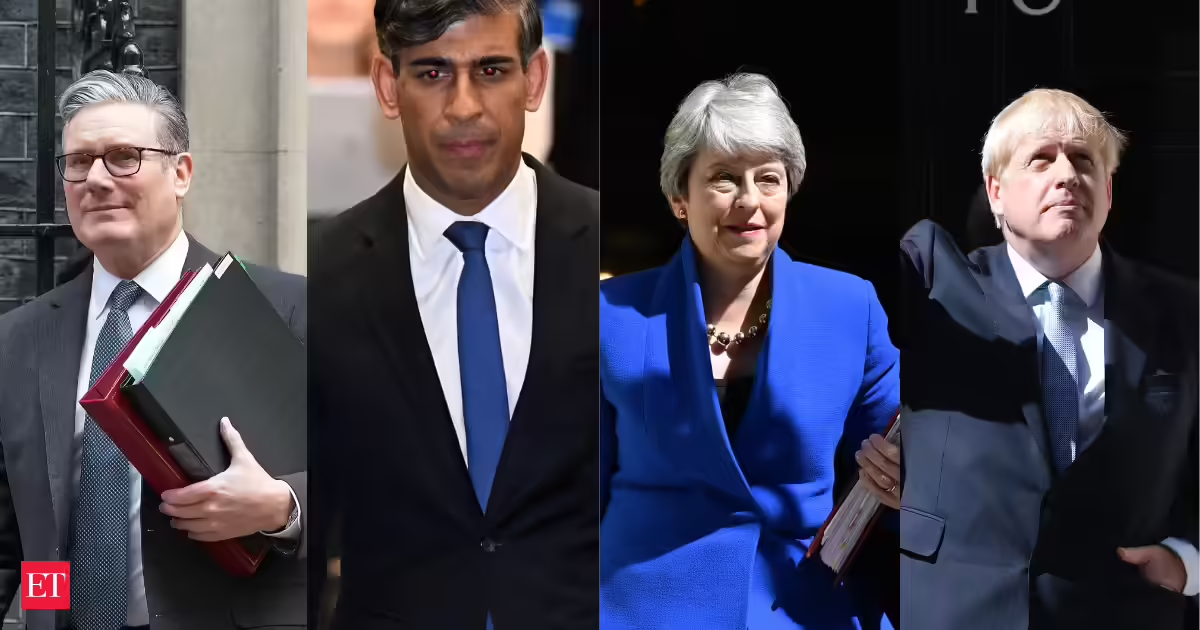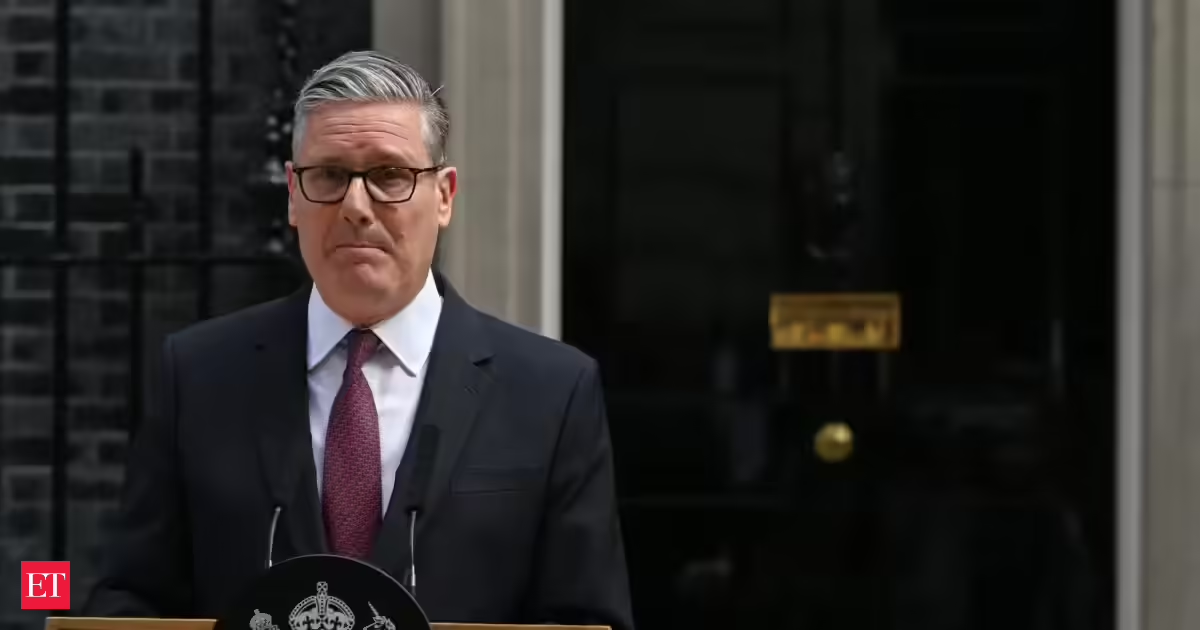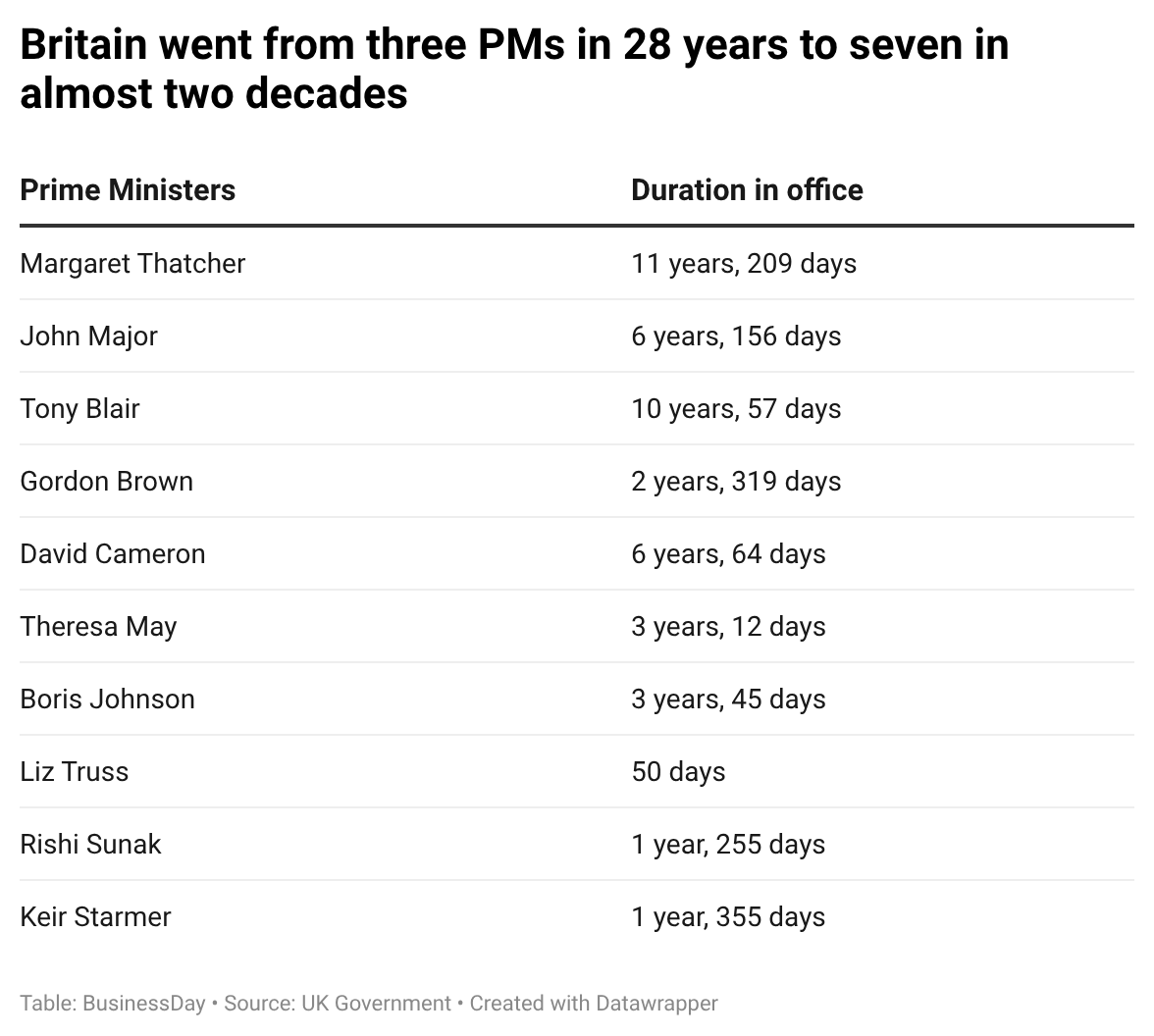
With the resignation of Keir Starmer, the UK is set to have its seventh prime minister in 10 years.
This is a far cry from a country that was once touted for its ability to produce stable and long-lasting governments compared to other European nations, due to its first-past-the-post voting system, the principle of parliamentary sovereignty and its evolutionary tradition of governance.
Since 2016, the political turmoil and polarisation that followed the Brexit referendum, frequent scandals in the previous right-wing Conservative government, and an ailing economy have meant that not a single British prime minister has managed to survive a full parliamentary term from one general election to the next — cycles that are typically meant to last five years.
David Cameron, who campaigned for the UK to remain in the EU, stepped down during his second term in July 2016 after losing the Brexit vote; Theresa May left the post three years later after repeatedly failing to get her Brexit deal through parliament; and Boris Johnson left the job in September 2022 following numerous scandals, including revelations he attended otherwise prohibited parties during the COVID-19 pandemic lockdowns.
His successor, Liz Truss, stayed in the post for only 49 days, becoming the shortest-serving prime minister in British history, after her government's mini-budget sparked severe financial market turmoil.