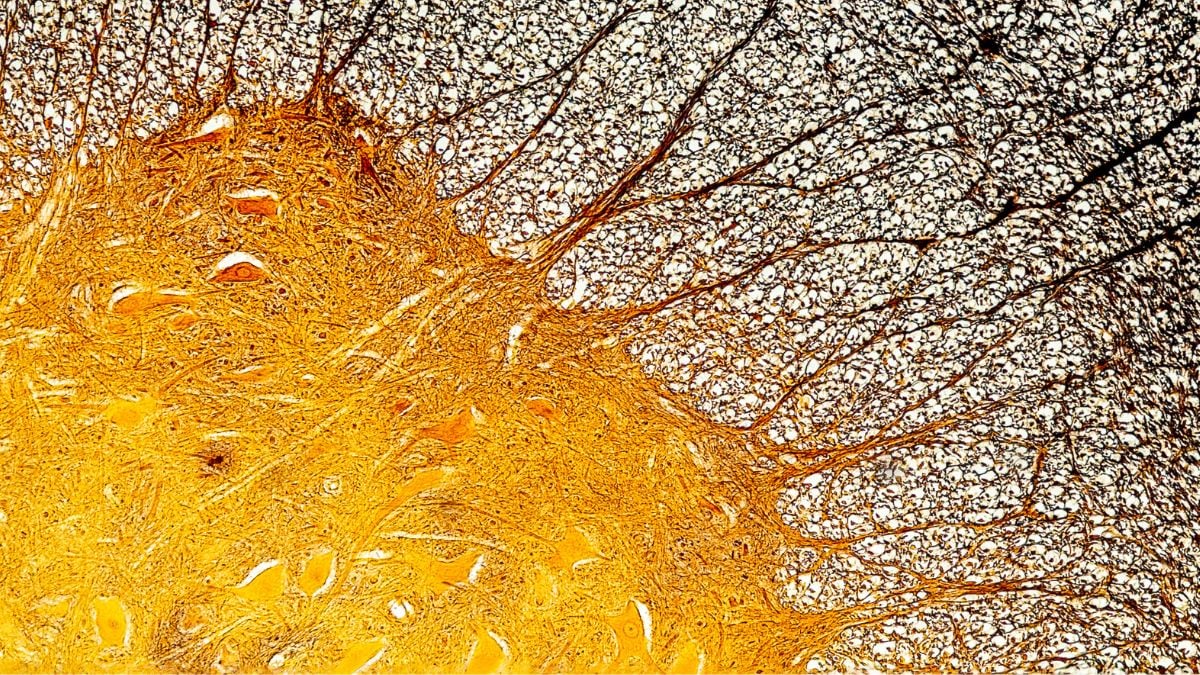
Researchers led by Daan van der Vliet, working with teams from the Netherlands Institute for Neuroscience, Leiden University, and Utrecht University, have identified a biological process that may help explain why multiple sclerosis (MS) becomes especially severe in some patients. Examining brain tissue from people with rapidly progressing MS, they found large numbers of unusual immune cells packed with fat droplets. The findings could point to new treatment strategies and future biomarkers that help predict how quickly the disease will worsen.
MS damages myelin, the fatty protective coating that surrounds nerve fibers in the brain and spinal cord. As this insulation breaks down, patients can develop neurological problems such as difficulty walking or vision impairment.
The disease does not follow the same path in everyone. Some individuals experience relatively mild symptoms for many years, while others develop serious disability and paralysis at a young age. Understanding why these outcomes differ has been a longstanding goal for researchers.
To investigate, the team focused on microglia, specialized immune cells in the brain that remove debris and support tissue repair. In patients with MS, however, these cells can undergo dramatic changes. They become filled with fat droplets, giving them a distinctive foamy appearance. Scientists refer to them as "foamy microglia."