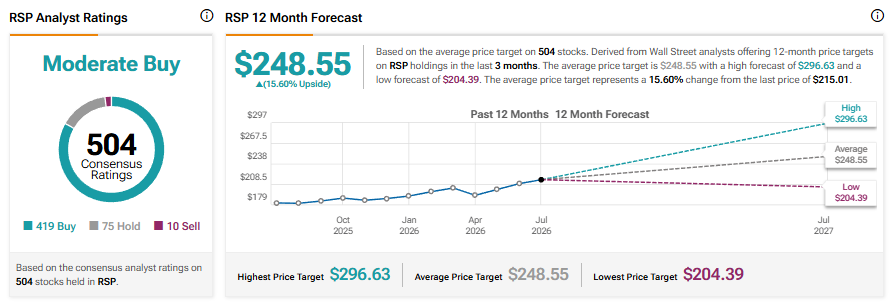
The S&P 500 and its equal-weight sibling are supposed to track the same 500 companies. Same stocks, same universe, same American economy. Yet the two indices are behaving less alike than at any point in recorded history.
The one-year correlation between the S&P Equal Weight Index (SPW) and the cap-weighted S&P 500 (SPX) has fallen to 79%, a record low. For context, a correlation of 1.0 means two things move in perfect lockstep. A reading of 0.79 between two indices holding the exact same companies is, to put it politely, unusual.
What’s actually happening under the hood
The S&P 500 and the S&P Equal Weight Index contain identical stocks. The difference is purely mathematical: how much each stock matters.
In the traditional cap-weighted S&P 500, a company’s influence scales with its market value. The top 10 companies now account for roughly 40% of the entire index’s weight. That means when Apple or Nvidia has a big day, the index moves whether or not the other 490 stocks participate.