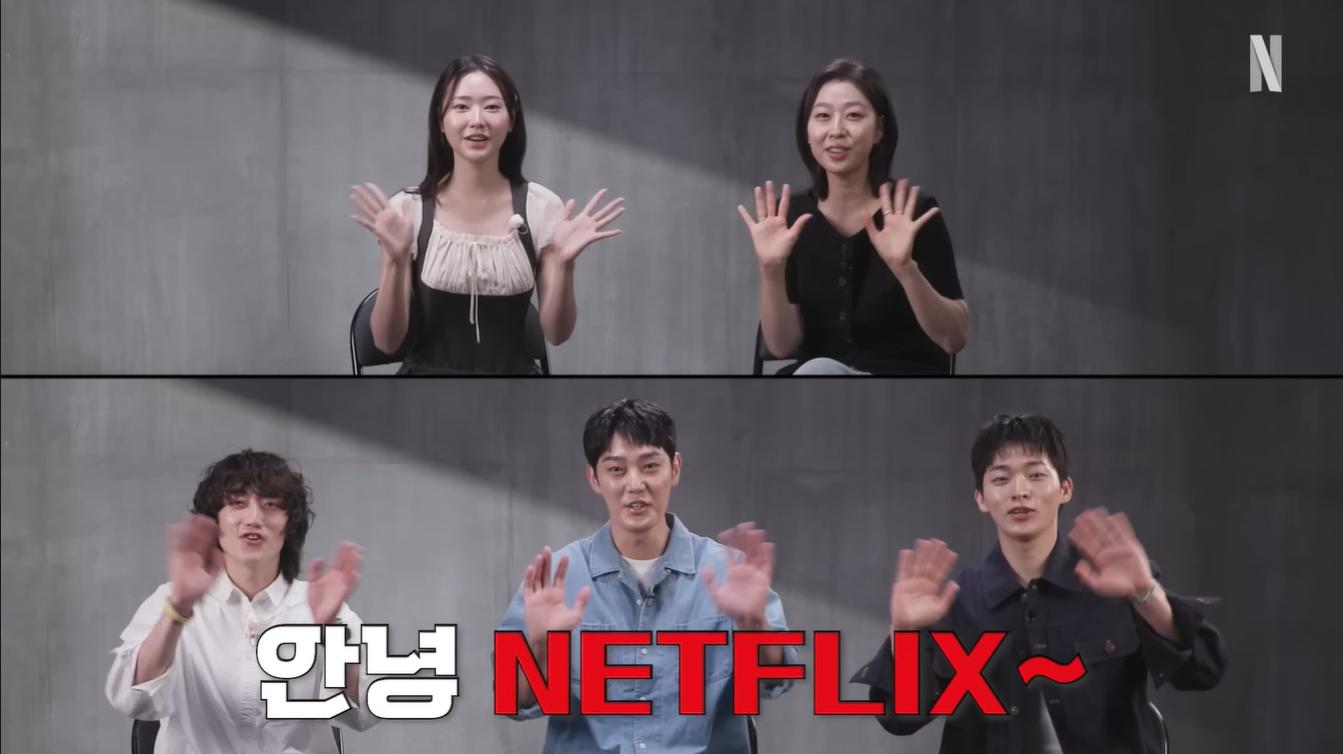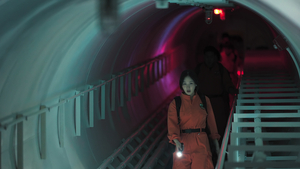
Inspired by failed Biosphere 2 experiment, 'Last Humanity' blends science, celebrity, reality to reinvent Korea's public broadcaster for streaming "The Last Humanity," starring Bibi (EBS) For years, South Korea’s public Educational Broadcasting System has struggled to rival the massive budgets of global streaming originals and star-driven mainstream variety hits. The education-focused network may have finally secured its crossover hit with "The Last Humanity," a science-infused survival reality series filmed on location at the famed Biosphere 2.Constructed in Arizona in 1991 as the world’s largest closed ecological experiment to test self-sustaining space colonies, the facility is operated by the University of Arizona as a living laboratory for climate research."The Last Humanity" leverages the backdrop to set viewers into a speculative 2038, tasking seven participants with securing the future of the human race inside the sealed habitat. "The Last Humanity," starring (from left) Yoo Seung-ho, Lee Nak-joon, Bibi and Jang Hong-jae (EBS) To bridge the gap between hard science and entertainment, the producers assembled an ensemble of celebrities and academics. The lineup features actor Yoo Seung-ho ("God of Study"), singer-actor Bibi ("Gangnam B-Side") and comedian Lee Eun-ji, who share the screen with specialists including neuroscientist Chang Dong-seon and chemist Jang Hong-jae.The gamble appears to have paid off. Following its June 4 Netflix debut, the series entered Netflix's weekly South Korea TV Top 10 at No. 10, before climbing to No. 6 in its second week.The ambitious swing was fueled by a 2 billion won ($1.3 million) production grant from the Korea Foundation for the Advancement of Science and Creativity, which was further supplemented by EBS’ own capital injection."We had long felt frustrated that the kind of programs EBS excels at — and believes it should be making, those with meaningful messages — often struggled to attract broad public attention," co-producer Choi Pyung-soon remarked during a press interview in Seoul on Thursday. Choi spearheaded the project alongside producers Lee Mi-sol and Park Jin-wook.EBS, a public broadcaster primarily dedicated to educational and lifelong learning content, has recently faced a drop in viewership ratings due to the pressures of a shrinking school-age population and soaring production costs.Lee said the creative team intentionally combined environmental science and gaming mechanics to create a format that would resonate with viewers aged 20 to 49 and spark conversation."For years, EBS' primary strategy for reaching the 20-49 audience was through YouTube," Lee noted. "Successfully reaching that audience (via many platforms) changed the conversation inside the company. It showed us there are other ways to expand our reach going forward." From left: Producers of "The Last Humanity" Choi Pyung-soon, Lee Mi-sol and Park Jin-woo participate in press interviews on Thursday in Seoul. (EBS) According to the production team, the conceptual roots of "The Last Humanity" trace back nearly two decades. Lee stated that the inspiration struck 16 years ago after reading Jane Poynter's memoir, "The Human Experiment: Two Years and Twenty Minutes Inside Biosphere 2.""What fascinated me most was that the experiment ultimately failed," Lee said. "I think it became such a landmark because it revealed just how extraordinary Earth's ecosystem really is." She added that even after joining EBS, she kept waiting for the right moment to bring the book's premise to TV. "The Last Humanity" poster (EBS) Unlike standard survival formats that dominate the unscripted landscape, "The Last Humanity" subverts genre tropes by prioritizing collective endurance over individual elimination."Rather than competing or voting people out, the real challenge is figuring out how to sustain the ecosystem through cooperation and coordination," Lee said. "Even the team competitions exist to help maintain the system, which is what sets this show apart from other survival programs."Park echoed the sentiment, noting that the psychological tension comes from a deeper ideological question: "One of the most compelling aspects of the show is watching whether competition or cooperation ultimately proves more effective for humanity's survival within a closed ecosystem." "The Last Humanity," starring Yoo Seung-ho (EBS) With legacy television continuing to face existential threats from digital disruption, the production team views the series as a potential turning point for public broadcasting's modern mandate."As the media landscape changes so quickly, we're constantly asking ourselves what kind of content we should be making and what role a public broadcaster should play," said Park."Even if we no longer reach audiences on the same scale as before, I believe broadcasters still have a responsibility to help sustain the foundations of our communities," Park said. "Regardless of its scale or format, I think this project resonated because it engaged viewers through an immersive experience that reflects the way people consume content today.""The Last Humanity" is an eight-part series that releases each Friday. So far, four episodes have aired, with the finale slated for July 24.
How did EBS science show reach Netflix's top 10?
For years, South Korea’s public Educational Broadcasting System has struggled to rival the massive budgets of global streaming originals and star-driven mainstr
TL;DRAI
EBS's "The Last Humanity" hit Netflix #6 (Korea) in two weeks, blending science with celebrity at Biosphere 2 on €1.3M budget. The format signals how education content can drive mainstream engagement—a playbook for legacy media competing against streaming platforms.
786 words~4 min read