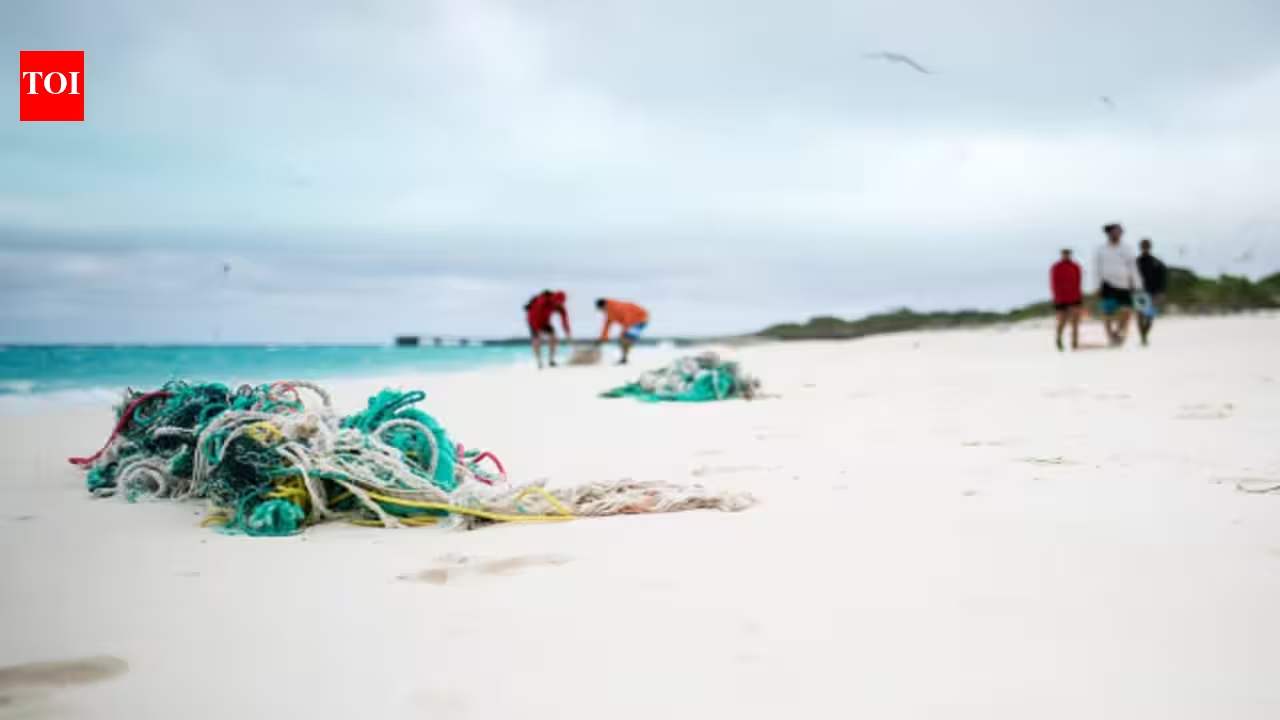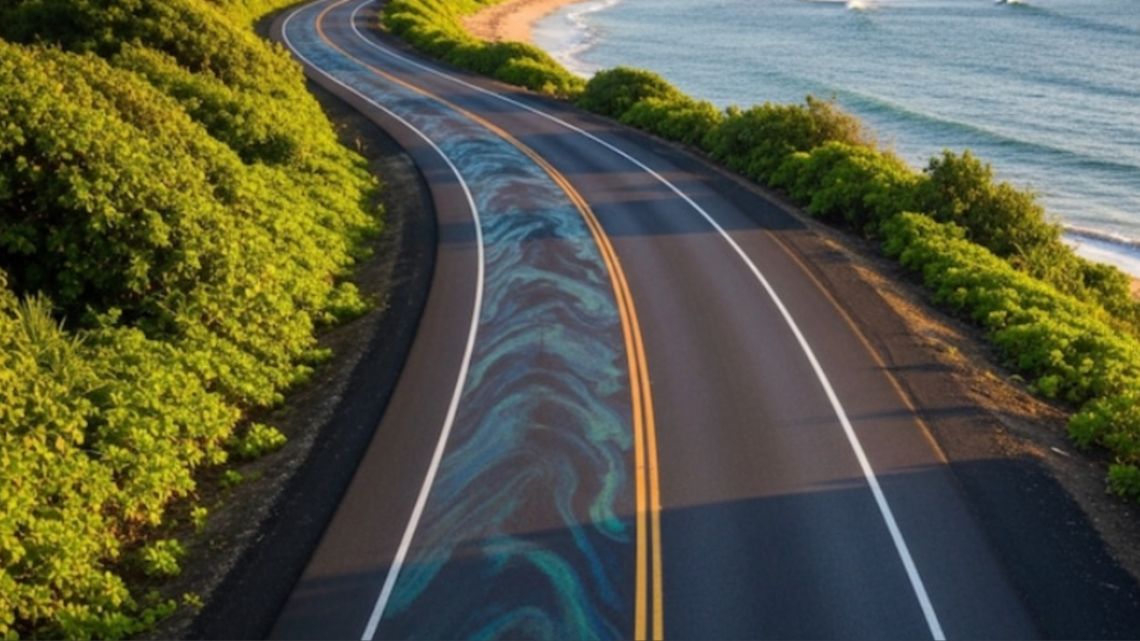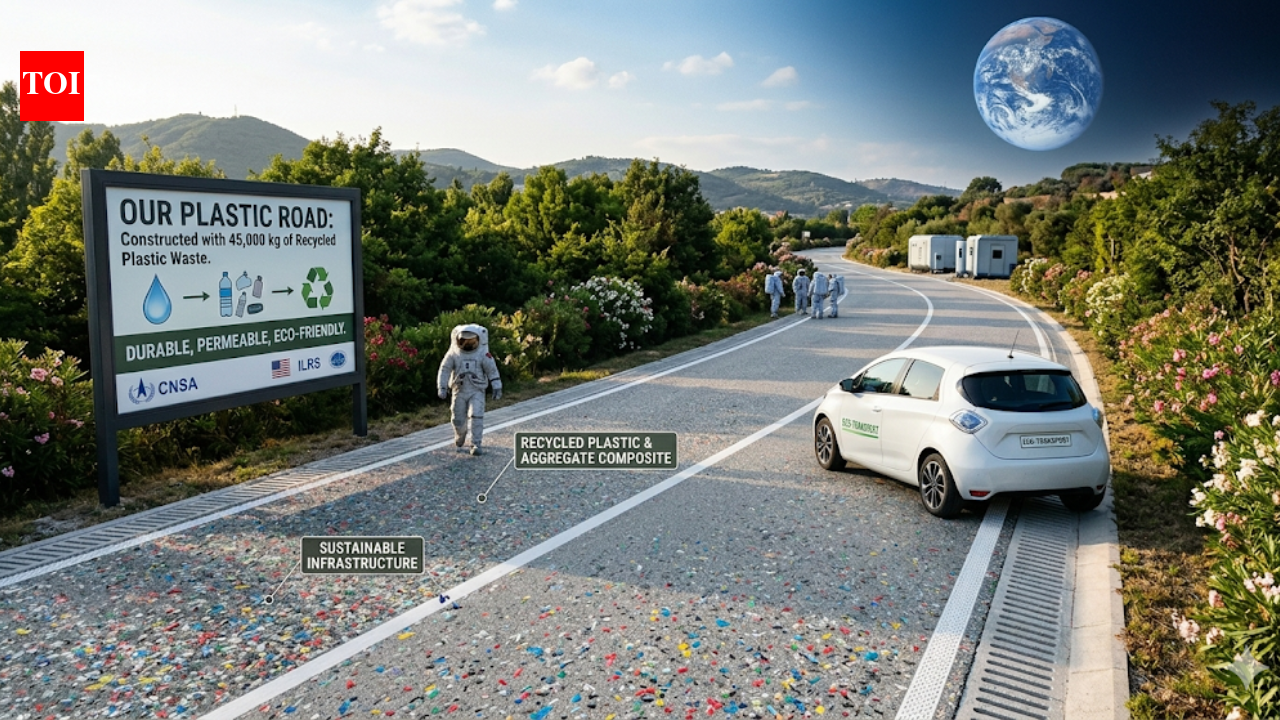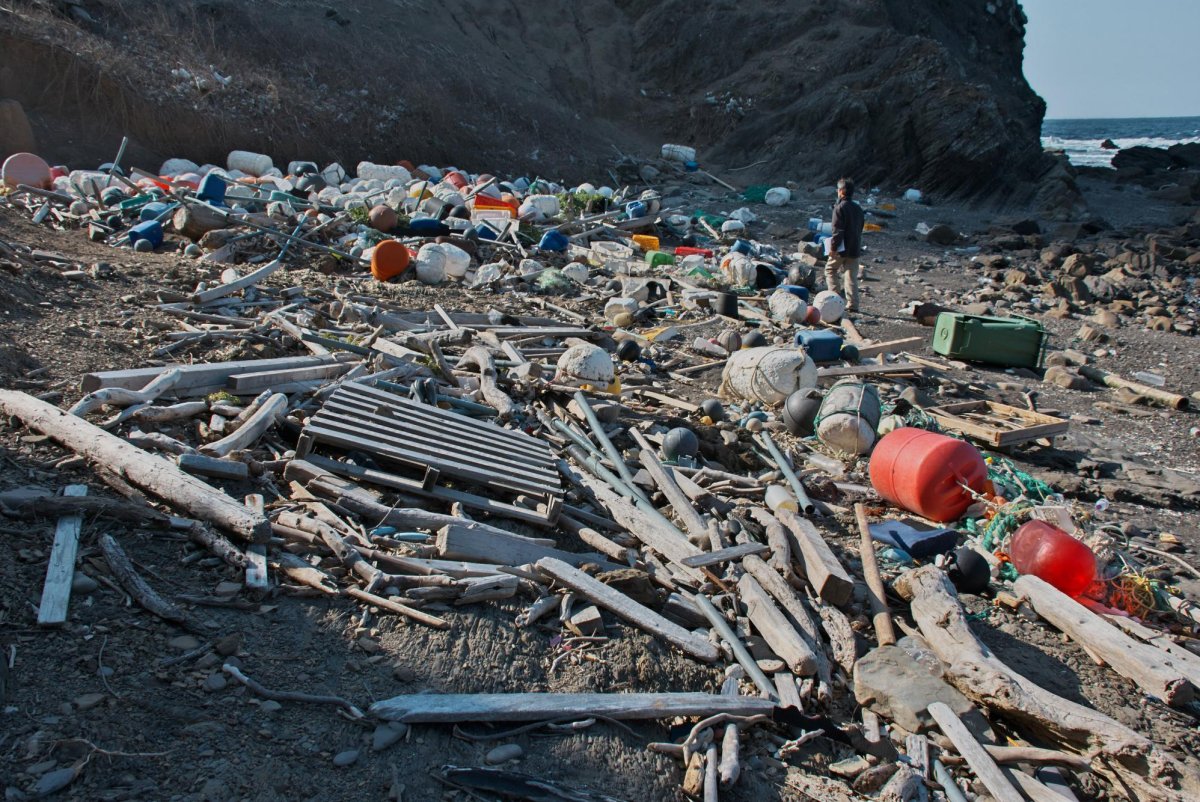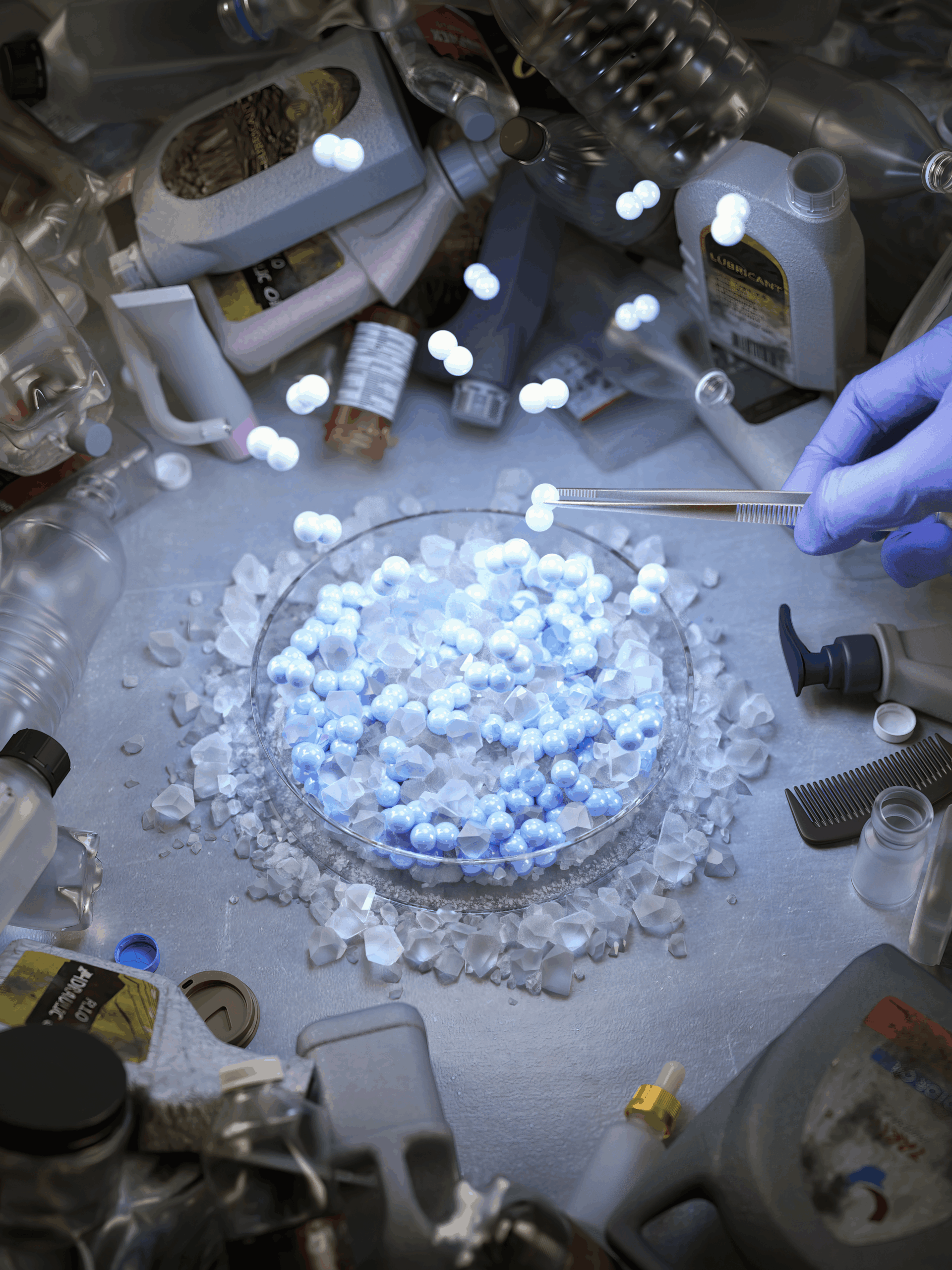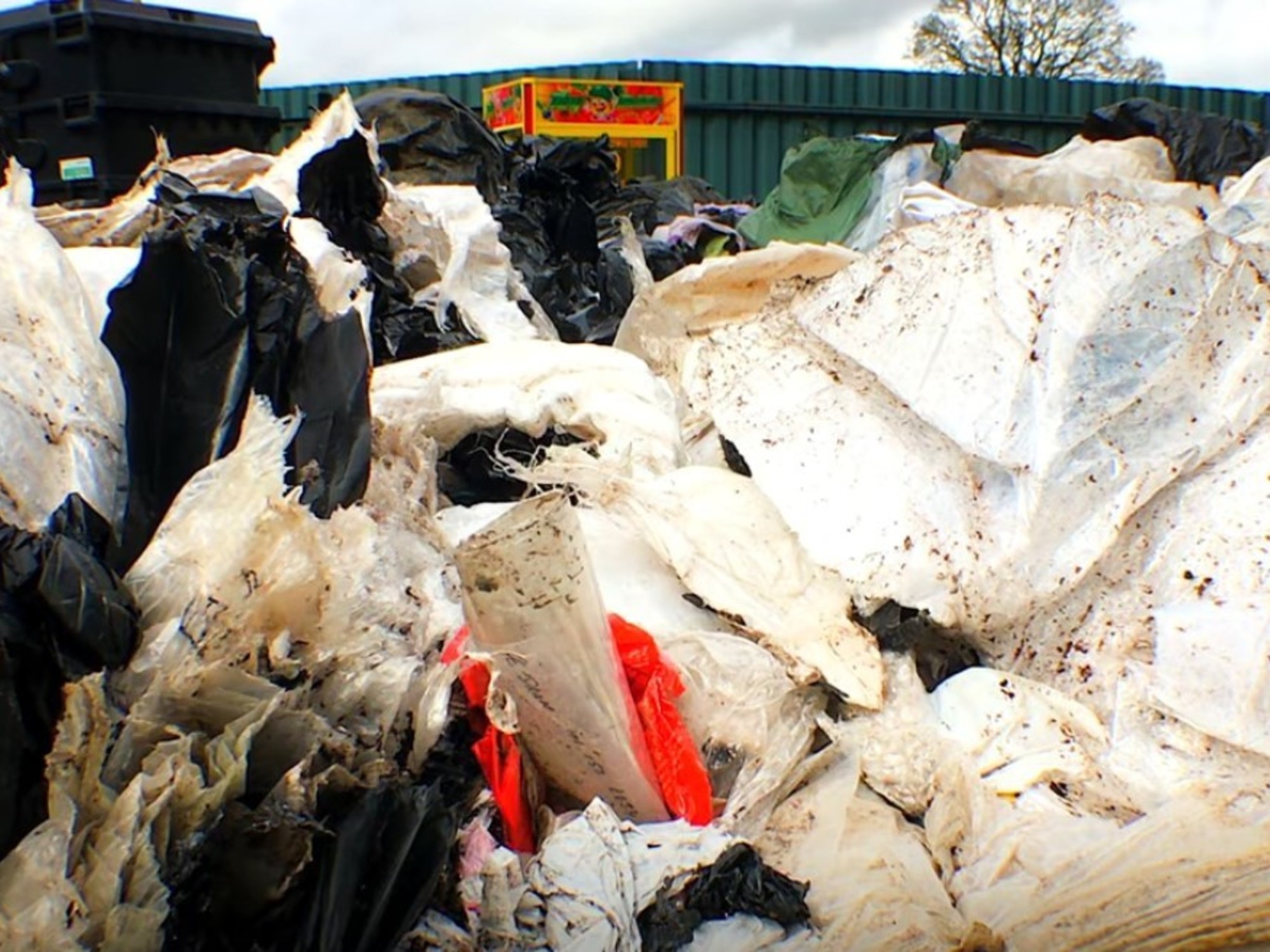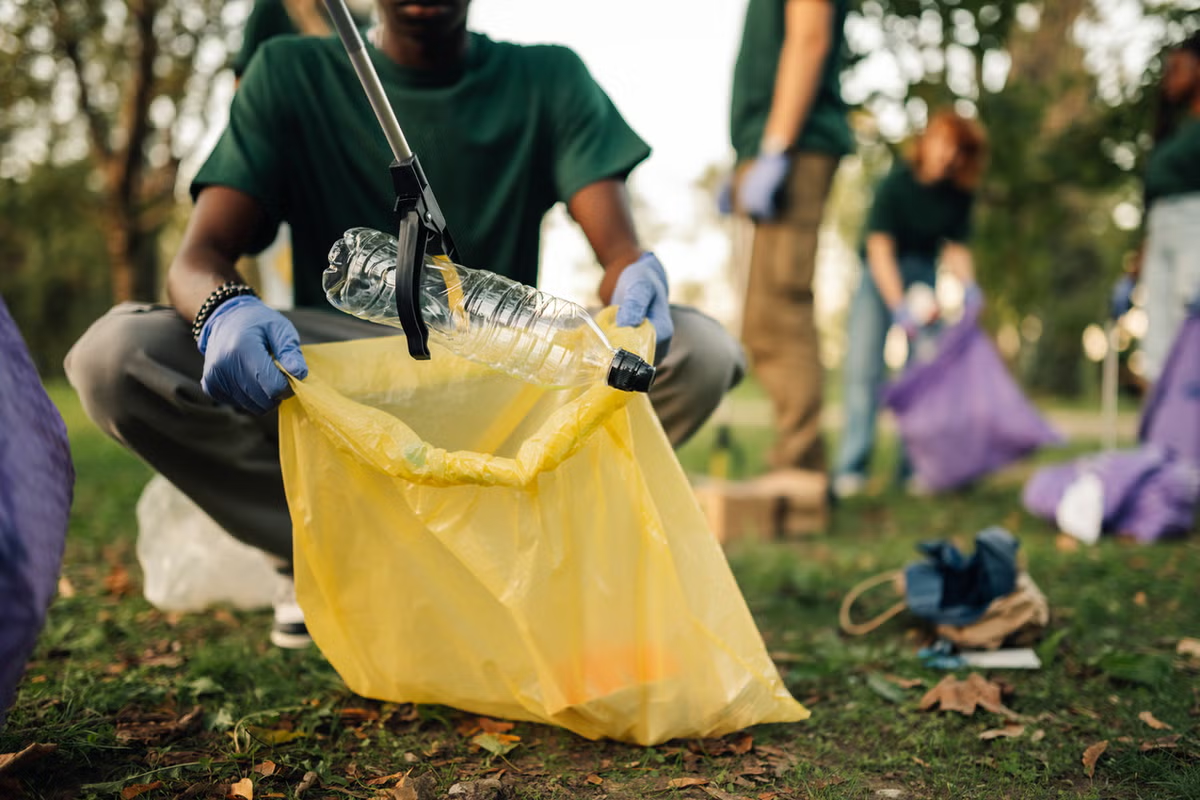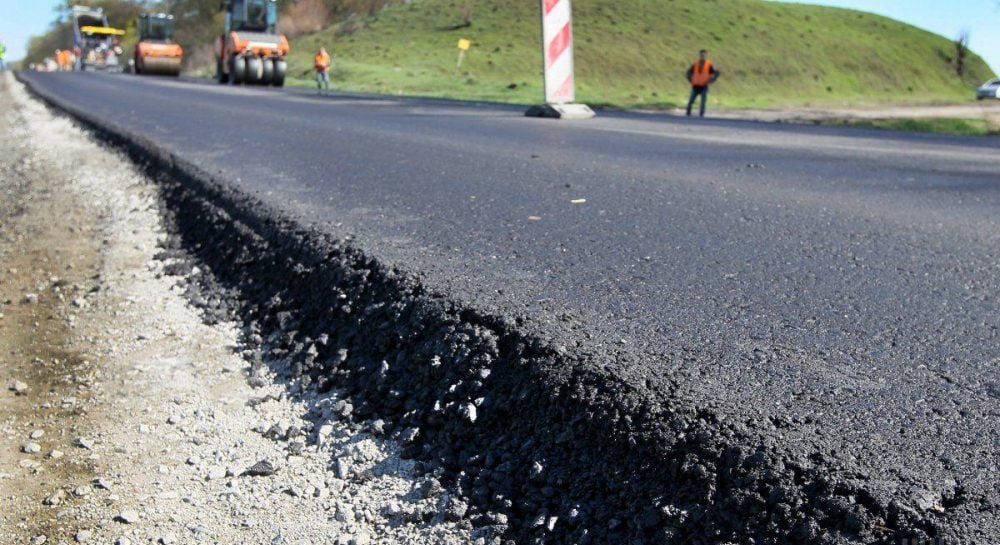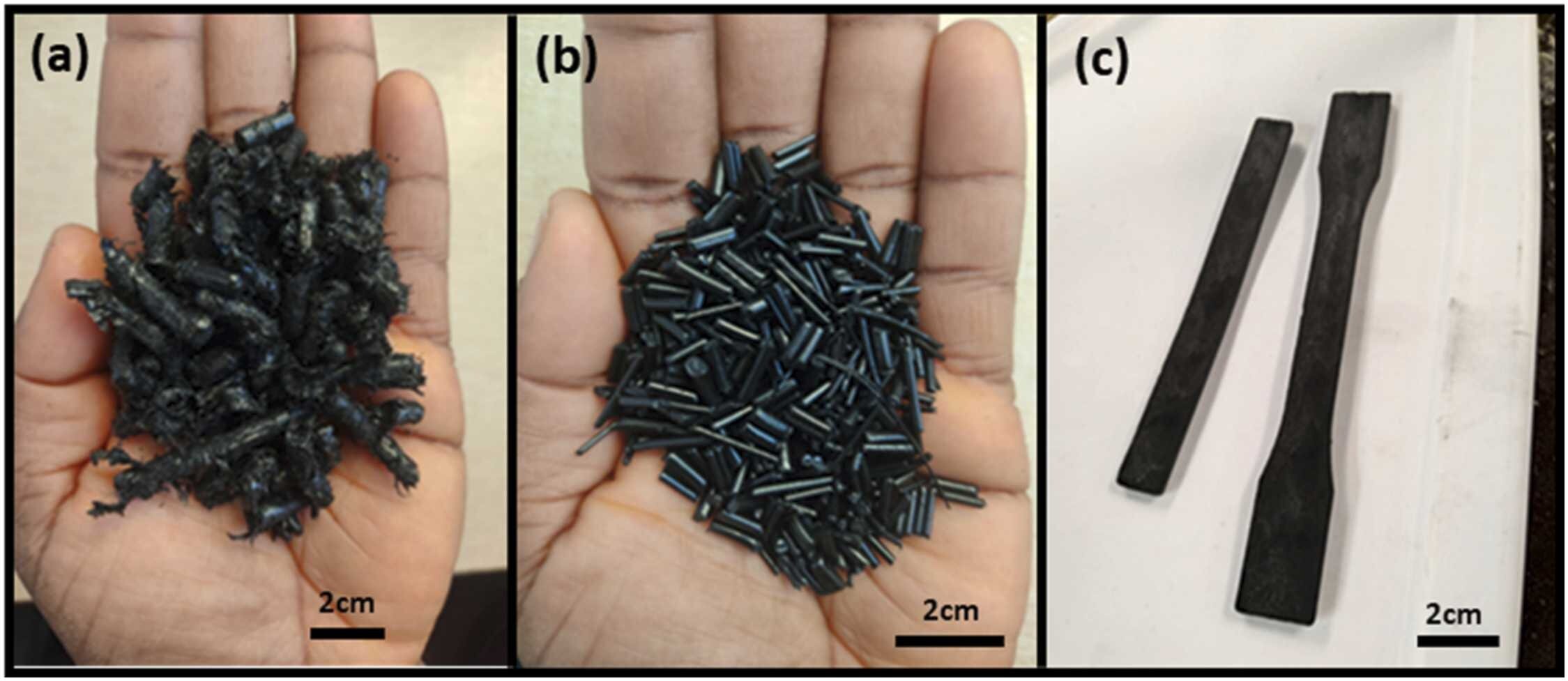
Hawaii faces a growing plastic waste challenge. Recycling on the islands is expensive and difficult, and large amounts of marine debris continue to wash ashore or remain in surrounding waters. Now, researchers are exploring an innovative solution by turning discarded fishing nets and household plastic waste into asphalt for roads. Early results suggest the approach could provide a practical new destination for plastics that might otherwise end up in landfills or the ocean.
Jeremy Axworthy, a researcher at the Center for Marine Debris Research (CMDR) at Hawaiʻi Pacific University, presented the findings at the spring meeting of the American Chemical Society (ACS).
"This work investigates whether it's responsible to use recycled plastics in Hawaii's roads," shares Axworthy. "By reusing plastic waste that is already in Hawaii, we can reduce the environmental and economic impacts of transporting waste plastics from the islands, incinerating it or dumping it in Hawaii's overflowing landfills."
Why Hawaii Is Testing Recycled Plastic Roads
Since 2020, most roads in Hawaii have been built using polymer-modified asphalt (PMA), which is designed to improve strength and durability. Compared with conventional asphalt, PMA is more flexible and better able to resist cracking, rutting, and water damage, making it well suited to Hawaii's tropical climate.