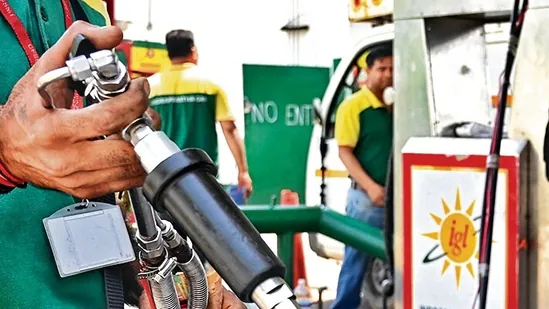
India's transition toward cleaner fuels is gaining momentum. From compressed natural gas (CNG) and compressed biogas (CBG) to emerging hydrogen applications, the country is increasingly investing in sustainable alternatives to conventional fossil fuels. However, while significant attention is given to fuel production and vehicle technology, one critical component often remains overlooked: gas storage.CNG (REPRESENTATIVE PIC)As India expands its clean mobility ecosystem, advanced storage solutions such as Type 4 cylinders are emerging as a key enabler of efficiency, sustainability, and scalability.Type 4 cylinders are high-pressure gas storage vessels that feature a polymer liner fully wrapped with composite materials such as glass fibre or carbon fibre. Unlike traditional steel cylinders, they are significantly lighter while maintaining stringent safety and durability standards.The technology is already being adopted globally across CNG, renewable natural gas (RNG), compressed biogas, and hydrogen applications due to its ability to reduce vehicle weight and improve overall operational efficiency.For India, where transportation accounts for a significant share of emissions and fuel consumption, the benefits could be substantial.Improving vehicle efficiency: Weight directly impacts fuel consumption and vehicle performance. Type 4 cylinders can be considerably lighter than conventional steel alternatives, allowing vehicles to carry more payload while consuming less fuel. For commercial fleets, public transport systems, and logistics operators, this translates into lower operating costs and improved efficiency.Accelerating India's biogas mission: India has immense potential in compressed biogas production, supported by abundant agricultural residues, organic waste, and government initiatives promoting circular economy practices. However, the effectiveness of biogas adoption depends not only on production but also on transportation and storage infrastructure. Lightweight composite cylinders can improve the economics of CBG distribution and make clean fuel adoption more practical across urban and rural markets.Supporting sustainability goals: The environmental advantages extend beyond vehicle emissions. Composite cylinders offer superior corrosion resistance and longer service life, helping reduce maintenance requirements and material consumption over time. As India pursues its net-zero ambitions, technologies that improve efficiency across the entire energy value chain will become increasingly important.Strengthening India's manufacturing ecosystem: The growth of advanced cylinder manufacturing presents a significant industrial opportunity for India.One of the key advantages of local Type 4 cylinder production is the ability to leverage domestically manufactured raw materials, particularly glass fibre, which is a critical component in composite cylinder construction. By sourcing materials locally, manufacturers can reduce supply chain dependencies, improve cost competitiveness, and support the development of a stronger domestic composites industry.India already has a growing ecosystem for composite materials, industrial manufacturing, and engineering expertise. Expanding the production of Type 4 cylinders using Indian-made raw materials can create skilled jobs, encourage technology development, and generate value across the supply chain—from material producers to cylinder manufacturers and end users.In addition, local sourcing can reduce transportation-related emissions and improve supply chain resilience, aligning with India's broader goals of self-reliance and sustainable industrial growth.Glass fibre plays a crucial role in making Type 4 cylinders both lightweight and durable. Its high strength-to-weight ratio allows cylinders to withstand high pressures while significantly reducing overall system weight compared to traditional steel alternatives.As India's glass fibre manufacturing capabilities continue to expand, the country has an opportunity to become a competitive hub for advanced composite storage solutions. This could not only support domestic demand for CNG and CBG applications but also position India as a supplier to international markets seeking lightweight and sustainable storage technologies.India's clean energy transition is about much more than producing alternative fuels. It requires an ecosystem where production, storage, transportation, and end-use technologies work together efficiently.While much of the focus is on cleaner fuels and new vehicle technologies, storage is equally important. Without low emission storage solutions and fossil free use of raw materials, we simply shift emissions elsewhere instead of cutting them. A challenge that applies as much to alternative fuels as to the batteries in electric vehicles.As India expands the use of CNG, compressed biogas, and hydrogen, advanced storage solutions will play a critical role in improving efficiency, strengthening supply chains, and supporting local manufacturing. By leveraging domestic capabilities and materials such as glass fibre, India has an opportunity to build a more resilient, sustainable, and energy-secure future.(The views expressed are personal)This article is authored by Alexander Enulescu, founder and CEO, Konvegas.
How advanced storage technology can drive India's energy transition
This article is authored by Alexander Enulescu, founder and CEO, Konvegas.
TL;DRAI
India deploys Type 4 composite cylinders (glass/carbon fiber wrapped) for CNG, biogas, and hydrogen storage, reducing vehicle weight and fuel consumption across clean energy infrastructure. Local production strengthens supply chain resilience and positions India as a competitive hub for advanced composite storage solutions in global markets.
697 words~3 min read