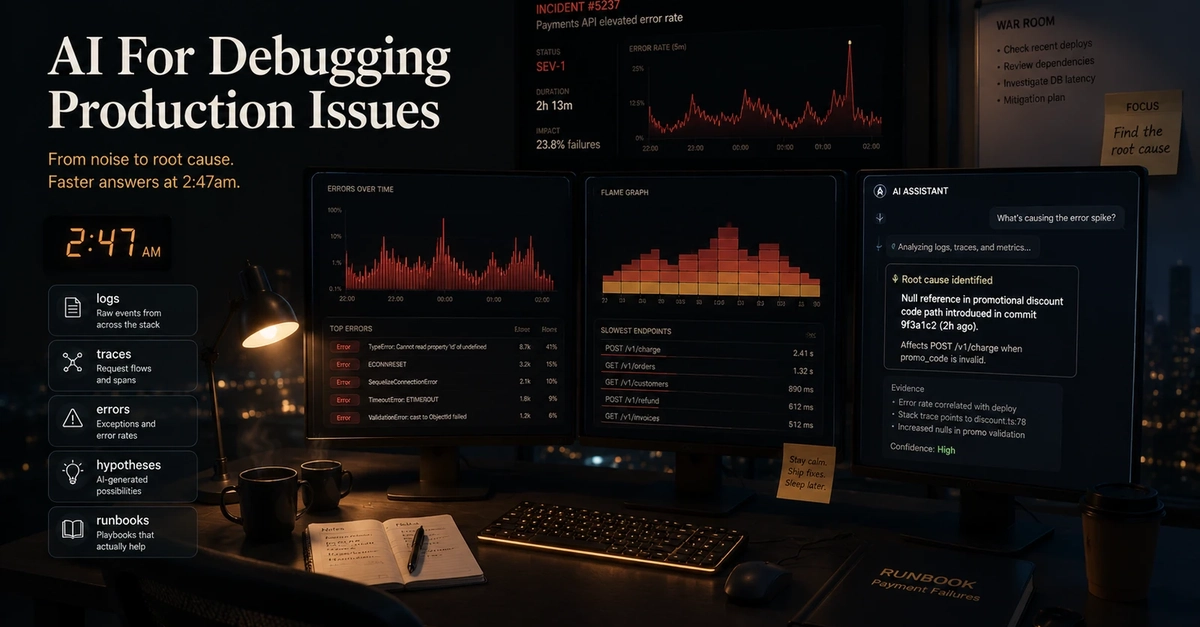
It's 2:14 a.m. and my phone is buzzing because a customer's instance won't get a floating IP. The alert is one line. The truth is somewhere in about forty thousand lines spread across nova-compute, neutron-server, the OVS agent, and libvirtd — each with its own timestamp format, its own idea of what a "request" is, and its own favorite way of burying the actual error under a wall of stack traces. This is the part of the job nobody puts on a slide. You are not solving a hard problem yet. You are finding the problem, and finding it is grep, scroll, swear, repeat.
This is exactly where AI earns its keep — and exactly where most people misuse it. So let me be precise about what I mean by "humanizing AI" for log analysis, because the phrase has been beaten half to death by marketing.
AI reads. You decide.
Humanizing AI does not mean an autonomous bot that "handles the incident." It means using a language model for the one thing it is genuinely, freakishly good at: pattern-matching and correlating across huge volumes of text, and translating jargon into plain English. A model can read forty thousand lines faster than you can scroll one screen, notice that the req- ID in nova-compute shows up again in neutron-server 1.2 seconds later attached to a binding failure, and tell you that in a sentence.