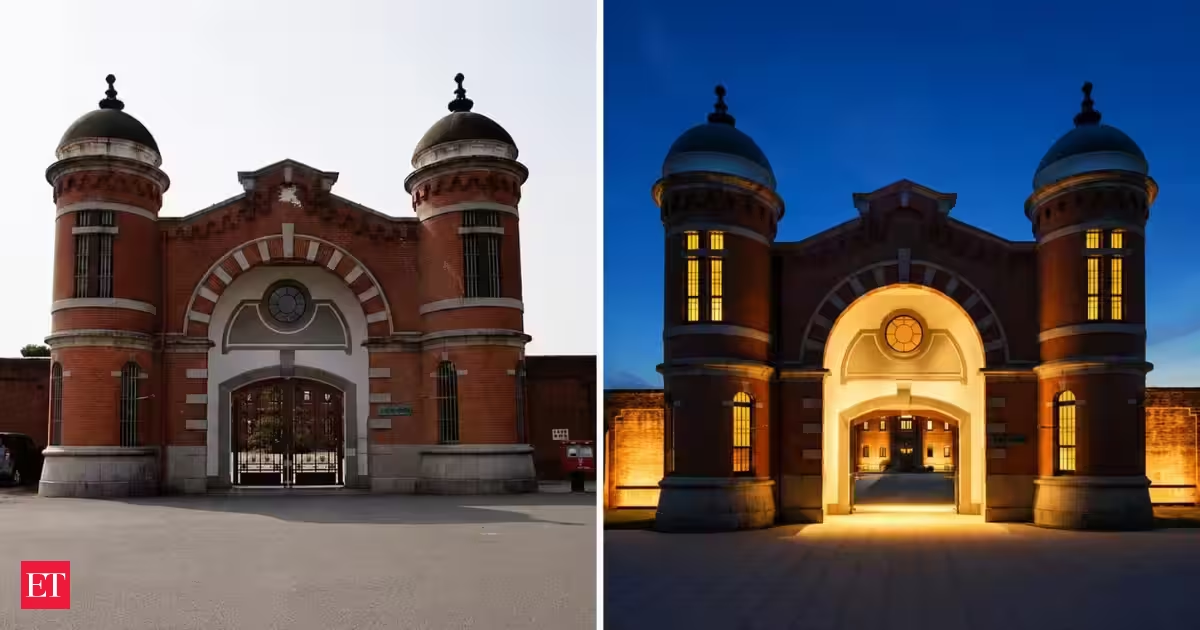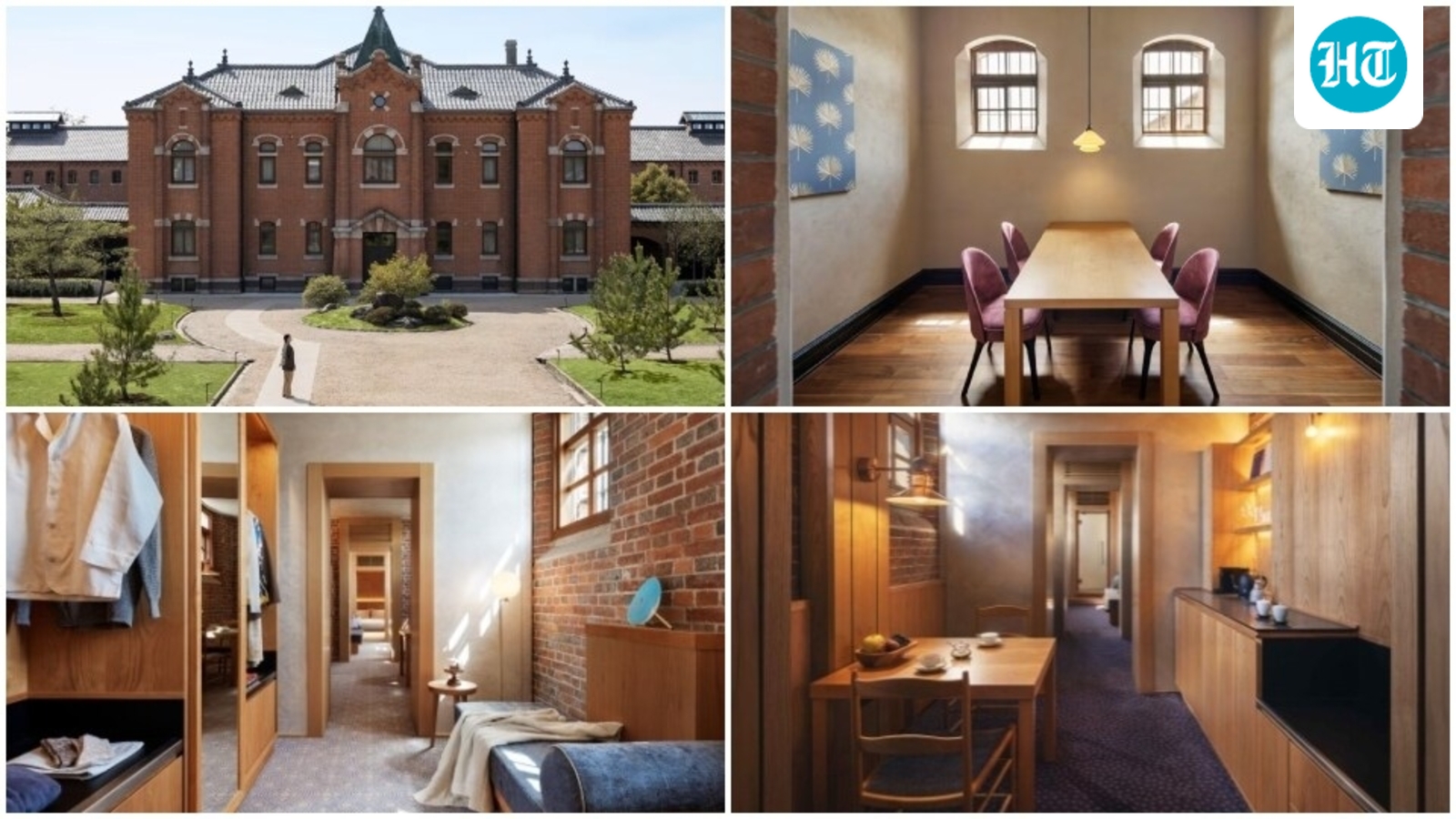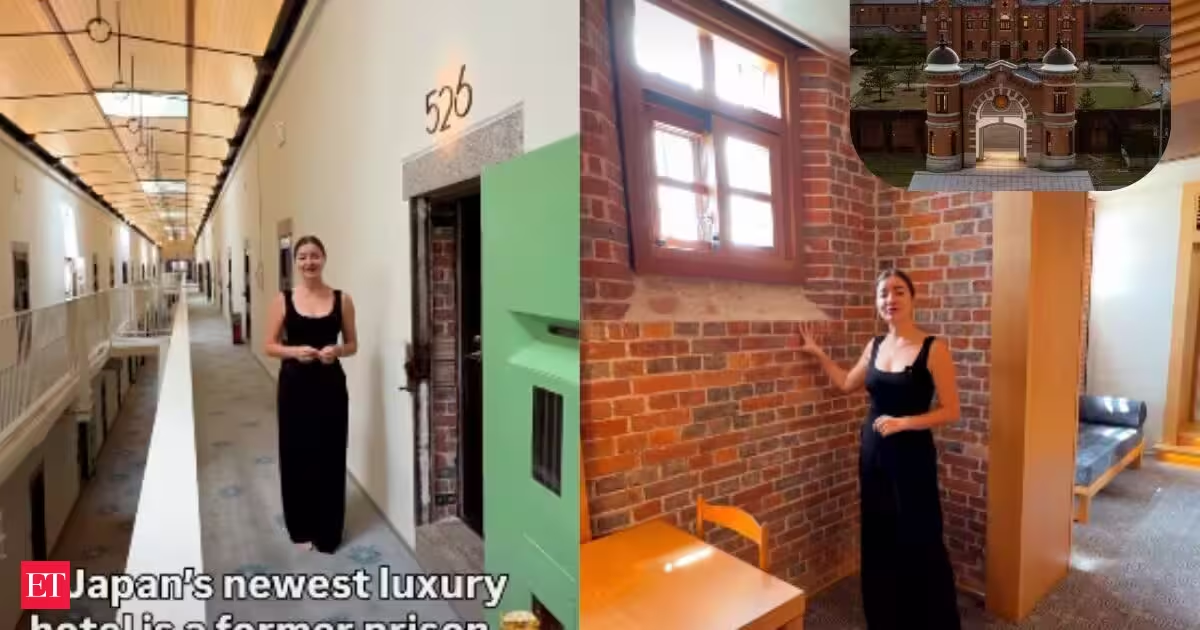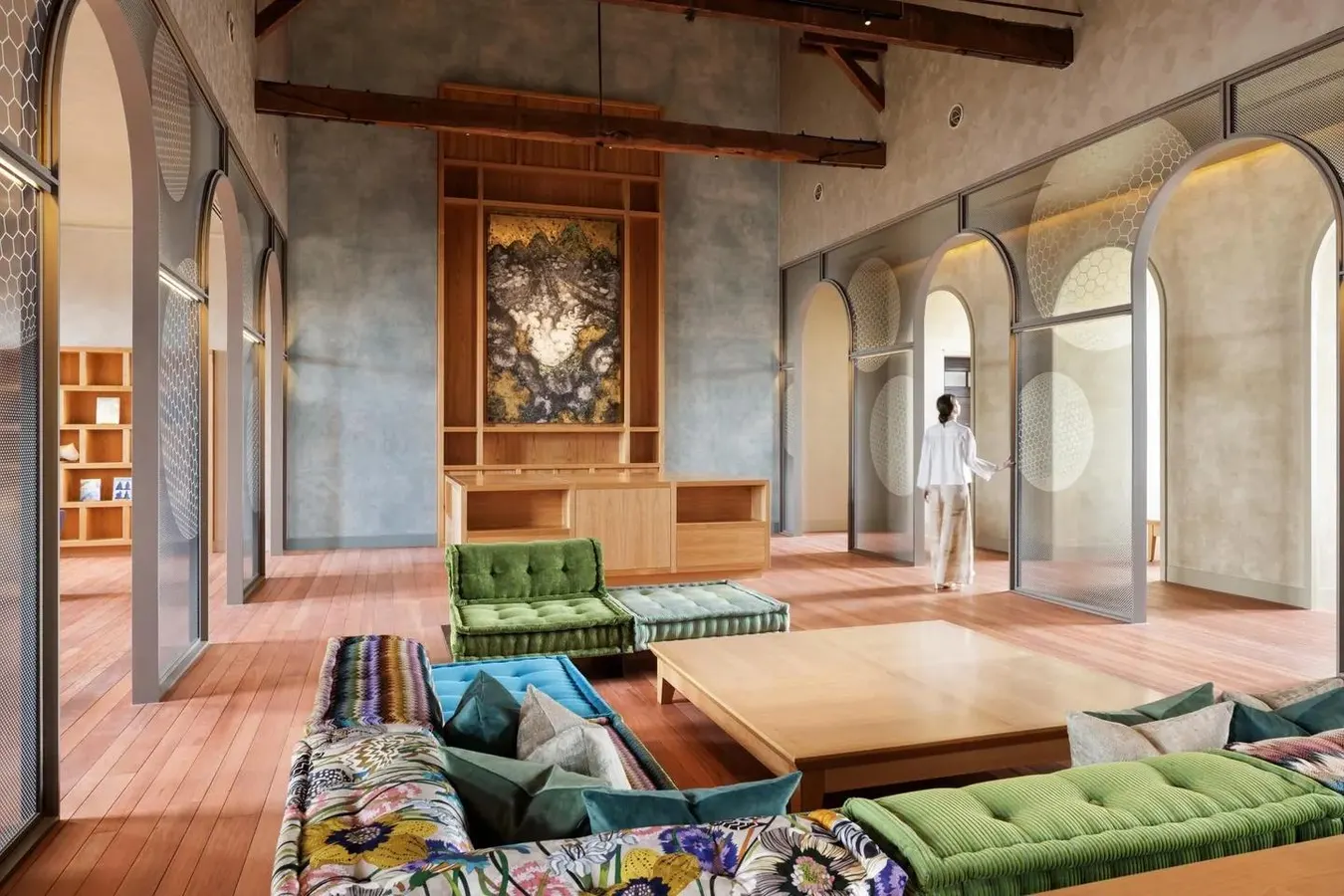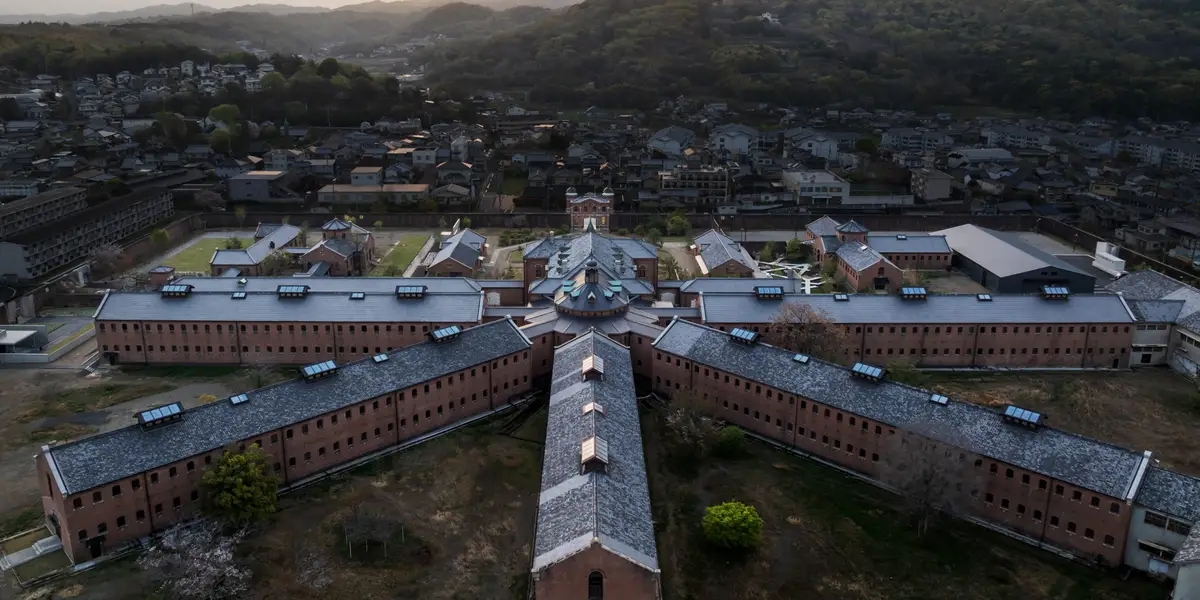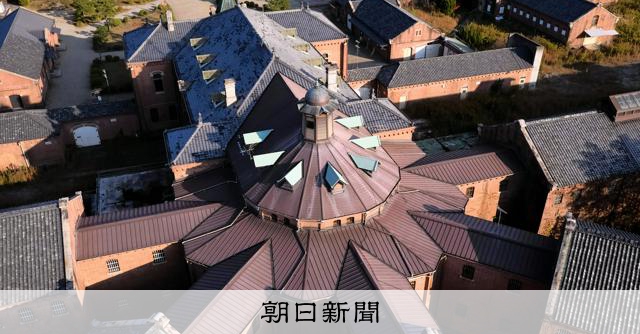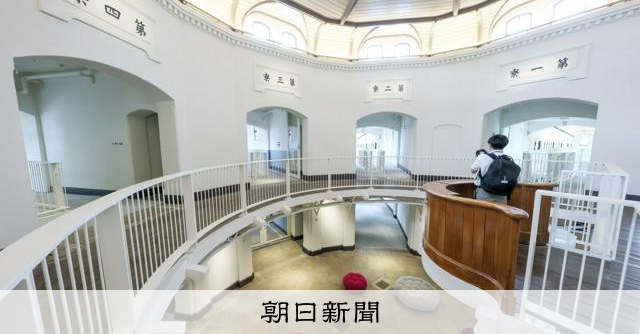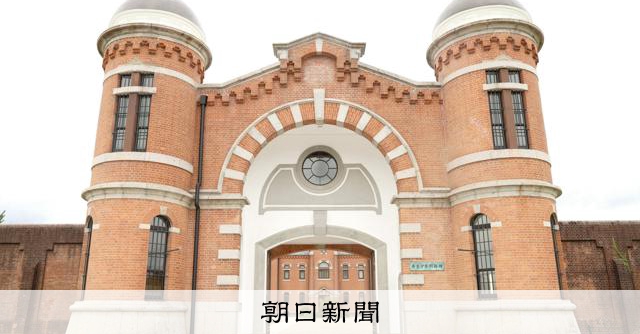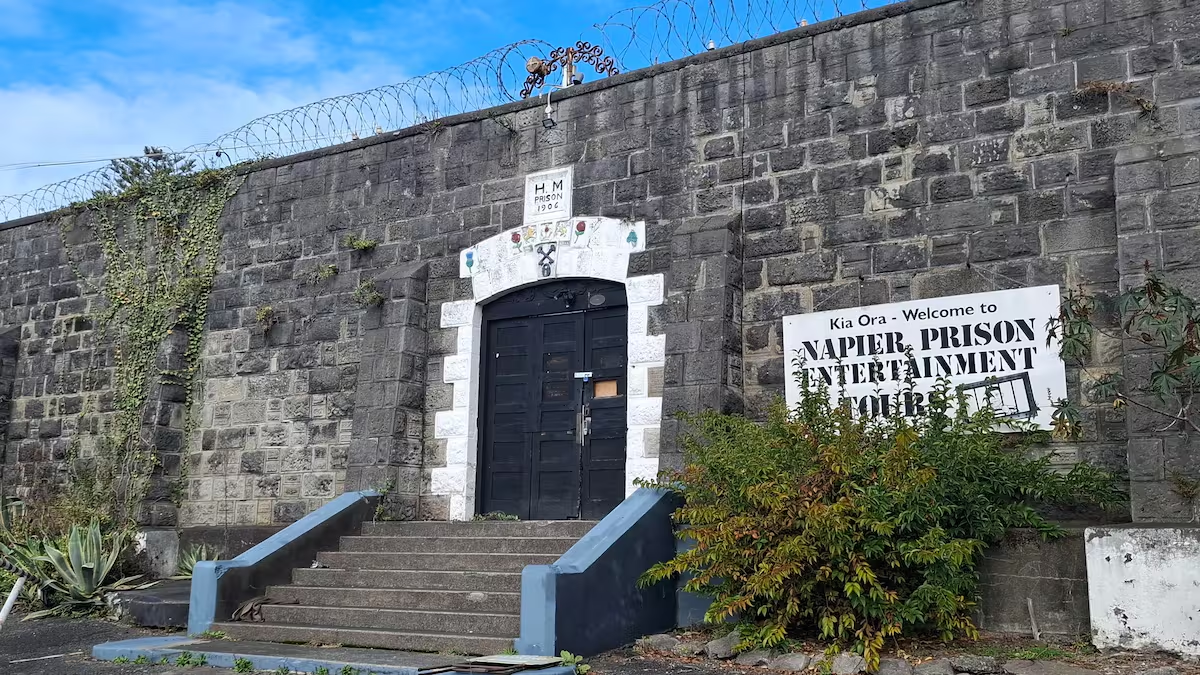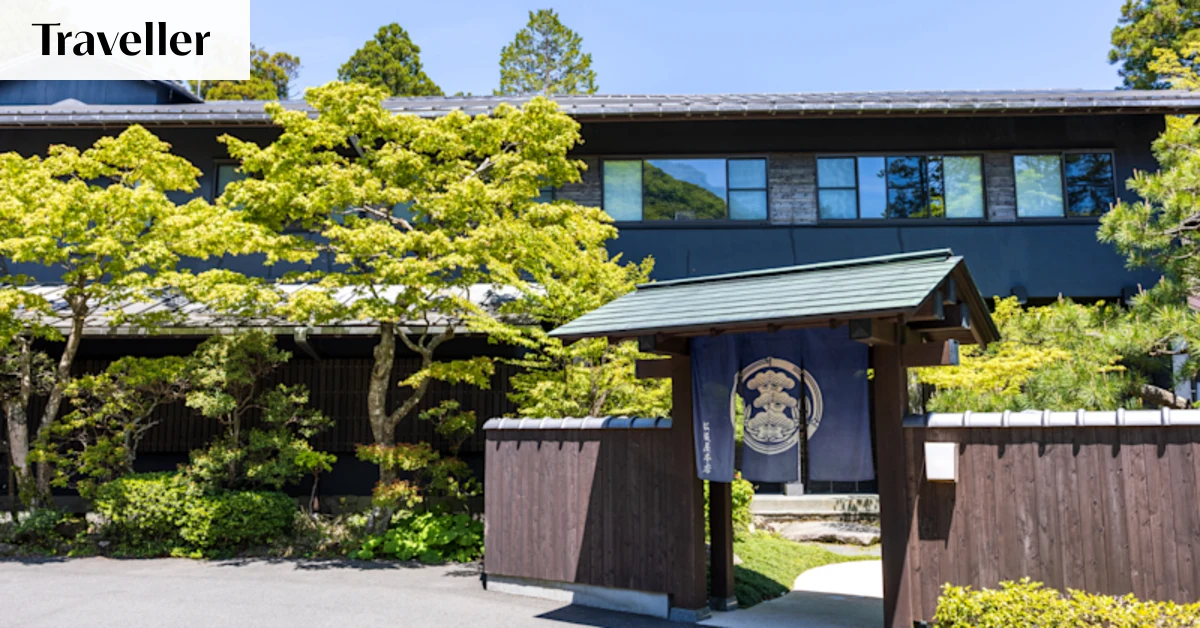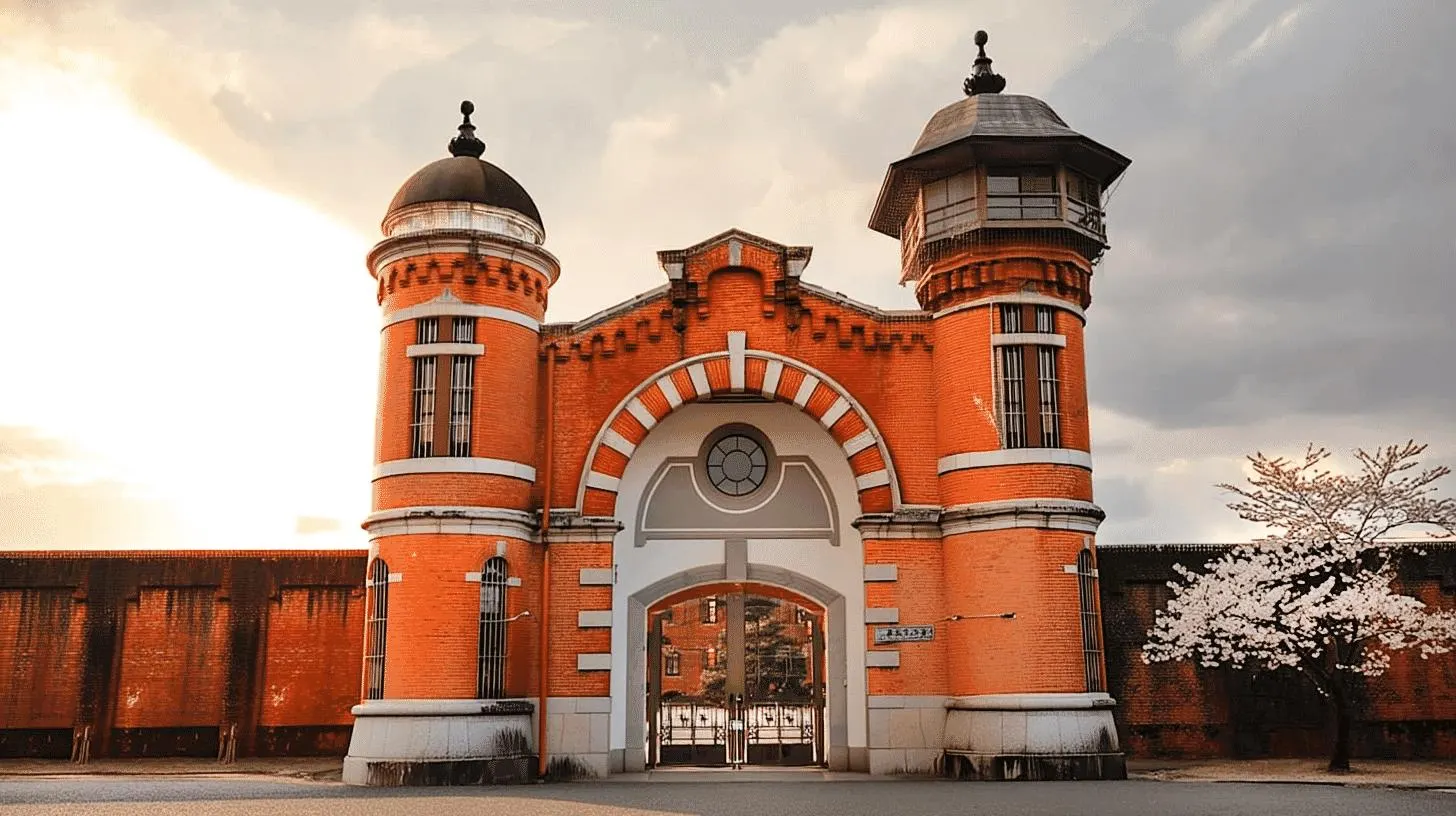
Front entrace of HOSHINOYA Nara PrisonHoshinoya HotelsNara is known for its ancient temples, free-roaming deer, and convenient location between Kyoto and Osaka. However, it has not had a standout hotel that could make the city a destination on its own, until now.Hoshino Resorts hopes to change that. Their newest property, HOSHINOYA Nara Prison, is set in the former Nara Prison, a red-brick building finished in 1908 during Japan’s Meiji era.The building was first a prison, then a juvenile correctional facility, before closing in 2017. After a long restoration, it has reopened as a 48-room hotel. Each suite is made from several former cells, including areas that once held both solitary and shared quarters.Aerial view of Hoshinoya PrisonHoshinoya HotelsThis hotel does not just use prison themes for decoration. It was once a real prison, and you can still see its original layout. Four cell wings stretch out from a central spot where guards used to watch over the whole area. The long hallways, cell doors, and old pathways are still there, even though the rooms have been completely transformed.The suites are named for the number of cells combined to form them: the 9-Cell, 10-Cell, and 11-Cell Deluxe configurations. Larger rooms include dressing areas, king-size beds, and deep soaking tubs.Hotel rooms are converted from former prison cells.Hoshinoya HotelsExposed red brick, arched ceilings, raw concrete, and high-set windows have all been retained. Rather than softening the building’s severe style, the redesign leans into it, producing something that reads as serious architecture rather than simply a themed getaway.Keijiro Yamashita, a government architect from the Meiji era, designed Nara Prison and several other important prisons and courthouses. Nara was one of Japan’s Five Great Prisons, built during a major update of the country’s legal and correctional system. Today, it is the only one from that group that remains mostly unchanged.Yoshiharu Hoshino, the chief executive of Hoshino Resorts, has argued that historic buildings deserve a future beyond pure redevelopment. “I’m fighting against design driven by space efficiency,” he said in an interview. “One of the best ways is to use old buildings and give them new value.” Lobby and reception areas at HoshinoyaHoshinoya HotelsThis transformation is also important culturally. Nara Prison became an Important Cultural Property in 2017 and turning it into a hotel is part of a bigger plan to preserve the site for the future. In April, Hoshino Resorts opened the Nara Prison Museum on the grounds, which looks at the building’s history and Japan’s wider story of incarceration.HOSHINOYA hotels are known for their modern take on Japanese hospitality, often inspired by the cozy feel of a ryokan. In this setting, the style changes. Warm lighting, wood paneling, and deep soaking tubs soften the brick and concrete, while the brand’s signature discreet service is still present.Interior prison cell roomHoshinoya HotelsBedroom in former cellHoshinoya HotelsThe restaurant takes inspiration from the Meiji period, a time when Western ingredients and cooking methods first appeared in Japanese kitchens. The menu ranges from multi-course kaiseki and wagyu shabu-shabu to vegetarian options, and in the morning, both Japanese and Western breakfasts are available.Nara Park and the Todai-ji temple complex are close enough that you do not need to make a day trip from Kyoto. Even so, for many guests, the hotel itself is the highlight. Its architecture adds meaning to every corridor, meal, and night's sleep.Cell block restaurantHoshinoya HotelsOld prisons often become fascinating hotels because they already have what many new luxury properties work hard to create: a strong sense of place, unique architecture, and a story that guests can connect with even before they arrive.This growing interest now has a name. Expedia Group’s Unpack ’26 report calls it “Salvaged Stays,” highlighting the trend of turning historic buildings into upscale hotels. Former prisons are part of this, along with old train stations, schools, and industrial buildings.This trend has already caught on in places from Boston to Istanbul. The Liberty Hotel in Boston is in the old Charles Street Jail. The Four Seasons Hotel Istanbul at Sultanahmet is in the former Sultanahmet Jail, close to Hagia Sophia and the Blue Mosque. In Cornwall, England, the Bodmin Jail Hotel is inside a carefully restored 18th-century prison.The Liberty Hotel in Boston is another example of prison conversion to hospitality.The Liberty HotelIn other places, these hotel conversions make the most of their unique settings. Malmaison Oxford is set in the old prison at Oxford Castle, where rooms are made from former cells. In Roermond, the Netherlands, Het Arresthuis is now a five-star hotel and restaurant in what used to be a detention center. Home Hotel Katajanokka in Helsinki, located in an 1837 prison near the city center, still shows off its original brickwork and barred windows. In Melbourne, HM Prison Pentridge has become the 5-star Interlude, offering just 19 suites in the old cells.This trend is growing across Europe. In Béziers, France, a prison built in 1850 is now Hotel La Prison. The Barabas Hotel in Lucerne is in a 135-year-old building that served as the city’s main prison until the late 1990s. In Stockholm, Langholmen Hotel sits on a former prison island that has become an urban getaway.In Australia’s Southern Highlands, there are plans to turn the old 1839 Berrima Gaol into a 55-room hotel and tourist spot. The main challenge with these projects is keeping the unique, tough features that make the buildings interesting while giving them a new purpose.MORE FROM FORBESForbesThis Futuristic Resort In Antigua Will Have AI Butlers, Robot Delivery, And An Over-Water ChapelBy Jim Dobsonprison hotel
Japan Turned A 100-Year-Old Prison Into A Luxury Hotel. Now Guests Are Paying To Sleep In Its Former Cells
Hoshinoya Nara Prison joins a growing wave of former jails turned design hotels, where cell blocks and prison yards are being recast for travelers looking for a remarkable stay.
917 words~4 min read