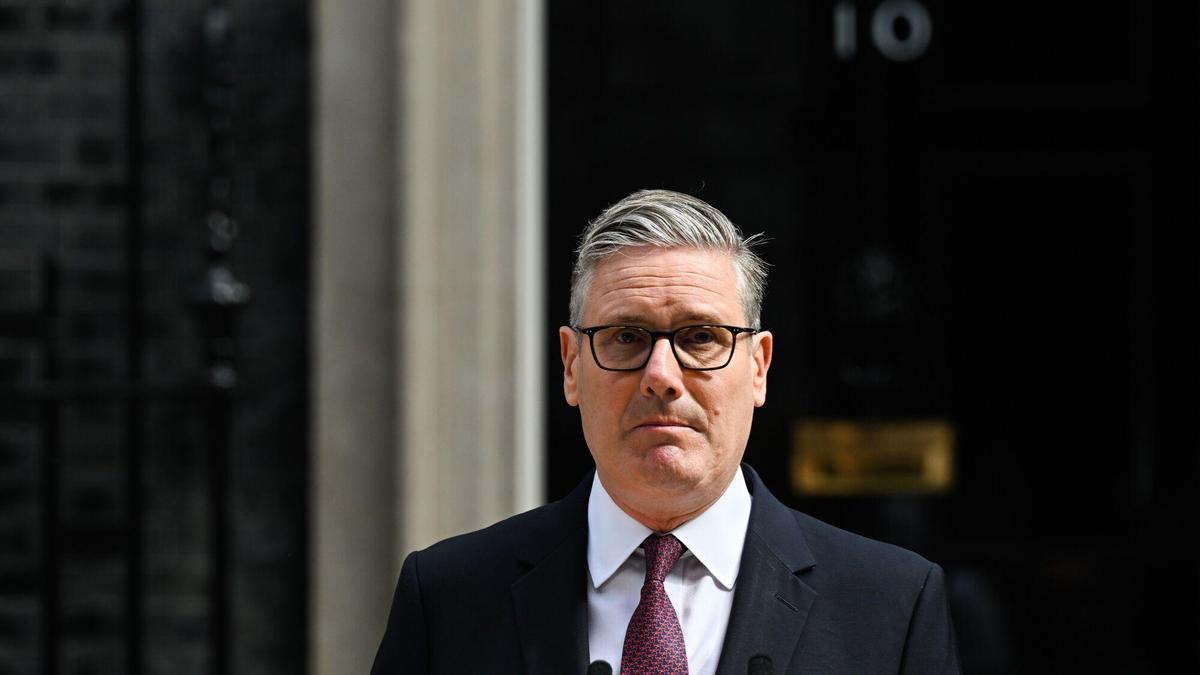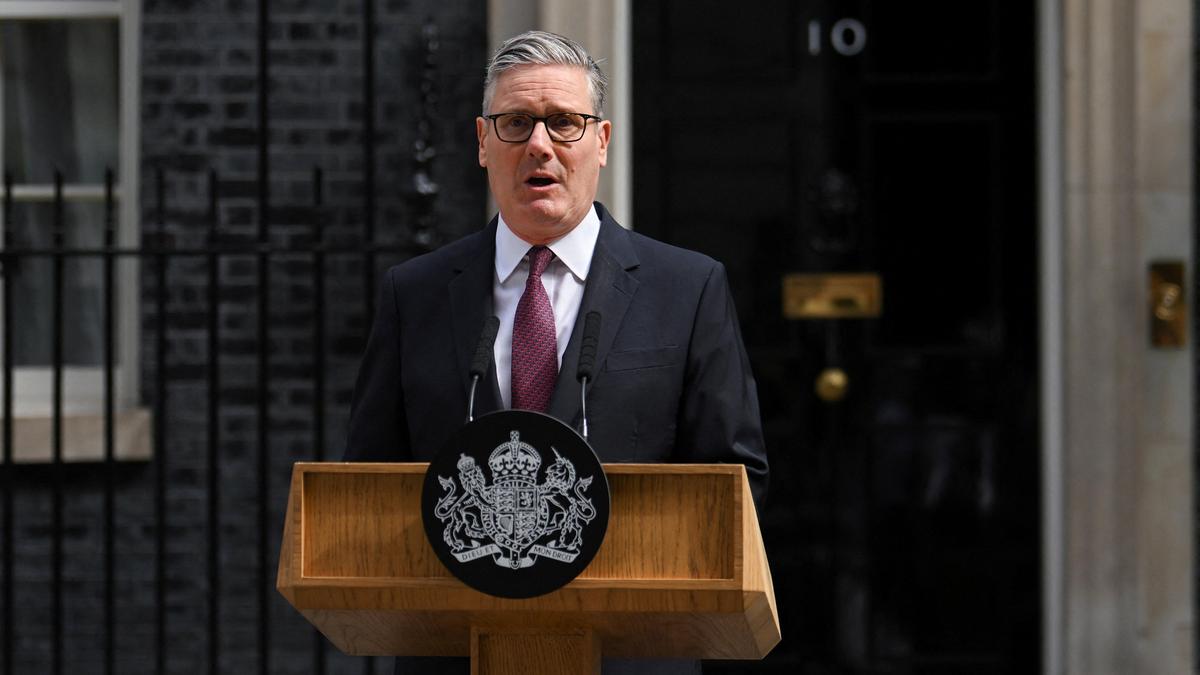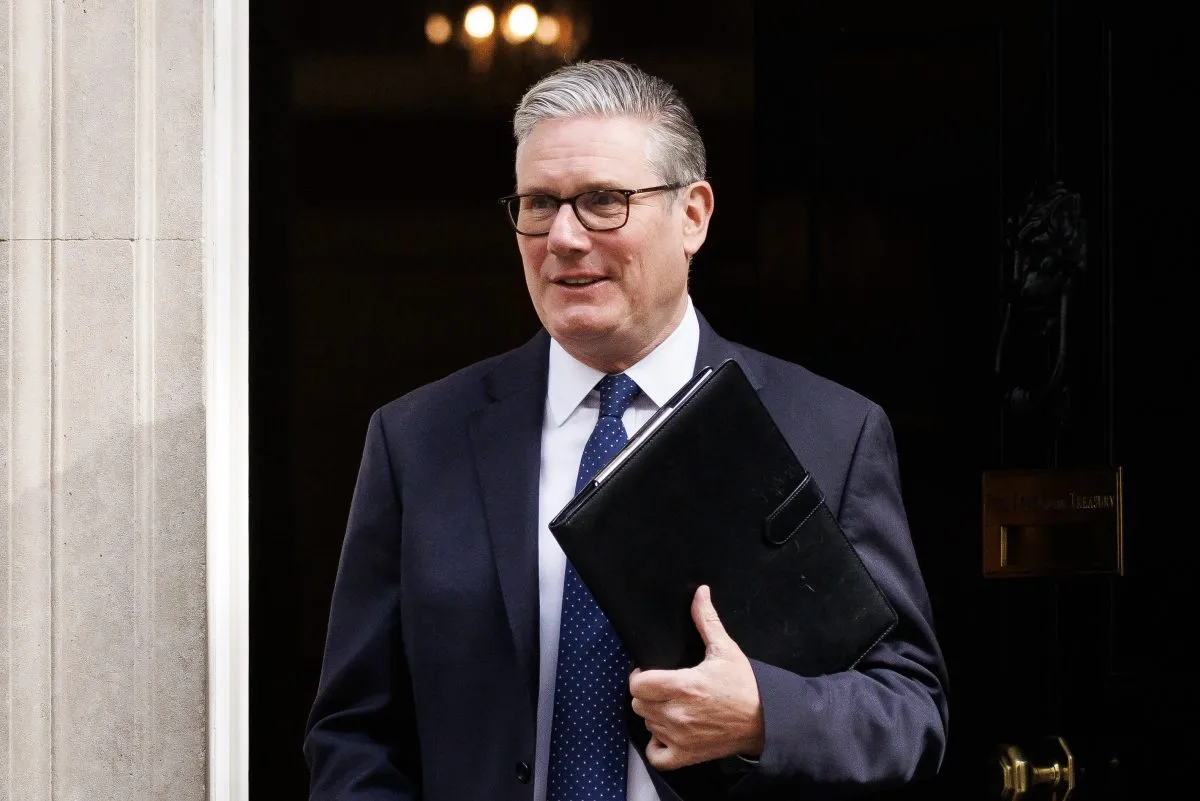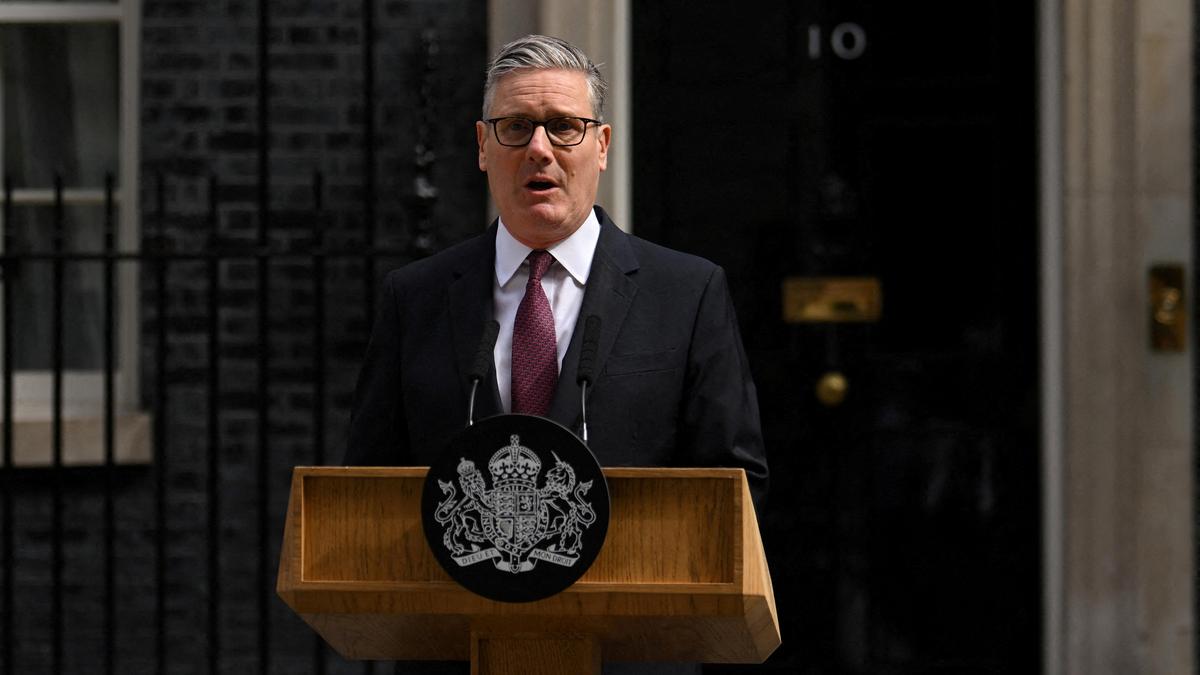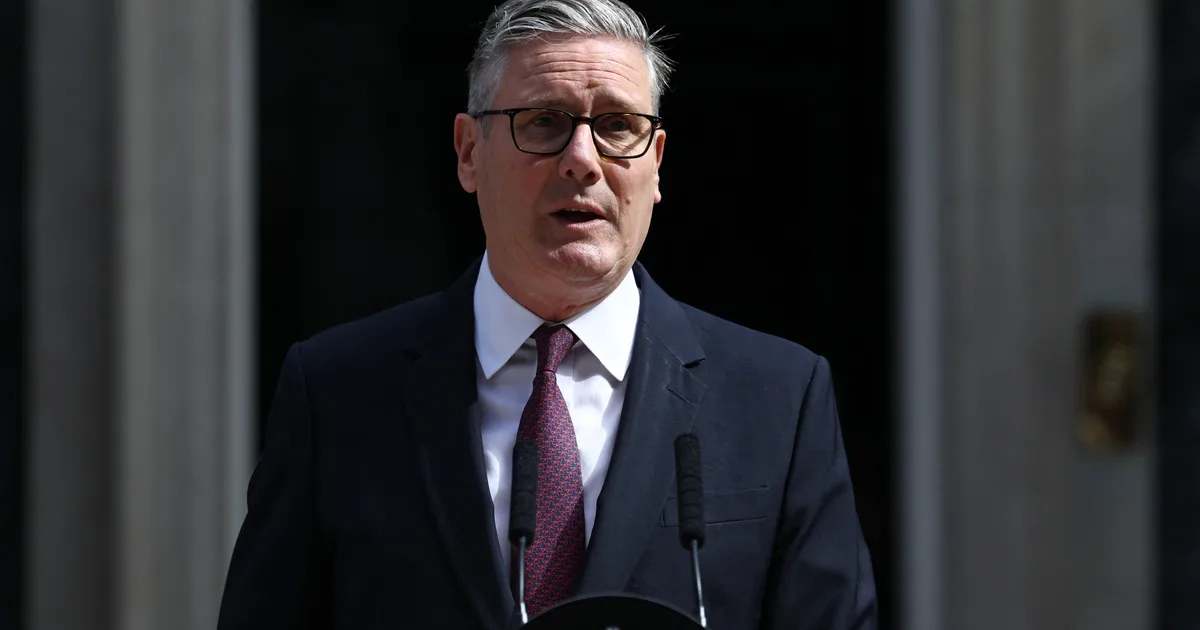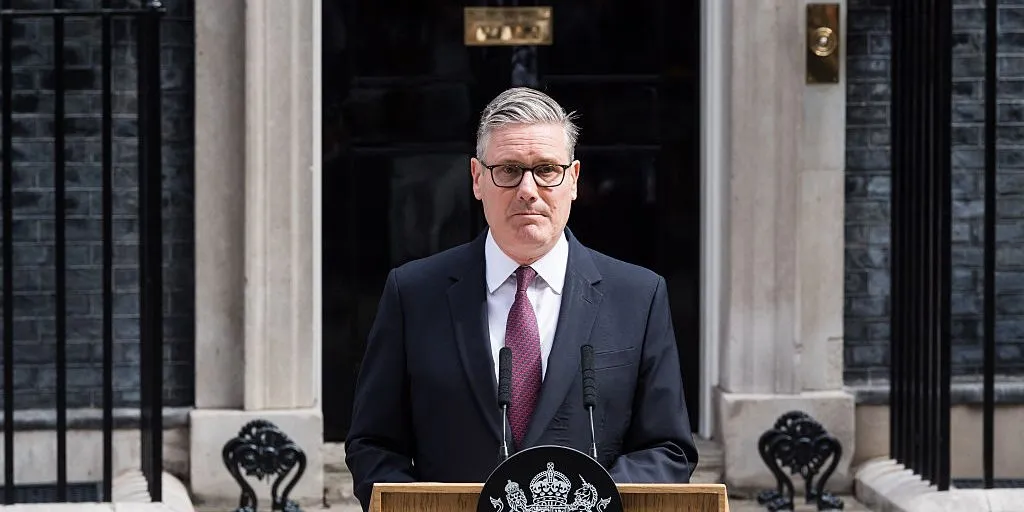
British Prime Minister Keir Starmer gives a speech announcing his resignation following mounting political pressure over heavy losses in the local elections and Andy Burnham’s decisive win in the Makerfield by-election in London on June 22, 2026. Photo: Wiktor Szymanowicz/Future Publishing via Getty Images
Sean Bell is a writer and journalist based in Edinburgh.
Keir Starmer, the U.K.’s sixth prime minister in a decade, has resigned. Even allowing for the weariness of repetition, this should theoretically be a big deal.
Within that benighted kingdom, it will be for some — the John Fetterman-esque cartoon Andy Burnham, now widely considered Starmer’s all-but-inevitable successor, looks set to grip the poisoned chalice that is leadership of the British Labour Party, for all the good it will do him. The ascendant far-right outfit Reform U.K. will likely regard Starmer’s downfall as another stepping stone to turning Oswald Mosley’s deferred dreams of Anglified fascism into reality.
The Greens, who have enjoyed some recent success with their novel proposal that left-wing people might actually want a left-wing party to vote for, may see this as further proof of the once-verboten idea that — whisper it — maybe the Labour Party doesn’t need to exist. And those constituent nations of the U.K. which are not England but are nevertheless forced to abide by its whims will be reminded that the British state they are bound to has not enjoyed stable government for quite a while.