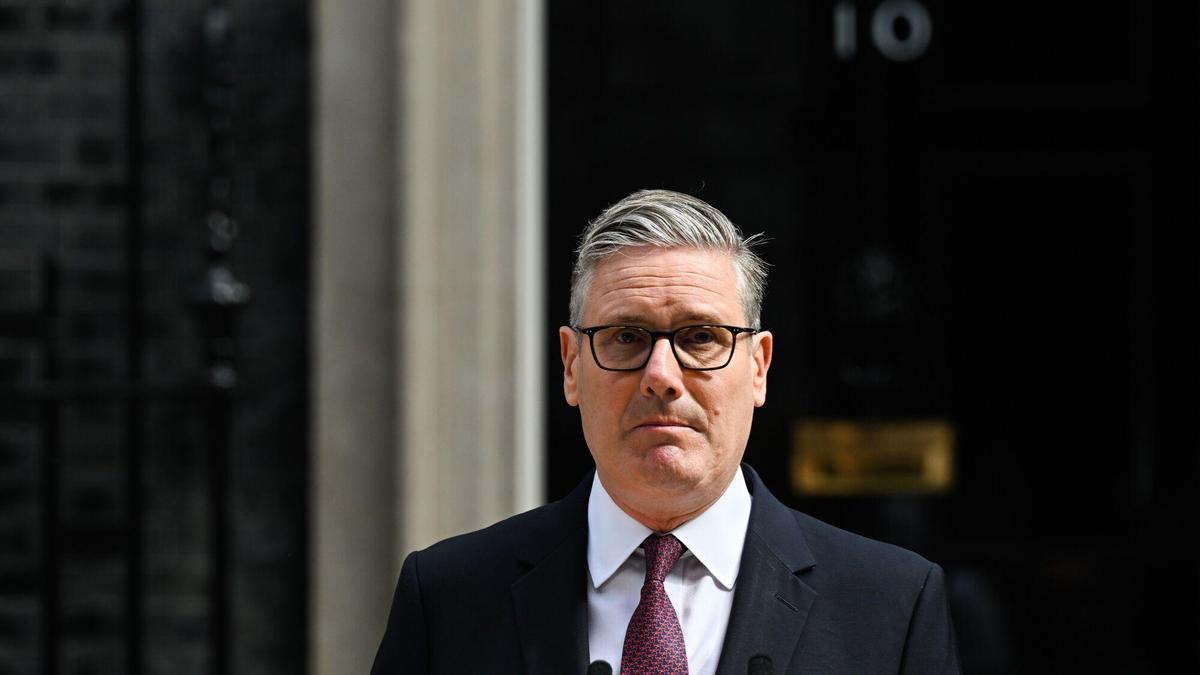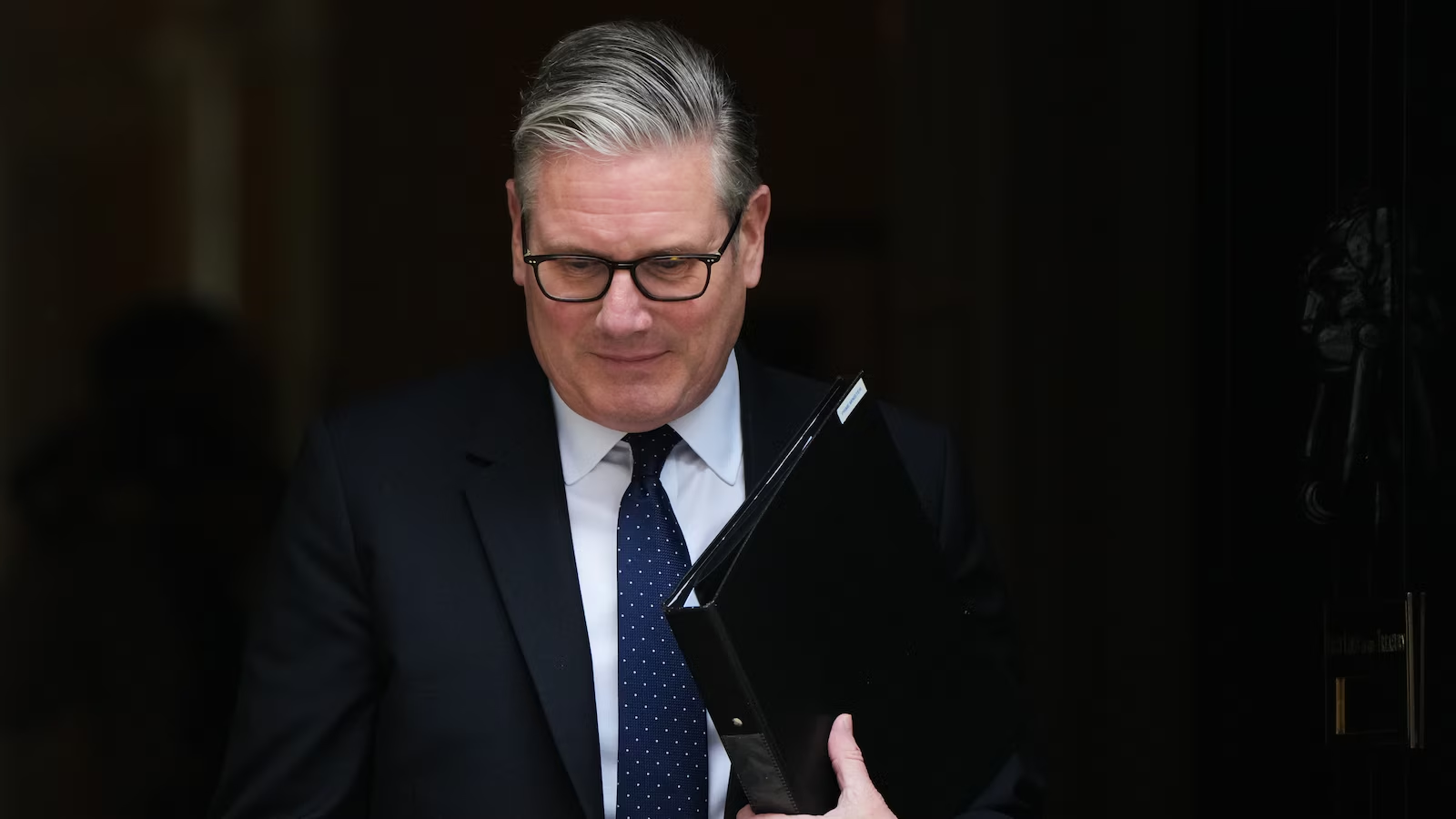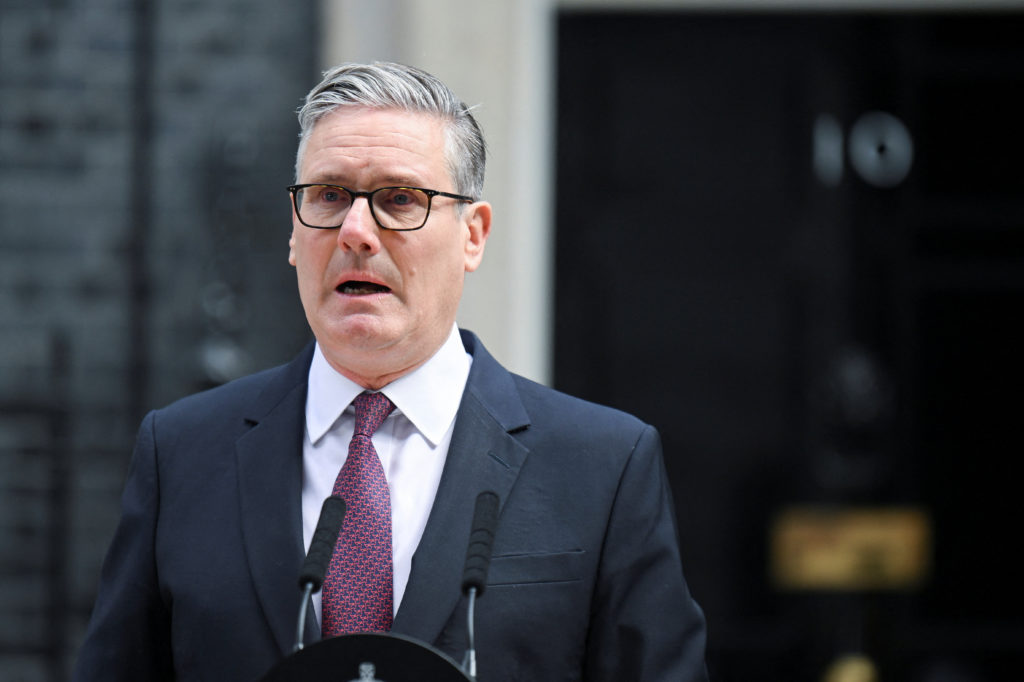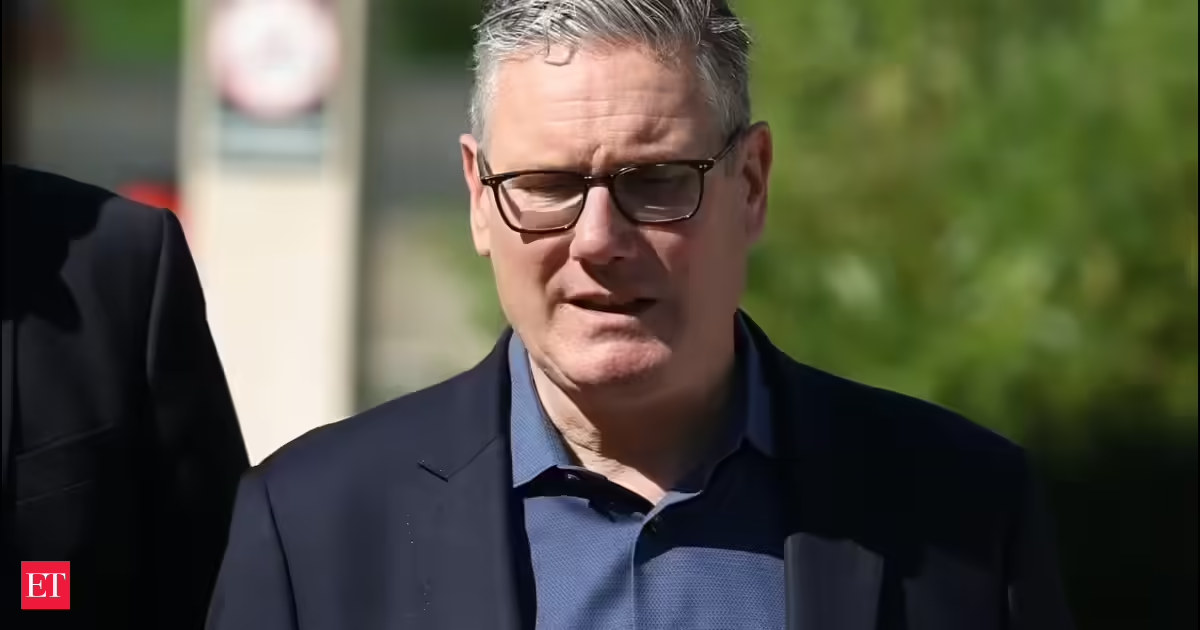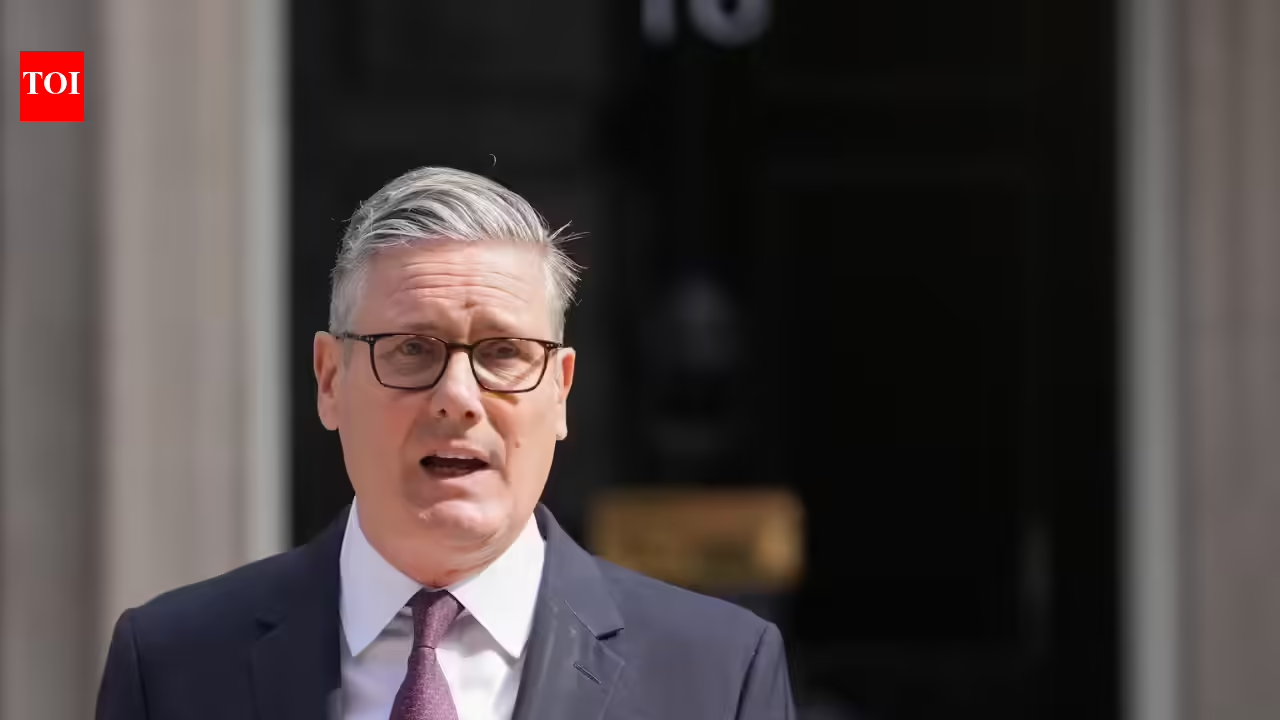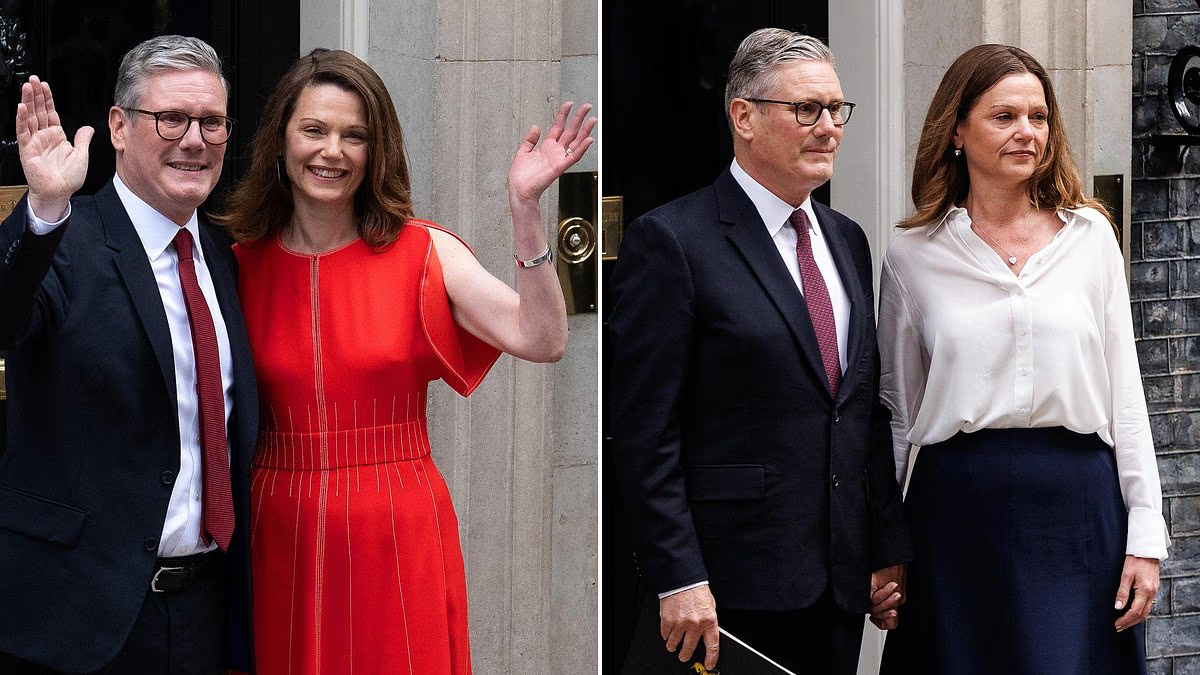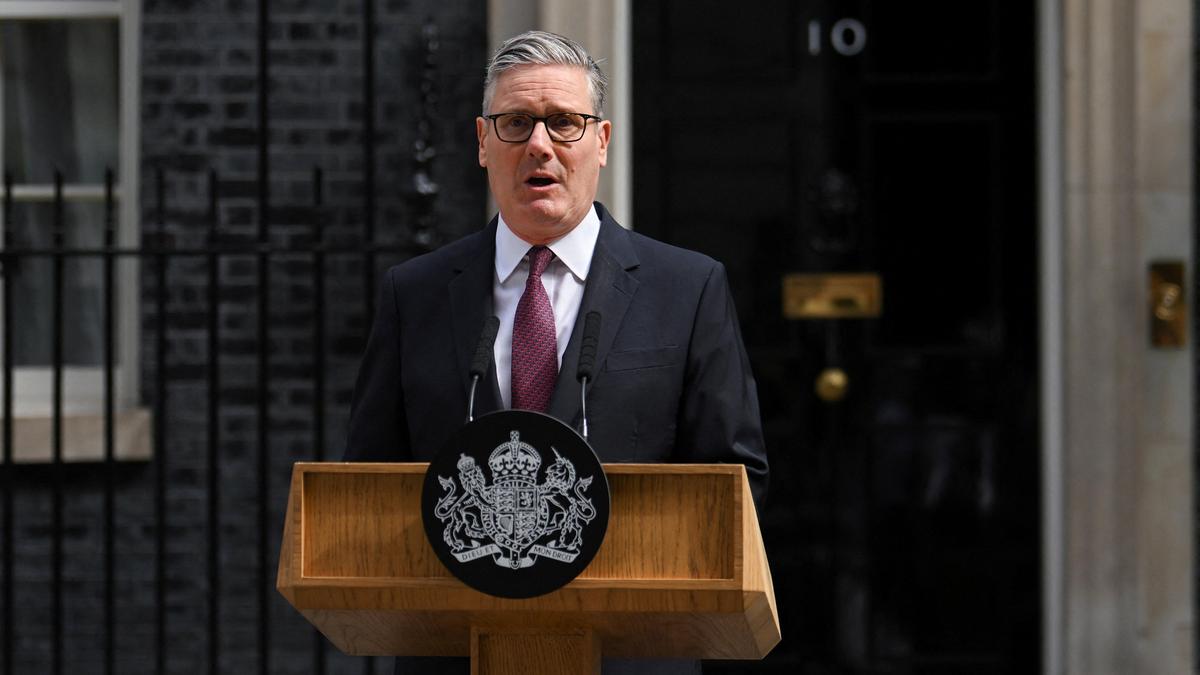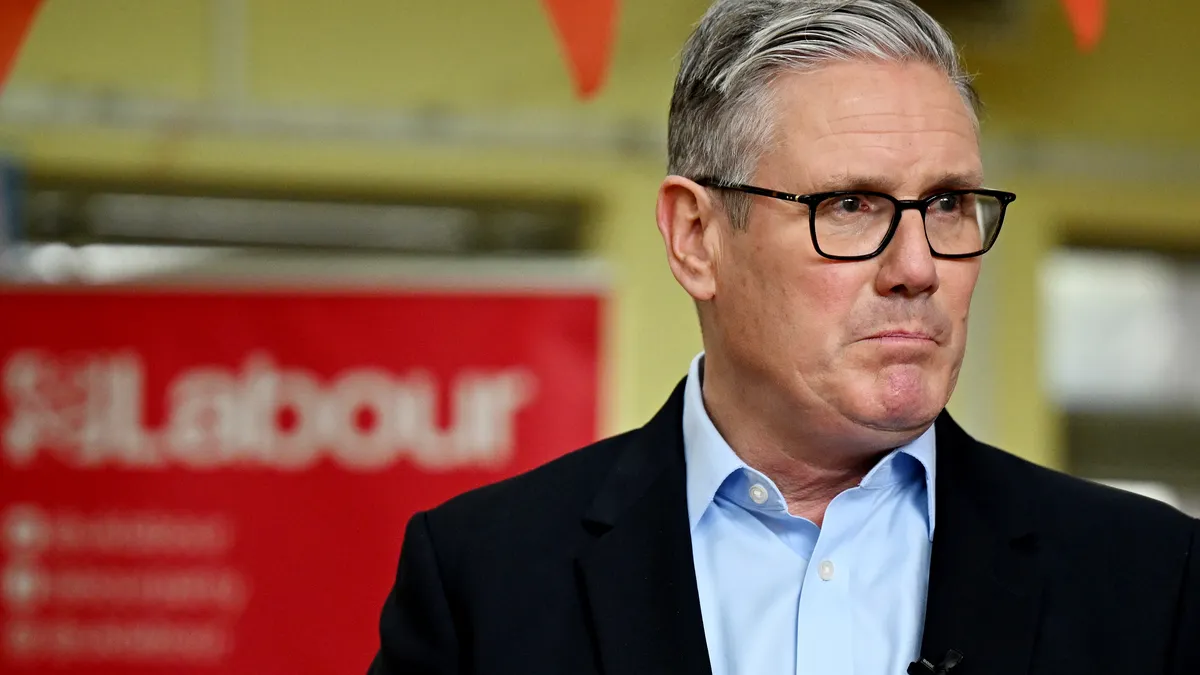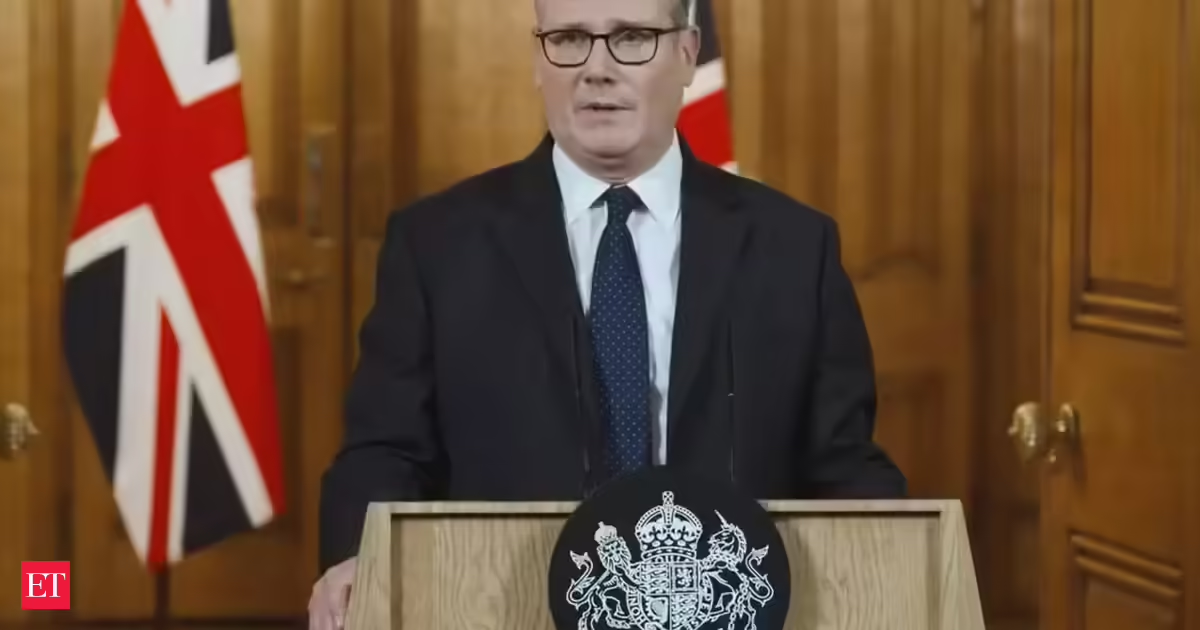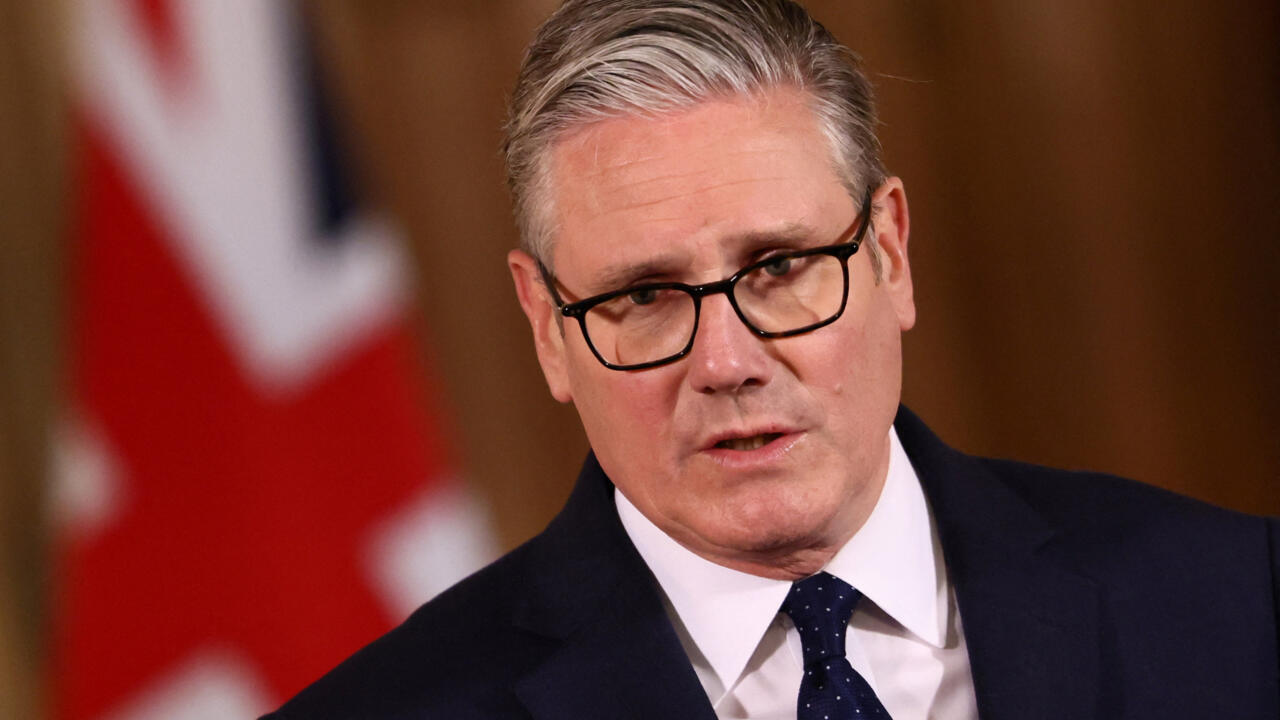
Starmer announced his resignation in an emotional statement from 10 Downing Street on Monday, saying he is stepping down as Labour Party leader but will remain as caretaker prime minister until a new Labour leader is chosen in the coming weeks. “The question my party is asking now is whether I am best placed to lead us into the next general election,” he said. “I have heard the answer of my parliamentary party to that question, and I accept that answer with good grace.” The UK's next general election is set for no later than August 15, 2029, although early elections could be called. Broken promises? Many of Starmer's political troubles were seemingly of his own making. An early furor erupted over his accepting free gifts, including designer glasses and Taylor Swift concert tickets. What followed was a series of early policy U-turns, including clumsy attempts to cut welfare spending that stirred anger in the Labour ranks – notably, his decision to cut winter fuel subsidies to 10 million pensioners before backtracking under pressure. “We came into office promising to be different from the Tories. Keir always took the moral high ground in opposition,” one Labour MP told the Guardian. “The public expected us to be squeaky clean. Yes, it’s a higher bar than the other lot, but we set it. Now they think we’re all the same.” Starmer’s selling point was “no more soap opera politics”, said Rob Ford, a political science professor at the University of Manchester. Instead, Ford said, his government was “the antithesis of what he said he was going to be about, and it’s very hard to survive that”. A Channel 4 analysis, however, found that the public perception might be exaggerated. The government "has delivered or is 'on track' to keep 22 of the 36 pledges – the majority of those we’ve looked at", it found. Ten more were “inconclusive” while another four had not been met. Nevertheless, a trouncing for Starmer's Labour Party in a midterm set of local and regional elections on May 7 proved the final straw. It triggered a series of government resignations and challenges that look set to sweep former Greater Manchester Mayor Andy Burnham into 10 Downing Street. It’s a precipitous downfall from July 4, 2024, when Starmer brought the centre-left Labour Party back to power after 14 years, winning 411 of the 650 seats in the House of Commons. Speaking the next day, Starmer pledged to restore “respect to politics” and lead a government of “public service”. After the chaos of years of conservative Tory rule, which saw a constant churn of scandal and the toppling of prime ministers Boris Johnson and Liz Truss in quick succession, Starmer promised to lower the temperature and make politics a little bit more boring. Some of the problems that felled him were baked into his victory, which was built on a wide but shallow base of support. Despite Labour's huge majority in Parliament, it was backed by only 34% of voters – and many of those appeared motivated by anger at the Conservatives rather than enthusiasm for Labour. What ultimately cost him his job was appointing Peter Mandelson to the plum post of the UK ambassador to the United States. Mandelson was seen as someone who could help Britain navigate US President Donald Trump’s second term. His trade expertise and comfort around the ultra-rich were considered major assets, and he helped secure a trade deal that spared Britain some of the tariffs Trump has imposed on countries around the world. But the choice of Mandelson – who in 2003 called himself Jeffrey Epstein’s “best pal” – backfired spectacularly when documents came to light in September 2025 showing how close his ties to Epstein had been. Starmer fired Mandelson, but further revelations in the following months plunged his leadership into crisis. Because Starmer entered politics in his 50s, after a successful law career, he lacked the “political radar” to spot potential booby traps, Ford said. Starmer’s legal career culminated in him becoming chief prosecutor for England and Wales, a role that included prosecuting people charged with terrorism, organised crime and other serious offences. He was knighted for his role leading the Crown Prosecution Service, and opponents liked to use his title, Sir Keir Starmer, to paint him as elite and an out of touch “lefty London lawyer”. That view of Starmer stuck, even though he comes from humble roots and has down-to-earth tastes. The son of a toolmaker, as he mentioned repeatedly in speeches, he loves soccer – still plays the sport at 63 – and enjoys nothing more than watching his beloved team, Arsenal, over a beer in his local pub. He and his wife Victoria, who works in occupational health, have two teenage children they strive to keep out of the public eye. First elected to Parliament in 2015, he was picked to lead and rebuild Labour five years later after the party’s worst election result since 1935. Starmer dragged Labour towards the political centre after taking over from veteran Socialist Jeremy Corbyn, who led Labour to election defeats in 2017 and 2019. Starmer ditched some of his predecessor’s more left-wing policies and apologised for the antisemitism that an internal investigation concluded had been allowed to spread under Corbyn. Starmer's forensic and prosecutorial skills were on display in Parliament, where he tormented the three Conservative prime ministers he faced off against. He was especially scathing in attacks on Boris Johnson, who allowed parties inside Downing Street during the Covid-19 pandemic, in violation of the country’s lockdown rules. International stage But being prime minister required a different skill set and Starmer often fell short, lacking the flexibility and political instincts that the job requires – at least on the domestic front. Starmer seemed far more comfortable dealing with international events, notably in rallying European support for Ukraine in its war with Russia and in working to mitigate the economic and political turmoil unleashed by the US-Israeli war on Iran. Upon his resignation, European Commission President Ursula von der Leyen praised Starmer’s legacy in a post online on Monday, writing: “European and Ukrainian security is stronger because of you. Thank you, dear Keir.” Ukraine opened a rift between Starmer and Trump, with whom he had initially forged a friendly relationship despite their divergent politics. “He’s liberal, which is a bit different from me, but I think he’s a very good person and I think he’s done a very good job thus far,” Trump said in January. Initially reluctant to criticise Trump publicly, Starmer began taking a firmer stand after the US president's threats to take over Greenland. Starmer's critiques became even sharper after the start of the Iran war, and by March Trump was deriding him as “not Winston Churchill” and mocking the Royal Navy. Starmer's decision to largely keep the UK out of the war chimed with the public mood but did not revive his party's support. Many Labour lawmakers were elected in their constituencies with relatively slim majorities and became increasingly anxious as Labour's poll ratings sank. Starmer’s personal approval rating fell to among the worst of any prime minister. For many Labour lawmakers, the Mandelson-Epstein revelations were the final straw because they shone a spotlight on Starmer’s lack of judgment. There was considerable anger that the prime minister appointed Mandelson to such a sensitive and high-profile post. Starmer sacked Mandelson after a first batch of emails was published in September that showed Mandelson remained friends with Epstein even after the late financier’s 2008 conviction for sex offenses involving a minor. But the emails made public in January 2026 suggested that Mandelson also passed on sensitive – and potentially market-moving – government information to the disgraced financier in 2009, when he was a member of the Labour cabinet. Mandelson has been arrested and questioned by police on suspicion of misconduct in public office but has not been charged, and does not face any allegations of sexual misconduct. Then came the revelation that Mandelson had been appointed despite failing security checks for the ambassador's job. Starmer's apology for the appointment and insistence he hadn't known about the failed security vetting increasingly fell on deaf ears. In the House of Commons on April 28, Labour lawmaker Emma Lewell said she felt “let down, disappointed and angry”, calling Mandelson's appointment “a fundamental failure of judgment”. After Labour was handed a drubbing by voters in May's local and regional elections, the party took action. A Labour lawmaker in Greater Manchester stepped down so Burnham could run for a seat in Parliament. He won decisively and called the moment a “turning point” for British politics. Days later, Starmer announced his intention to step down. Britain now begins the process of choosing his successor, who is slated to become the country's seventh prime minister in a decade. (FRANCE 24 with AP)
Anatomy of a fall: Keir Starmer, from election landslide to precipitous descent
Dutiful rather than dynamic, Keir Starmer was elected to be a safe pair of hands after years of chaos under Britain’s Conservatives. His term ended less than two years later amid corruption allegations,…
1,476 words~7 min read