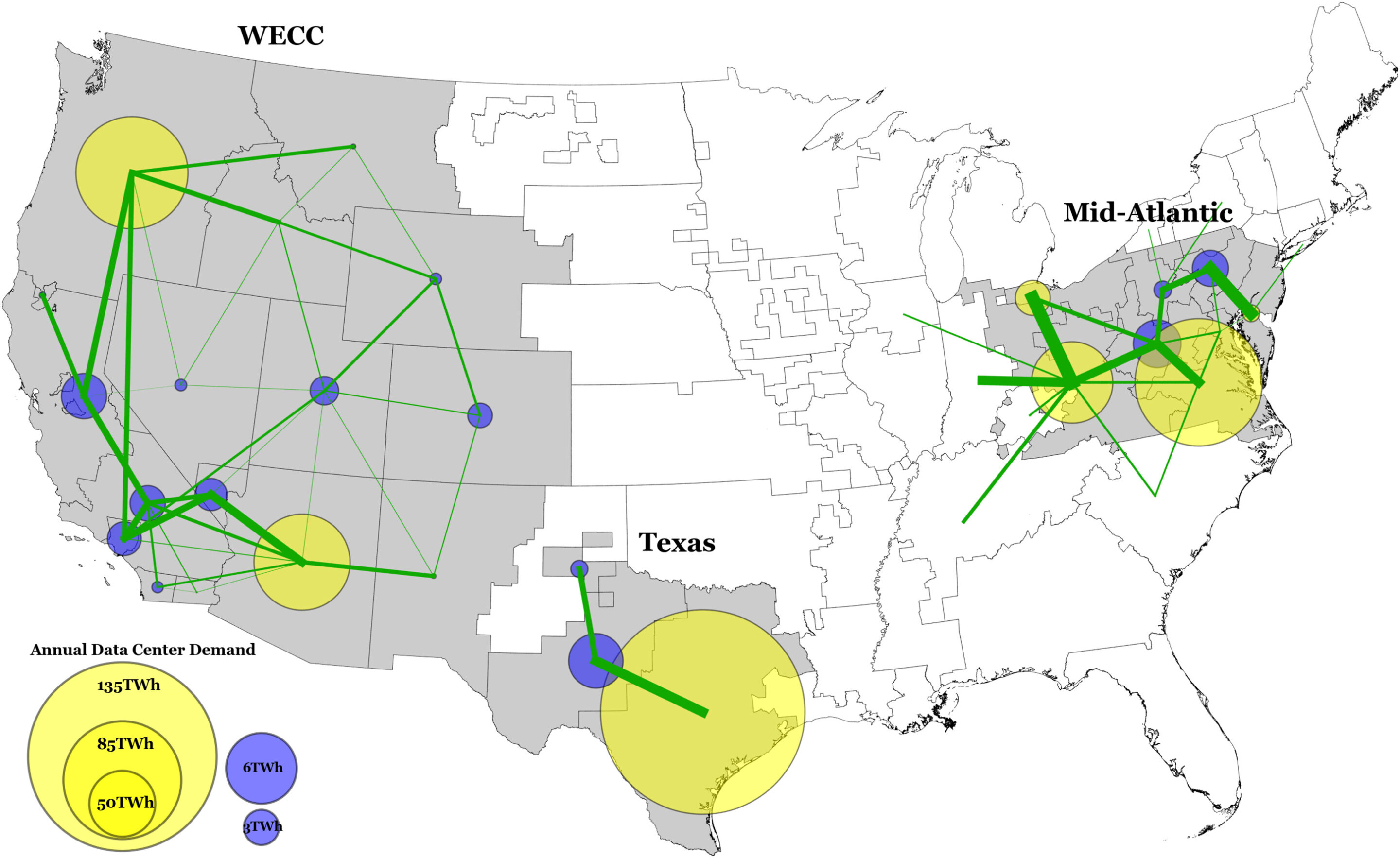
Model zones with transmission lines and data center load. Credit: iScience (2026). DOI: 10.1016/j.isci.2026.116497
The number of U.S. data centers is growing, largely to power artificial intelligence programs. That has led to concern about the environmental consequences of data centers—and their impact on the energy grid itself. What will happen if scores of new data centers come online?
A new study by MIT researchers indicates that the impact of data centers could vary significantly, depending on how their energy use is structured.
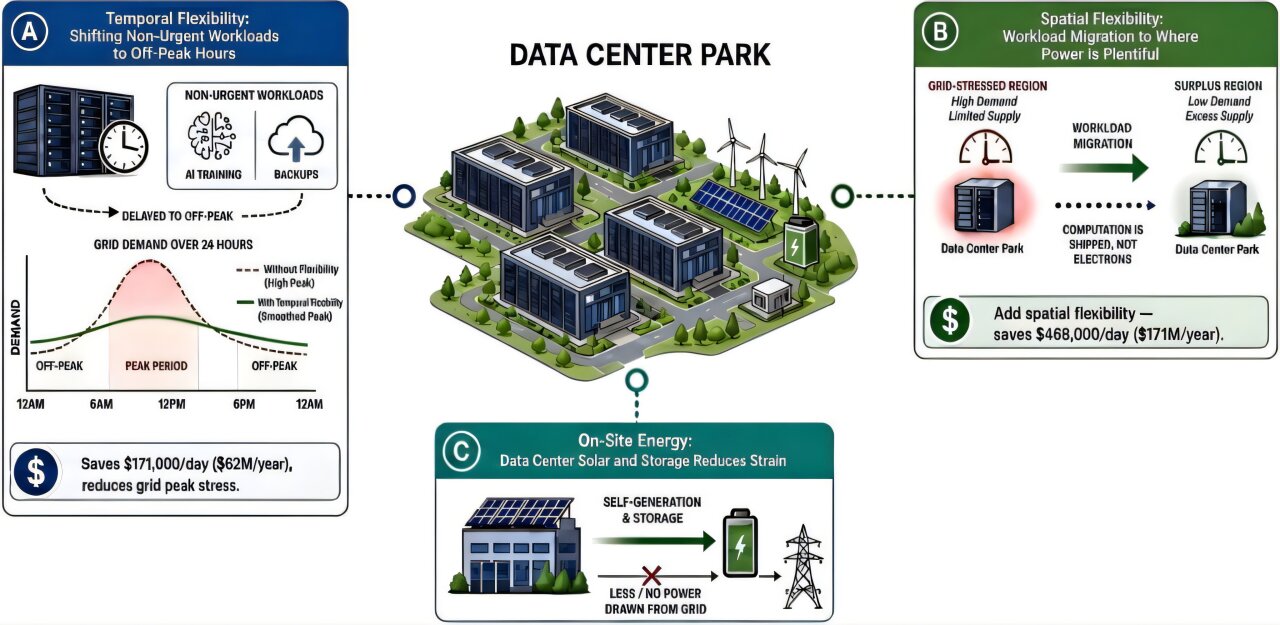
Specifically, if data centers move a significant portion of their energy consumption to nonpeak hours, it might actually help lower average energy costs. The environmental impact, in terms of the type of energy consumed, would differ by location, with some places likely seeing a greater buildout of renewables and others experiencing a relative increase in fossil fuel use.
"The key with data centers is: How can we add them to the network without adding a lot to our peak usage?" says Christopher Knittel, an economist in the MIT Sloan School of Management and co-author of a new paper detailing the study. "One way for data centers to do that—to add to average usage but not the peak usage—is if they provide some grid flexibility during those high-cost periods. And that's what we've been interested in understanding."