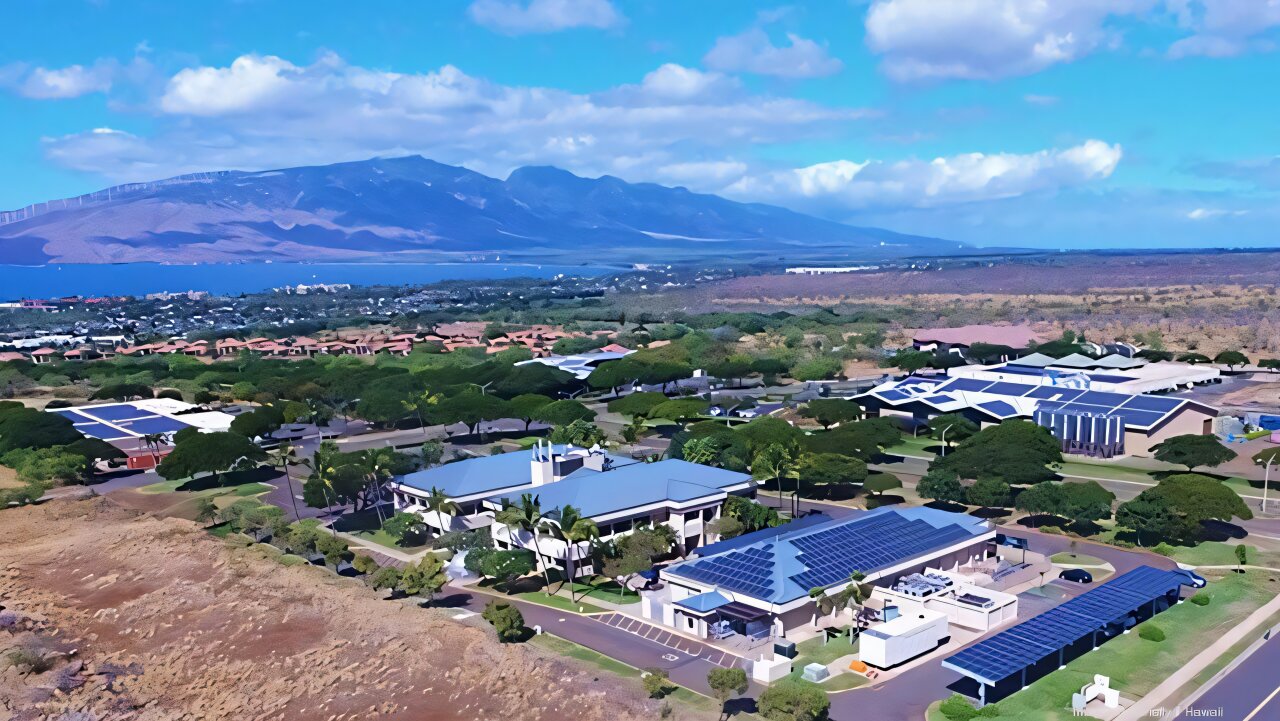
Maui High Performance Computing Center. Credit: University of Hawai'i
Reliable operation of data centers has become essential to nearly all sectors of modern society, including health care, education, government services, power grid operation, banking, defense and disaster relief. New research published in Scientific Reports, led by University of Hawai'i (UH) at Mānoa atmospheric scientists reveals that future climate conditions may reduce the availability of one of the cheapest and most energy-efficient approaches to cooling data centers.
The research team, led by Christina Karamperidou, atmospheric sciences professor in the UH Mānoa School of Ocean and Earth Science and Technology, assessed historical and projected temperatures and humidity levels around the world and compared them with the conditions required for "direct air free cooling," wherein naturally cold outside air is brought in to cool a building or equipment.
"We found that periods of time when temperature and humidity exceed recommended operating thresholds for direct air-free cooling are becoming more frequent and lasting longer in many regions," said Karamperidou. "This will reduce the availability of air free cooling for a growing number of data centers globally."