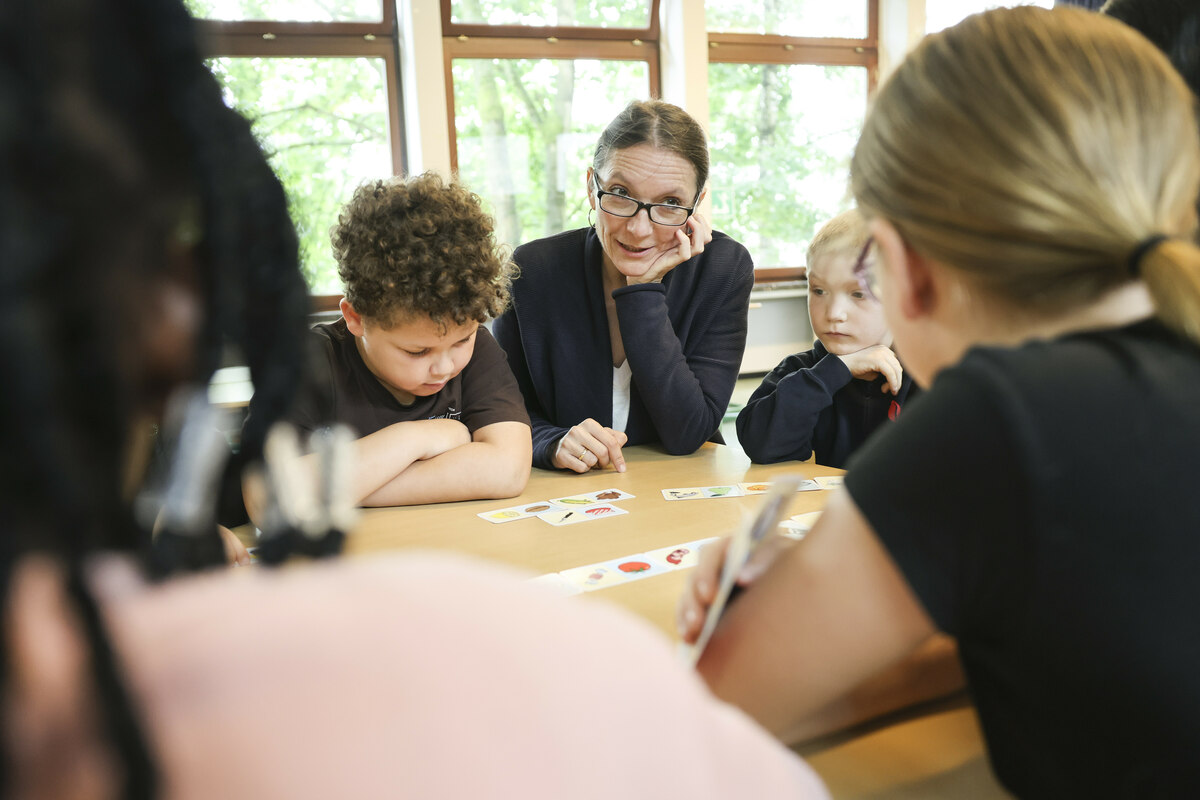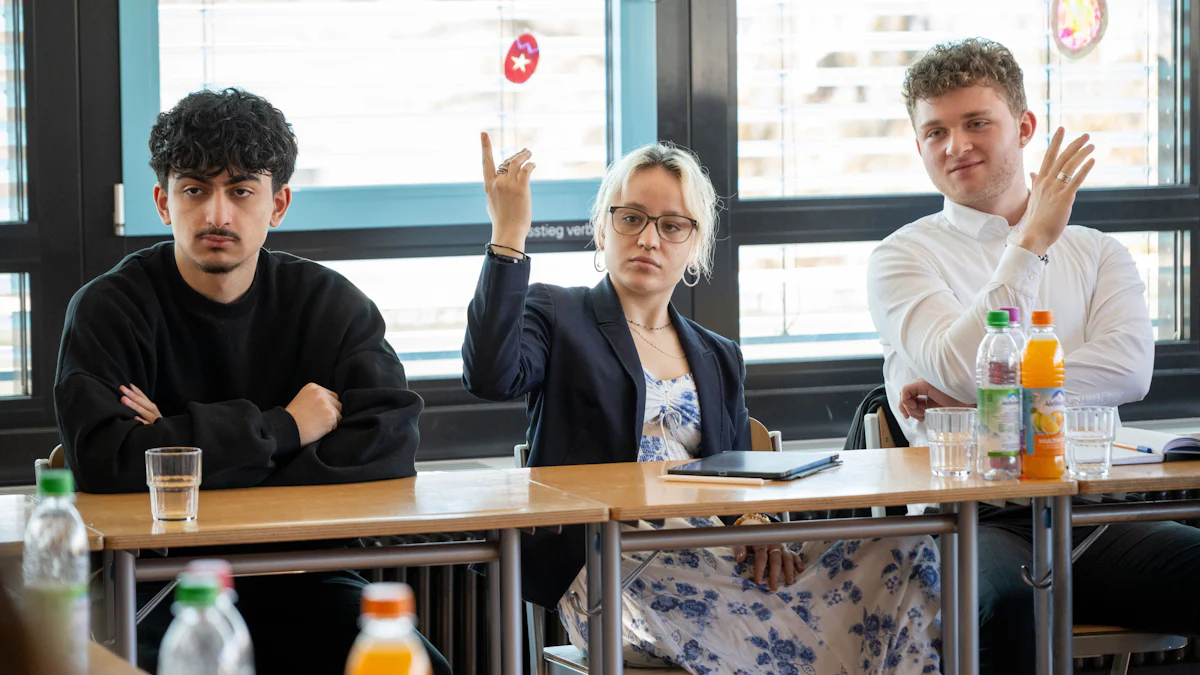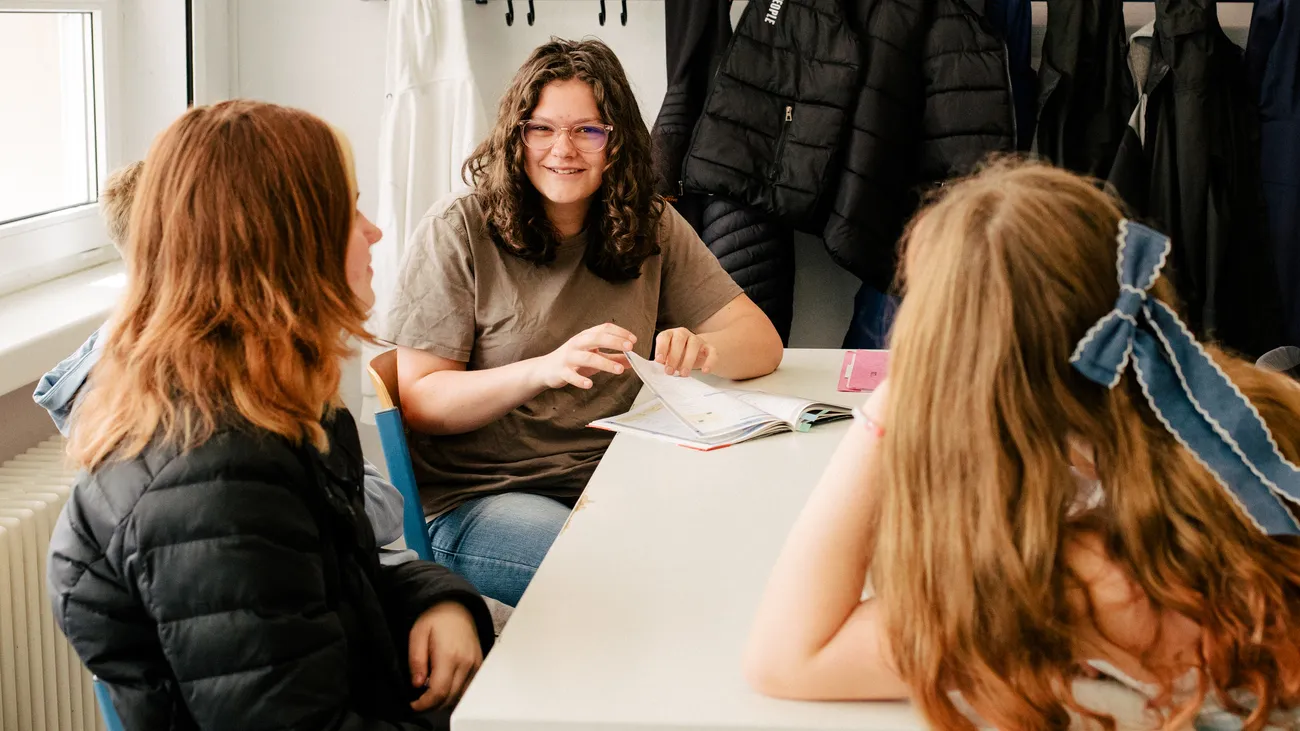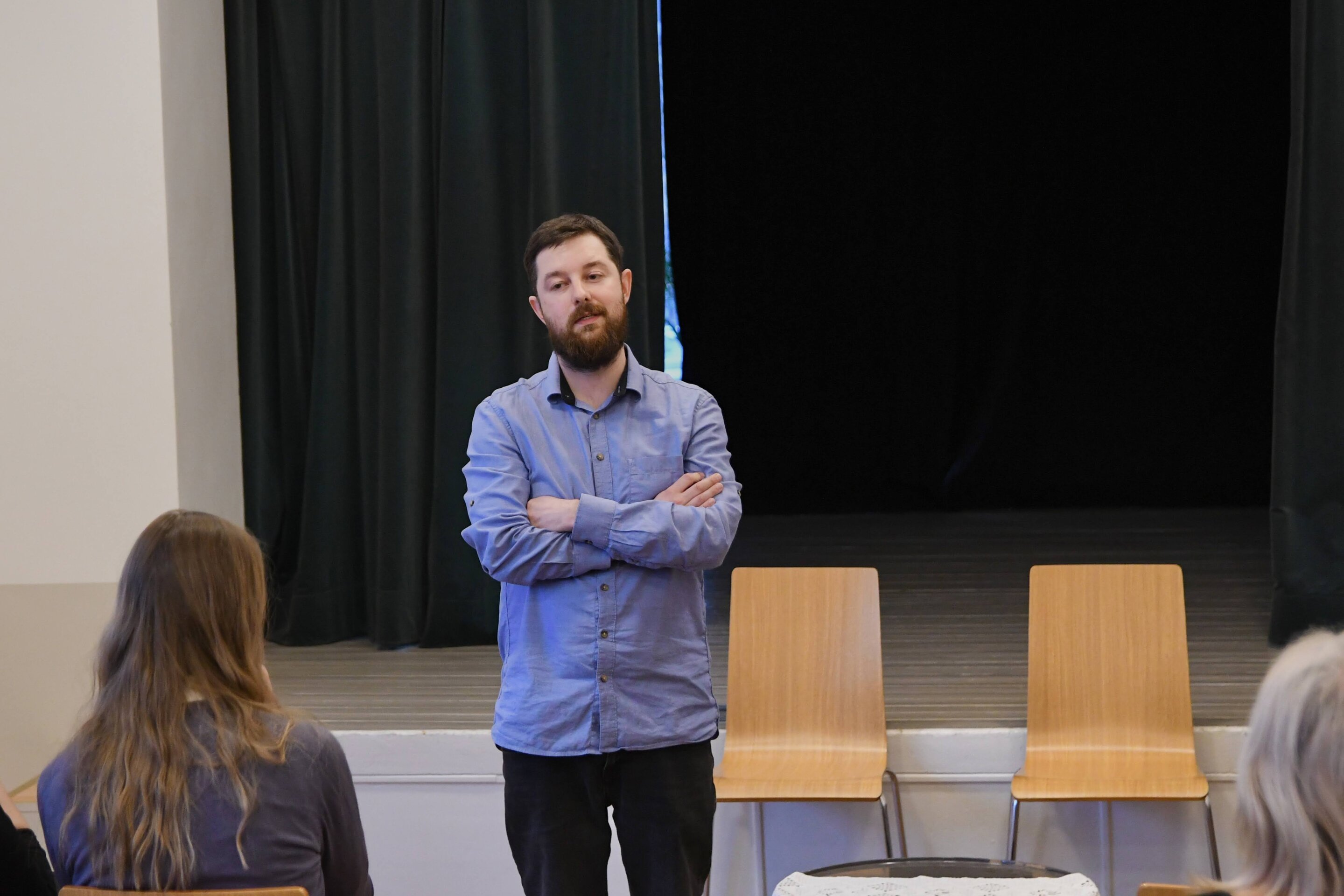
Nikolai Kunitsõn conducting participatory theater. Credit: Nikolai Kunitsõn and Tallinn University
In Estonian schools, social studies classes provide a thorough education on what democracy is and what it means to be a citizen. However, knowledge alone is not enough to foster active citizenship or reduce the differences in civic skills between Estonian- and Russian-speaking young people. A doctoral thesis by Nikolai Kunitsõn, a political scientist at Tallinn University, shows that participatory theater can bridge this gap.
Democracies around the world are currently under pressure from both external and internal sources. To thrive, open societies need active citizens who possess the skills required to participate in democracy. Kunitsõn examined how the development of such citizens could be better supported. This is particularly important for young people attending Russian-language schools, as it helps reduce the differences in democratic knowledge and civic skills between Estonian- and Russian-speaking young people.
"Social studies classes in Estonian schools are overloaded with factual knowledge, while the teaching of skills takes a back seat," explains the political scientist. "Teachers have a great deal of freedom, but also a great deal of responsibility, which exacerbates inequality in Russian-language schools."