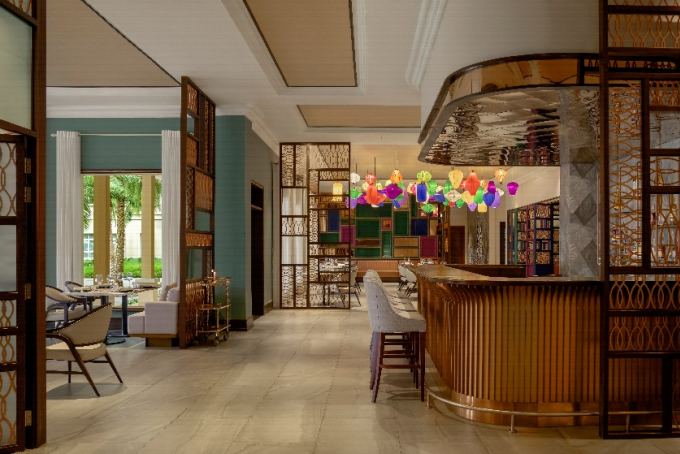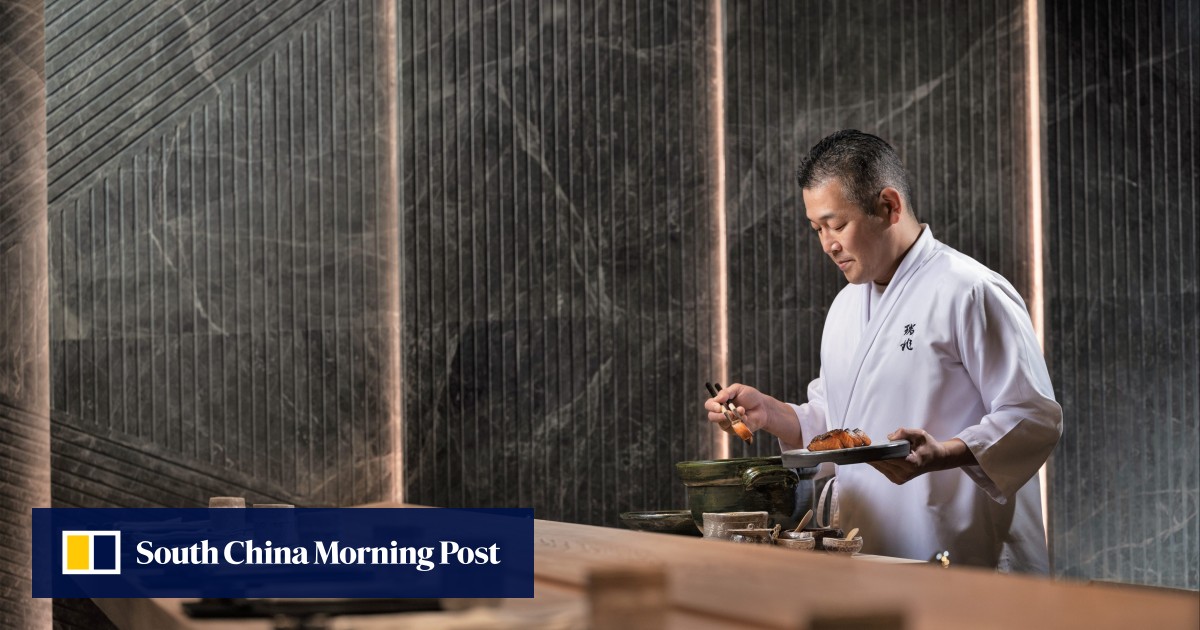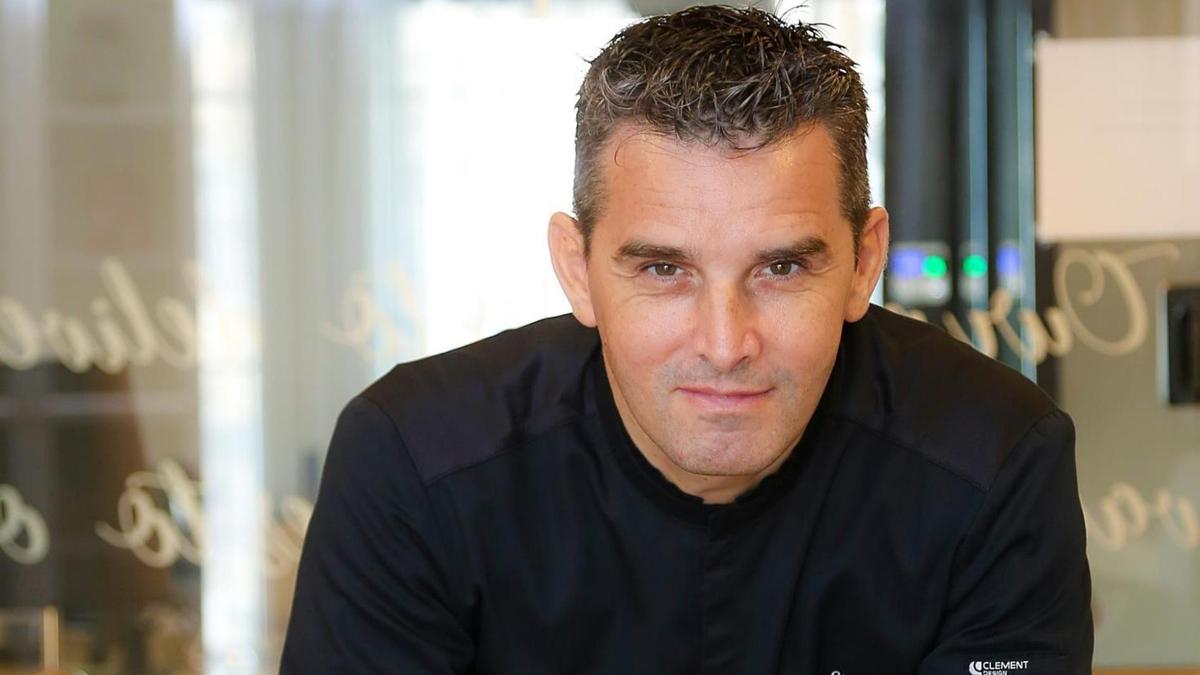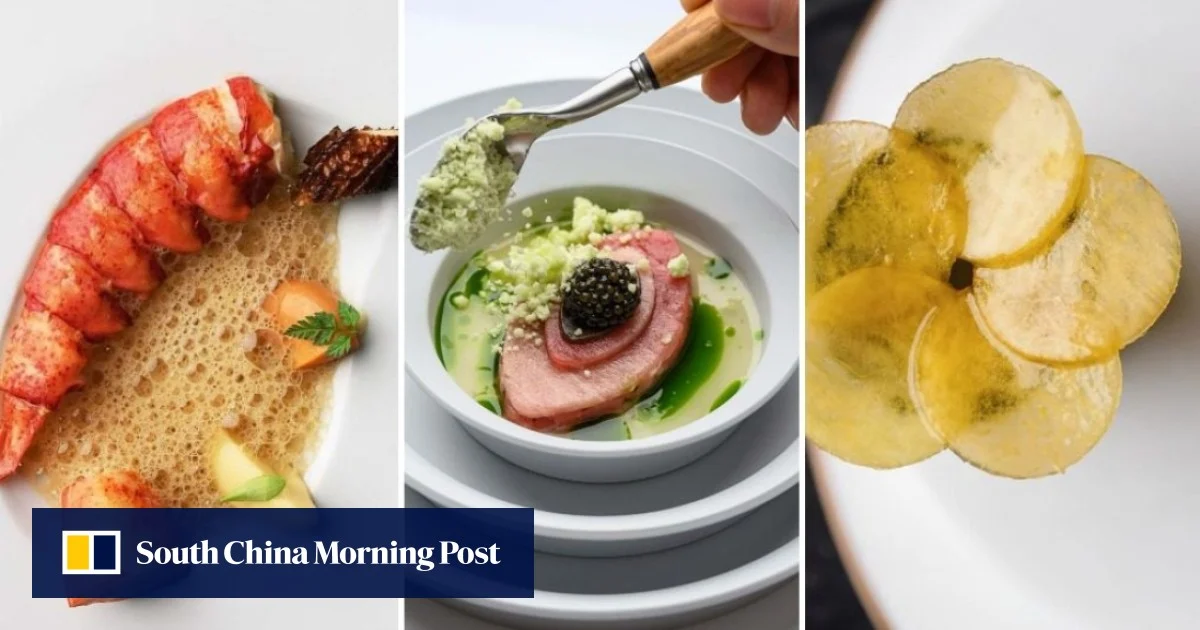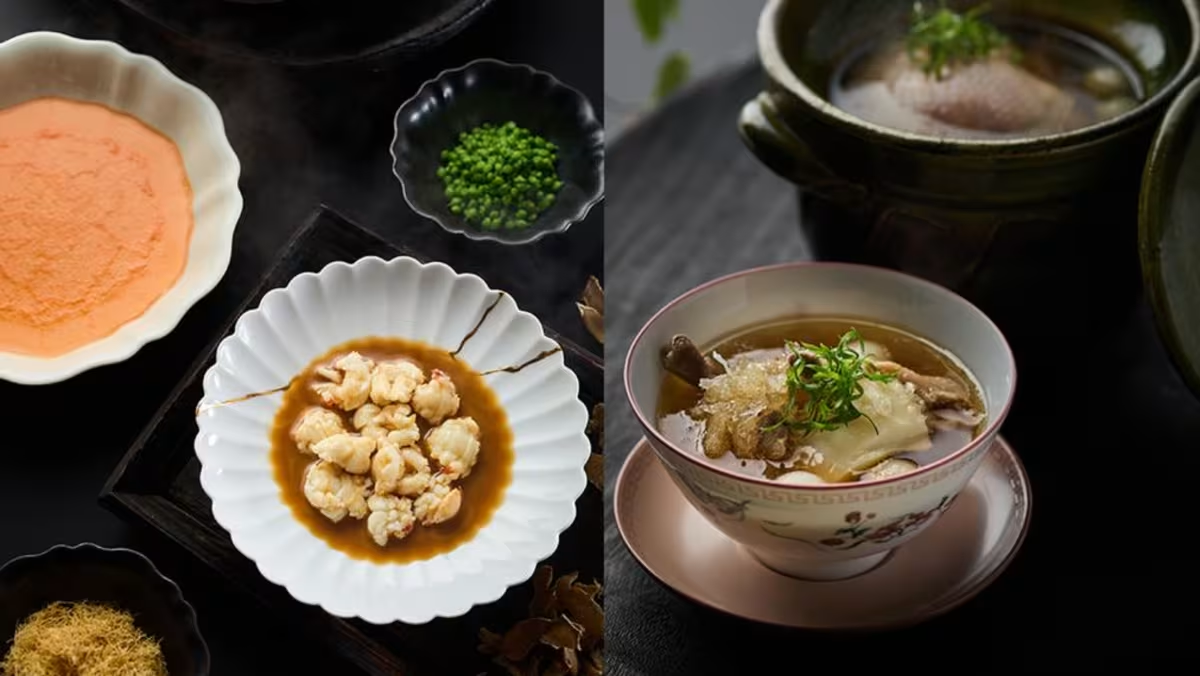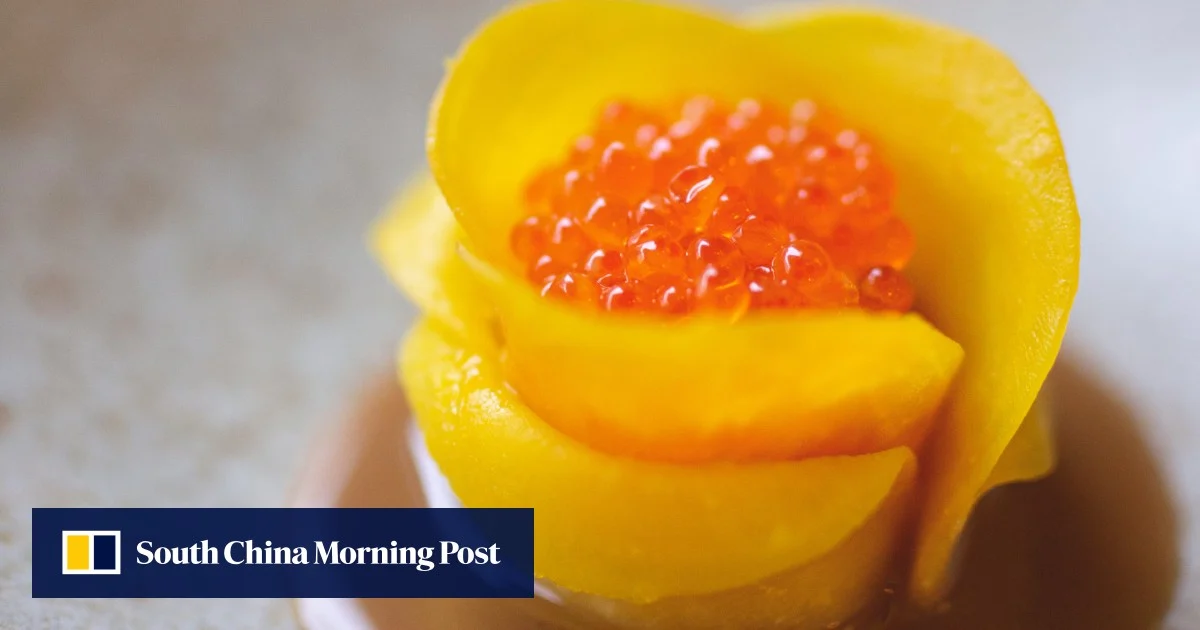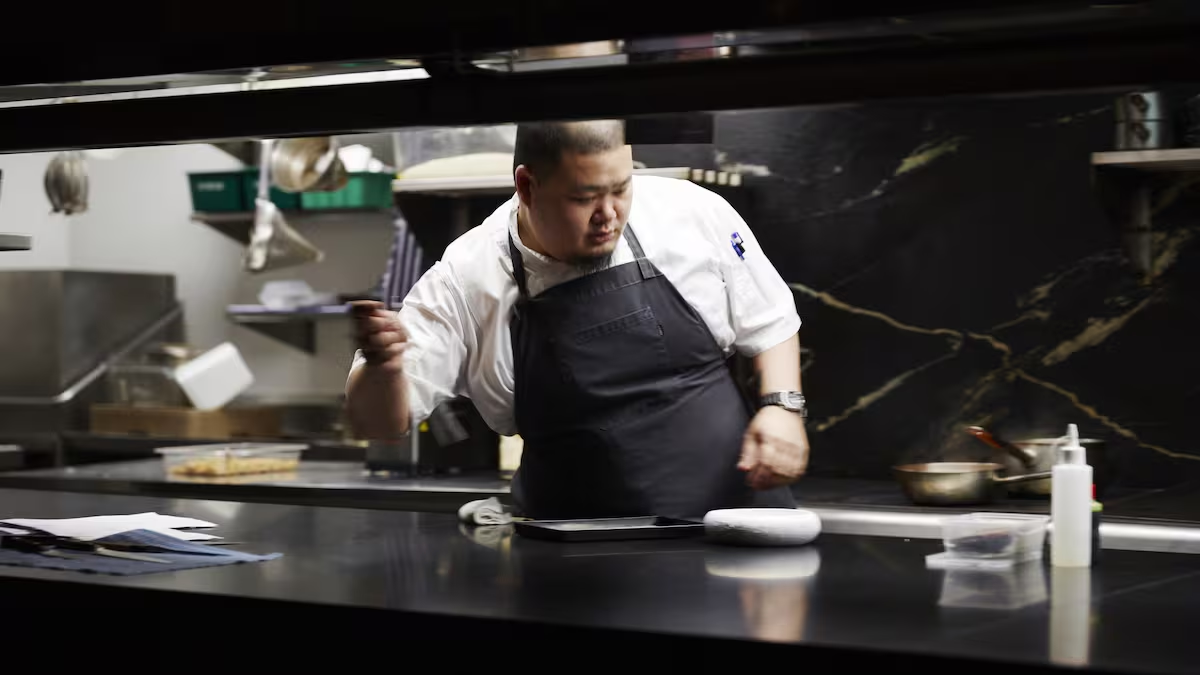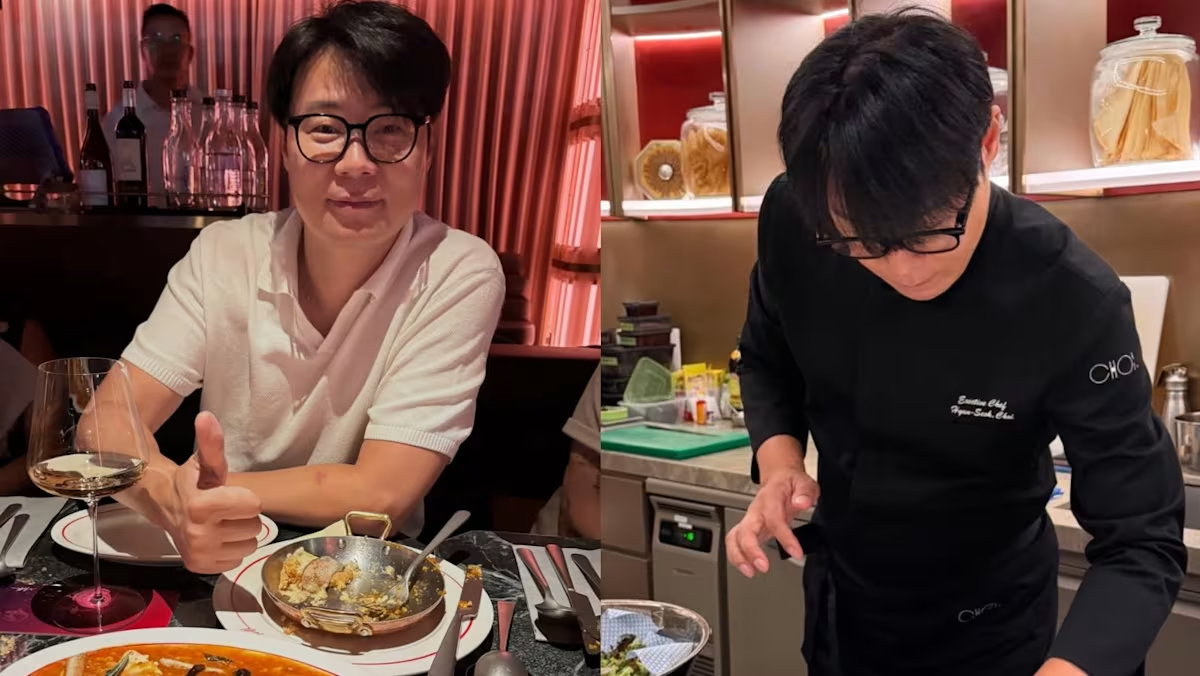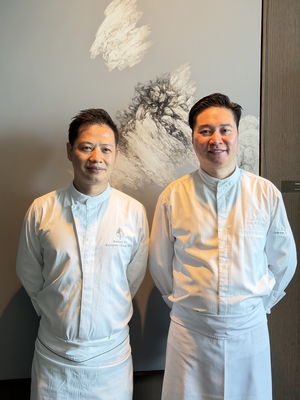
Yu Yuan, Michelin one-star restaurant at Four Seasons Hotel Seoul (Four Seasons Hotel Seoul) For one night, Yu Yuan's kitchen was led by four hands instead of two.On June 19, the Michelin-starred Cantonese restaurant at Four Seasons Hotel Seoul shared its kitchen with Zi Yat Heen, the one-Michelin-star Cantonese restaurant at Four Seasons Hotel Macao, for a single seating. Yu Yuan chef To Kwok Wai and Zi Yat Heen chef Anthony Ho built a seven-course menu that set Korea's early-summer ingredients next to Macao's Cantonese repertoire.The four-hands dinner is part of a series that Four Seasons Hotel Seoul began in 2025 and hopes to bring back each year. Last year's edition paired To with Charles Zhang of Jin Jing Ge in Suzhou for a two-day event that blended Cantonese and Jiangsu cooking with seasonal Korean ingredients. Zi Yat Heen's chef Anthony Ho (left) and Yu Yuan's chef To Kwok Wai at Yu Yuan in Four Seasons Hotel Seoul on June 19 (Hong Yoo/The Korea Herald) This year, two rooms came with matching credentials. Zi Yat Heen holds a Michelin star along with a Black Pearl one-diamond rating and a Forbes Travel Guide five-star award. Yu Yuan earned a Michelin star every year from 2017 to 2021 and has held it again in 2025 and 2026. Ho built his career across Shanghai, Hong Kong and Macao, while To has spent years pairing Korean seasonal produce with Cantonese technique in Seoul."Cantonese cuisine is about understanding the essence of an ingredient and drawing out its purest flavor through the balance of time and fire. Through this collaboration, the sensibilities of Seoul and Macao meet to show what sustainable Cantonese cooking can be," To said.The meal opened with a Drappier Carte d'Or Brut, a crisp, high-acid Champagne whose fine bubbles set up the seafood to come.First came three cold bites from Ho. A piece of lobster sat over a shiso parcel of minced shrimp and shrimp roe, fried until crisp, finished with caviar that pushed the savory note further. Next was a marinated scallop under aged napa cabbage kimchi set into a chewy jelly, its spicy-sour edge sharpening the appetite. The third, marinated abalone from Haenam, South Jeolla Province, steeped long in soy sauce, had a spoonful of minced green chili for a quiet kick. Dried sea cucumber and black chicken soup (Hong Yoo/The Korea Herald) Ho's second course was a double-boiled black chicken soup from Jeongeup, North Jeolla Province, simmered twice with dried sea cucumber, dried scallop and morel mushroom. The broth ran deep and clean, a summer restorative in Cantonese dress. The black chicken stayed plump, and the dried sea cucumber, a prized ingredient in Macao, held its springiness through the long cooking.A Boyer-Martenot Bourgogne Aligote followed, a Meursault white of green apple and citrus with the minerality to carry into the next seafood course. Steamed egg custard with sea urchin and king crab (Hong Yoo/The Korea Herald) To's signature came next, a steamed egg custard under sea urchin and king crab. The custard was as soft as set cream, glazed with a king crab bouillon simmered for hours from the crab's meat and shell. Eaten on its own first, then with the crab and urchin together, it highlighted the long-simmered stocks that have become To's trademark.Ho answered with Zi Yat Heen's signature, stir-fried live saw-edged perch served in a crisp potato-starch shell over fine scallion, with carrot and asparagus. The fish, a rare catch, was cooked lightly in a house soy sauce restrained enough to let its own flavor lead.A Chateau Talbot, a fourth-growth Saint-Julien long favored by Korean collectors, arrived with the beef, its blackcurrant and black cherry framed by fine tannin. Hanwoo beef 1+ with hawthorn glazed sauce and crispy rice (Hong Yoo/The Korea Herald) To's hanwoo beef 1+ striploin came under a hawthorn glaze made from Cheongsong hawthorn in North Gyeongsang Province, gathered as it fell naturally in June. A crisp rice-puff coating added a contrasting texture to the tender meat, with red chili on top. Shrimp roe noodles tossed in aromatic oil (Hong Yoo/The Korea Herald) The savory courses closed with Hong Kong-style egg noodles in shrimp roe and scallion oil, springy and nutty with a low hum of shrimp, topped with fried scallion. A clear pork-and-chicken broth came alongside, light to the eye but deep in flavor. White lotus and bird's nest sago with avocado and melon (Hong Yoo/The Korea Herald) Dessert was bird's nest over avocado, honeydew melon and sago. The bird's nest, prized for its collagen, added a soft, jelly-like texture to the fresh fruit base, closing the meal on a light note.The dinner was served only on June 19, at 358,000 won per person. Wine pairings were offered at 130,000 won for three glasses and 150,000 won for four.
Two Michelin kitchens, four hands, one night in Seoul
For one night, Yu Yuan's kitchen was led by four hands instead of two. On June 19, the Michelin-starred Cantonese restaurant at Four Seasons Hotel Seoul shared
797 words~4 min read