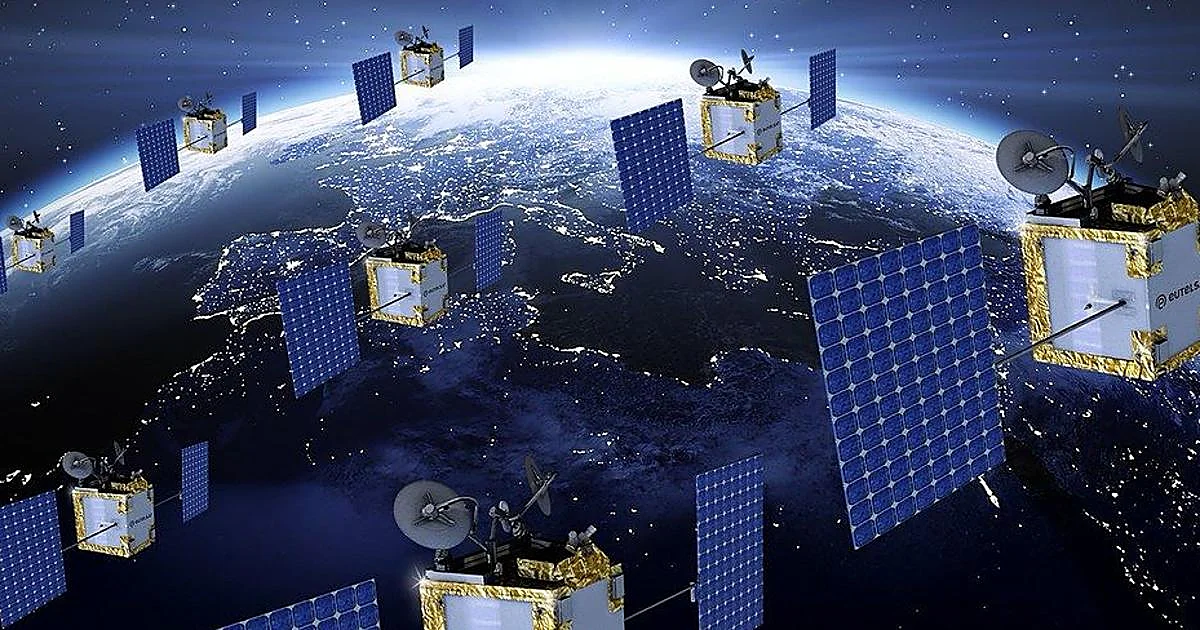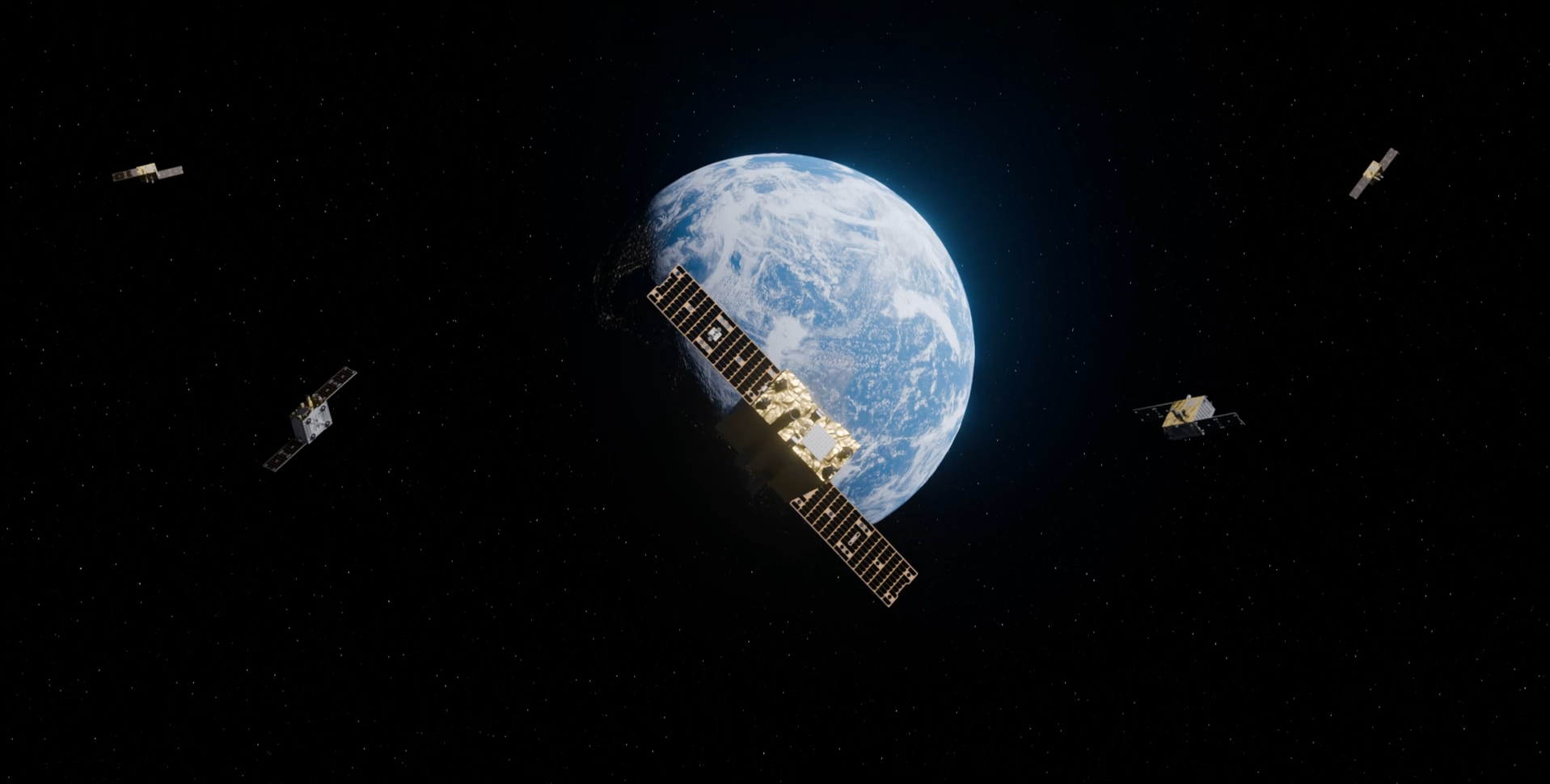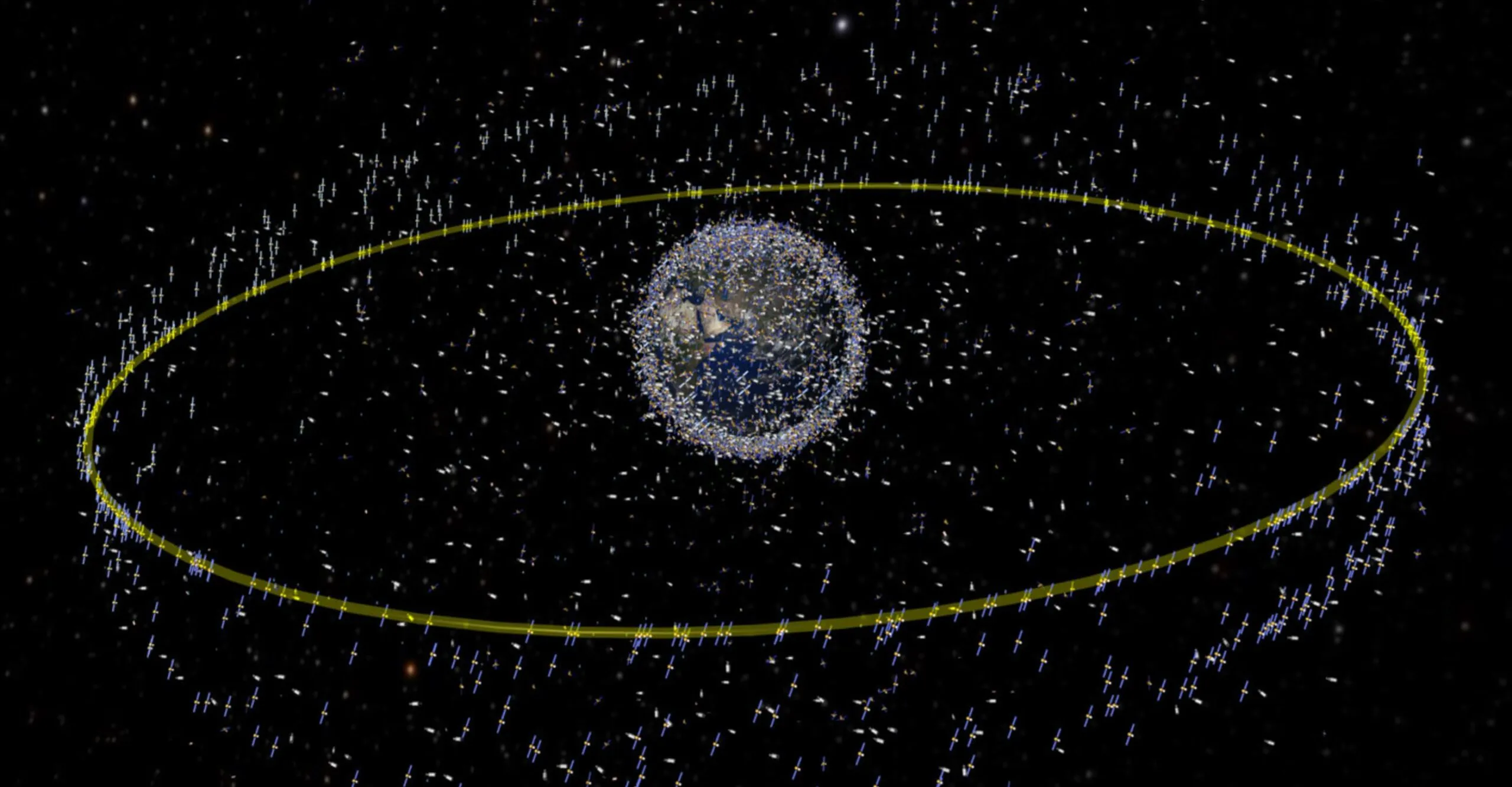
An artist's representation of objects in low Earth and geostationary orbits. Credit: ESA
Across the European Union, satellite navigations alone is thought to underpin more than 10% of GDP. Satellite-dependent activity on the whole is responsible for much more. According to INSEE and CNES, France’s space sector generated 10.8 billions euros ($12.3 billion) bn in space-related turnover and supported 33,200 dedicated space jobs in 2020. As of 2025 in the United Kingdom, space-based activity is behind about 18% of GDP. It doesn’t take too much imagination, therefore, to picture the chaos that might ensue should a strategically crucial European satellite or group of satellites be harmed. Space systems form the enabling network of much of modern life.
It follows that these systems can’t be left unguarded. They’re too important; and therefore make far too inviting targets for our adversaries who, according to analysts and insiders, are already tracking them closely. Protecting them starts with our being able to see exactly what is happening around them, which points to the crucial role that Space Situational Awareness (SSA) has to play. This, a field of significant growth (spending is set to hit $61 billion over the next decade), is vitally necessary if governments and defence agencies are to overcome the so-called problem of attribution and develop the ability to distinguish between hostile activity and an accident. Orbit remains a shared domain with mainly voluntary traffic coordination, which makes working out why a satellite failed or who might be behind a crash is an obstacle.