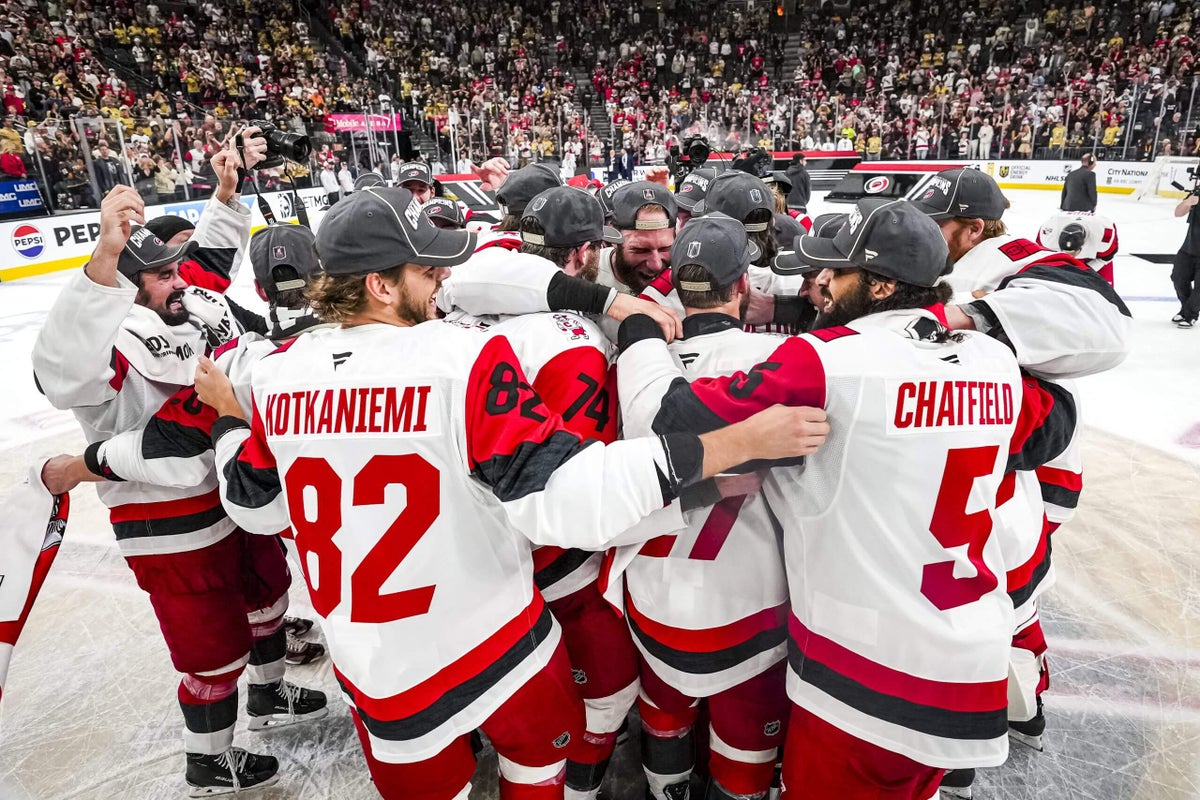
In 2009, Sidney Crosby’s Pittsburgh Penguins won their first Stanley Cup title. In 2010, Jonathan Toews’ Chicago Blackhawks won theirs. That moment in time served as an inflection point for the NHL, one that dictated the next two decades of champions, providing the exact blueprint for glory in a 30-team salary cap league. When cap space and market efficiency dictate so much strategy, the only way up is to start from the bottom with a rebuild. The Los Angeles Kings knew it. The Washington Capitals knew it. And the recent run of champions from Tampa Bay, Colorado, Florida and Carolina knew it, too. Since Pittsburgh’s win in 2009, 15-of-18 Stanley Cup wins have come from those eight teams. All of them have a common thread: A run of at least three top-five picks over six years that started the whole process.It started with a proper rebuild.What those wins from Crosby and Toews (and Anze Kopitar’s Kings) obfuscated, though, is just how long that process should take.Fans often hear about a “five-year plan” from front offices and that’s not far off from how long it took those three teams to get there. Crosby won in his fourth season, Toews in his third and Kopitar in his sixth. That’s created an economy of impatience around the league, but the reality is that what those teams did is far from the norm. Especially not now, as these types of rebuilds have become the standard.How to win a Stanley Cup without superstarsHarman DayalWhat’s a lot closer to reality is what was once thought to be anomalous: Alex Ovechkin’s Capitals winning in Year 14. That’s how long Florida needed. Colorado and Carolina needed 13 while Tampa Bay needed 12. It should be noted, too, that the Penguins went back-to-back in Years 13 and 14, while Chicago’s second and third Cup titles came in years nine and 11.If the ultimate goal is winning it all, the idea of a “five-year plan” is setting teams up for failure. Impatience and desperation can veer a team off course. That’s especially true if the first five years don’t go according to plan and teams start rushing the process.None of this is to give front offices a free pass to be bad forever, especially if it leaves young players disgruntled regarding a lack of success. But it does mean the hockey world at large should have a better understanding of just how long the process takes.Winning the Stanley Cup is a 10-to-15-year job when done well, with the eight aforementioned teams winning their first after 10.4 years on average. After five years, the only expectation should be making the playoffs.All of this depends on when exactly the clock starts on a rebuild. Some might argue it’s the minute the defining piece is drafted. Some might argue it’s the minute a team stops making the playoffs. For our purposes, the rebuild clock starts the minute a team adds what should become their first cornerstone piece with a top-five draft pick. If that’s the through-line between the eight champs who started with at least three, that’s when the clock should start ticking.No matter what, it’s better to do it right than to do it fast and that requires a lot more time than many fans are usually comfortable with.So what does a successful rebuild look like? Based on the eight success stories, there are four stages with fairly clear stepping stones marked by their regular-season performance: accumulation, development, competing and contention.AccumulationThis is, without question, the most important part of the process to get right and not rush. The eight teams averaged about 70 points across all three years and collectively garnered 18 top-five picks, an average of 2.3 per team. They added 10 more in subsequent years, but this was the main period when the basis of each team’s core was established. And until a legitimate core was in place, there was no real rush to move forward.Here, it’s less about years and more about draft capital acquired. However long it takes to get there is how long the accumulation stage should last. It does not make sense to abandon this stage before that happens (cough, Detroit, cough).Neatly, the magic number before winning it all is roughly 100 wins of draft capital accumulated. While teams don’t need to net all of that during the accumulation stage, they do need to add a large chunk of it when it’s easiest to do so. It also helps to have some value stored from a ‘pre-build’ from before a top-five selection was made (this is roughly two years on average). The Kings getting Kopitar at 11th in 2005 is the best example of that.With those two things in mind, successful rebuilds earn 50 wins of expected value over their first three drafts and 74 wins over their first five drafts. What’s interesting is that also happens to be true for six rebuilds that ended up unsuccessful or currently look that way. The Coyotes and Islanders both failed (and it’s fair to wonder whether that would’ve been the case for the Islanders had John Tavares not left), and while the jury is still out on Buffalo, Edmonton and Toronto, time is not in their favor. New Jersey is the final club and is a difficult team to place 10 drafts in. Considering the Devils haven’t made the playoffs two years in a row, we’re inclined to lump them with the failed rebuilds rather than the ongoing ones until they prove otherwise.
Anatomy of a successful rebuild: Why it takes at least 10 years to build an NHL champion
How long does it take to execute a proper rebuild in the NHL? Longer than you think, but it's worth the wait and patience.
2,617 words~12 min read