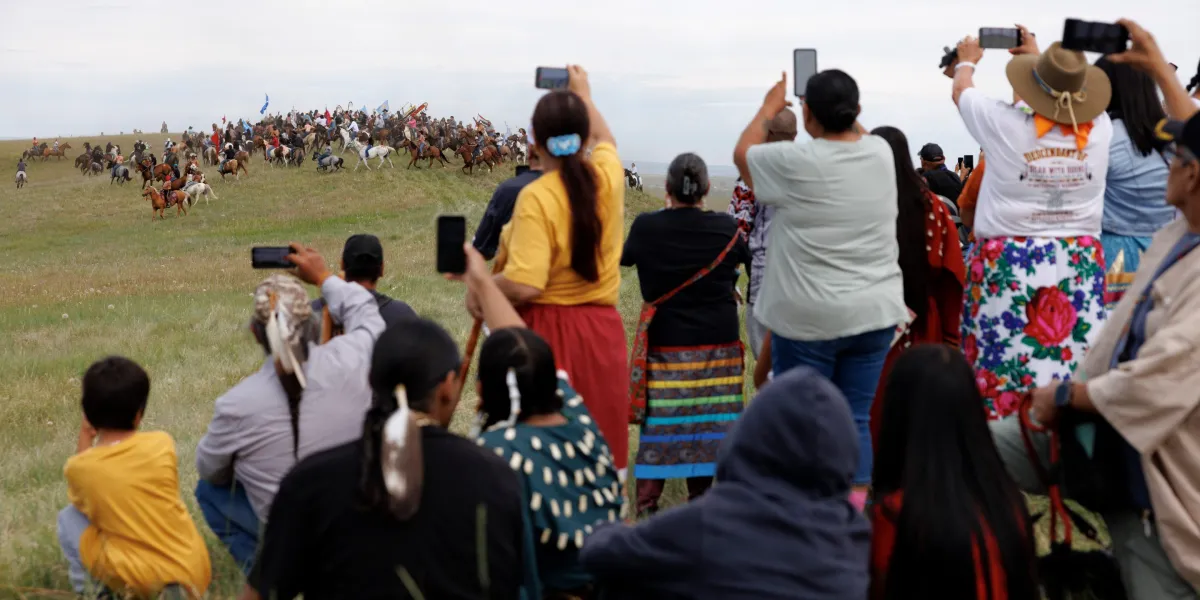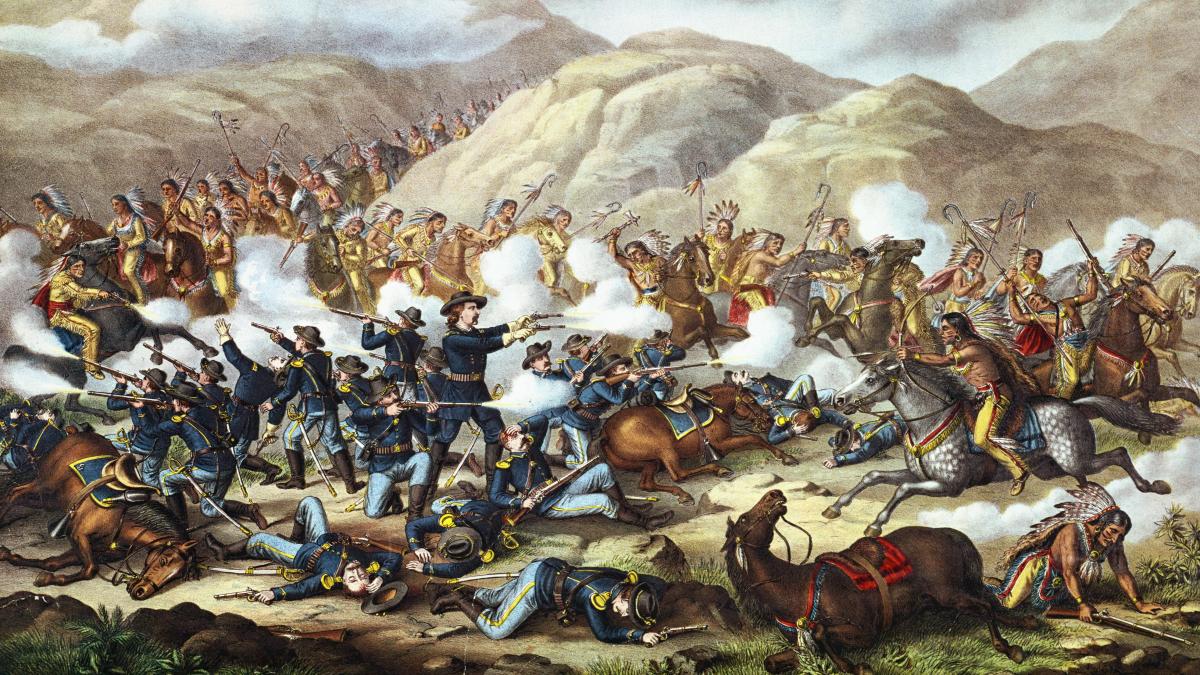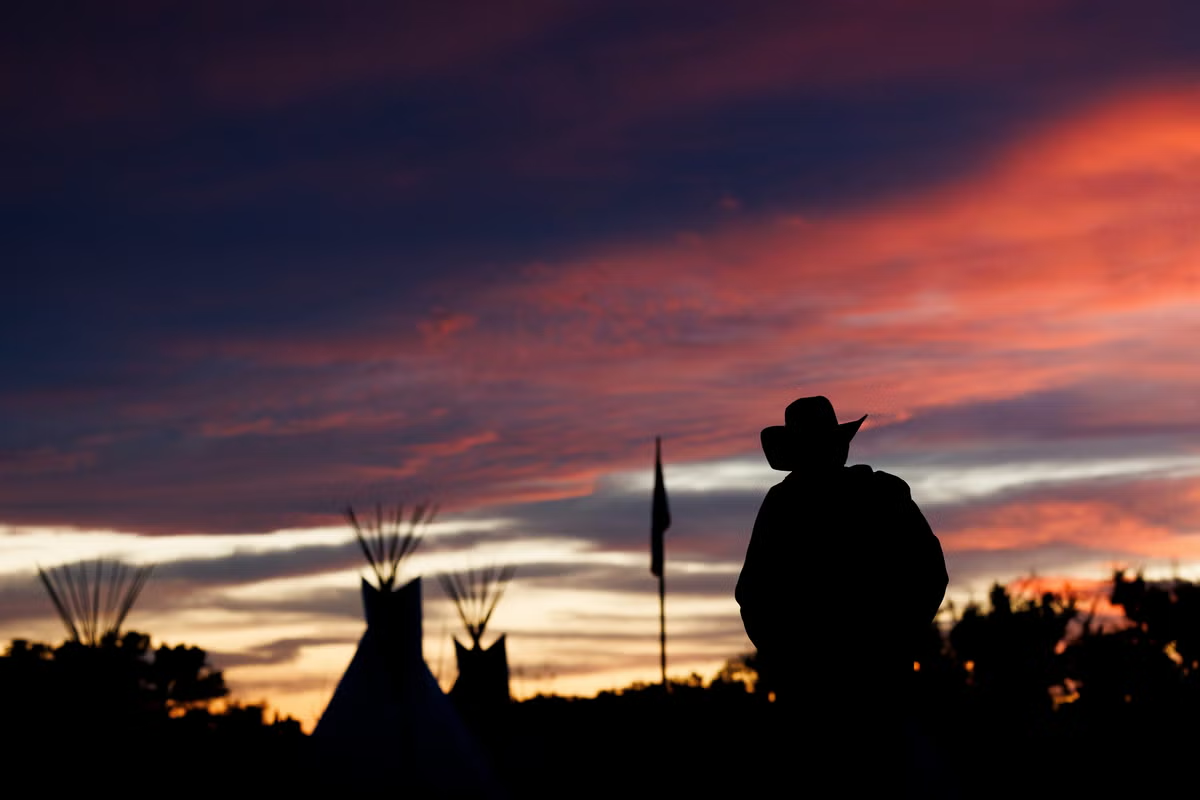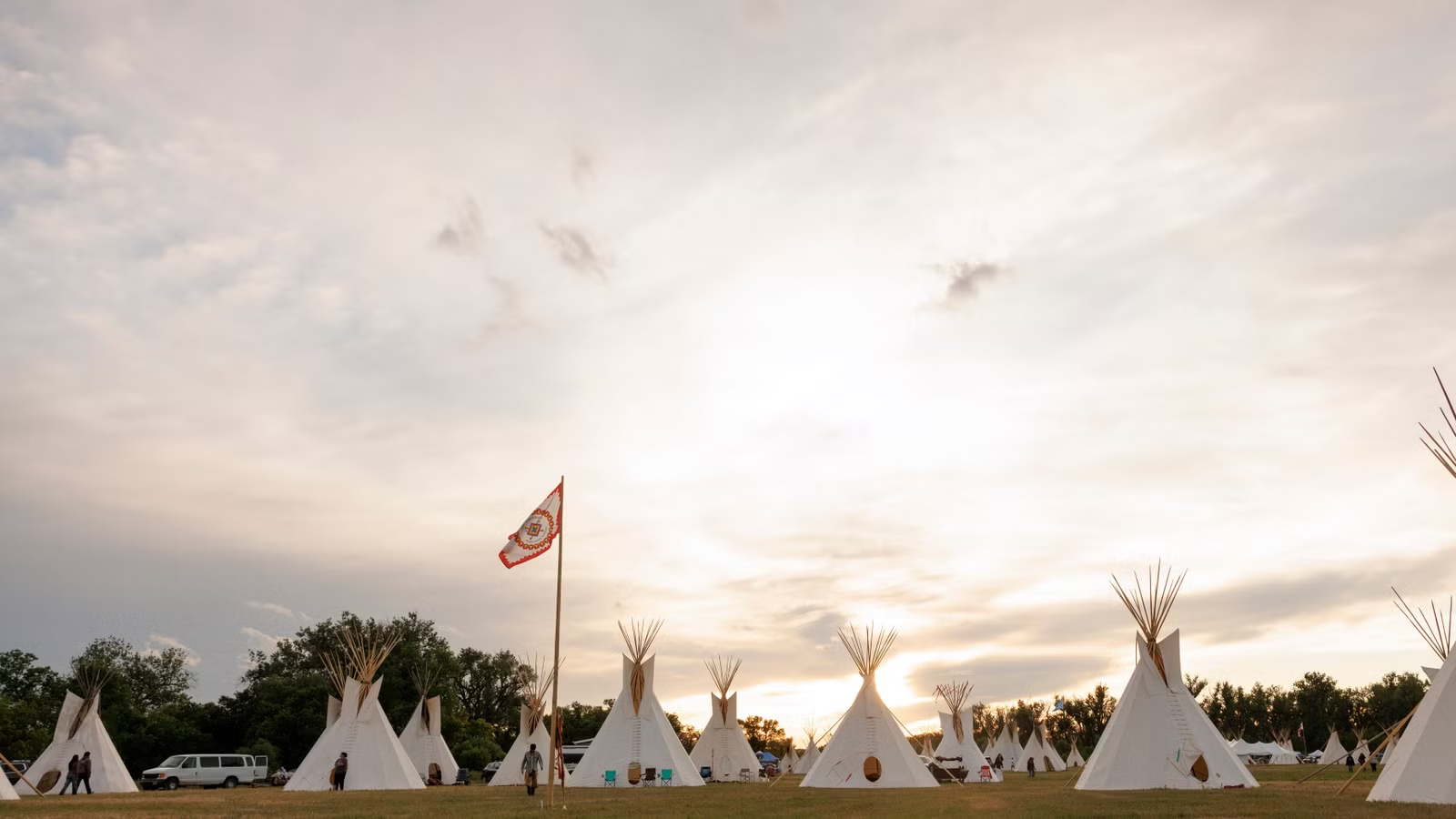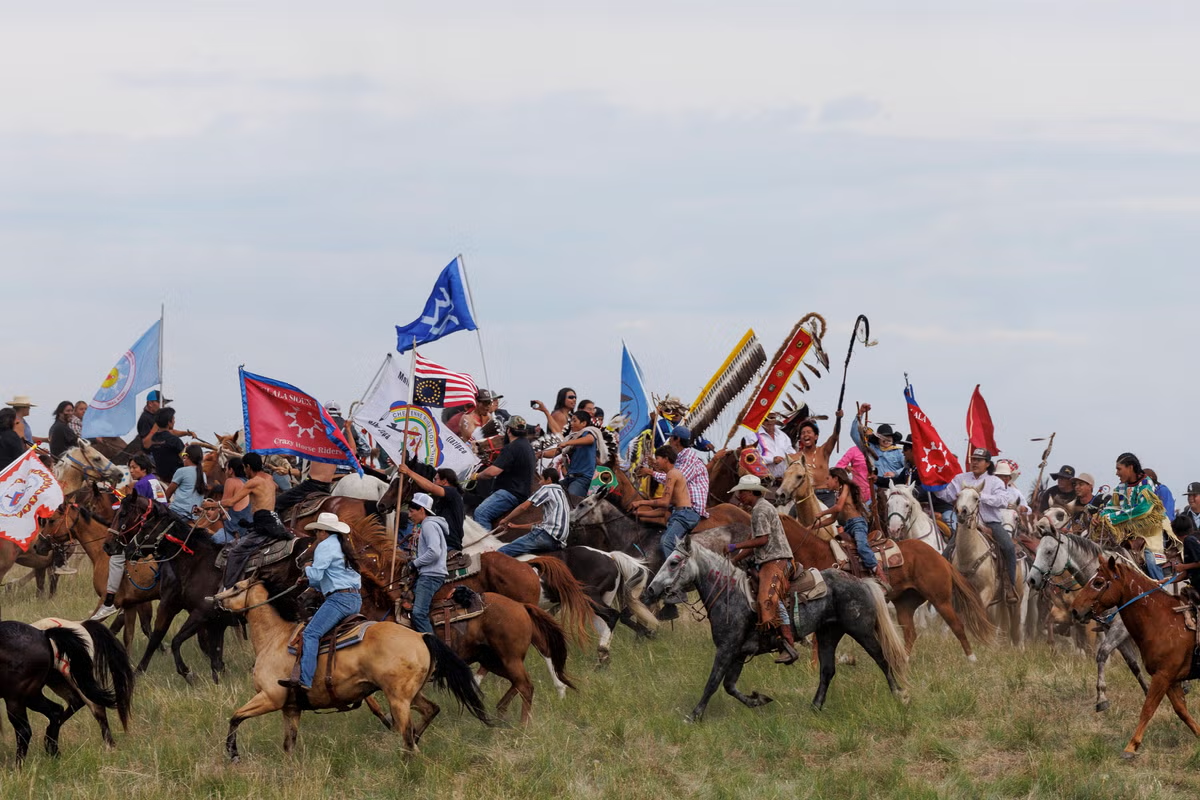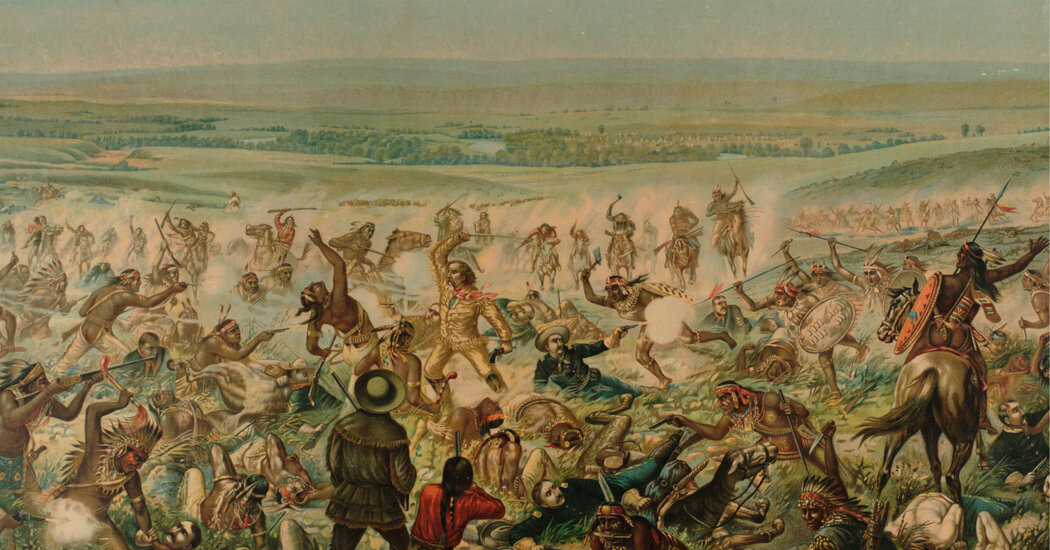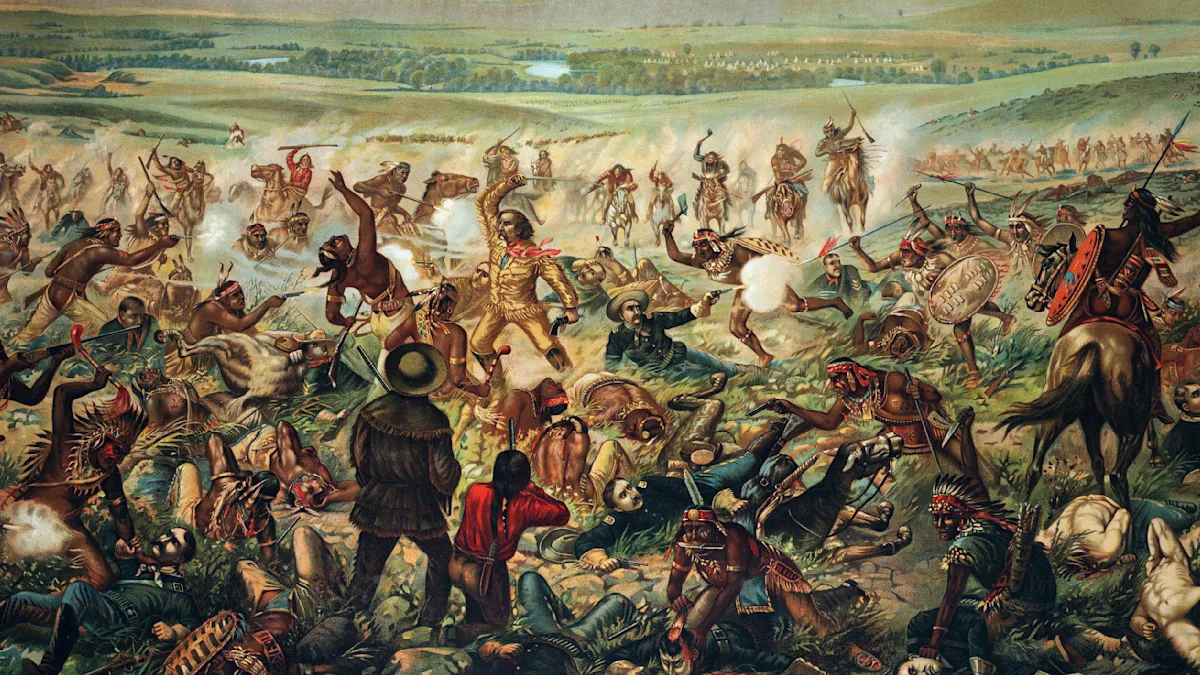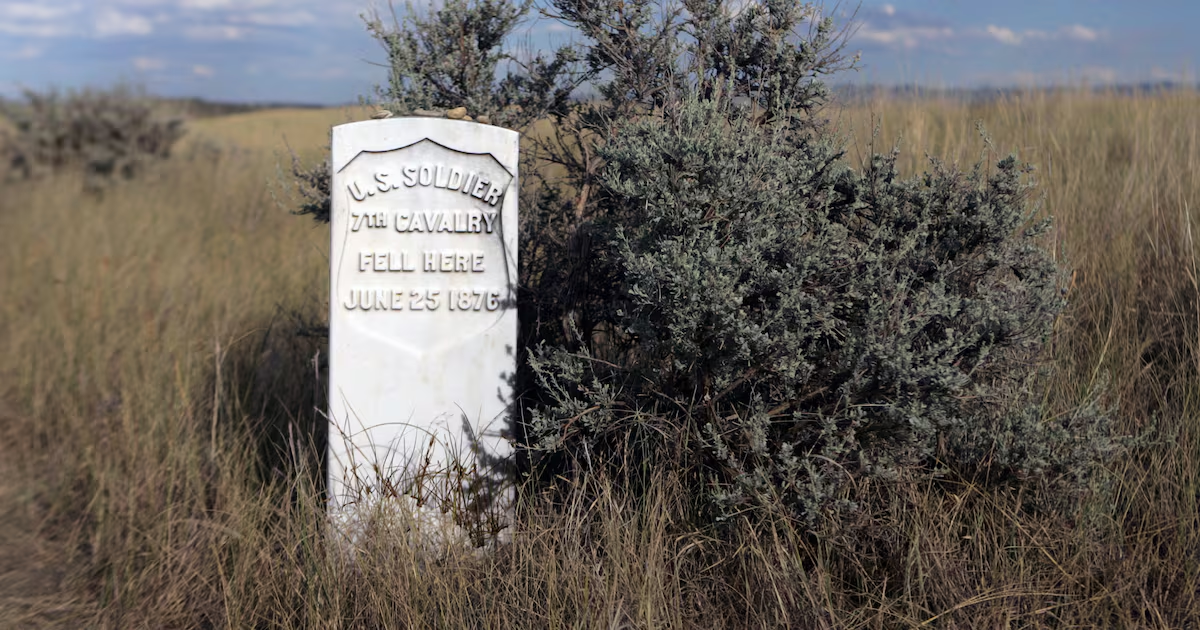
Noontime now on Thursday and it is fast approaching, that sacred, weighted hour on June 25th when, exactly 150 years ago, the US 7th Cavalry came racing down the broad grassy slope in front of us and were, in a swift 90 minutes of dust and blood and screams, eviscerated by a band of Native American warriors who had amassed, by the banks of the Little Bighorn River, for one last summer of resistance and the old life.In other words, it’s almost 150 years to the minute since one of the most transformative and mythologised battles in US history took place. So, of course, they’ve come by the thousands, arriving since early morning, hauling flasks, folding chairs, packed lunches, binoculars, water bottles: all the paraphernalia one would need to survive a high summer day on the plains of southeastern Montana. And now, everything seems to be happening all at once. In front of the covered seating area, there are speeches and intermittent war chants. Out on the grass verge, or bluff, crowds are waiting for the ceremonial charge of warriors on horseback. Near the fenced-off slope where general George A Custer and 50 other soldiers fell, one guy is explaining to his companion about how the women pierced Custer’s ears with knitting needles that he may hear better in the next life. At the crest, a Sioux couple pose for photographs with arms raised in victory salute while clusters of Little Bighorn battle nerds hold earnest what-if conversations: if major Marcus Reno had charged when instructed; if Custer had not split his unit. There are Native Americans in full headdress and white guys wandering about carrying bugles and wearing the heavy navy jackets of the 7th and there’s a helicopter honorary flyover and children playing and, honestly, this place – which is buried deep, deep, into the American subconscious – can seldom have felt more alive with all of human life. If the dead from that battle a century and a half ago could for even one second have glimpsed this strange and full-hearted effort to remember them, what would they have thought?Last Stand Hill, where Gen George Armstrong Custer and members of the 7th Cavalry died. Photograph: Steven Clevenger/Corbis via Getty Images “This day itself, you know, is one of the greatest military victories,” Trina Lone Hill tells me shortly after speaking to the crowd. “They always thought of us as savages, as primitive. But ... they studied our strategies here at West Point. People they deemed not human. So ... just the pride is what we take out of this day.”Trina, who is Oglala Sioux, explains that her great-great-great grandmother fought at Little Bighorn, becoming embroiled in the close-quarters combat along with her two sons after they had been trying to retrieve the body of a warrior relative. Trina Lone Hill: 'They always thought of us as savages, as primitive. But ... they studied our strategies here at West Point.' Photograph: Keith Duggan “I come from Fool’s Crow, a famous medicine man in our people. And his grandfather was Knife Chief, who fought alongside Crazy Horse. My ancestor, she had a headdress on her at the battle. That’s why I wore this today. People thought I was crazy wearing it but I said: you know what, it’s my right. We are very humble people. But today is a day to be proud of our ancestors. And to know that she fought here. She got caught up in that fight and was literally part of the combat.”Over the past few days, the Oglala, the Rosebud, the Cheyenne and other tribes began arriving at the Crow Indian Reservation to set up camp in tepees in the same location, by the moseying river where their forefathers had formed a huge village, of seven tribes, in the summer of 1876. The anniversary is marked annually but this 150th occasion has drawn an exceptional crowd and feels like a crossing point. As it is, the national park attracts about 200,000 people a year annually. The United States is painstaking in the preservation and presentation of its battlegrounds – the bloodier, the more cherished. But few places have quite the magnetic pull on the imagination as this sprawling, rolling section of land about 50 miles east of Billings. George Armstrong Custer, pictured in 1865. Photograph: Library of Congress via The New York Times The appeal is partly attributable to the novelistic richness of the lead figures of the day: Sitting Bull, the leader of the conjoined tribes of maybe 7,000 people and 1,000 tepees; the flamboyant and recklessly courageous Custer who had cultivated a form of international military celebrity, complete with travelling press corps; and then Crazy Horse, the enigmatic Oglala Sioux leader who had begun to ascend into the realm of Native American archetype by the time he shaped and led what was a tactical and fighting rout – a massacre, really – of the outnumbered and outwitted 7th. Custer and Crazy Horse were both, in one of those unsettling quirks, known as “Curley” in their younger days. Custer chronicled his life as he lived it and seldom saw a camera he did not love. Crazy Horse was, famously, never photographed as he believed it thieved the soul and thus lives in the mind’s eye by inherited description: slender, almost pretty-faced, sparse warpaint, light hair, fearless in conflict to the point of supernatural. The alliteration of those names and their profile among their respective peoples meant that this brief, decisive episode of frontier war carried mythic weight – the first re-enactment took place just a decade afterwards. If it hadn’t been Little Bighorn, they would have met somewhere else. By 1876, the United States was struggling to emerge from an economic crisis, and with the confirmation of gold in the Black Hills – which the Sioux had rights to by legal treaty – the Grant government had abandoned its peace principles and demanded the last off-reservation tribes to report to agencies. A man walks back to camp during the festivities marking 150 years since the Battle of the Little Bighorn. Photograph: Tailyr Irvine/AP The Crow scouts easily found the vast encampment, and a combination of impetuosity, a career-record of near invincibility and a fear that the tribes might escape compelled Custer to attack with haste. Political ambition may have lurked within his motivations too: the centenary of independence was approaching on July 4th and Custer may have foreseen a victory lap in New York and Washington. So, he would wait neither for the Gatling guns nor reinforcements and split his unit into four, leading the 268 men in his own command into absolute carnage, trapped from all sides. “It makes me kinda proud,” Darren Wells, a Sioux from Wakpala, South Dakota, tells me as we stand at the monument and gaze down at the markers of the slain 7th. Custer’s is the lone headstone decorated in black. His brother Tom lies just feet away.“I served in the US military too, so it’s kind of pullin’ me both ways. I think it was a kind of tragedy for America at the same time. But we didn’t choose this. We didn’t ask for the fight. The fight came to us. And Custer ... was very arrogant, I would say, to attack the camp. He’s quoted as saying that they’re not enough Indians in the world to defeat the 7th Cavalry. But ... they were defeated this day.”It’s difficult to comprehend the cold, horrified dread, and awful thrill with which white America absorbed the news. Clement Lounsberry, the editor of the Bismarck Tribune, used the notes retrieved from the pouch of his luckless reporter Mark Kellogg, who followed Custer and was killed, along with second-hand interviews to piece together a 50,000-word report transmitted over the lone telegraph line between his office and St Paul, over a 24-hour unbroken spell. The bill reportedly ran to $3,000. The New York Herald carried a 15,000-word account that ran on July 6th, when the United States was 100 years and two days old. Darren Wells: 'We didn’t ask for the fight. The fight came to us.' Photograph: Keith Duggan “Just like 250 this year, they were fixin’ to celebrate 100 years. This battle was the 9/11 of the centenary,” Putt Thompson tells me, leaning back in his office chair when I call into him on Wednesday afternoon. “I mean, it was a clap of thunder.”Putt and his wife Jill opened the Little Bighorn Trading Post, directly across the road from the entrance to the park ground, in 1985. It’s a pleasant cafe with Indian Tacos and Buffalo Steaks, and an extraordinarily stocked gift store filled with Native American blankets and artwork and historic curios. Putt is Texan but belongs to the generation of Americans who, as he says, “had this obsession with the Native American ... experience, to use a broad term. I first came up here as a teenager to the Crow Fair. And when I saw the tepees, I thought I was in heaven.”He returned to spend winters with a family from the Real Bird tribe. He learned how to sing, how to play Crow games. He never really left. While we chat, Putt periodically receives visitors, among them a group of musicians from Hardin High School who have got a band together and are in to thank him for sponsorship. The teenagers take turns shaking his hand and tell him they mostly play rock, country and blues. They’re talented: the woman who chaperoned them into the cabin updates Putt on their progress: they’ve won awards, the eldest has earned a music scholarship.“Any Crow rap?” Putt jokes.Putt Thompson: 'A million acres. It’s a complicated, different kind of world here.' Photograph: Keith Duggan “Music is a language, you know. So, you’re really doing everyone quite the service.”When they leave, it’s clear he’s thrilled by the visit.“The best part about being here is that kind of experience of people who started kids off on a good direction because that doesn’t always happen,” he explains.“A million acres. It’s a complicated, different kind of world here. I always said to my wife we’d be bored to death if we lived anywhere else, with the politics of land and tribes which seems amplified here, good and bad.”Thompson is clear-eyed about the nuances and moralities of what happened in 1876. Just as I’m heading out the door, he remembers the woman who led the music students in and notes it would have been good to speak with her: her great-great-great grandfather acted as an interpreter for George A Custer.Fifty years of assimilation and friendships with the Crow reservation have taught Thompson that for every person you ask about the Battle of the Little Bighorn, you’ll get a different story. What is universal is not so much the military detail as the fact that it exists as a living, breathing obsession for many people.Siobhan Fallon is a novelist whose fascination with the battle has prompted many visits to the battle field, and to video essays she posts on YouTube. Married to a US military husband, she wrote a well-reviewed collection of short stories from the perspective of military spouses, which led her to the story of Libby Custer, who lived as a widow until 1933. And that, in turn, guided her down the rabbit hole of what happened to the 7th.“One of the things that made me really stick to the story is that our perspective on it has changed so much over the decades,” she explains over the telephone from her home in Cyprus.“I remember travelling across country through America for college and having this idea of Custer as an idiot, repeating these glib 20-year-old reactions of he attacked, he didn’t know what he was doing. And when I started to dig into the complexities later on, it made me feel compelled to help other people see the larger picture of this entire battle. For me, it’s an example of how we can get things wrong in whatever moment of history we are talking about.”Around one-fifth of Custer’s cavalry were Irish. The most celebrated of those was Captain Myles Keogh, whose life had a cosmic arc: born into Famine Ireland; fought in the Papal Wars; fought at Gettysburg – where he first met Custer; died at Little Bighorn. On Thursday, I took a walk across the path to where Keogh’s marker is posted, deep in a quiet ravine that trapped the dead heat and was populated only by butterflies. He was, by all accounts, exceptionally well regarded. “Keogh had terribly bad luck because he had been injured and missed out on several campaigns but I can’t think of anyone in the 7th who was promoted faster than he was,” Siobhan Fallon says.Markers where US soldiers fell in the Battle of the Little Bighorn. Photograph: Will Warasila/The New York Times
The Irish who rode with Custer — and died at Little Bighorn
As thousands gather in Montana to mark 150 years since the battle, the legacy of Native American resistance and US expansion remains contentious
3,320 words~15 min read