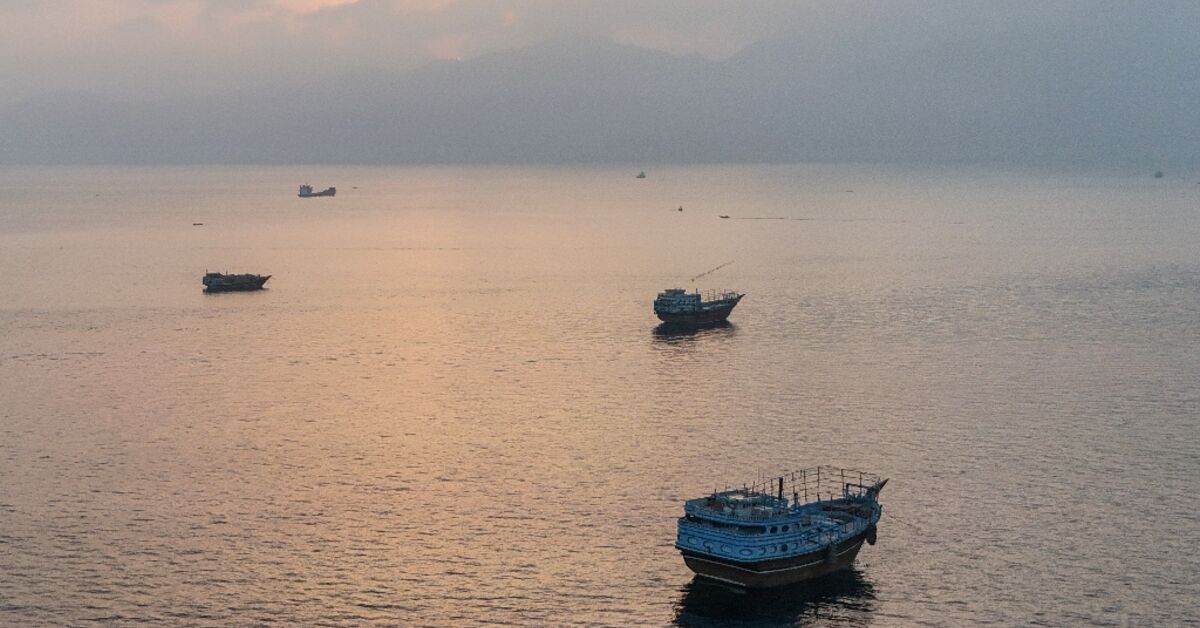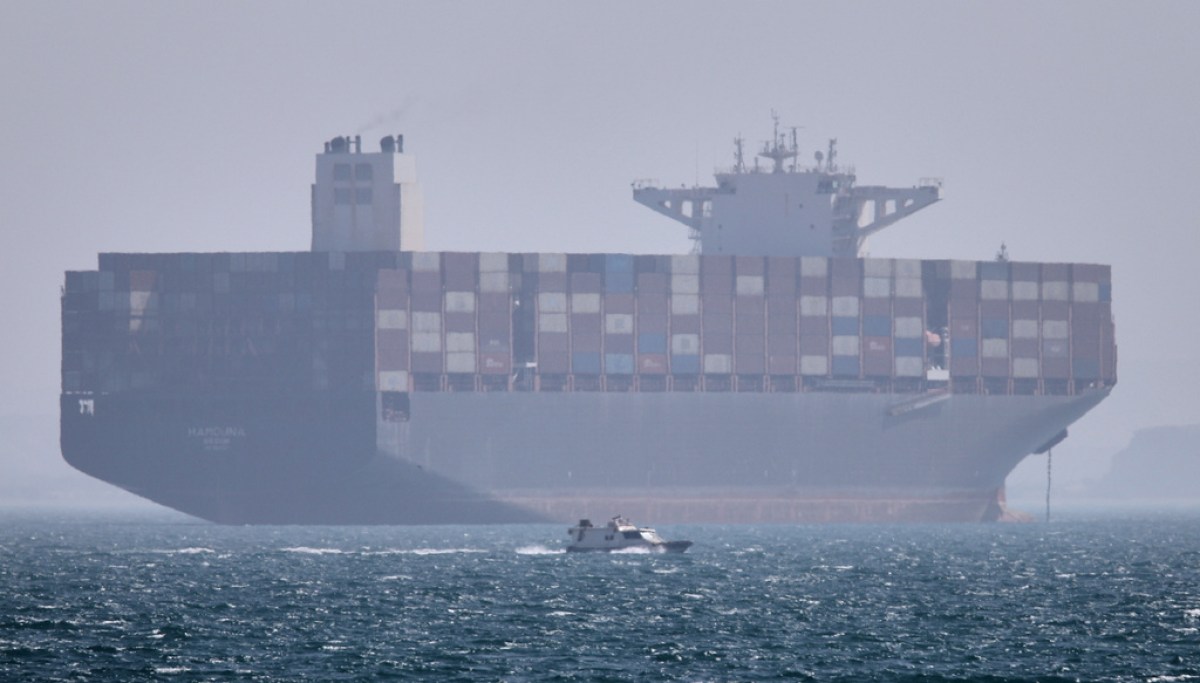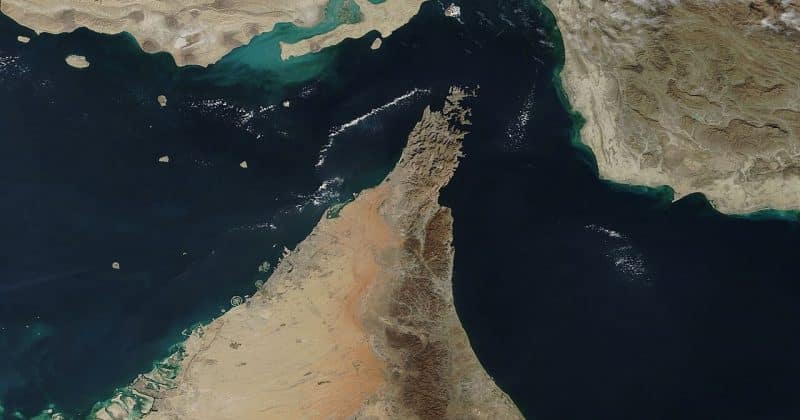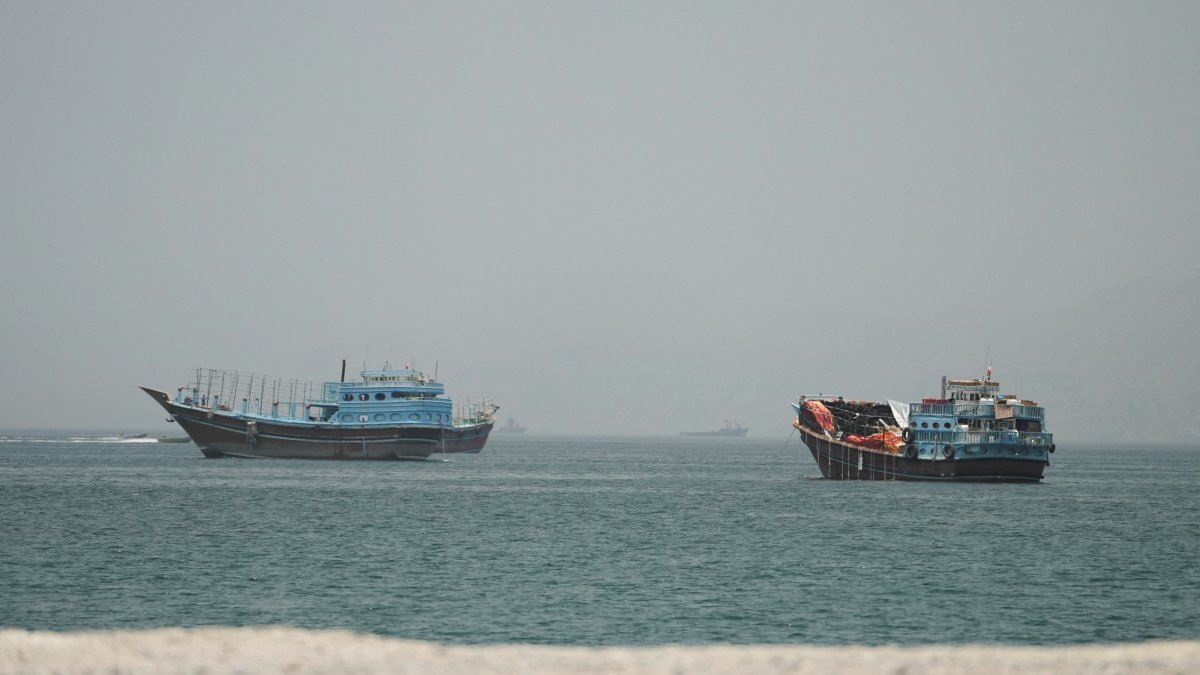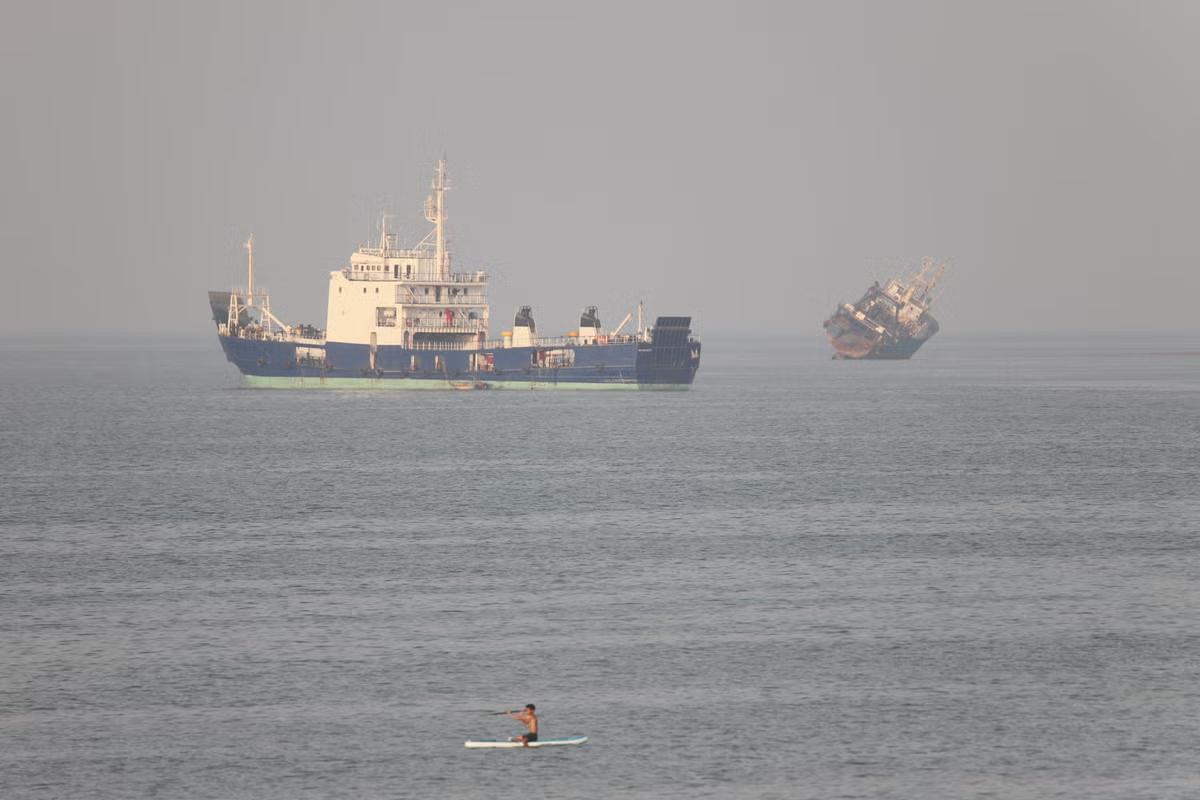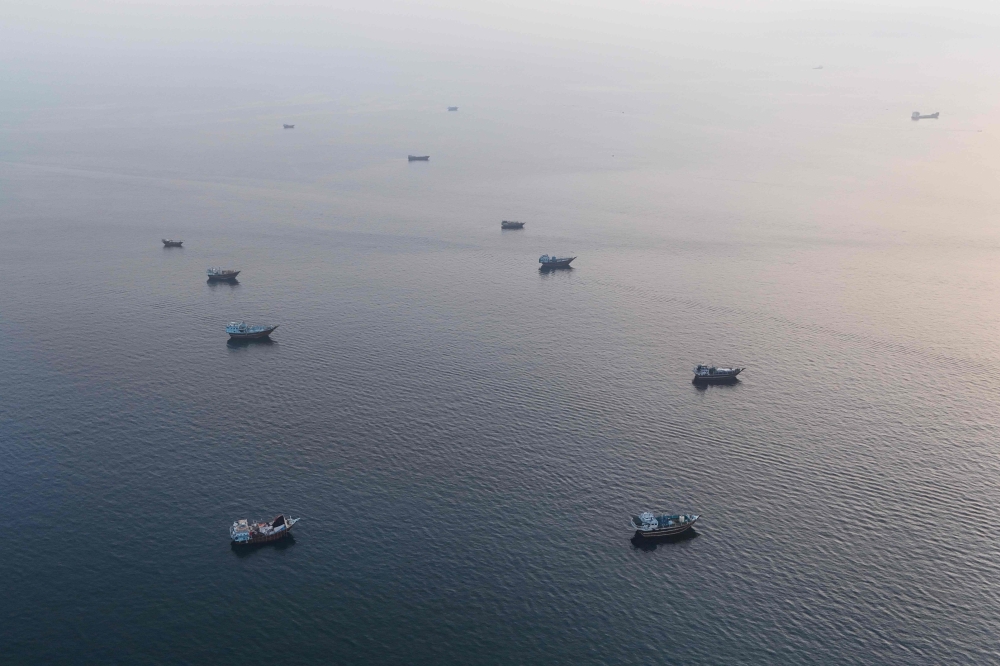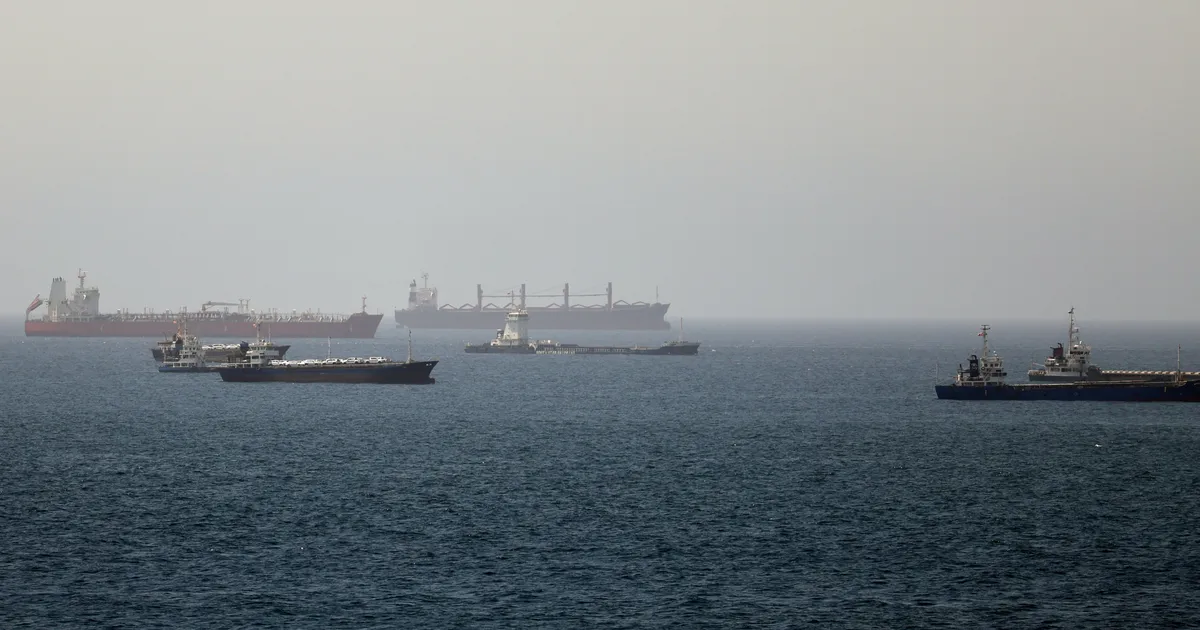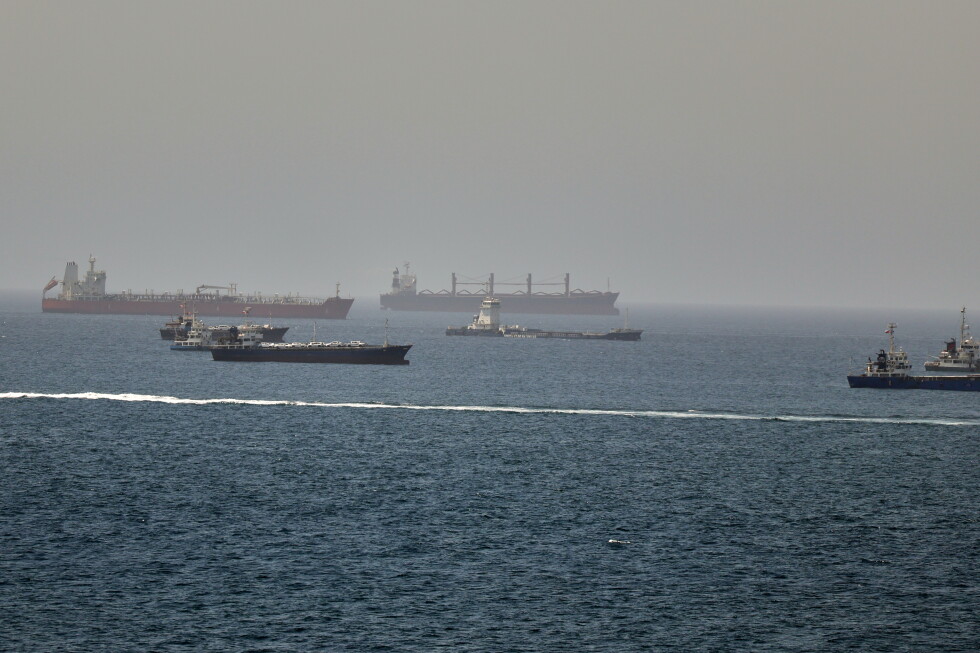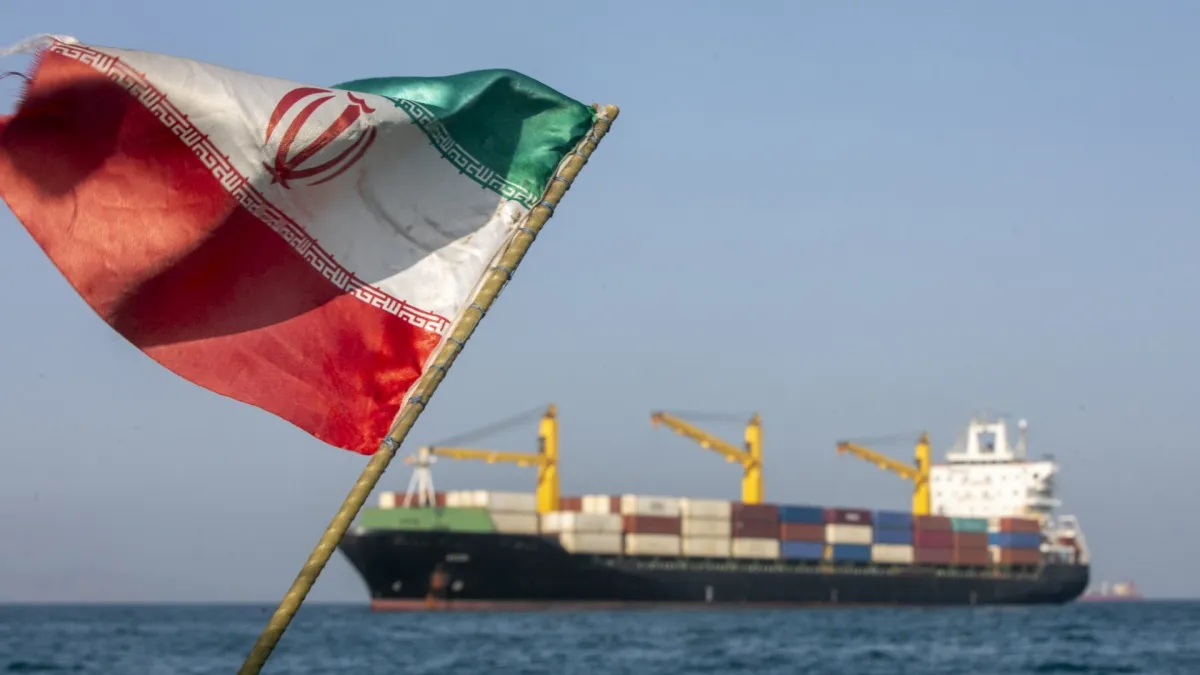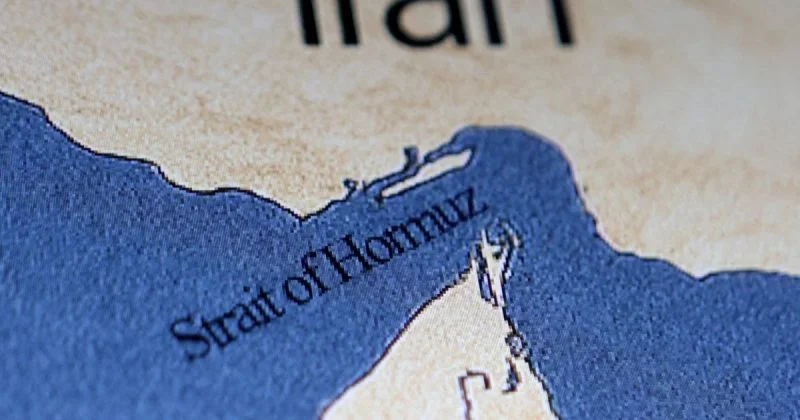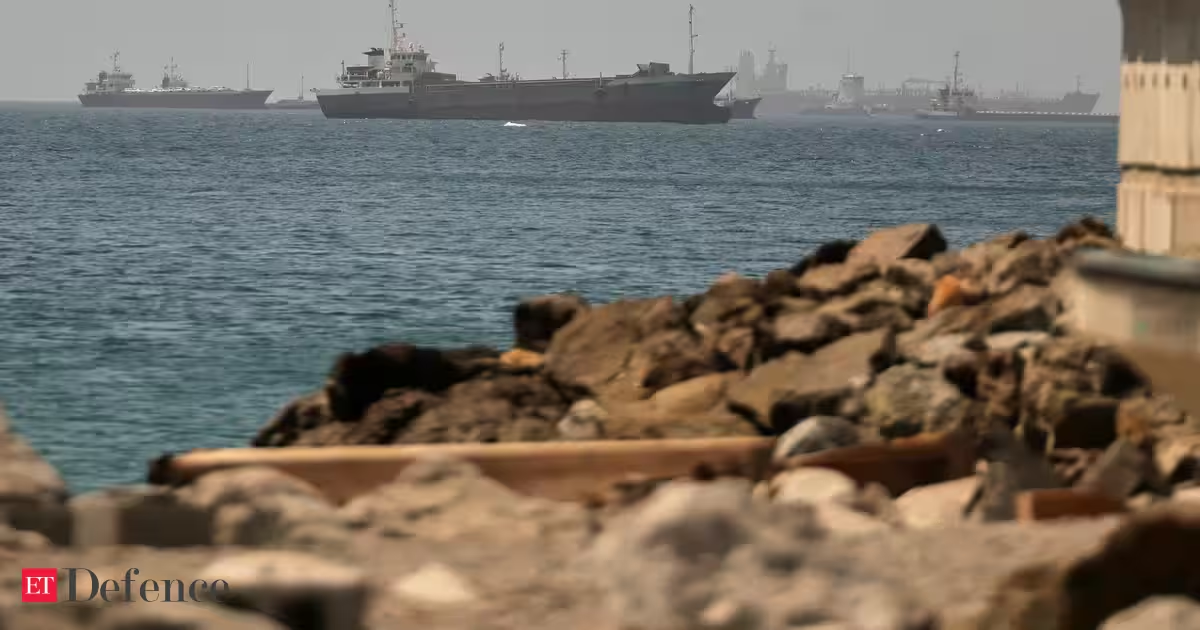
Iran on Thursday struck a vessel in the Strait of Hormuz, compromising efforts to restore shipping through the narrow waterway and threatening to unravel peace talks with the U.S.The attack came hours after Iran’s Islamic Revolutionary Guard Corps (IRGC) had warned ships that they must coordinate with its navy and travel through a designated route through Iranian waters. After the U.S. and Iran agreed last week to reopen the Strait of Hormuz toll-free for 60 days as part of a preliminary agreement, ships had rushed to travel through the corridor. Many used an alternative route on the southern side of the Strait along the Omani coast.“This route is unacceptable and extremely dangerous,” the Iranian navy said on Thursday in a statement carried by IRGC-linked news agency Tasnim. “We warn all vessels to strictly refrain from any movement outside the designated routes.”After the strike, which was first reported by the Wall Street Journal, the Persian Gulf Seaways Management Organization warned that “the consequences of traveling on unauthorized routes will be the responsibility of the owner, operator, and commander of the vessel.” The agency was recently created by Tehran to manage the Strait, and it announced last Friday that vessels must submit transit requests to be permitted to pass through.Iranian and U.S. officials later confirmed that it was an Iranian strike to the New York Times, although Iran has not publicly claimed responsibility for the attack.The price of Brent crude briefly rose more than two percent to around $75.50 a barrel on Thursday before falling around two percent in early trading on Friday to $74.03 a barrel. U.S. West Texas Intermediate saw a similar jump on Thursday before sinking more than two percent to $70.38 a barrel on Friday. Oil prices have fallen rapidly since Trump first announced the MOU even as some shipowners have expressed uncertainty over safe passage through the Strait.The attack has also renewed concern that Iran plans to institutionalize its control of the Strait, including potentially charging tolls or fees. Uncertainty remains around whether the U.S. will respond to Iran’s attack, which could derail ongoing negotiations toward a final U.S.-Iran deal.The United Kingdom Maritime Trade Operations organization reported that a cargo vessel transiting through the Strait 7.5 nautical miles southeast of Dahit, Oman, was hit by an “unknown projectile” that damaged its bridge. No casualties were reported.A U.S. official told the Times that the vessel had been hit by a drone. The Journal identified the ship as the Ever Lovely, a Singapore-flagged vessel owned by Taiwan-based shipping company Evergreen Marine. The vessel had been stuck in the gulf for more than 100 days, according to financial data provider LSEG; it had loaded cargo in Iraq and attempted to cross the Strait on Thursday morning.The ship had followed the route identified by the United Nation’s International Maritime Organization (IMO) along the Omani coast. Passengers on the ship told the Journal that there had been no warning from the Iranian navy.“The situation underscores the importance of clear and unambiguous agreements between the U.S. and Iran regarding a resumption of maritime traffic through the Strait. The wording of the U.S.-Iran [memorandum of understanding] is currently not sufficiently clear,” Jakob Larsen, chief security officer at BIMCO, the world’s largest shipping association, said in a statement on Thursday.The MOU states that Iran will “conduct dialogue” with Oman to “define the future administration and maritime services in the Strait of Hormuz.” While the Trump Administration has insisted that it will not allow Iran to charge tolls or fees for transit through the Strait, analysts previously told TIME that the language of the MOU leaves the issue unresolved.An Iranian official told the Times that Oman has been in discussions with Iran to create a management system for the Strait while facing pressure from the U.S. to reject monetization of the waterway. Oman is in a tight spot, the official said, because it cannot provide security guarantees to vessels without Iran on board.U.N. pauses escort operations as shipping under threatIn light of the attack, the IMO halted its operations to escort hundreds of stranded ships out of the Persian Gulf. More than 11,000 seafarers have been stuck in the region, unable to leave out of fear of being attacked. Fourteen seafarers were killed in attacks on commercial vessels over the course of the war.“I have always reiterated that the safety of the seafarers remains paramount. Therefore, to ensure a coordinated approach and navigational safety, the evacuation plan will be paused until further clarity is obtained,” IMO Secretary-General Arsenio Dominguez said in a statement on Thursday.Dominguez said the ship that had been attacked was not part of the agency’s evacuation. The escort mission began on Tuesday after the agency said it had secured safety guarantees and was working in close cooperation with Iran.Shipping through the Strait surged in recent days after the MOU was signed last Wednesday as companies hoped to take advantage of the two-month toll-free period to export highly-demanded oil and liquefied natural gas around the world. Around 70 vessels, including 29 tankers, transited the Strait on Wednesday, according to maritime data firm Kpler. The figures marked the busiest day since March 1, although still below the roughly 130 ships that travelled through the waterway every day before the war.Analysts previously told TIME that energy prices will gradually ease in the weeks after the MOU was signed, but it could take months before they return to pre-war levels. Attacks on vessels and other unresolved tensions could extend that timeline even further, analysts said, as shipowners weigh the risks of sending their vessels through the waters.Back-and-forth over MOU termsAmerican and Iranian negotiators have met to flesh out the terms of a final deal, and Secretary of State Marco Rubio said on Wednesday that technical talks will begin on June 30, with working groups focused on Iran’s nuclear program and sanctions. Rubio met with Gulf Arab leaders in Bahrain on Thursday in an effort to assuage their concerns over certain terms of the MOU, including the ambiguous language around the management of the Strait of Hormuz.“The reality of it is that no country on Earth has a right to charge for the use of international waterways, and that will never be an acceptable condition of any deal,” Rubio said.Earlier this week after a meeting between Iran’s parliamentary speaker and Oman’s foreign minister, Oman said that Iran had “affirmed commitment to international law and toll-free safe passage.”But Iran’s Thursday attack complicates that promise, and what comes after the 60-day period remains even more uncertain. Tehran has repeatedly said it wants control over the Strait, a portion of which runs through its territorial waters, and floated the idea of charging certain service fees. Iran has reportedly taken steps toward making that plan a reality.In a social media post on Tuesday, Trump insisted that the Strait is open and warned that he could reimpose the U.S. naval blockade on Iranian ports if necessary.Management of the Strait is not the only controversial term in the MOU.The MOU has come under criticism from American lawmakers over what appear to be significant economic concessions to Iran, including the lifting of U.S. sanctions on Iranian oil, the release of frozen Iranian assets, and the creation of a $300 billion fund for investment into Iran.On Tuesday, Trump attempted to allay those concerns, claiming that any economic benefit for Iran will be funnelled back to the U.S.“The Money and/or Sanctions that the U.S. Treasury is releasing goes into escrow, controlled by the U.S.A., and will be used for the purchase of food and medical supplies, exclusively from the United States, including Corn, Wheat, and Soybeans from our great American Farmers,” Trump said in his post.But Iran rejected that assertion. “With regard to Iran’s released assets, we will make decisions in whatever way serves the country’s interests and is most beneficial,” Iran’s foreign ministry spokesperson Esmaeil Baghaei told media. “Concerning the purchase of goods, our Ministry of Agriculture and other relevant authorities will decide based on both price and quality. Therefore, there are no restrictions in this regard.”“It is interesting to us that the philosophy and objective of the war, which they previously declared to be the destruction of Iranian civilization and the collapse of Iran, has now been reduced to making American farmers richer,” Baghaei added.Trump also said in his Tuesday post that Iran had “fully and completely agreed to highest level Nuclear inspections long into the future (Infinity!!!) … If they did not agree to this, there would be no further negotiations!” (Vice President J.D. Vance also told reporters on Monday that Iran had agreed to allow inspectors from the U.N.’s nuclear watchdog, the International Atomic Energy Agency.)Iran disputed the claims, with Baghaei telling reporters that Iran had made “no new commitments.” The IAEA has had limited access to inspect Iran’s nuclear sites since the U.S. and Israel bombed Iran’s nuclear facilities last June.Tensions also remain over Israel’s offensive in Lebanon, which has killed more than 4,000 people, according to Lebanon’s health ministry. Iran has repeatedly said that any peace deal must include Lebanon, a point that is also stated in the MOU. Nevertheless, Israel, which has criticized the MOU, has ramped up its attacks on Lebanon.The Trump Administration has appeared to grow frustrated with Israel. Rubio is skipping Israel on his current Middle East tour. And Vance said last week that Israel cannot “just kill your way out of solving every single national security problem that you have.”
Iran Strikes Vessel in Strait of Hormuz, Pausing Escort Operations
The latest incident has amplified worries that the shipping disruptions that upended global trade for months are not over.
1,574 words~7 min read