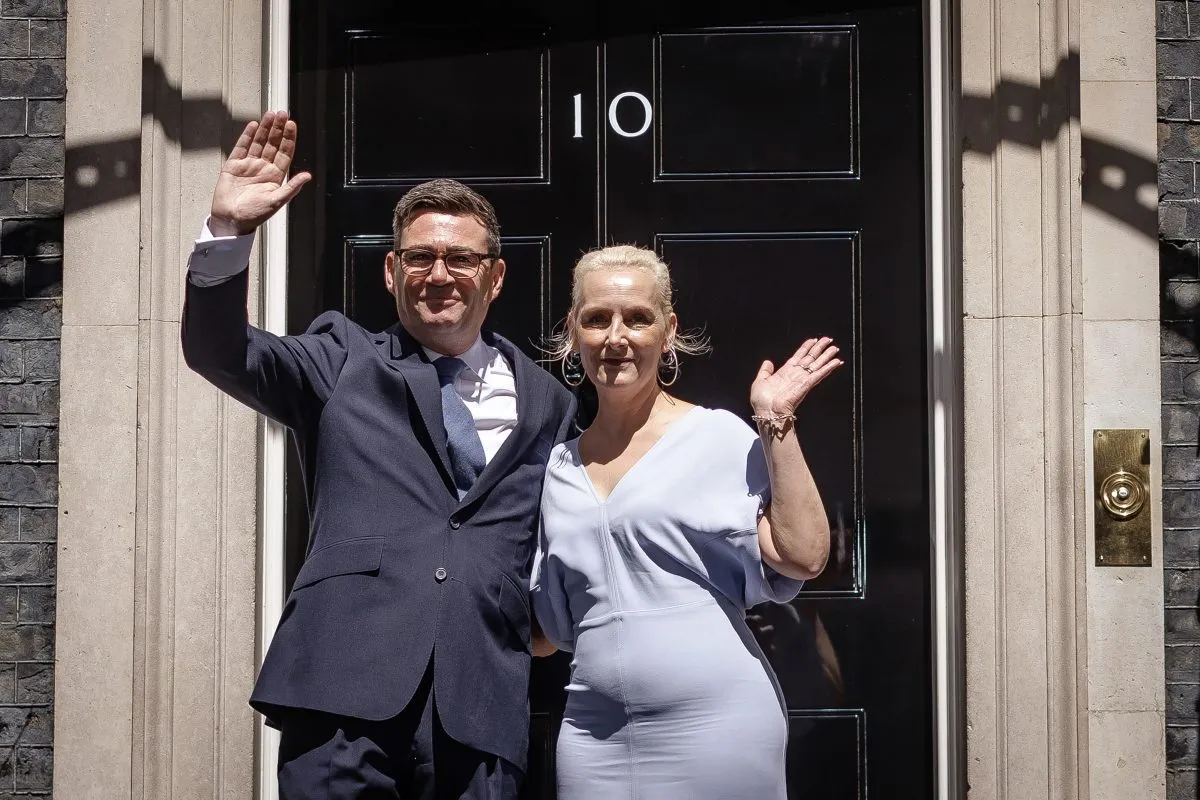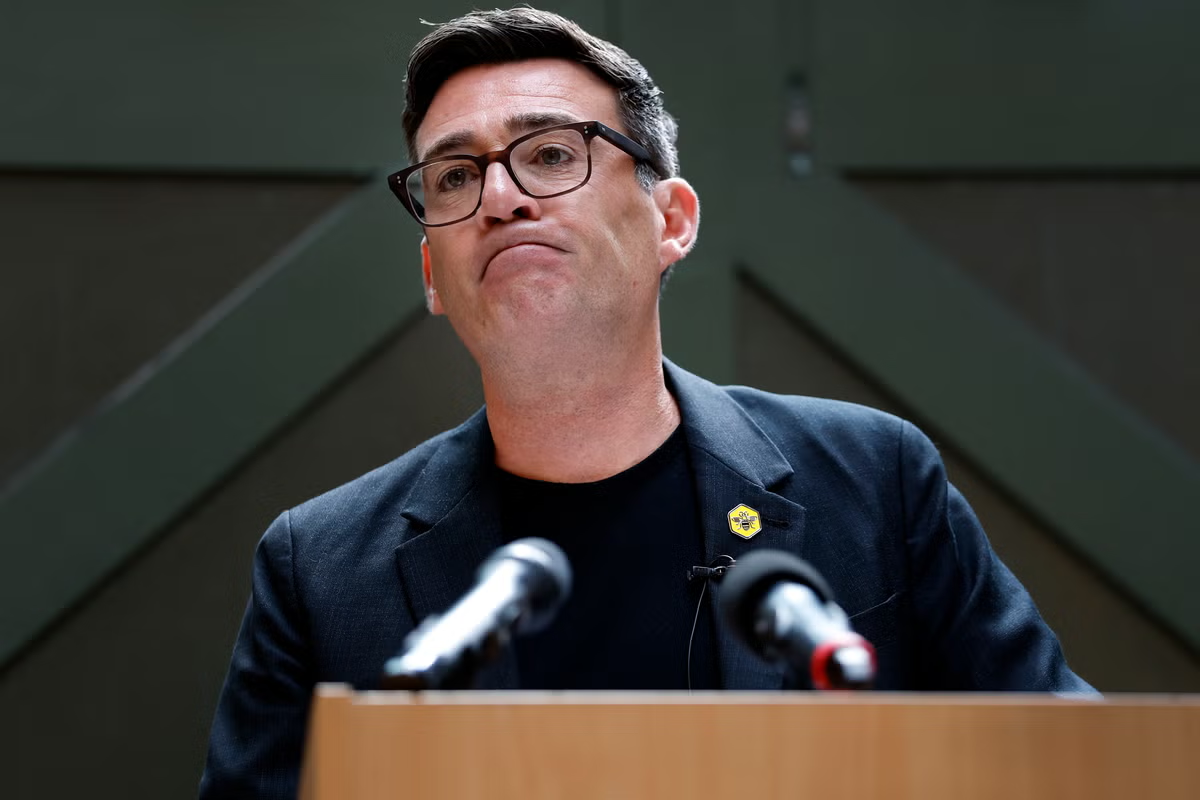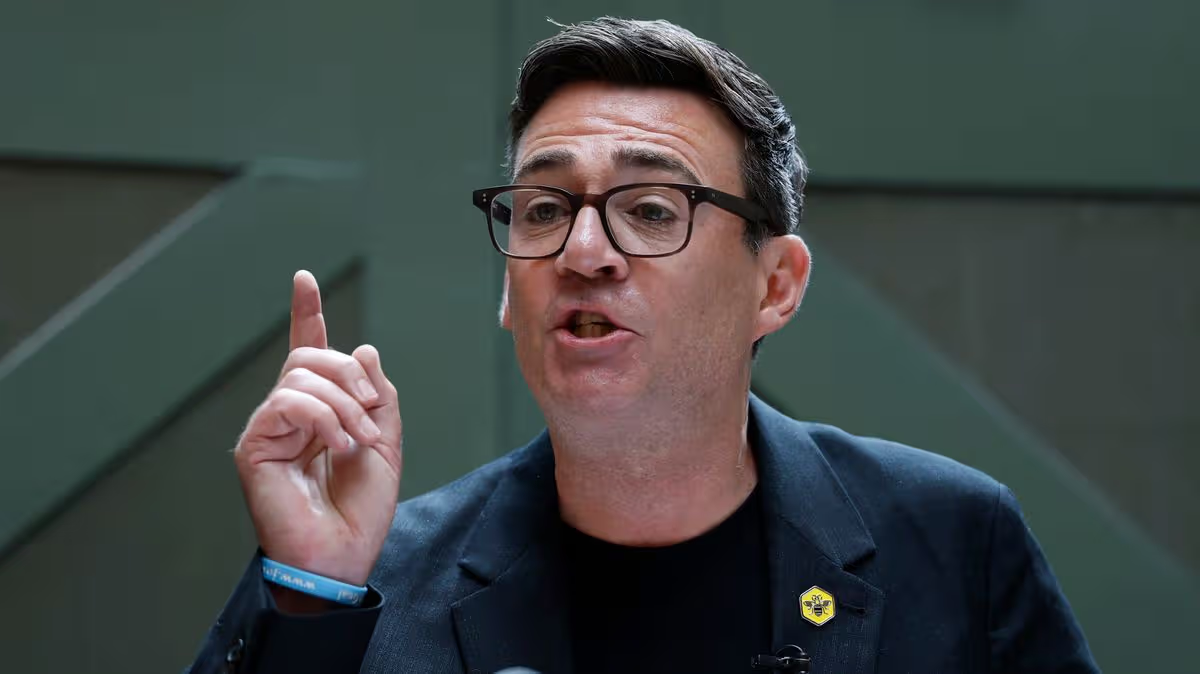
Documents relating to the Irish peace process at the British National Archives in Kew, London, are revealing about key moments on the way to implementing the Belfast Agreement signed in 1998, and the strategies of the British prime minister at that time, Tony Blair. Amid controversy in April 1999 about demands that the IRA decommission its weapons, Blair was focused on devising a solution and recorded: “I will need 3 clear days to work on it.”Do British prime ministers have a run of “clear days” to work on anything any more? The office is over 300 years old, but never have there been so many in quick succession. Consider that between 1979 and 2007, there were only three prime ministers. Even before the latest upheavals, historian Anthony Seldon gave as the title of his 2021 book on the history of the position, The Impossible Office?Observing the constant firefighting of the modern occupants of 10 Downing Street in an era of endless news cycles and saturation coverage, he wondered: “how much more effective and strategic might prime ministers be if they were allowed more space in their diaries?”The lack of room is a measure of how the pace and optics of politics has shifted. In his 2019 study of nine more recent prime ministers, the former political editor of the New Statesman, Steve Richards, uses revealing phrases such as “toiling fragility”, “fearful paralysis” and “wretched powerlessness” to characterise the climates they operated under.The crisis afflicting the office is due to a combination of factors, partly to do with overreach and the centralisation of British politics. British prime ministers must, or feel they must, do too much in the modern era; heading government, leading their party, travelling abroad as, in effect, a senior foreign secretary, while also facing theatrical question time in parliament and finding advisers, spinners and reformers who will direct operations from number 10.We are accustomed to thinking that the job is supposed to be exhausting, but that has not always been the case. Seldon makes a case for greater delegation, with less focus on political aides: “Some of the arrivistes would not be found anywhere near the chief executive of a large organisation: why in Downing Street?” Partly because of their focus on winning elections, not on governance. Seldon also identifies a curious lack of interest in history; such has been the scale of the relaunching and reinvention of number 10 that “there is no institutional memory or learning”. Political scientist Mark Garnett, author of the 2021 book The British Prime Minister in an Age of Upheaval, suggests the presidential culture now associated with the office is also problematic, and argues for a restoration of the older system of cabinet government when the prime minister was “first among equals”. Andy Burnham. Photograph: Tolga Akmen/EPA [ Starmer ally says he will not run against Andy Burnham for Labour leadershipOpens in new window ]Britain’s prime ministers have always been, records Seldon, “criticised, mocked and undermined relentlessly”. Temperament matters greatly in facing that. One of the phrases Margaret Thatcher, who lasted over 11 years in the office, is best remembered for is from 1980: “The Lady is not for turning”. It cemented her reputation as ruthless and that benefited her longevity if not the victims of her ideological thinking, and contributed to the sense that she was authoritative and in charge. But political parties are more inclined now to panic and ditch as they eye the next election. That does not necessarily bode well for Andy Burnham as he awaits occupancy; as one MP said cheekily in the House of Commons as Burnham took his parliamentary seat on Monday, “he’s not the Messiah”. Burnham appears once in Seldon’s book, in the context of the challenges to prime ministers from directly elected mayors, who, speaking for their own electoral base, can pit themselves against a prime minister from their own party by insisting “they are the leader of a city, directly, rather than indirectly, elected”. In such contests, “increasingly, the prime minister is hemmed in”. The Messiah Burnham will now be reminded constantly by his opponents that as prime minister, he has no mandate from the people. “He’s one of us” has been the refrain from supporters associated with his power base, but with his elevation, and the reality of British national debt, such slogans are unlikely to travel far.Number 10 Downing Street on June 22, 2026 in London, England. Photograph: Ben Montgomery/Getty Images Britain’s fracturing and mood of revolt since Brexit a decade ago is also a greatly complicating factor, yet it is also apparent that those who do vote are regularly prepared to switch. Burnham may benefit from a recognition that the constant turmoil in Downing Street needs to be calmed. But he will also need to find his own form of consistent steeliness and a new style of governance from number 10 if he is to deliver on expectations, and that may involve having to shed the earthy image and persona he has cultivated to get there.[ What could Andy Burnham’s first 100 days in power look like?Opens in new window ]
Diarmaid Ferriter: Messiah Andy Burnham will have to shed his earthy image and find a Thatcherite steel
The presidential culture associated with the office of British prime minister makes it a tough job
852 words~4 min read