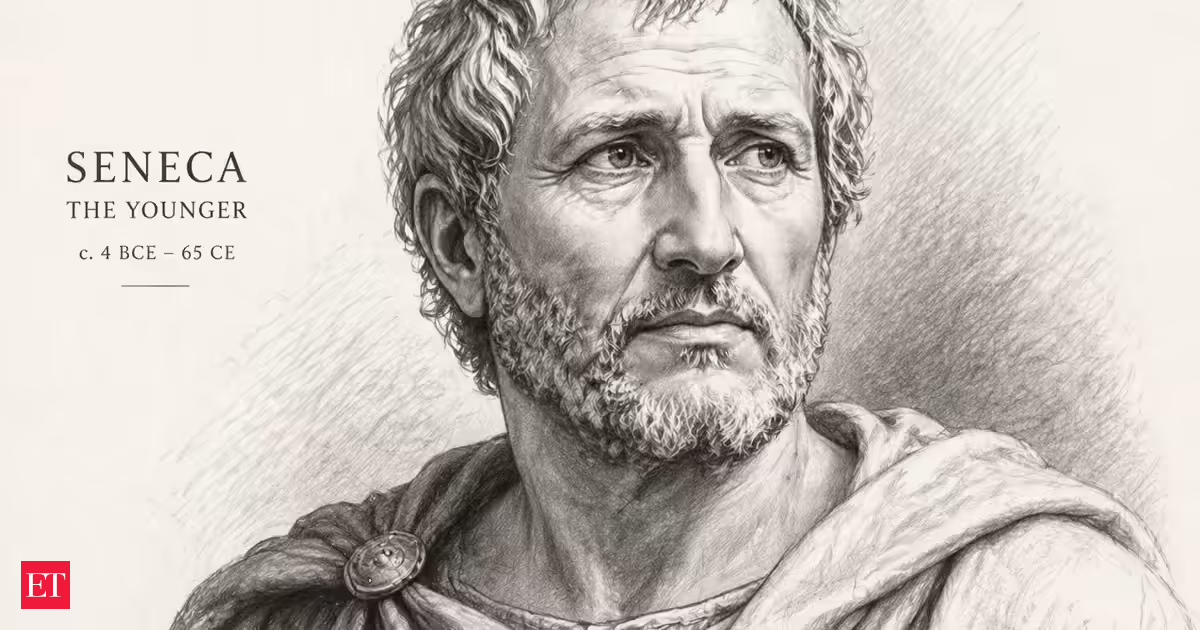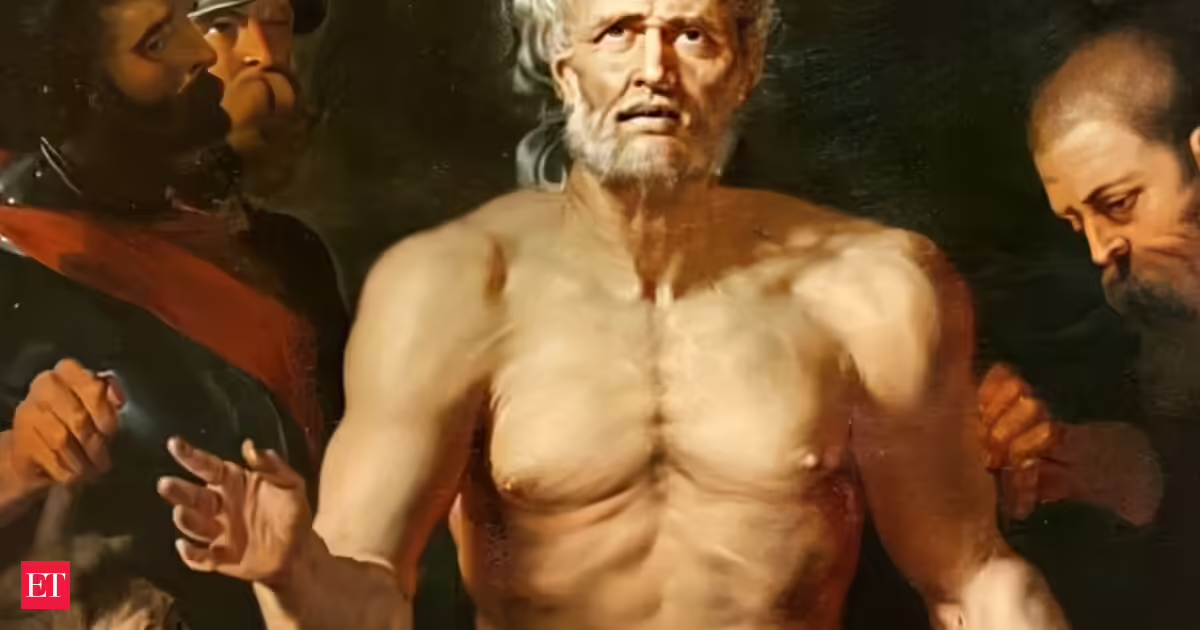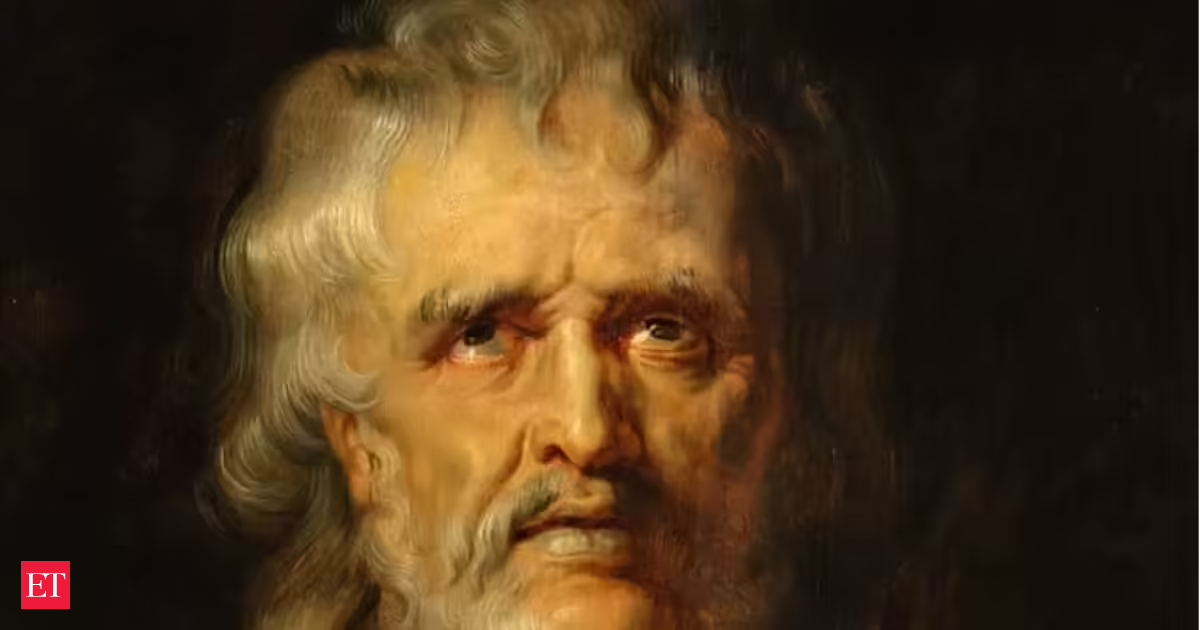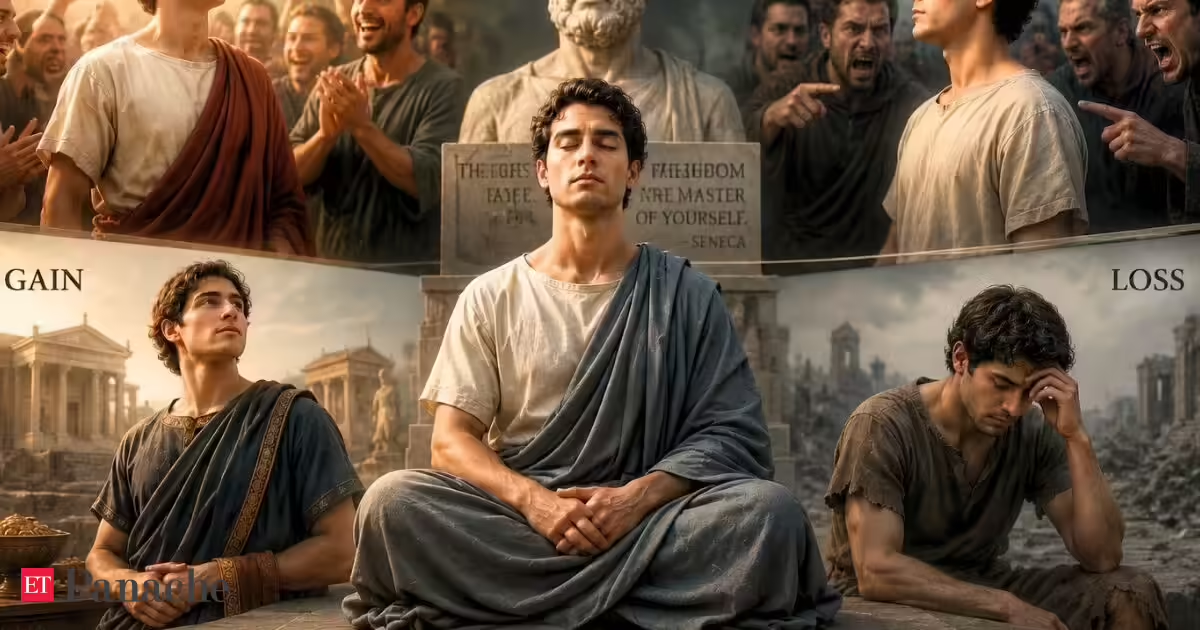
Freedom is often associated with power, wealth, status, or the ability to make choices without restrictions. In modern life, many people measure freedom by what they have or what they can achieve. Yet some of history's most influential thinkers viewed freedom in a very different way. Among them was the Roman Stoic philosopher Seneca, whose writings continue to be read nearly two thousand years after his death. One of his most thought-provoking observations remains especially relevant in a world where opinions, praise, criticism, success, and setbacks constantly shape people's emotions."The final test of freedom is this: Can you remain the same person in praise, in insult, in gain, and in loss."At its core, Seneca's quote asks a simple but difficult question. Can a person maintain their character no matter what happens around them? Most people feel encouraged when praised and hurt when criticized. Success can bring confidence, while losses can create frustration or self-doubt. Seneca suggests that true freedom is not about controlling these events but about not allowing them to control who we are.The quote reflects a key Stoic belief that external circumstances are often beyond our control. Praise may come and go. Money can be gained and lost. Public opinion can change overnight. If a person's identity depends entirely on these things, their sense of self will constantly shift. Seneca argued that genuine freedom comes from inner stability—the ability to remain guided by reason and values regardless of changing fortunes. In that sense, freedom becomes a matter of self-mastery rather than external power.A Philosopher Who Lived Through Turbulent TimesThe man behind the quote, Lucius Annaeus Seneca, commonly known as Seneca or Seneca the Younger, was born around 4 BCE in Corduba, present-day Córdoba in Spain. He was the son of Seneca the Elder, a respected teacher of rhetoric. As a young boy, he was taken to Rome, where he received training in philosophy and public speaking.Seneca's life was far from peaceful. Although he became one of the most influential intellectuals in Rome, his career was marked by political struggles, exile, and eventually a tragic end. Early in his public life, he attracted the attention of powerful figures within the Roman Empire. Under Emperor Claudius, Seneca was accused of adultery and banished to the island of Corsica in 41 CE.His years in exile became a period of reflection and writing. During this time, he produced several philosophical works and developed many of the ideas that later became central to Stoic thought. In 49 CE, he returned to Rome after the intervention of Agrippina, who arranged for him to become tutor to her son Nero, the future emperor.The Contradictions of Seneca's LifeOne reason Seneca remains a fascinating historical figure is the contrast between his philosophy and his political career. He taught moderation, wisdom, and emotional control, yet he operated at the highest levels of Roman politics, a world often driven by ambition and power.When Nero became emperor in 54 CE, Seneca emerged as one of his chief advisers. Together with Sextus Afranius Burrus, he helped guide the early years of Nero's rule and supported several reforms. However, Nero's reign gradually became more oppressive, and critics later questioned how a philosopher known for virtue could remain associated with such a ruler.These tensions have followed Seneca's reputation for centuries. Some viewed him as a hypocrite, while others saw him as a thinker attempting to apply philosophy within difficult political realities. Regardless of the debate, his writings continue to attract readers because they focus on challenges that remain familiar today: handling anger, dealing with adversity, managing time wisely, and maintaining inner calm.Works That Shaped Stoic ThoughtSeneca left behind a large body of writing that helped preserve and spread Stoic philosophy. Among his best-known works are On Anger, On Mercy, On the Brevity of Life, On the Happy Life, and the Moral Letters to Lucilius. These writings explore practical questions rather than abstract theories.One of his most frequently quoted observations states: "We are not given a short life but we make it short, and we are not Ill-supplied but wasteful of it."His essays encouraged readers to use time carefully, control destructive emotions, and focus on what truly matters. Unlike many philosophers who concentrated on theoretical discussions, Seneca often wrote about everyday struggles and personal conduct.
Quote of the day by Stoic philosopher Seneca: 'The final test of freedom is this: Can you remain the same person in praise, in insult, in gain, and in loss...' The one question to ask yourself if you are truly free
The quote of the day from Roman Stoic philosopher Seneca, "The final test of freedom is this: Can you remain the same person in praise, in insult, in gain, and in loss," highlights the idea that true freedom comes from inner stability rather than external circumstances. Explore the meaning behind this timeless insight, and how Stoicism encourages people to remain grounded through both success and adversity.
711 words~3 min read