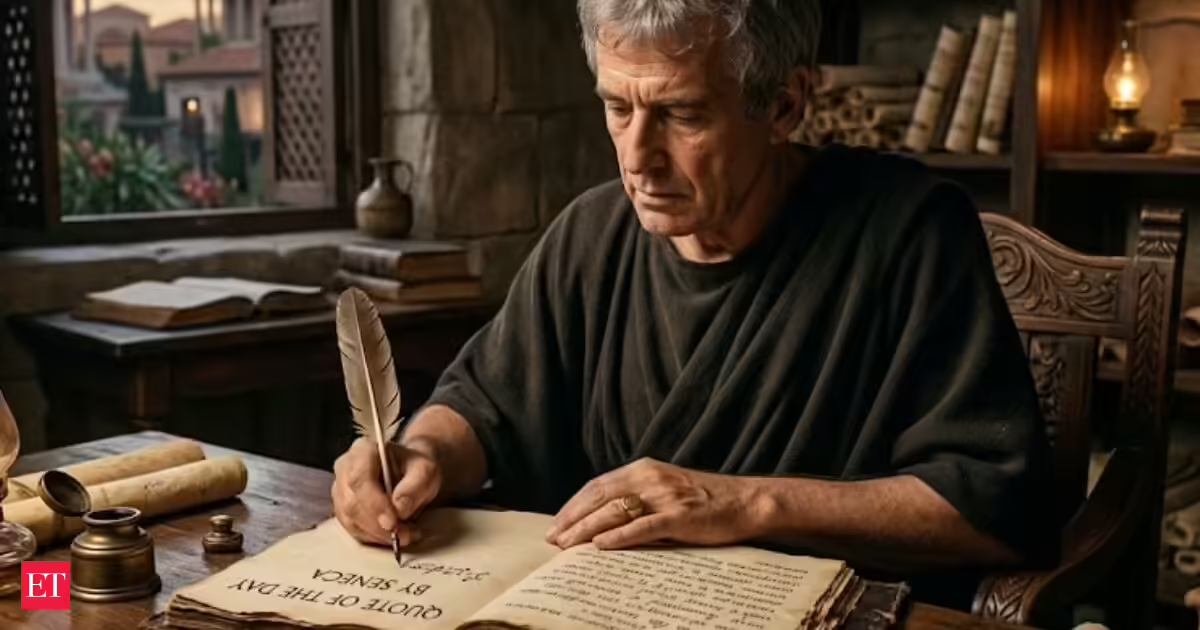
Stoic Thought of the Day by Seneca: In an age driven by endless ambition, comparison, and the constant pursuit of more, the ancient Stoic philosopher Seneca offered a timeless reminder about where true happiness comes from. While many people spend their lives chasing things they do not have, Seneca believed that peace begins when we learn to appreciate what is already within our reach.Today's Stoic Thought of the Day comes from one of his most enduring reflections, "It is in no man's power to have whatever he wants, but he has it in his power not to wish for what he hasn't got, and cheerfully make the most of the things that do come his way."Though written nearly two thousand years ago, the quote speaks directly to modern life, where dissatisfaction often grows faster than gratitude.Stoic Thought of the Day: Philosophical context behind the thoughtSeneca was one of the leading voices of Stoicism, the ancient philosophy that taught people how to live with wisdom, courage, self-discipline, and tranquility. Unlike many philosophies that focused on abstract theories, Stoicism was designed to help people navigate everyday struggles.You Might Also Like:At the heart of Stoic thinking is a simple distinction: some things are within our control, while others are not. Our choices, attitudes, judgments, and responses belong to us. Wealth, status, public opinion, luck, and many external events do not.Seneca's quote perfectly reflects this principle. He reminds us that life does not guarantee that we will receive everything we desire. However, we always retain the power to adjust our desires, manage our expectations, and find satisfaction in what we already possess.Rather than viewing happiness as something waiting in the future, Stoicism teaches that fulfillment is available in the present moment if we learn to see it.You Might Also Like:Seneca's Stoic Wisdom: Deeper meaningThe deeper meaning of Seneca's words lies in the relationship between desire and suffering. Many people assume that unhappiness comes from lacking something. Stoic philosophy suggests the opposite. Often, suffering comes from believing that we must possess something before we can be content.A promotion, a larger house, more recognition, greater wealth, a different relationship, or a different life altogether. The list never ends.Seneca argues that peace is not found by eliminating every obstacle between ourselves and our desires. Peace is found by examining whether those desires truly deserve control over our happiness.You Might Also Like:This lesson feels particularly relevant in today's digital world. Social media constantly exposes people to carefully curated images of success, luxury, beauty, and achievement. As a result, many individuals spend their lives measuring themselves against standards that are constantly moving.The Stoic response is refreshingly practical. Instead of asking, "Why don't I have what others have?" Seneca encourages us to ask, "How can I make the best use of what I already have?"This shift transforms gratitude from a pleasant emotion into a powerful life strategy. The person who learns to appreciate what they possess becomes far less vulnerable to disappointment, envy, and anxiety. Their happiness no longer depends entirely on circumstances beyond their control.What Seneca can teach us about contentmentOne of Seneca's greatest insights was that abundance and satisfaction are not the same thing. History is filled with wealthy individuals who remained restless and unhappy, while countless others found meaning and joy despite having very little. According to Seneca, contentment is not measured by possessions but by perspective.His philosophy does not discourage ambition or self-improvement. Instead, it warns against allowing future desires to steal the value of the present. A person can work hard toward meaningful goals while still appreciating today's blessings. The Stoics believed that gratitude and ambition can coexist when desire is guided by wisdom rather than obsession.In practical terms, Seneca's advice encourages us to focus less on what is missing and more on how we respond to what life provides.A statesman, playwright, writer, and Stoic thinker, Seneca served as advisor to Emperor Nero and became one of the wealthiest and most prominent figures in Rome. Yet despite his political influence and personal success, his writings consistently emphasized self-control, virtue, and inner freedom.His essays and letters explored topics such as anger, grief, adversity, wealth, happiness, and the pursuit of wisdom. Works such as Letters from a Stoic, On the Shortness of Life, and On Tranquility of Mind continue to be widely read centuries after his death.What makes Seneca's teachings remarkable is their practicality. He did not write for scholars alone. He wrote for ordinary people trying to live meaningful lives amid uncertainty, disappointment, and change.Today, his words remain a cornerstone of modern Stoicism and continue to inspire readers seeking resilience, gratitude, emotional balance, and lasting peace.Seneca's Quote and the Core Principle of StoicismFew quotes capture the essence of Stoicism as completely as this one from Seneca. At the heart of Stoic philosophy lies the belief that human suffering often comes from confusing what we can control with what we cannot. The Stoics taught that external circumstances, wealth, status, reputation, and even many of life's outcomes remain beyond our direct control. What remains fully ours is our response to those circumstances.Seneca's words are a direct reflection of this principle. He acknowledges a reality that many people spend their lives resisting: no one can guarantee that they will get everything they want. Fortune is unpredictable, opportunities come and go, and life rarely unfolds exactly as planned. Yet rather than viewing this as a cause for despair, Seneca presents it as a path to freedom.The quote shifts attention away from acquisition and toward attitude. Instead of asking how we can obtain every desire, Seneca asks a more profound question: what if we learned to desire differently? This is a distinctly Stoic way of thinking. The goal is not to control the world but to master our expectations of it.For the Stoics, happiness was never found in possessing more. It was found in needing less. A person who depends on external success for peace of mind becomes a prisoner of circumstances. A person who learns to appreciate what life has already provided becomes emotionally independent. Seneca's quote embodies this ideal perfectly. It teaches that contentment is not created by abundance but by wisdom.In many ways, this single sentence contains the foundation of Stoic practice. Gratitude over resentment. Acceptance over complaint. Inner mastery over external control. Rather than fighting reality, the Stoic learns to work with it, finding dignity and peace regardless of what fortune brings.Why This Quote Matters TodayThe wisdom of this quote feels especially relevant in an age driven by comparison and endless consumption. Modern culture constantly encourages people to seek more money, more recognition, more possessions, and more validation. Yet despite unprecedented levels of comfort and convenience, anxiety and dissatisfaction remain widespread.Seneca would likely argue that the problem is not a lack of opportunities but an excess of unchecked desires. When happiness depends on obtaining the next thing, satisfaction becomes temporary. The moment one goal is achieved, another immediately takes its place.His quote offers an alternative path. It reminds us that fulfillment does not come from endlessly expanding our wish list. It comes from learning to value what is already present. In a world obsessed with more, Seneca's message remains a powerful reminder that peace often begins with enough.You Might Also Like:
Stoic Thought of the Day: 'It is in no man's power to have whatever he wants...'- thought-provoking lessons on contentment, resilience, inner peace, and stoic wisdom by the Stoic philosopher
Ancient philosopher Seneca offers a timeless lesson on happiness: true contentment isn't about acquiring everything you desire, but about appreciating what you already have. In today's world of constant comparison, his wisdom highlights that peace stems from managing expectations and finding joy in the present. This Stoic approach shifts focus from external acquisition to internal attitude, fostering resilience and lasting satisfaction.
1,204 words~5 min read